
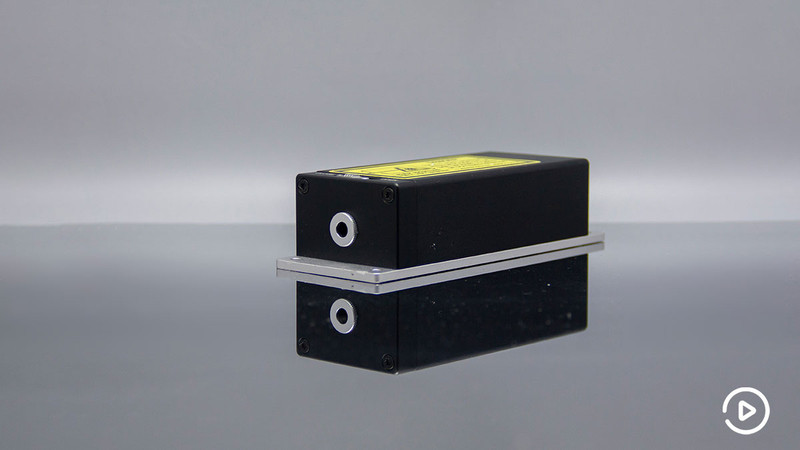
532nm Laser CL532-150mJ-SSL006
Crylink's 532 nm lasers include laser dazzlers, 532nm actively Q-switched subnanosecond lasers, 532nm passively Q-switched subnanosecond lasers, 532nm single-frequency continuous-wave lasers and 532nm single-frequency solid-state lasers. Laser dazzlers are mainly used in counterterrorism and counterdemonstration settings. Narrow-linewidth lasers are mainly used for fluorescence spectroscopy. Single-frequency continuous-wave lasers are mainly used to pump titanium-sapphire lasers. Actively Q-switched subnanosecond lasers are mainly used for Doppler wind measurements, underwater imaging, point-cloud imaging lidar, aerosol lidar and laser remote sensing. Passively Q-switched subnanosecond lasers are mainly used to generate terahertz radiation. 532nm microchip lasers are mainly used for laser micromachining, time-resolved Raman spectroscopy, ultrasound imaging and laser-induced breakdown spectroscopy. Single-frequency solid-state lasers: the single-frequency series includes single-frequency continuous-wave seed sources, single-frequency continuous-wave amplification plus frequency doublers, and single-frequency high-energy solid-state lasers. Engineering technologies such as nonplanar ring cavities, resonance detection and external-cavity resonant frequency doubling provide a full-parameter, multiband product range covering narrow-linewidth seed sources, laser amplification and nonlinear frequency conversion. Advanced engineering design, including integrated optomechanical and thermal analysis and automatic electrical control system development, supports product reliability and stability. The series is widely used in lidar systems for Doppler wind measurements, laser debris observation and laser remote sensing. Its technical advantages include high spectral performance for fine spectral analysis, high-quality seed injection for excellent power amplification, resonance detection to ensure single-frequency operation in every pulse, and frequency locking and stabilization. A combined fiber and solid-state design provides 532nm green output >50W. The PDH frequency-locking technology enables a compact, stable and reliable structure. 532nm single-frequency pulsed solid-state laser.
 Save to Favorites
Overview
Specifications
| Parameter | Value |
|---|---|
| Energy | 150 mJ |
| Power stability | <2.5% |
| Pulse Width | <10 ns |
| Repetition Rate | 1-200 Hz |
| Spot diameter [@1/e2] | ~4.5 |
Applications
Key Features
Datasheet
Supplier Information
Related Products
-
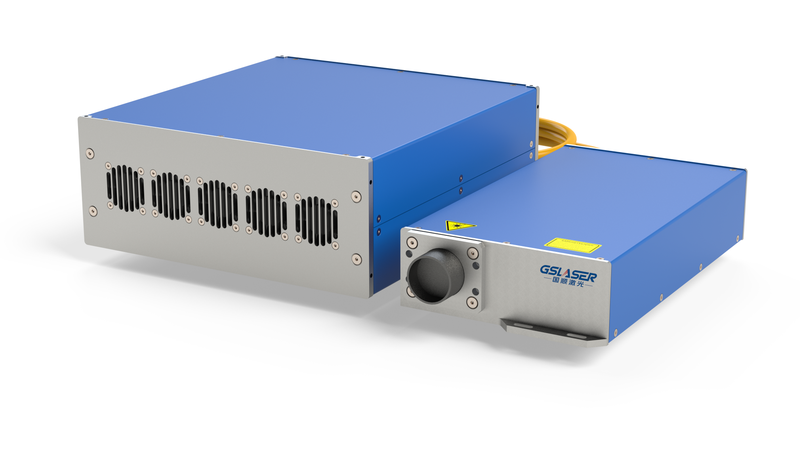 100W Subnanosecond Infrared Laser
Laser Modules & Systems
Guoshunlaser
M² Beam quality: <1.6 Average Output Power: >100 Power adjustment Range: 0~100 %
-
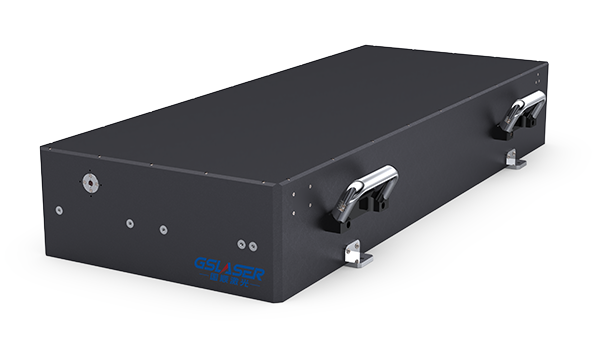 100W Picosecond Green Fiber Laser
Laser Modules & Systems
Guoshunlaser
M² Beam quality: <1.3 Average Output Power: >100 Power adjustment Range: 0~100 %
-
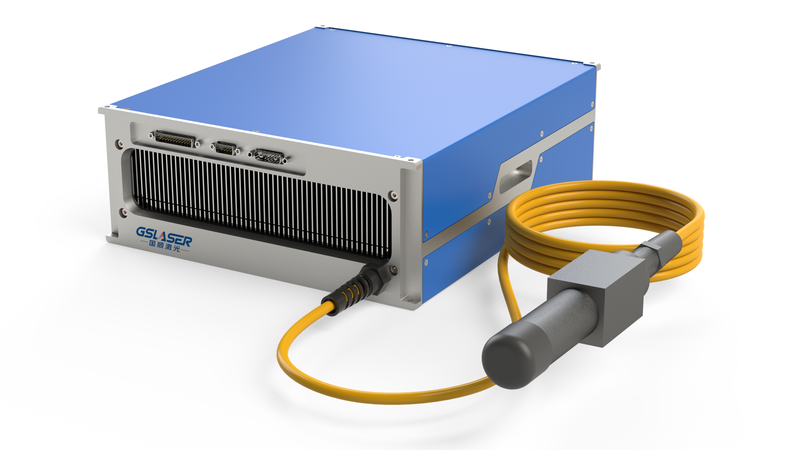 100W Nanosecond Infrared Fiber Laser
Laser Modules & Systems
Guoshunlaser
M² Beam quality: <1.4 Average Output Power: >100 Power adjustment Range: 0~100 %
-
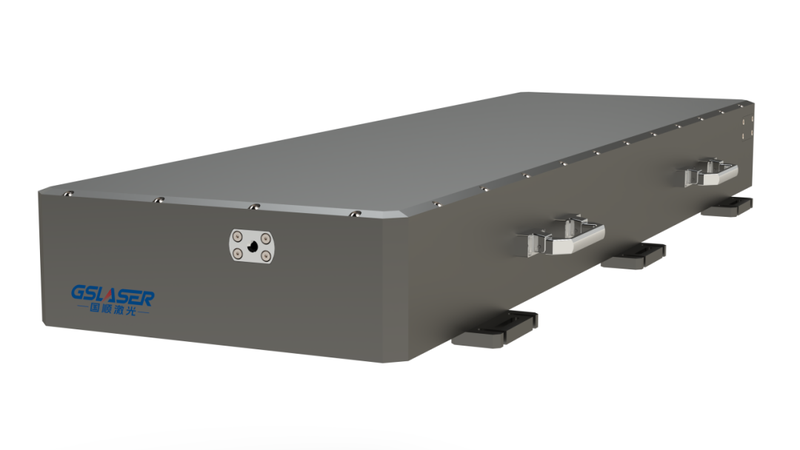 100W Femtosecond Infrared Laser
Laser Modules & Systems
Guoshunlaser
M² Beam quality: <1.3 Average Output Power: >100 Power adjustment Range: 0~100 %
-
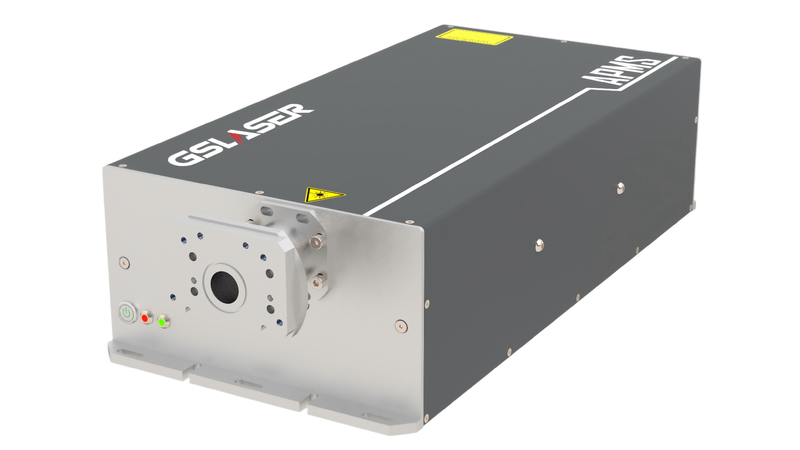 10W Compact Picosecond Infrared Laser
Laser Modules & Systems
Guoshunlaser
M² Beam quality: <1.2 Average Output Power: >10 Power adjustment Range: 0~100 %
Related Articles
As a core precision optical component for wavelength screening, frequency locking and spectral demodulation, optical etalons are widely used in high-end scientific research and precision laser equipment.
As a vital emerging sector of modern three-dimensional spatial economy, the low-altitude economy has become a new global growth driver. It covers a wide range of commercial scenarios, including UAV navigation and obstacle avoidance, precise airspace management, aerial mapping, low-altitude logistics distribution, security monitoring and emergency disaster rescue. Nevertheless, frequent extreme weather, complex terrain obstacles and increasingly dense low-altitude flight activities pose severe challenges to the safety and stability of low-altitude aircraft operations.
Laser pump sources are the core energy input component of solid-state lasers and laser amplifiers, and their performance directly determines the output power, beam quality and service life of the entire laser system. In scenarios such as industrial processing, scientific research experiments and high-end equipment, improper pump source selection will not only result in substandard system performance, but also bring a series of problems such as rapid device degradation and high operation and maintenance costs. This article sorts out the core selection logic and key pitfalls of pump source procurement, and provides selection references based on mature, mass-produced high-reliability products to help purchasers efficiently screen suitable products.
Shandong Haucore Optoelectronics Co., Ltd. introduces the HGLD‑792‑COS‑D‑10WB semiconductor laser within its COS series. Delivering an output power of 10 W at a central wavelength of 792 nm, this device adopts gold‑tin bonding COS packaging. Featuring high reliability and long service life, it serves as a preferred pump source for solid‑state lasers and is widely deployed in industrial processing, laser display, medical & aesthetic treatment, scientific research and other fields.
Loading...
Name
Phone
Organization
Use Case

Database Platform