
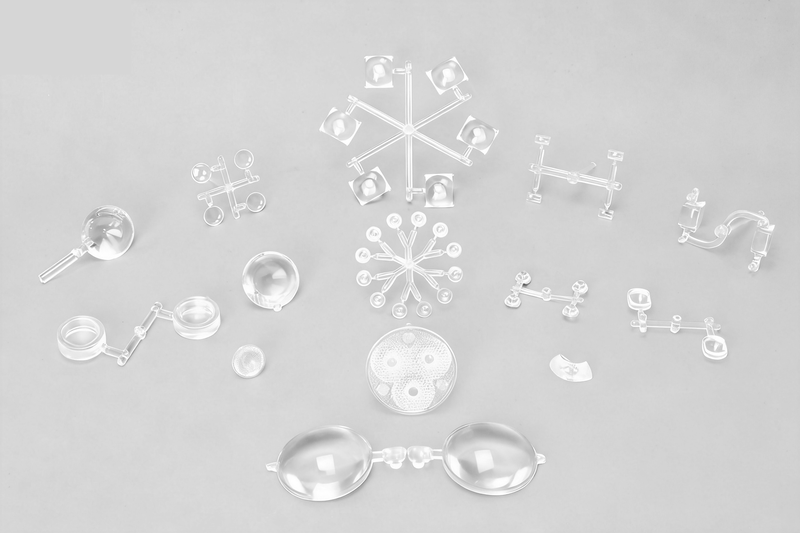
Plastic Lens
A plastic lens is a transparent optical element made of optical-grade plastic material. Its core function is the same as that of a glass lens — changing the optical path through light refraction to achieve light convergence, divergence, or collimation, but due to the material characteristics, it is more suitable for lightweight, low-cost, and impact-resistant scenarios. It shares the core logic of "light refraction" with glass lenses: when light enters plastic from air, the change in propagation speed causes the light to bend; the convex/concave surfaces of the lens determine the direction of the optical path — a convex surface converges light, while a concave surface diverges light. Plastic has a lower refractive index, so a thicker surface must be designed for the same optical effect; however, the density of plastic is only 1/2-2/3 that of glass, so it is lighter and less prone to breakage. Plastic lenses include the following types: plastic convex lenses, plastic concave lenses, plastic combination lenses, etc.
 Save to Favorites
Overview
Specifications
| Parameter | Value |
|---|---|
| Diameter [Processing Capability] | 1 - 80 mm |
| Diameter [Inspection Equipment] | Digital Micrometer |
| Center Thickness Tolerance [Processing Capability] | ±0.003 mm |
| Center Thickness Tolerance [Inspection Equipment] | Digital Micrometer |
| Surface Figure Accuracy [Processing Capability] | PV ≤ 0.6 µm, RMS ≤ 0.2 µm |
| Surface Figure Accuracy [Inspection Equipment] | UA3P Profilometer |
| Centration Error [Processing Capability] | 3 µm |
| Centration Error [Inspection Equipment] | UA3P Profilometer |
| Surface Defects [Processing Capability] | 2x0.1 |
| Surface Defects [Inspection Equipment] | Visual Inspection or Microscope |
Datasheet
Please provide your email to download the datasheet.
Invalid email format. Please try again.
Supplier Information
Related Products
-
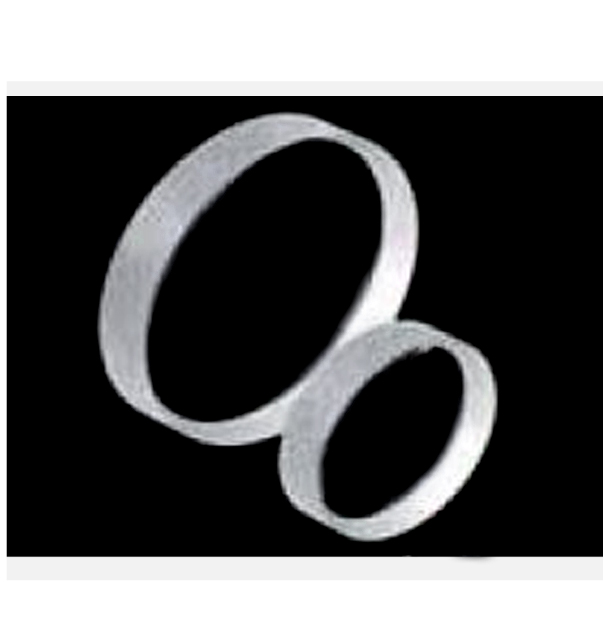 Bi-convex lens
Optical Lenses
Zeit-group
Material: H-K9L(BK7) / Quartz / Sapphire / CaF2 / BaF2 / MgF2 / Ge / ZnSe Optical Coating: As Required Surface Figure Accuracy: λ/6
Biconvex lenses primarily collect light from a point source or relay images to other optical systems.
-
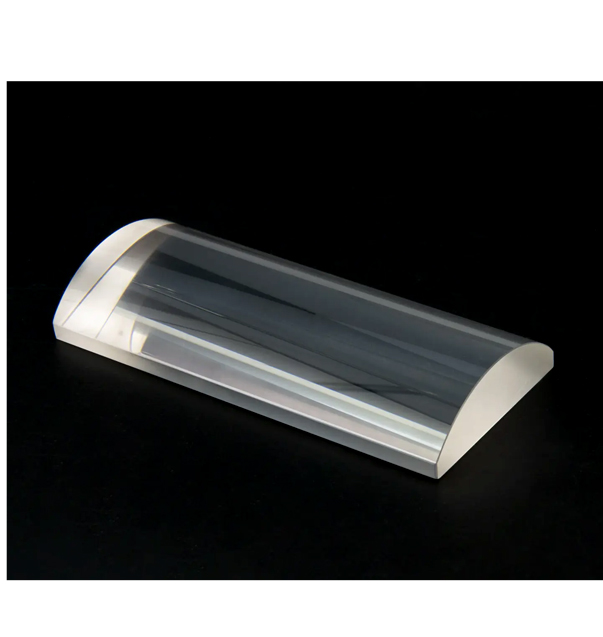 Plano-convex cylindrical lens
Optical Lenses
Zeit-group
Material: H-K9L(BK7) / Quartz Optical Coating: As Required Surface Figure Accuracy: λ/2
A plano-convex cylindrical lens forms a line image and controls beam size in only one direction.
-
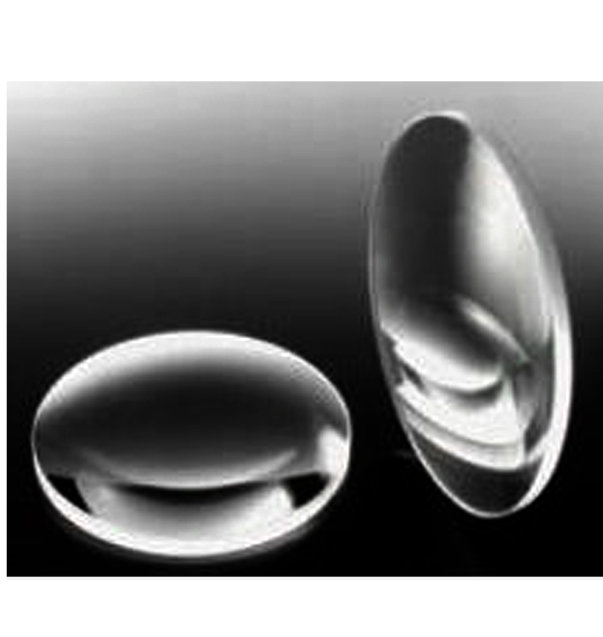 Plano-convex lens
Optical Lenses
Zeit-group
Material: H-K9L(BK7) / Quartz / Sapphire / CaF2 / BaF2 / MgF2 / Ge / ZnSe Optical Coating: As Required Surface Figure Accuracy: λ/6
A spherical plano-convex lens operates by refraction.
-
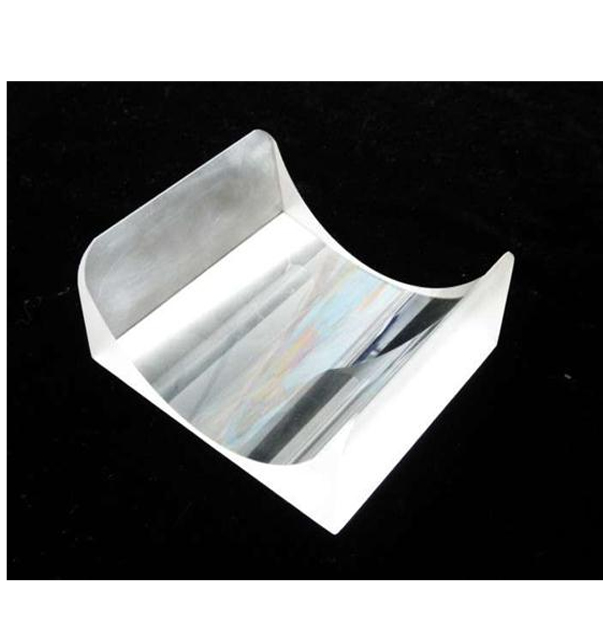 Plano-concave cylindrical lens
Optical Lenses
Zeit-group
Material: H-K9L(BK7) / Quartz Optical Coating: As Required Surface Figure Accuracy: λ/2
A plano-concave cylindrical lens forms a diverging line-shaped virtual image and controls beam size in only one direction.
-
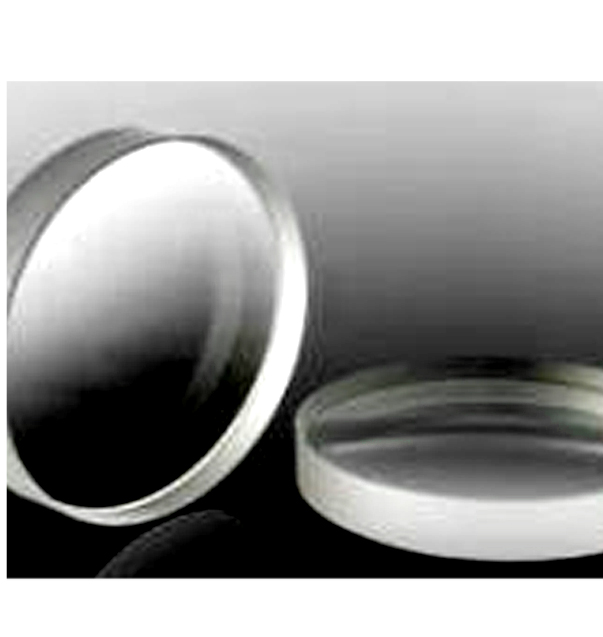 Plano-concave lens
Optical Lenses
Zeit-group
Material: H-K9L(BK7) / Quartz / Sapphire / CaF2 / BaF2 / MgF2 / Ge / ZnSe Optical Coating: As Required Surface Figure Accuracy: λ/6
A plano-concave lens has a negative focal length and diverges a collimated beam.
Related Articles
Wuhan Optical Valley Interlink Technology Co., Ltd. was founded in 2013 by a technical team from Huazhong University of Science and Technology.
Shanghai Connet Laser Technology Co., Ltd. focuses on technological innovation, delivering cutting-edge photonic products & solutions for industrial lasers, LiDAR, fiber optic sensing, coherent telecom, cold atom physics and precision spectroscopy research & mass manufacturing.
Against the evolving demands for military‑grade hardware, rail transit equipment and heavy‑duty machinery that run under high‑shock vibrating conditions, anti‑loose connectors serve as indispensable hardware for stable power delivery and high‑speed signal transmission.
BEIJING JIEPU TREND supplies YAG+Er:YAG+YAG bonded composite slab laser crystals for high‑power solid‑state laser systems. The monolithic slab consists of two undoped YAG end‑cap layers and a central Er‑doped YAG gain segment. The overall dimension is 9 mm×9 mm×9 mm.
Loading...
Name
Phone
Organization
Use Case

Database Platform