YAG ErYAG YAG Composite Slab Laser Crystal

Published: 2026-08-26 13:43:19 Views: 6

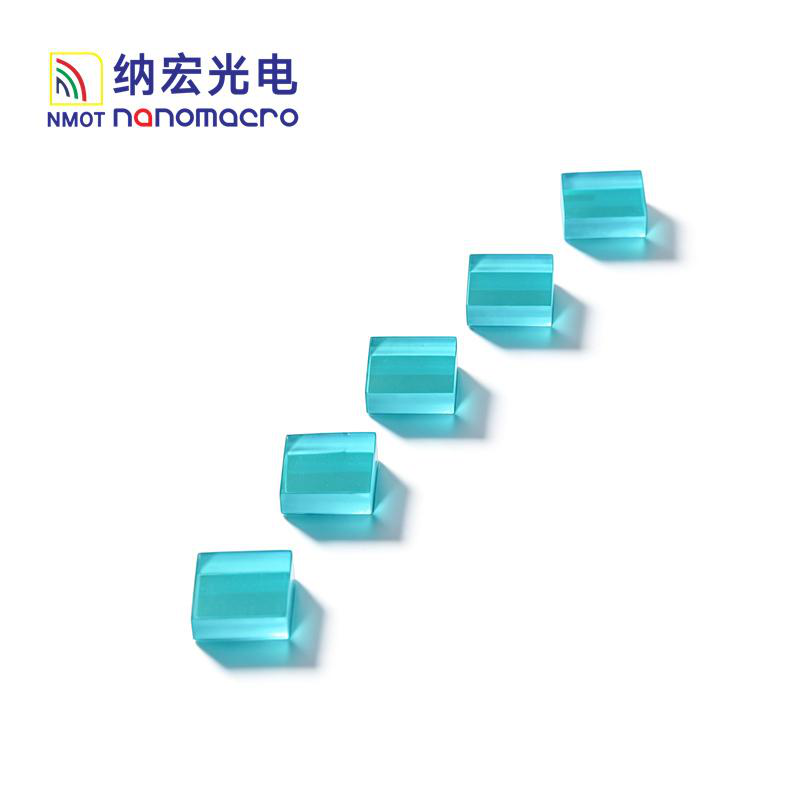
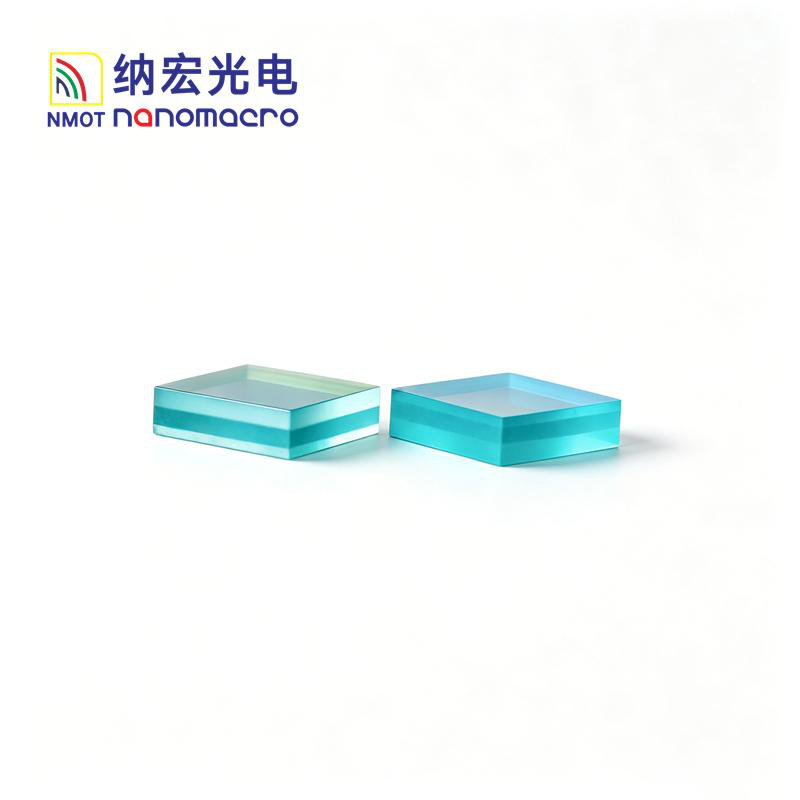
BEIJING JIEPU TREND supplies YAG+Er:YAG+YAG bonded composite slab laser crystals for high‑power solid‑state laser systems. The monolithic slab consists of two undoped YAG end‑cap layers and a central Er‑doped YAG gain segment. The overall dimension is 9 mm×9 mm×9 mm.

Each pure‑YAG end‑cap (S1, S2) has a length of 2.5 mm, and the middle Er:YAG gain section is 4 mm long with an erbium doping concentration of 50%. Both optical end‑faces are processed as flat‑flat surfaces, while lateral sides are fine‑ground. The crystal is delivered without coatings on both facets, and anti‑reflection or high‑reflection films can be customized according to your laser‑system requirements.

The three‑layer bonded architecture brings three major technical improvements for laser performance.

  1. Mitigation of thermal‑lens effect caused by end‑face deformation. The outer undoped‑YAG end‑caps act as thermal buffers, isolating thermal stress generated inside the gain region. This greatly reduces end‑face distortion under high pump loading and minimizes beam aberration induced by thermal lensing, delivering better beam quality.
  2. Higher optical‑to‑optical conversion efficiency. The monolithic bonded structure eliminates Fresnel reflection losses between discrete crystal segments. Pump light couples more efficiently into the Er:YAG gain medium, cutting unnecessary energy waste and improving overall laser conversion performance.
  3. Enhanced laser‑induced damage threshold (LIDT). The Er‑doped gain zone is set back from the crystal end‑faces, preventing intense pump radiation from directly irradiating the facet surface. The risk of optical damage on end‑faces is significantly lowered, enabling the slab to withstand higher pump power and extending component service life.

This composite Er:YAG slab is well‑suited for 2.94 μm medical erbium lasers, high‑power scientific solid‑state lasers and industrial pulsed laser sources. Customization on doping level, geometric dimensions and optical coatings is available upon request.
Related Products

Image Name Category Manufacturer Parameters Description
  • Non-Contact Type Laser-to-Fiber Coupler - Adapter Interface Fiber Optic Couplers Non-Contact Type Laser-to-Fiber Coupler - Adapter Interface Fiber Optic Couplers Shconnet

    In non-contact laser-to-fiber couplers, there is a certain air gap between the fiber and the coupling lens. This design is very flexible, allowing the use of various types of lenses with various focal lengths. The distance between the fiber and the lens in this coupler can be adjusted to compensate for small changes in laser wavelength. In high-power multimode fiber coupling systems, the distance between the fiber and the lens can be adjusted for defocusing to avoid fiber damage.

  • Non-Contact Type Laser-to-Fiber Coupler - Adapter Interface Fiber Optic Couplers Non-Contact Type Laser-to-Fiber Coupler - Adapter Interface Fiber Optic Couplers Shconnet

    In non-contact laser-to-fiber couplers, there is a certain air gap between the fiber and the coupling lens. This design is very flexible, allowing the use of various types of lenses with various focal lengths. The distance between the fiber and the lens in this coupler can be adjusted to compensate for small changes in laser wavelength. In high-power multimode fiber coupling systems, the distance between the fiber and the lens can be adjusted for defocusing to avoid fiber damage.

  • Non-Contact Type Laser-to-Fiber Coupler - Adapter Interface Fiber Optic Couplers Non-Contact Type Laser-to-Fiber Coupler - Adapter Interface Fiber Optic Couplers Shconnet

    In non-contact laser-to-fiber couplers, there is a certain air gap between the fiber and the coupling lens. This design is very flexible, allowing the use of various types of lenses with various focal lengths. The distance between the fiber and the lens in this coupler can be adjusted to compensate for small changes in laser wavelength. In high-power multimode fiber coupling systems, the distance between the fiber and the lens can be adjusted for defocusing to avoid fiber damage.

  • Non-Contact Type Laser-to-Fiber Coupler - Adapter Interface Fiber Optic Couplers Non-Contact Type Laser-to-Fiber Coupler - Adapter Interface Fiber Optic Couplers Shconnet

    In non-contact laser-to-fiber couplers, there is a certain air gap between the fiber and the coupling lens. This design is very flexible, allowing the use of various types of lenses with various focal lengths. The distance between the fiber and the lens in this coupler can be adjusted to compensate for small changes in laser wavelength. In high-power multimode fiber coupling systems, the distance between the fiber and the lens can be adjusted for defocusing to avoid fiber damage.

  • Non-Contact Type Laser-to-Fiber Coupler - Adapter Interface Fiber Optic Couplers Non-Contact Type Laser-to-Fiber Coupler - Adapter Interface Fiber Optic Couplers Shconnet

    In non-contact laser-to-fiber couplers, there is a certain air gap between the fiber and the coupling lens. This design is very flexible, allowing the use of various types of lenses with various focal lengths. The distance between the fiber and the lens in this coupler can be adjusted to compensate for small changes in laser wavelength. In high-power multimode fiber coupling systems, the distance between the fiber and the lens can be adjusted for defocusing to avoid fiber damage.

Contact Us

Loading...

A global database of 100,000 photonics products helps match you with the right product.

  • Expert Selection
  • Verified Suppliers
  • Quality Assured
AI Parametric Selection
Smart Match · Precise Recs
Enter Specifications
AI Smart Matching
Get Best Matches
Skip Manual Comparison
Find Best Solutions Fast
Select Now →