
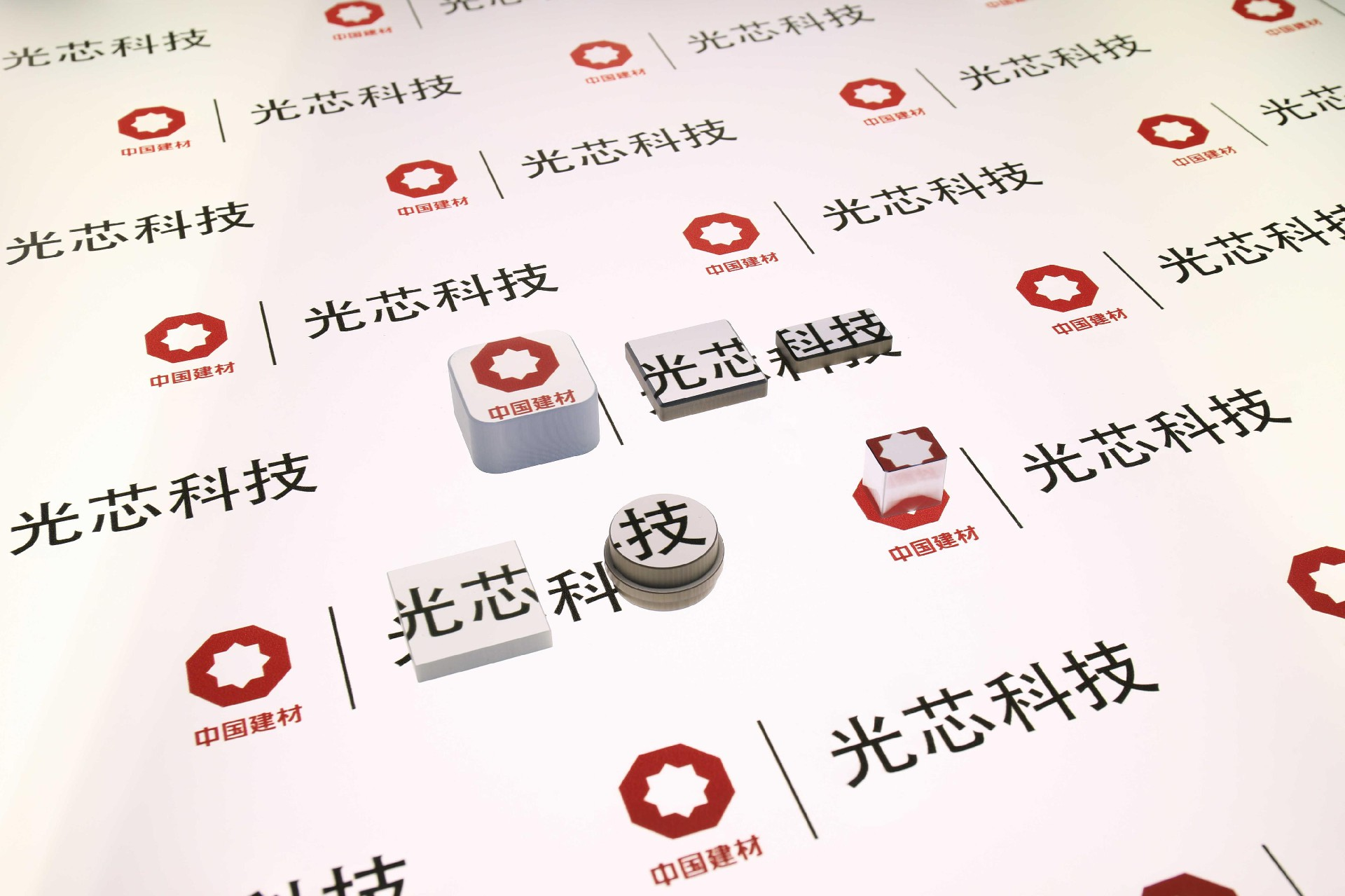
Optical Fiber Faceplate
Optical fiber faceplates are formed by regularly arranging and fusing tens of millions of optical fibers with diameters of 4~6 μm. Each fiber is a basic image-transmitting unit, drawn at high temperature from a low-refractive-index cladding glass and a high-refractive-index core glass. Light propagates inside the fibers according to the principle of total internal reflection. With a large numerical aperture, strong light-gathering capability, and high resolution, the faceplate can transmit images from the input surface to the output surface with high fidelity. Optically it has a zero-thickness characteristic, making it an excellent optoelectronic imaging device.
 Save to Favorites
Overview
Specifications
| Parameter | Value |
|---|---|
| Single Fiber Diameter | Φ4~80μm (customizable) |
| Effective Aperture | Φ5~150mm |
| Thermal Expansion Coefficient (20~300 °C) | (60~90)×10-7/℃ |
| Vacuum Air Tightness | <10-12Pa•m3/s |
| Numerical Aperture | 0.3~1.0 |
| Collimated Transmission Ratio | >70% |
| Diffuse Transmittance | >65% |
| Infrared Response | 2700nm |
| UV Response | 300nm |
| Shear Distortion | <15μm |
| Total Distortion | <15μm |
| Image Displacement | <50μm |
Datasheet
Please provide your email to download the datasheet.
Invalid email format. Please try again.
Supplier Information
Related Products
-
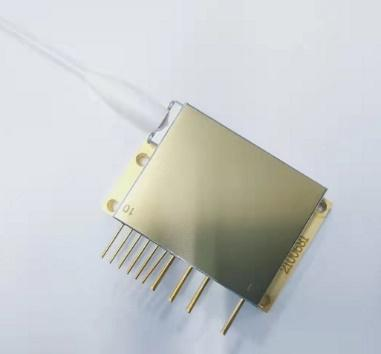 Fibre-coding semiconductor lasers FH-1430-8E
Fiber Optics
Haucore
Fibre-coding semiconductor lasers FH-1430-8E
Fiber Optics
Haucore
spectral width: 3.5
Wavelength/ Wavelength 808 & 980 nm; Fibre power/ Outlook Power 15 & 15W; fibre core/ Fiber Core 400 m; fibre numerical aperture/ Fiber NA 0.22
-
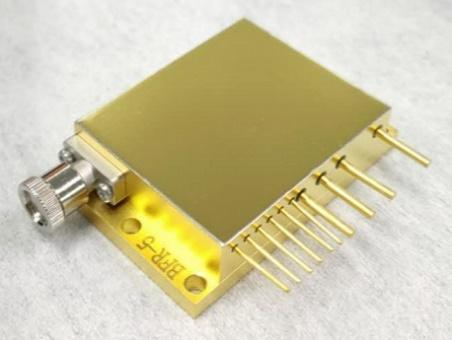 Fibre-coding semiconductor lasers FH-2212-CA
Fiber Optics
Haucore
Fibre-coding semiconductor lasers FH-2212-CA
Fiber Optics
Haucore
Electricity conversion efficiency: 24%
Wavelength/ Wavelength 650 & 450 & 980 nm; Fibre power/ Outlook Power 0.5 & 4 & 8W; fibre core/ Fiber Core 200 m; fibre-optic numerical aperture/ Fiber NA 0.22
-
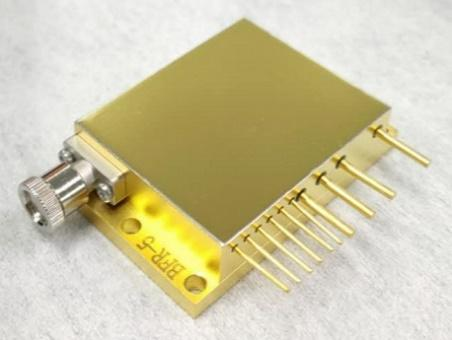 Fibre-coding semiconductor lasers FH-3229-CA
Fiber Optics
Haucore
Fibre-coding semiconductor lasers FH-3229-CA
Fiber Optics
Haucore
Electricity conversion efficiency: 19% (Symbol: WPE)
Wavelength/ Wavelength 650&808&915&980nm; Fibre power/output Power 0.3&9&10&10W; fibre core/Fiber Core 400mm; fibre numerical aperture/Fiber NA 0.22
-
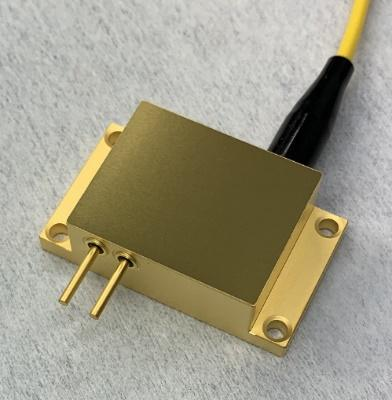 Fibre-coding semiconductor lasers FH-6102-S2
Fiber Optics
Haucore
Fibre-coding semiconductor lasers FH-6102-S2
Fiber Optics
Haucore
Central wavelength: 655 / 660 / 665 nm
Wavelength/ Wavelength 660 nm; Fibre power/ Outlook Power 2W; fibre core/ Fiber Core 105 m; fibre numerical aperture/ Fiber NA 0.22
-
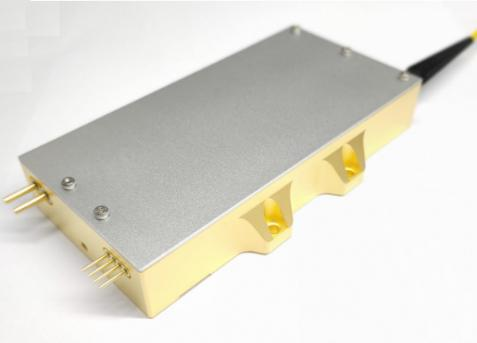 Fibre-coding semiconductor lasers FH-6115-SA
Fiber Optics
Haucore
Fibre-coding semiconductor lasers FH-6115-SA
Fiber Optics
Haucore
Wavelength/ Wavelength 660 nm; Fibre power/ Outlook Power 15W; fibre core/ Fiber Core 105 mm; fibre numerical aperture/ Fiber NA 0.2
Related Articles
As a professional manufacturer of precision optical thin-film components, sycco-optics (Shandong Yanggu Hengjing Optoelectronics) launches high-performance 850nm narrow band pass filters for near-infrared precision detection, intelligent sensing and optical imaging systems. Adopting advanced vacuum coating technology, the filter realizes high transmittance in the target band and deep blocking in interference bands. It effectively eliminates stray light and spectral noise, serving as a core optical component for machine vision, biochemical detection and photoelectric sensing equipment.
Wuhan Optics Valley Quantum Technology Co., Ltd. is a leading domestic developer of high‑speed semiconductor optical chips and photodetector components. Our product portfolio covers InGaAs avalanche photodiode bare dies and PIN photodetector chips designed for fiber‑optic communication
A microlens array (MLA) is a high-precision optical component composed of hundreds or thousands of tiny, uniformly arranged micro lenses on a single flat substrate. Unlike traditional single lenses that focus one light beam, a microlens array can split, homogenize, and reshape light on a micro scale. It is widely paired with VCSELs, lasers, and image sensors, becoming a core part of modern miniature optical systems.
Shandong Huaguang Optoelectronics Co., Ltd. (HAUCORE) is a leading high-tech manufacturer of compound semiconductor optoelectronic devices, founded in 1999 and headquartered in Jinan, China, with two R&D and production bases in Jinan and Weifang.
Loading...
Name
Phone
Organization
Use Case

Database Platform