
ZnSe zinc selenide
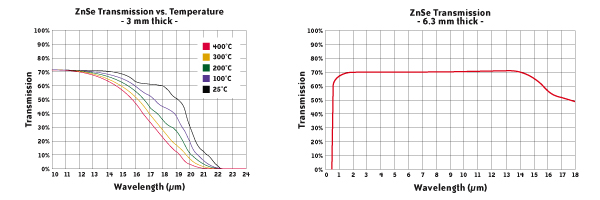
Zinc selenide material is a yellow transparent polycrystalline material with a crystal grain size of about 70μm and a transmission range of 0.5-15μm. Synthesized by chemical vapor deposition (CVD), it is basically free of impurity absorption with extremely low scattering loss. Because of its very low absorption of 10.6μm wavelength light, it has become the preferred material for making optical components in high-power CO2 laser systems. It is also a commonly used material in various optical systems throughout its entire transmission band. Zinc selenide material has a very high tolerance to thermal shock, making it the best optical material in high-power CO2 laser systems. Its hardness is only 2/3 of that of multispectral-grade ZnS; the material is relatively soft and prone to scratches, and its refractive index is relatively high, so a high-hardness anti-reflection coating must be applied to its surface for protection and to obtain higher transmittance. Within its commonly used spectral range, scattering is very low. When used in high-power laser devices, the bulk absorption and internal structural defects of the material must be strictly controlled, along with minimally damaging polishing technology and the highest optical quality coating processes. Zinc selenide material is used to make total reflection mirrors, semi-reflection mirrors, beam expanders, flat-field lenses, mid-infrared lenses, various plano-convex lenses on far-infrared 10.6Um/CO2 high- and low-power lasers, convex-concave meniscus cut lenses, gold-coated mirrors, circular polarizers, beam expanders, flat-field lenses, etc. It is widely used in laser, medical, astronomy and infrared night vision and other fields. Physical Properties Transmission Curve Product Forms ZnSe round rods/wafers/windows/lenses ZnSe evaporation deposition coating granules ZnSe large-size zinc selenide up to 250mm in diameter
 Save to Favorites
Overview
Specifications
| Parameter | Value |
|---|---|
| Structure | Cubic (zincblende) |
| Density | 5.264 g/ cm^3 |
| Hardness | 105 kg/ mm^2 |
| Flexural Strength(4pt bending) | 7500 psi |
| Young’s Modulus | 10.2 Mpsi |
| Poisson Ratio | 0.28 |
| Coefficient of thermal expansion | 7.1×10⁻⁶/K |
| Specific Heat | 0.339 J/gK |
| Thermal conductivity | 0.16 W/cmK |
| Eg at 295 K | 2.67 eV |
| Dielectric Constant | 8.976 |
| Max. Transmittance(λ=2.5-15 μm) | ≥70.5 % |
| Absorption Coefficient(λ=10.6 μm) | (1-2)×10-3 cm-1 (including 2 surfaces) |
| Damage threshold(λ=10.6 μm) | ≥100 kWt/cm2 |
| Thermo-Optic Coef.(dn/dT) | 6.1 ( λ=10.6 μm) |
| Refractive index(λ=10.6 μm) | 2.4 |
| Electrooptical coefficient r41(λ=10.6 μm) | 2.2×10⁻¹² m/V |
| γ-radiation tolerance dose | > 106 J/kg |
| Diameter | 1-50 mm |
| Thickness | 0.1-150 mm |
| Orientation | (110), (111) |
| Surface Quality | As-grown, as-cut, 80/50, 60/40, 40/20 per MIL-0-13830 |
| Purity | 99.99%, 99.999% |
| Particle size | 0.01- 10 mm |
Applications
Datasheet
Please provide your email to download the datasheet.
Invalid email format. Please try again.
Supplier Information
Related Products
-
 glass NS00
Optical Material
Gggxbl
glass NS00
Optical Material
Gggxbl
Guoguang: Material Data; Schott; Hoya; Russia; Other
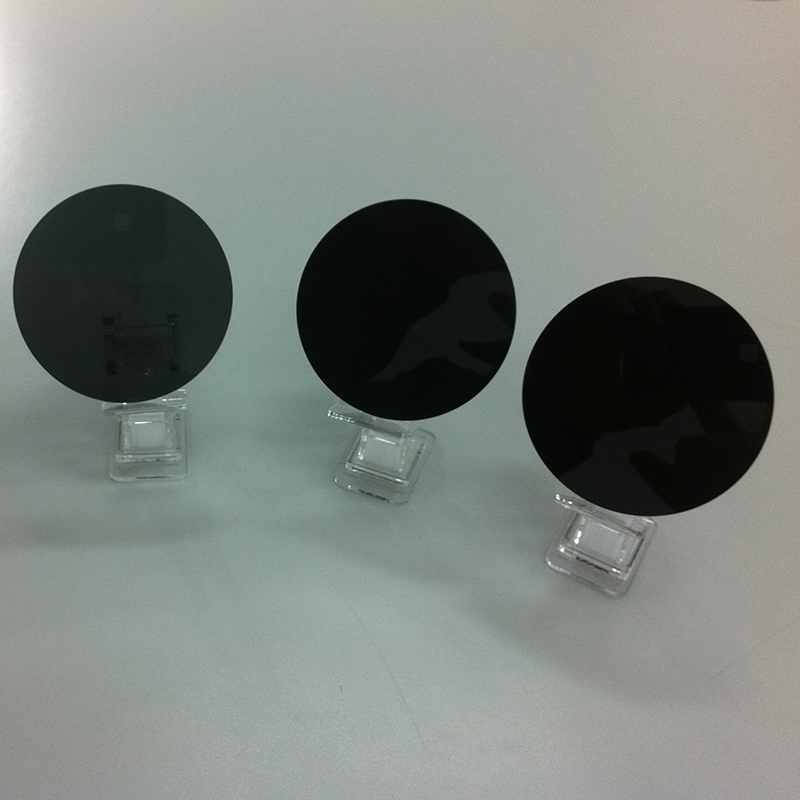
The main characteristic of the glass in this section is that the pass rate is not very different in the 400 nm-700 nm band;
-
 glass NS02
Optical Material
Gggxbl
glass NS02
Optical Material
Gggxbl
Guoguang: Material Data; Schott; Hoya; Russia; Other
The main characteristic of the glass in this section is that the pass rate is not very different in the 400 nm-700 nm band;
-
 glass NS2
Optical Material
Gggxbl
glass NS2
Optical Material
Gggxbl
Guoguang: Material Data; Schott; Hoya; Russia; Other
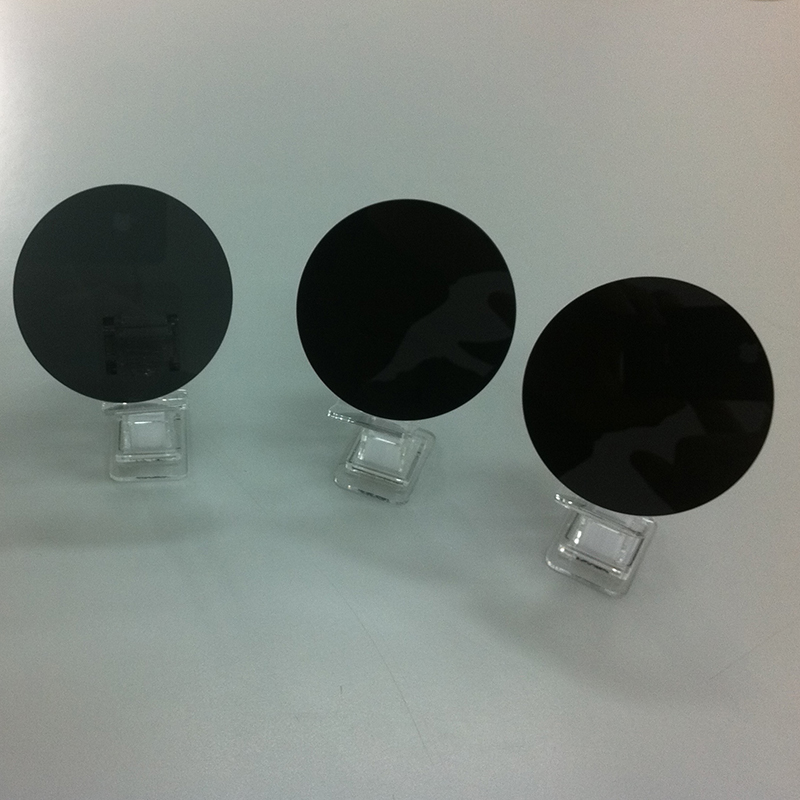
The main characteristic of the glass in this section is that the pass rate is not very different in the 400 nm-700 nm band;
-
 glass NS5
Optical Material
Gggxbl
glass NS5
Optical Material
Gggxbl
Guoguang: Material Data; Schott; Hoya; Russia; Other
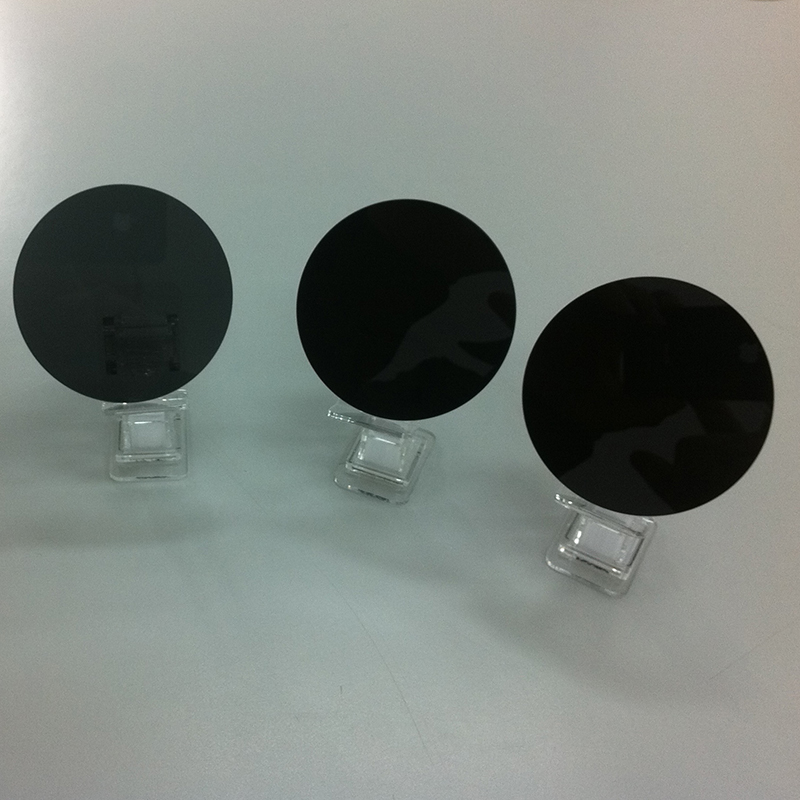
The main characteristic of the glass in this section is that the pass rate is not very different in the 400 nm-700 nm band;
-
 glass / glass
Optical Material
Smart-crystal
glass / glass
Optical Material
Smart-crystal
Crystal Ji (Shanghai) Optical Instrument Equipment Ltd.
Related Articles
As a top‑tier supplier of tunable laser chips, Shandong Zhongxin Optoelectronics Technology Company has newly launched the world’s first budget‑friendly fiber‑Bragg‑grating (FBG) demodulator and scanning module.
Within cutting‑edge ultrafast photonics research, asynchronous optical sampling (ASOPS) and synchronous sampling serve as fundamental technologies for terahertz excitation detection, coherent Raman imaging and other time‑resolved spectroscopy experiments.
Semiconductor laser diodes are essential light sources for industrial sensing, LiDAR and laser printing. Many engineers waste time picking mismatched models. We summarize 4 simple selection standards, plus a mature industrial product: HGLD-790TO5.6-ZSP-10mW from HAUCORE.
Raybowlaser, a professional manufacturer of high-power laser chips, has officially launched its upgraded new-generation 1470nm high-performance laser chip. Achieving groundbreaking progress in rated output power and wall-plug efficiency (WPE), this innovative laser chip delivers superior and reliable core light source solutions for medical cosmetology, industrial processing, agricultural applications and scientific research equipment.
Loading...
Name
Phone
Organization
Use Case

Database Platform