OLCR-1000 Low-Coherence Interferometer: A Trusted Solution for Precision Optical Inspection
Published: 2026-08-10 13:19:18 Views: 69
Driven by the continuous pursuit of higher precision and efficiency in optical communication and optoelectronic device manufacturing, OLCR-1000 Low-Coherence Interferometer, independently developed by Wuhan Guanggu Interconnect Technology Co., Ltd., provides an innovative technical solution for distributed return loss testing of optical fibers and optoelectronic devices.

Key Applications
Benefiting from superior spatial resolution and wide-range return loss measurement capability, the OLCR-1000 can effectively detect tiny fiber cracks and hidden defects during the production of optical jumpers and optical cables. It ensures the long-term operational reliability of optical wiring components in optical communication networks.
For precise internal reflection measurement and positioning of optical devices and optical chips, the instrument delivers high-accuracy positional and intensity data even for complex internal structures. It provides critical technical support for R&D iteration and production quality control, enabling continuous performance improvement and quality upgrading of optoelectronic products.
Application Test Cases
Case 1: Return Loss Test of Optical Jumpers
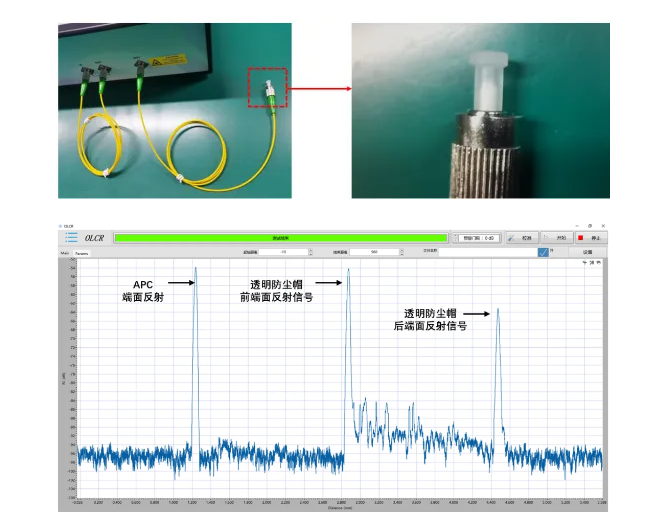
The OLCR-1000 accurately measures the return loss (RL) of FC/APC connectors at -54 dB. It simultaneously identifies and quantifies reflection signals from both front and rear end faces of the fiber dust cap, realizing multi-point synchronous high-precision detection.
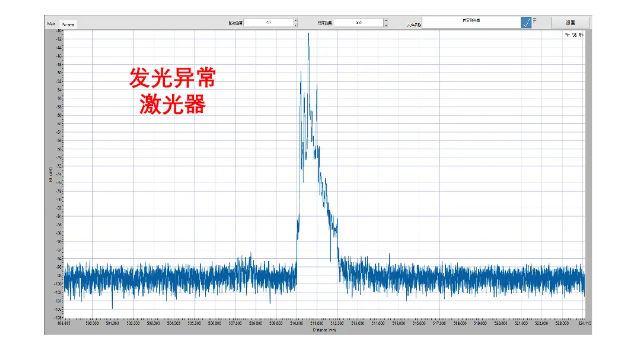
Case 2: ITLA Laser Testing
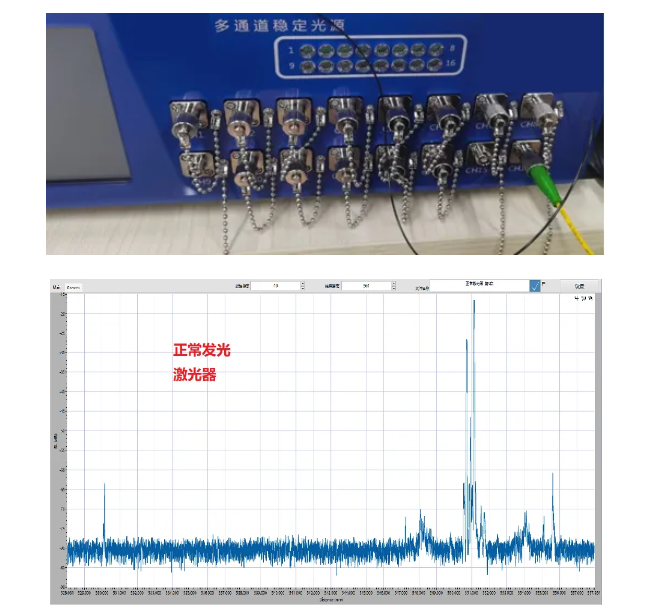
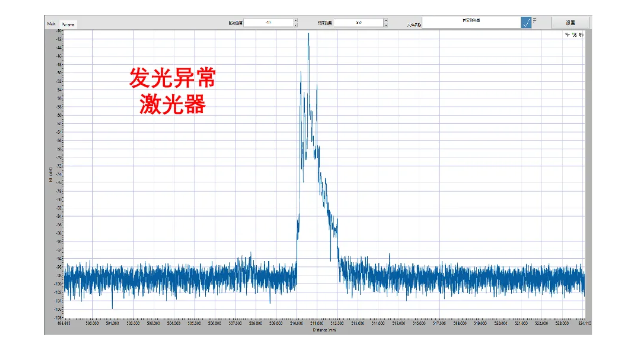
In laser performance evaluation, the internal reflection intensity of standard qualified ITLA lasers is measured at -16 dB, while abnormal lasers show a much lower reflection intensity of -40 dB. The distinct data difference effectively indicates offset deviation between the laser chip and coupled fiber, which accounts for abnormal optical coupling power.
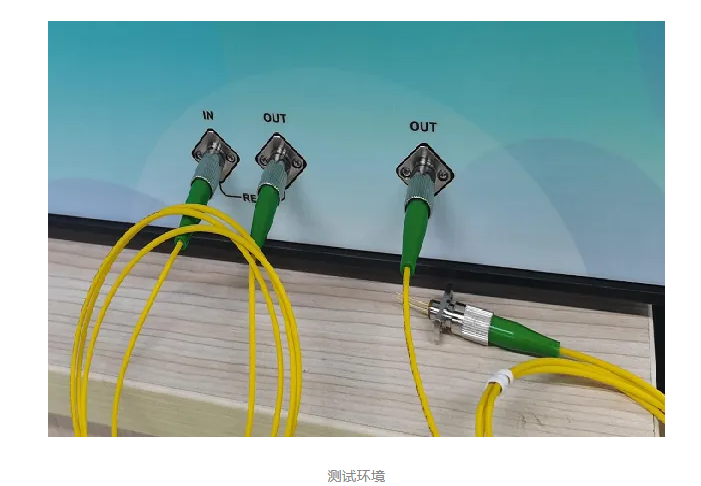
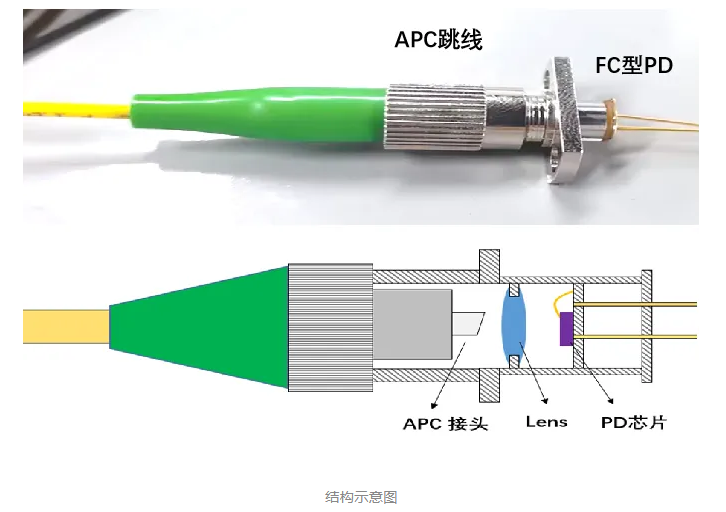
Case 3: Return Loss Test of Flanged PD Devices
The instrument precisely acquires the reflection intensity and position of each functional structure inside flanged photodetector (PD) devices. It provides reliable test data for product performance evaluation and process quality control, supporting refined quality management of optoelectronic components.

Performance Features
Equipped with second-level ultra-fast measurement capability, the OLCR-1000 outputs test results instantly, greatly improving the continuity and efficiency of batch detection procedures. Withmicron-level positioning accuracy, it accurately captures weak reflection events and subtle optical anomalies, providing reliable fundamental data for subsequent product analysis and optimization.
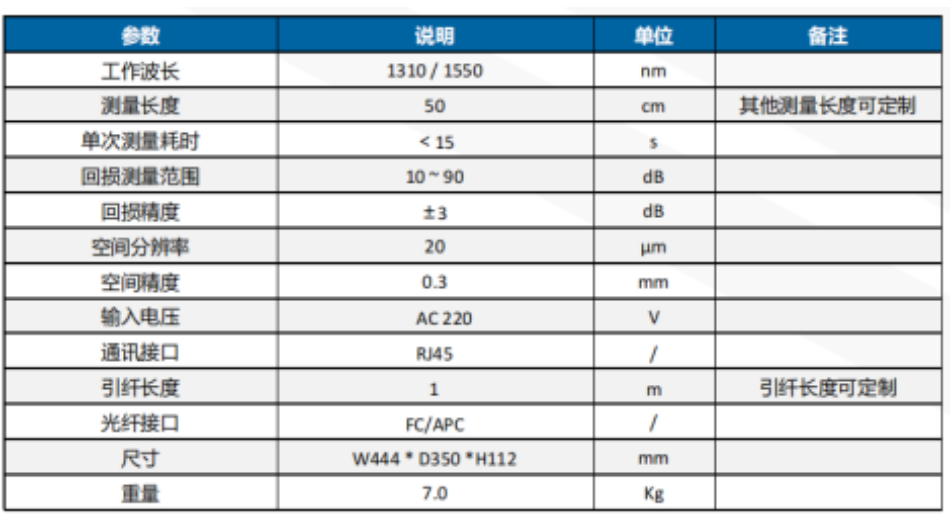
The device achieves highly repeatable return loss quantification for all reflection points, ensuring credible performance evaluation of optical components. Its standard sub-meter measurement range covers most conventional testing scenarios. Customized testing solutions are available for special-length and customized testing requirements, delivering outstanding flexibility and scenario adaptability.
Working Principle
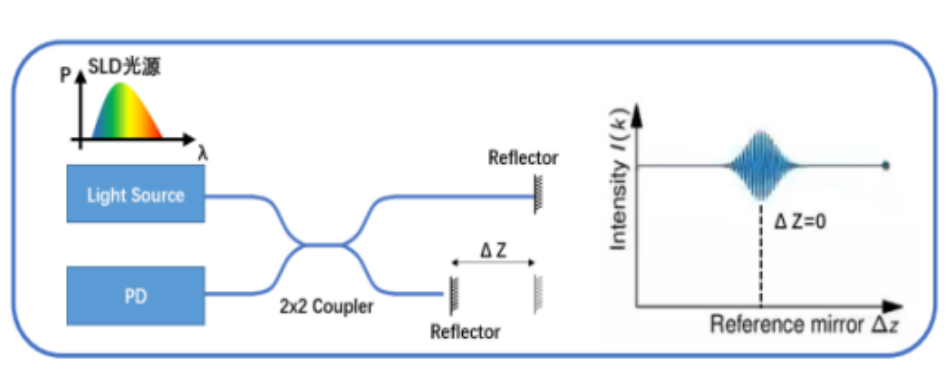
Based on white-light low-coherence interferometry, the OLCR-1000 constructs a high-precision distributed fiber return loss detection system. Compared with traditional optical frequency-domain reflectometers, it achieves better comprehensive performance in measurement accuracy, testing speed and cost control. It helps enterprises optimize inspection cost structures, improve production efficiency, and further enhance overall product quality and stability.
An ideal choice for fiber micro-crack inspection, internal reflection testing of optical devices and chips, and high-precision optical performance calibration, the OLCR-1000 delivers efficient, stable and reliable all-in-one optical detection solutions. We welcome in-depth consultations and cooperation to explore more innovative applications in the field of precision optical inspection.