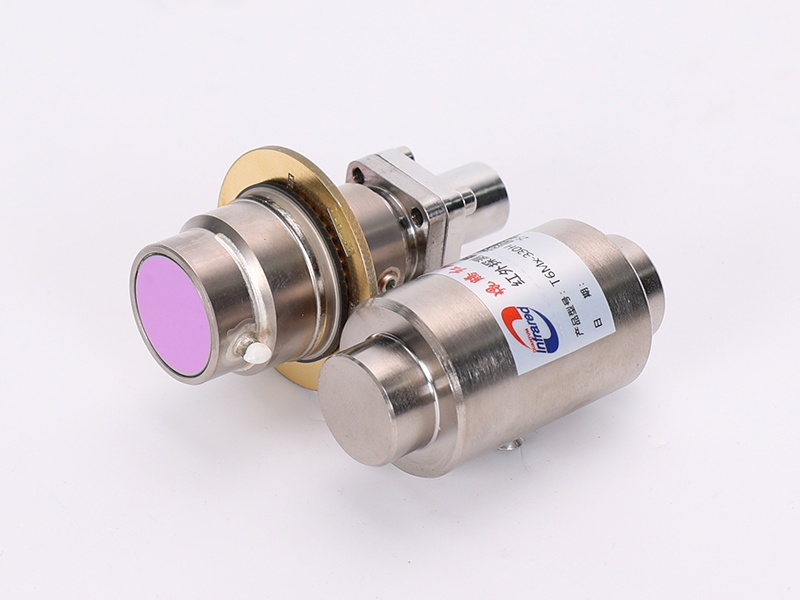
What Is a Pyroelectric Laser Detector? Working Principle & Key Applications of ELTEC 420M7
Published: 2026-08-05 14:51:31 Views: 57
1. Why Choose Pyroelectric Laser Detectors
For pulsed laser and full-spectrum optical testing, photodiodes and thermopiles have inherent drawbacks. Photodiodes show weak response in infrared band, while thermopiles feature slow response and cannot capture nanosecond narrow pulses.
Pyroelectric laser detectors adopt lithium tantalate crystal with pyroelectric effect. They only respond to variable light signals and filter out constant ambient thermal noise, operating stably at room temperature without cooling. The spectral coverage ranges from 0.1 μm to 1000 μm, covering UV, visible, infrared and millimeter wave, with both ultra-fast response and high optical damage threshold.
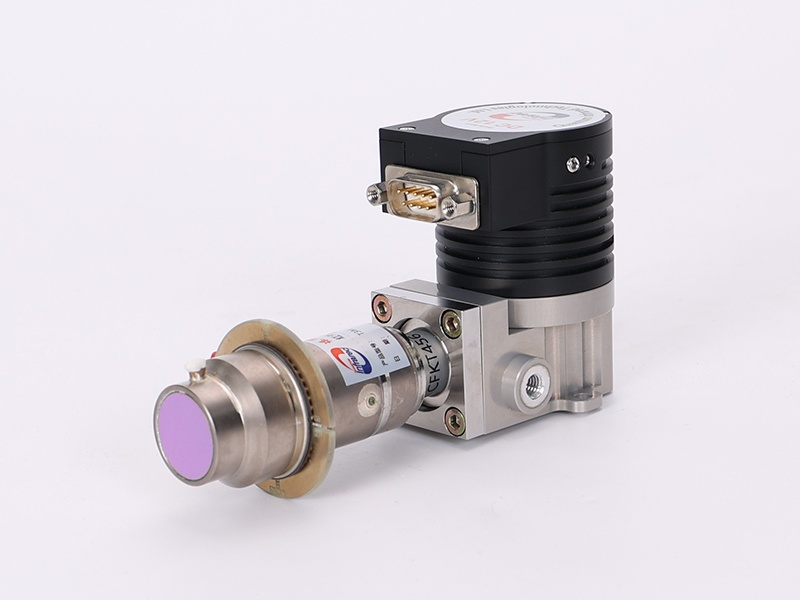
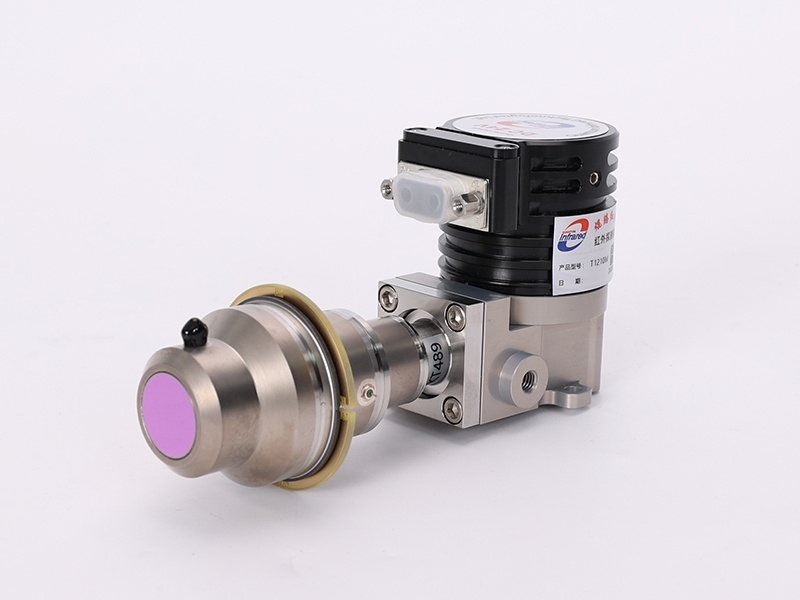
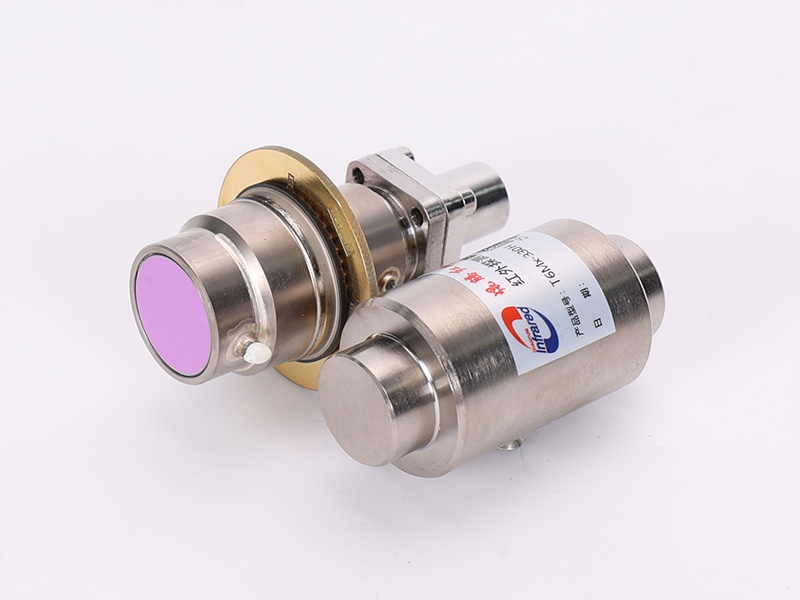
As a standard benchmark product, ELTEC Model 420M7 adopts hermetic TO-5 metal housing and exclusive heat dissipation structure, perfectly matching research and industrial laser monitoring, becoming the top choice for pulsed laser parameter measurement.
2. Working Principle of Pyroelectric Laser Detectors
Lithium tantalate single crystal serves as the core sensitive element, and the detection process includes three steps:
- Light-to-heat conversion: Incident laser irradiates the crystal wafer, converts optical energy into heat and creates instantaneous temperature change;
- Charge induction: Lithium tantalate has stable spontaneous polarization. Temperature variation changes polarization intensity and induces surface charge proportional to heating rate;
- Signal output: Supporting circuits read induced charge in two operating modes:
- Voltage Mode: Matched with JFET circuit and 50Ω load resistor, achieving 5 ns nanosecond pulse acquisition;
- Integration Mode: Paired with op-amp or ELTEC Model 320 Impedance Converter for high-precision measurement of ultra-low laser energy.
3. Core Product Highlights of ELTEC 420M7
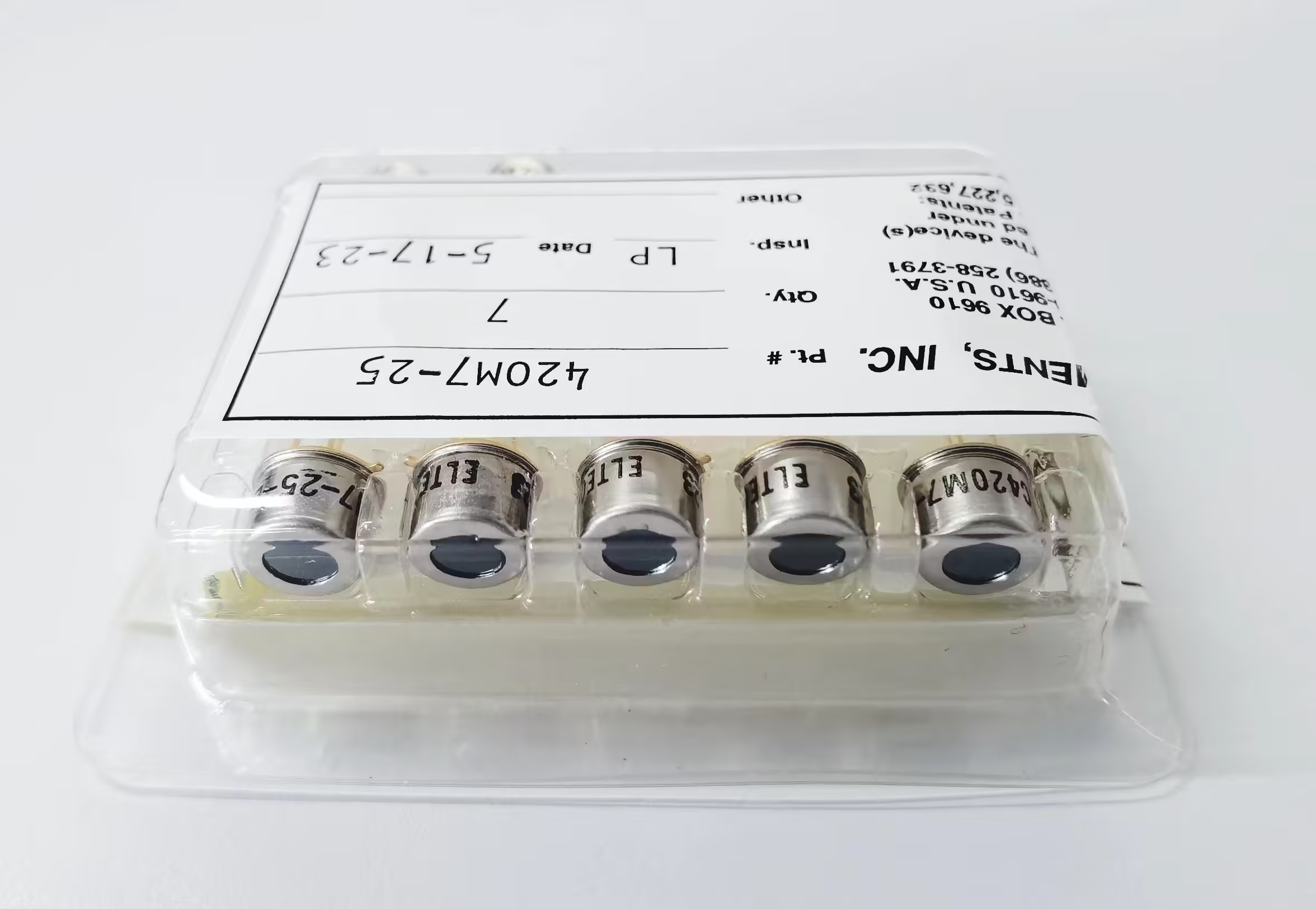
- Broad spectral range: 0.1–1000 μm response, optional optical filters for monochromatic, tunable and multi-laser systems;
- High power resistance: Proprietary heat sink mounting design, maximum incident power up to 5 W/cm² to avoid optical damage;
- Ultra-fast response: Typical electrical time constant of 5 ns for accurate narrow pulse waveform reconstruction;
- Wide temperature stability: Functional operating temperature from -55 ℃ to +125 ℃, Curie temperature up to 610 ℃ without thermal drift;
- Standard packaging: Hermetic TO-5 metal housing with clear pin layout, dual voltage/current circuit schemes for easy equipment integration;
- High-sensitivity chip: 4.5×4.5 mm square active aperture, minimum responsivity of 0.25 μA/W, high element impedance for weak signal detection.
4. Key Product Applications
- Academic Laser Labs: Laser pulse profile mapping, single-shot energy measurement, tunable laser calibration, multi-beam laser system testing;
- Industrial In-line Laser Monitoring: Integrated with beam splitter in laser cutting, marking and micro-processing equipment to track real-time power and improve production yield;
- Deep UV Laser Inspection: Calibration of deep UV pulsed lasers and lithography light sources, covering blind spectral zone of silicon photodiodes;
- Millimeter-Wave & Terahertz Research: Energy detection of millimeter-wave radiators and characterization of broadband radiation sources;
- Metrology & Calibration Institutes: Core sensing component for optical standard meters and laser calibration instruments.