What Is the MicroLight SLD Laser? Working Principle and Key Applications Keywords
Published: 2026-08-07 15:25:05 Views: 45
1. Why Choose MicroLight SLD Lasers
Conventional semiconductor lasers feature extremely narrow‑band spectrum and high optical coherence. When deployed for interferometric measurement and medical imaging devices, they tend to produce speckle noise and unwanted interference fringes. Ordinary LED sources suffer from limited output power and large beam divergence angle, creating heavy fiber‑coupling loss and preventing stable operation of high‑precision optoelectronic equipment.
As premium broadband light sources situated between traditional LEDs and laser diodes, MicroLight superluminescent‑diode (SLD) products combine broad spectral bandwidth, sufficient optical output power and low‑coherence performance.
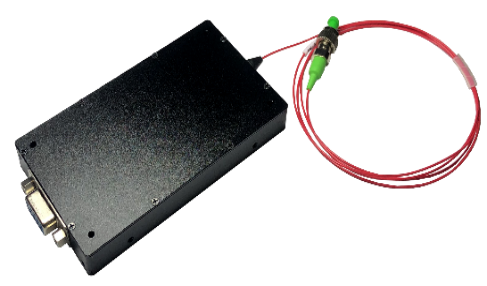
The brand‑complete product portfolio covers four mainstream near‑infrared wavelengths: 840nm, 1064nm, 1310nm and 1550nm. Product categories contain TO60‑8pin all‑in‑one modules and bare butterfly‑packaged 8‑pin &14‑pin chips. Multiple power grades (1.5 mW, 5 mW, 10 mW, 25 mW) are available. Every unit is equipped with a PD power‑monitor photodetector and built‑in TEC thermoelectric cooler. The spectral ripple is strictly kept within 0.3dB. MicroLight SLDs serve as dedicated broadband light sources for fiber‑optic gyroscopes, OCT scanners, passive optical‑component testing gear and industrial non‑destructive inspection instruments.
2. Working Principle of MicroLight SLD Lasers
MicroLight superluminescent diodes operate via single‑pass superradiance amplification on the semiconductor PN‑junction, without laser‑resonator oscillation:
- Carrier injection and spontaneous‑emission generation
After forward driving current flows into the chip, electrons and holes recombine inside the active layer and release spontaneous‑emission photons of the target central wavelength. - Single‑pass optical gain amplification in the waveguide
Photons propagate through the built‑in optical waveguide and acquire continuous light gain. No complete end‑face resonant‑feedback structure is constructed inside the SLD chip to trigger laser oscillation. - Broad‑spectrum beam emission
Broadband amplified light exits the chip facet. The −3dB spectral width reaches ≥45 nm for the 840 nm variant, 22 nm for 1064 nm models and 40 nm for 1310 nm &1550 nm series. - Constant‑temperature control and closed‑loop power monitoring
The integrated TEC stabilizes chip operating temperature to avoid wavelength drift caused by ambient‑temperature fluctuation. The PD photodetector feeds back real‑time light‑intensity data, supporting closed‑loop power regulation from the drive circuit.
3. Core Advantages of MicroLight SLD Series
- Comprehensive wavelength lineup
MicroLight supplies 840 nm, 1064 nm, 1310 nm and 1550 nm options, covering near‑infrared inspection and telecommunication bands for industrial, medical and sensor‑based projects. - Multiple adjustable power tiers
Output power selections (1.5 mW, 5 mW, 10 mW, 25 mW) satisfy low‑level fiber sensing and high‑brightness optical‑imaging requirements. - Excellent flat‑spectrum characteristic
All‑model spectral ripple stays at 0.3dB. Smooth spectral curves greatly cut interference fringe distortion and speckle noise, delivering stable measuring and imaging performance. - Two mature packaging solutions
TO60‑8pin integrated modules arrive fully‑assembled for quick deployment. Custom‑development‑oriented bare‑chip components adopt 8‑pin and 14‑pin butterfly packages for repackaging. - Standard built‑in PD and TEC accessories
Every SLD laser is fitted with a power‑monitor photodiode and thermoelectric cooling component, enabling constant‑temperature operation and real‑time output‑power management. - Ultra‑wide −3dB spectral bandwidth
The 840 nm version achieves ≥45 nm spectrum width. Communication‑band variants support up to 40 nm bandwidth, well‑suited for white‑light interferometry and fiber‑optic sensors. - Low‑coherence design suppresses speckle artifacts, delivers uniform imaging and high repeatability for interferometric tests.
4. Primary Application Fields
- Medical optoelectronic inspection hardware: Optical Coherence Tomography (OCT) scanners, fundus diagnostic devices and skin endoscope illumination sources;
- Inertial fiber‑optic sensing: Fiber‑optic gyroscopes, fiber hydrophones and diverse fiber interferometer sensors;
- Laboratory testing for optical‑passive‑components: Spectrum inspection equipment for fiber couplers and optical filters;
- Industrial non‑destructive testing: Fiber interferometers, polarization testers and workpiece‑defect scanning light sources;
- University‑based scientific research: White‑light interferometers, spectrum analysis and fiber‑optics experimental platforms;
- Precision optical meters, automotive infrared sensors and distributed fiber temperature‑monitoring systems.