VCSEL Chips & Infrared Thermal Imaging: Core Perception Technologies for Smart VehiclesVCSEL

Published: 2026-08-13 15:43:07 Views: 24

Driven by the rapid upgrading of intelligent vehicles, optoelectronic sensing technologies represented by laser sensing and infrared thermal imaging have become core pillars for high-level autonomous driving and smart cockpit iteration. Leveraging automotive-grade optoelectronic R&D advantages, Pilot Technology Group launches the VITAL intelligent vehicle solution. By integrating high-power VCSEL laser chips and vehicle infrared night-vision thermal imagers, the system comprehensively enhances vehicle environmental perception and realizes safer, smarter and more comfortable driving experiences.

1. Automotive-Grade High-Power Pulsed VCSEL Chips

As the core light source component of modern 3D sensing systems, VCSEL (Vertical-Cavity Surface-Emitting Laser) features superior beam uniformity, high-power output and cost-efficiency, leading the large-scale commercial innovation of 3D imaging technology. With continuous technological optimization, high-power VCSEL chips have been widely adopted in consumer electronics, including smartphone proximity sensing, 3D facial recognition, AR/VR posture detection and intelligent gesture interaction systems.

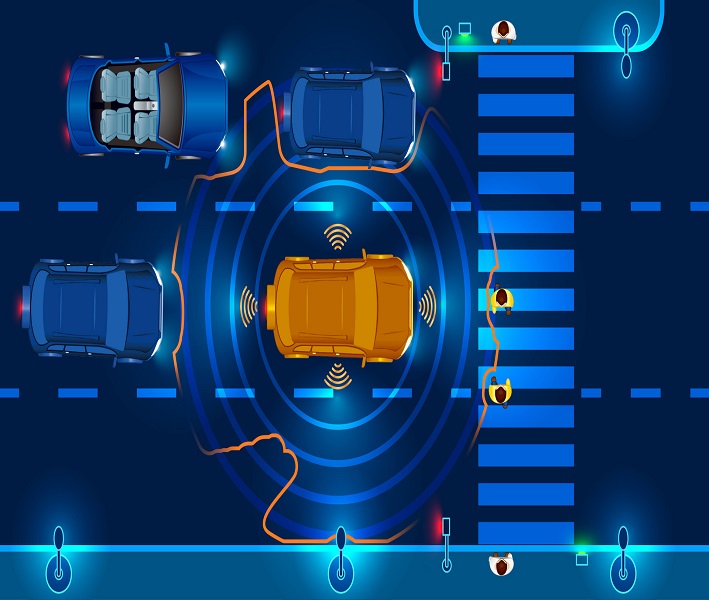
In intelligent automotive applications, automotive-grade pulsed VCSEL chips realize full-dimensional in-cabin and outdoor perception. Inside the vehicle, VCSEL-based 3D sensing enables driver monitoring and smart cockpit gesture interaction. For exterior ADAS scenarios, VCSEL light sources cooperate with LiDAR systems to accurately detect pedestrians, non-motor vehicles and road obstacles, pre-judge potential collision risks, and greatly improve the environmental adaptability of autonomous driving systems.
ImageDescription

2. Vehicle-Mounted Infrared Night-Vision Thermal Imagers

A single LiDAR solution cannot fully adapt to complex all-weather road conditions, making infrared thermal imagers an indispensable supplement to intelligent vision systems. Based on thermal radiation imaging principles, infrared imaging is completely unaffected by total darkness, heavy rain, dense fog, sandstorms and high glare from oncoming vehicles.

By capturing real-time thermal signatures of road targets, vehicle thermal imagers accurately identify hidden hazards such as pedestrians and road barriers under low-visibility conditions. They effectively compensate for the blind spots of traditional visible-light cameras, expand the all-weather perception boundary of intelligent vehicles, and provide reliable early warning data for active safety and auxiliary driving systems.

ImageDescription

3. Integrated Optoelectronic Perception Solution for Intelligent Vehicles

The VITAL intelligent vehicle solution integrates VCSEL 3D laser sensing and infrared thermal imaging technology to build a dual-redundancy perception system with precise laser ranging and all-weather infrared imaging. It upgrades intelligent cockpit interaction while filling the perception gaps of autonomous driving in extreme scenarios. As a leading next-generation automotive optoelectronic solution, it empowers automotive manufacturers to achieve comprehensive upgrades in vehicle safety, intelligence and riding comfort.

Related Products

Image Name Category Manufacturer Parameters Description
  • Non-Contact Type Laser-to-Fiber Coupler - Adapter Interface Fiber Optic Couplers Non-Contact Type Laser-to-Fiber Coupler - Adapter Interface Fiber Optic Couplers Shconnet

    In non-contact laser-to-fiber couplers, there is a certain air gap between the fiber and the coupling lens. This design is very flexible, allowing the use of various types of lenses with various focal lengths. The distance between the fiber and the lens in this coupler can be adjusted to compensate for small changes in laser wavelength. In high-power multimode fiber coupling systems, the distance between the fiber and the lens can be adjusted for defocusing to avoid fiber damage.

  • Non-Contact Type Laser-to-Fiber Coupler - Adapter Interface Fiber Optic Couplers Non-Contact Type Laser-to-Fiber Coupler - Adapter Interface Fiber Optic Couplers Shconnet

    In non-contact laser-to-fiber couplers, there is a certain air gap between the fiber and the coupling lens. This design is very flexible, allowing the use of various types of lenses with various focal lengths. The distance between the fiber and the lens in this coupler can be adjusted to compensate for small changes in laser wavelength. In high-power multimode fiber coupling systems, the distance between the fiber and the lens can be adjusted for defocusing to avoid fiber damage.

  • Non-Contact Type Laser-to-Fiber Coupler - Adapter Interface Fiber Optic Couplers Non-Contact Type Laser-to-Fiber Coupler - Adapter Interface Fiber Optic Couplers Shconnet

    In non-contact laser-to-fiber couplers, there is a certain air gap between the fiber and the coupling lens. This design is very flexible, allowing the use of various types of lenses with various focal lengths. The distance between the fiber and the lens in this coupler can be adjusted to compensate for small changes in laser wavelength. In high-power multimode fiber coupling systems, the distance between the fiber and the lens can be adjusted for defocusing to avoid fiber damage.

  • Non-Contact Type Laser-to-Fiber Coupler - Adapter Interface Fiber Optic Couplers Non-Contact Type Laser-to-Fiber Coupler - Adapter Interface Fiber Optic Couplers Shconnet

    In non-contact laser-to-fiber couplers, there is a certain air gap between the fiber and the coupling lens. This design is very flexible, allowing the use of various types of lenses with various focal lengths. The distance between the fiber and the lens in this coupler can be adjusted to compensate for small changes in laser wavelength. In high-power multimode fiber coupling systems, the distance between the fiber and the lens can be adjusted for defocusing to avoid fiber damage.

  • Non-Contact Type Laser-to-Fiber Coupler - Adapter Interface Fiber Optic Couplers Non-Contact Type Laser-to-Fiber Coupler - Adapter Interface Fiber Optic Couplers Shconnet

    In non-contact laser-to-fiber couplers, there is a certain air gap between the fiber and the coupling lens. This design is very flexible, allowing the use of various types of lenses with various focal lengths. The distance between the fiber and the lens in this coupler can be adjusted to compensate for small changes in laser wavelength. In high-power multimode fiber coupling systems, the distance between the fiber and the lens can be adjusted for defocusing to avoid fiber damage.

Contact Us

Loading...

A global database of 100,000 photonics products helps match you with the right product.

  • Expert Selection
  • Verified Suppliers
  • Quality Assured
AI Parametric Selection
Smart Match · Precise Recs
Enter Specifications
AI Smart Matching
Get Best Matches
Skip Manual Comparison
Find Best Solutions Fast
Select Now →