

Near-Infrared Spectrometer Fiber SMA-NIR-02
The source describes near-infrared spectroscopy (NIR) as analyzing molecular vibrational and rotational processes in the approximately 700-2500 nm region. It is widely used in chemistry, biology, pharmacy, food, and other fields. NIR spectrometer fibers are specialized transmitting fibers designed for this band. They connect source, sample, and detector: source light reaches the sample through fiber and, after interaction, returns to the detector. Besides guiding light in microscopes and other optics, fibers enable flexible paths, remote transmission, and multichannel NIR detection. Materials such as specially designed quartz must transmit NIR while providing sufficient strength/flexibility. Optimized interfaces improve delivery and collection at sample contact points. Transmission losses and environmental effects must be considered for accurate, repeatable spectra. The source reiterates that fibers carry light and connect source, sample, and detector. Specific roles: high flexibility permits analysis in compact or hard-to-access spaces that challenge conventional beam paths; low-loss long-distance transmission enables remote online/real-time monitoring, including outside laboratories; multichannel collection from multiple samples/points reduces experiment time and improves efficiency for complex analysis platforms; easy integration into portable, laboratory, and industrial spectrometers enables custom solutions; in some circumstances fibers reduce environmental dependence by isolating disturbances such as vibration or temperature fluctuations. Overall, fibers provide efficient transmission and make spectrometers more flexible, practical, and easily integrated. Selection considerations for NIR spectrometer fibers: fiber type—choose single-mode (SMF) or multimode (MMF) according to application/distance; the source recommends single mode for long distances and multimode for short distances. Wavelength—cover approximately 700-2500 nm; quartz and low-OH quartz are described as having good transmission over this range. Core diameter—common multimode sizes include 50μm, 100μm, 200μm, and 400μm. Smaller cores offer higher spatial resolution; larger cores collect more signal. NA—higher light-acceptance angles increase collection; common values are 0.22 and 0.37, selected to the application. Outer diameter/jacket—choose for environment and handling; the source lists polyurethane, spiral stainless-steel armor, and 'juya'anqing' (source material term), considering abrasion, heat, and chemical resistance. Insertion loss—the source defines it as optical attenuation during fiber transmission; lower values mean higher efficiency, so review loss specifications carefully. Connectors—match spectrometer/equipment interfaces, such as FC, SC, ST, or SMA. Temperature—ensure stable operation over the required application range.
 Save to Favorites
Overview
Specifications
| Parameter | Value |
|---|---|
| Optical fiber material | Infrared silica fiber |
| Connector Type | SMA905/FC/custom |
| Fiber core count | Multicore |
| Operating Temperature | -55~ +85 ℃ |
| Numerical Aperture | 0.22 |
| Wavelength Range | 400-2500 nm |
| Structure type | Customized on request (one input and one output, one input and two outputs) |
| Ferrule material | Stainless steel/ceramic |
| Fiber Type | Step-index type |
| Optical fiber specification | Customer specified (50-1000μm) |
| Length | Customer specified |
| Protective tube diameter | Customer specified |
| Protective tube type | Customer specified |
| Coating material | Acrylic resin |
| Single-filament transmission efficiency | ≥85% |
| Bundle transmission efficiency | ≥65% |
| Output Type | Customer specified (circular|rectangular|linear) |
| Clear Aperture Dimension | Customer specified |
| RoHS report | Compliant with standards |
| REACH report | Compliant with standards |
Datasheet
Please provide your email to download the datasheet.
Invalid email format. Please try again.
Supplier Information
Related Products
-
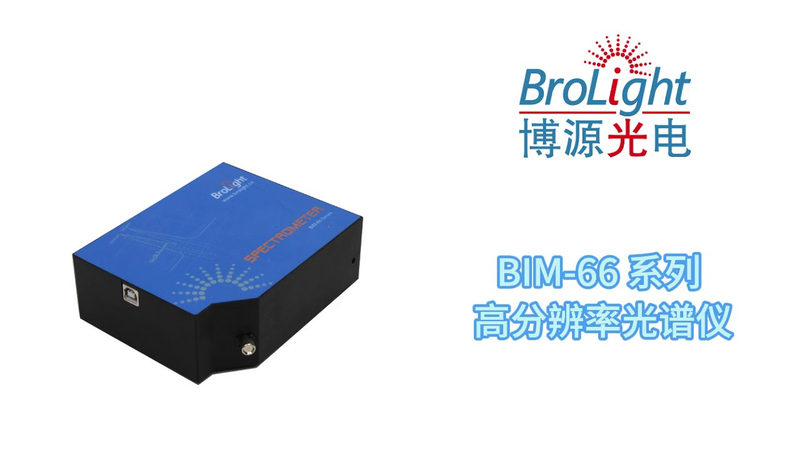 BIM-6602A series high-resolution spectrometers UV-NIR BIM-6602A-15
Spectrometers
Brolight
Fiber Connectors [BIM-6602A: Parameter Specifications]: SMA905 Detector [BIM-6602A: Parameter Specifications]: Hamamatsu S11639, Line-Array CMOS Detector Pixel [BIM-6602A: Parameter Specifications]: 2048 Pixels, Each Pixel 14μm×200μm
The BIM-6602A series spectrometer uses a high-resolution optomechanical structure in a compact, portable design, with resolution as fine as 0.08 nm. Interchangeable gratings adjust optical resolution and spectral range. Upgraded circuitry provides a 10000:1 dynamic range, minimum integration time of 0.5 milliseconds, and 600:1 signal-to-noise ratio for weak-signal detection. RS232 communication and improved interference resistance make it ideal for industrial and scientific applications.
-
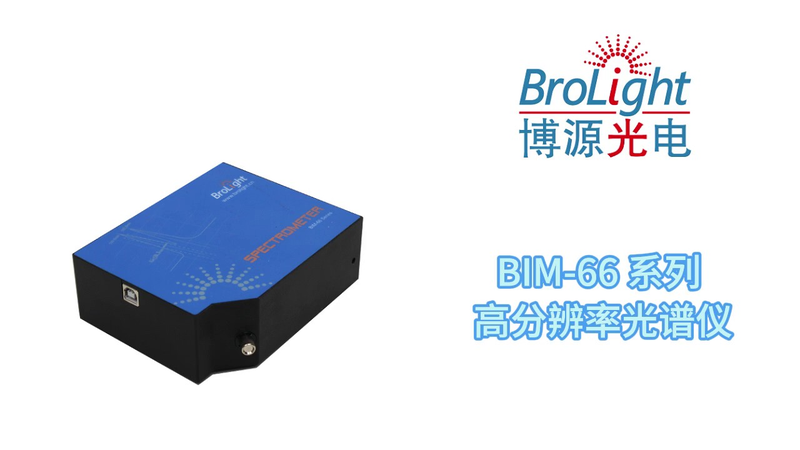 BIM-6602A series high-resolution spectrometers UV-NIR BIM-6602A-16
Spectrometers
Brolight
Fiber Connectors [BIM-6602A: Parameter Specifications]: SMA905 Detector [BIM-6602A: Parameter Specifications]: Hamamatsu S11639, Line-Array CMOS Detector Pixel [BIM-6602A: Parameter Specifications]: 2048 Pixels, Each Pixel 14μm×200μm
The BIM-6602A series spectrometer uses a high-resolution optomechanical structure in a compact, portable design, with resolution as fine as 0.08 nm. Interchangeable gratings adjust optical resolution and spectral range. Upgraded circuitry provides a 10000:1 dynamic range, minimum integration time of 0.5 milliseconds, and 600:1 signal-to-noise ratio for weak-signal detection. RS232 communication and improved interference resistance make it ideal for industrial and scientific applications.
-
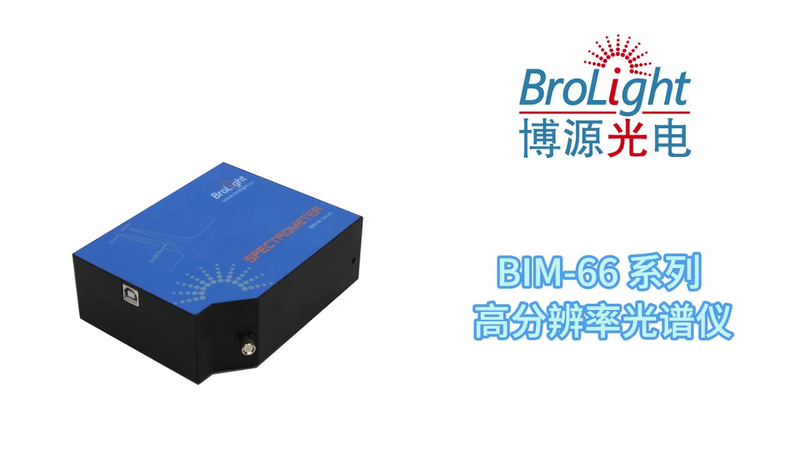 BIM-6602A series high-resolution spectrometers UV-NIR BIM-6602A-17
Spectrometers
Brolight
Fiber Connectors [BIM-6602A: Parameter Specifications]: SMA905 Detector [BIM-6602A: Parameter Specifications]: Hamamatsu S11639, Line-Array CMOS Detector Pixel [BIM-6602A: Parameter Specifications]: 2048 Pixels, Each Pixel 14μm×200μm
The BIM-6602A series spectrometer uses a high-resolution optomechanical structure in a compact, portable design, with resolution as fine as 0.08 nm. Interchangeable gratings adjust optical resolution and spectral range. Upgraded circuitry provides a 10000:1 dynamic range, minimum integration time of 0.5 milliseconds, and 600:1 signal-to-noise ratio for weak-signal detection. RS232 communication and improved interference resistance make it ideal for industrial and scientific applications.
-
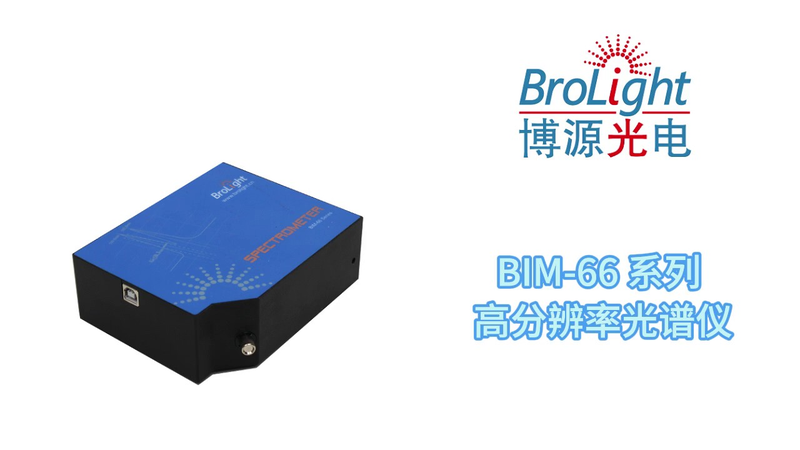 BIM-6602A series high-resolution spectrometers UV-NIR BIM-6602A-18
Spectrometers
Brolight
Fiber Connectors [BIM-6602A: Parameter Specifications]: SMA905 Detector [BIM-6602A: Parameter Specifications]: Hamamatsu S11639, Line-Array CMOS Detector Pixel [BIM-6602A: Parameter Specifications]: 2048 Pixels, Each Pixel 14μm×200μm
The BIM-6602A series spectrometer uses a high-resolution optomechanical structure in a compact, portable design, with resolution as fine as 0.08 nm. Interchangeable gratings adjust optical resolution and spectral range. Upgraded circuitry provides a 10000:1 dynamic range, minimum integration time of 0.5 milliseconds, and 600:1 signal-to-noise ratio for weak-signal detection. RS232 communication and improved interference resistance make it ideal for industrial and scientific applications.
-
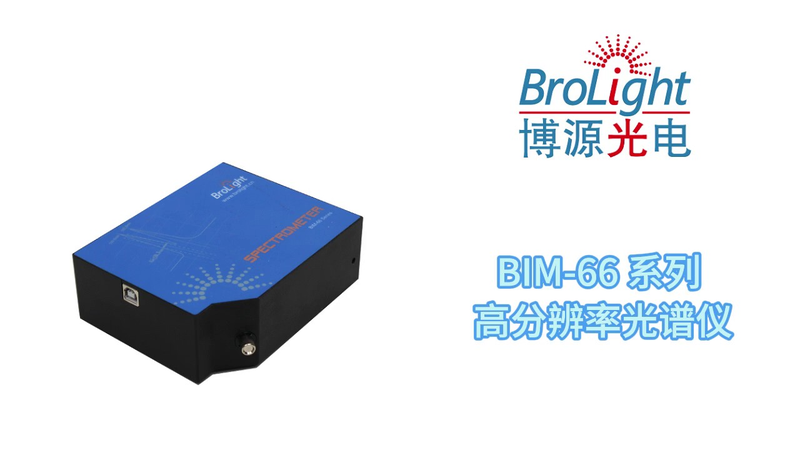 BIM-6602A series high-resolution spectrometers UV-NIR BIM-6602A-19
Spectrometers
Brolight
Fiber Connectors [BIM-6602A: Parameter Specifications]: SMA905 Detector [BIM-6602A: Parameter Specifications]: Hamamatsu S11639, Line-Array CMOS Detector Pixel [BIM-6602A: Parameter Specifications]: 2048 Pixels, Each Pixel 14μm×200μm
The BIM-6602A series spectrometer uses a high-resolution optomechanical structure in a compact, portable design, with resolution as fine as 0.08 nm. Interchangeable gratings adjust optical resolution and spectral range. Upgraded circuitry provides a 10000:1 dynamic range, minimum integration time of 0.5 milliseconds, and 600:1 signal-to-noise ratio for weak-signal detection. RS232 communication and improved interference resistance make it ideal for industrial and scientific applications.
Related Articles
The petrochemical industry features continuous high-risk production, where production equipment operates uninterruptedly under extreme working conditions including high temperature, high pressure, strong corrosion and oxidation.
Driven by the continuous pursuit of higher precision and efficiency in optical communication and optoelectronic device manufacturing, OLCR-1000 Low-Coherence Interferometer, independently developed by Wuhan Guanggu Interconnect Technology Co., Ltd., provides an innovative technical solution for distributed return loss testing of optical fibers and optoelectronic devices.
Driven by the rapid upgrading of intelligent vehicles, optoelectronic sensing technologies represented by laser sensing and infrared thermal imaging have become core pillars for high-level autonomous driving and smart cockpit iteration. Leveraging automotive-grade optoelectronic R&D advantages, Pilot Technology Group launches the VITAL intelligent vehicle solution. By integrating high-power VCSEL laser chips and vehicle infrared night-vision thermal imagers, the system comprehensively enhances vehicle environmental perception and realizes safer, smarter and more comfortable driving experiences.
Fiber lasers and fiber amplification systems require excitation sources with stable wavelength, narrow spectral linewidth and consistent output power.
Loading...
Name
Phone
Organization
Use Case

Database Platform