
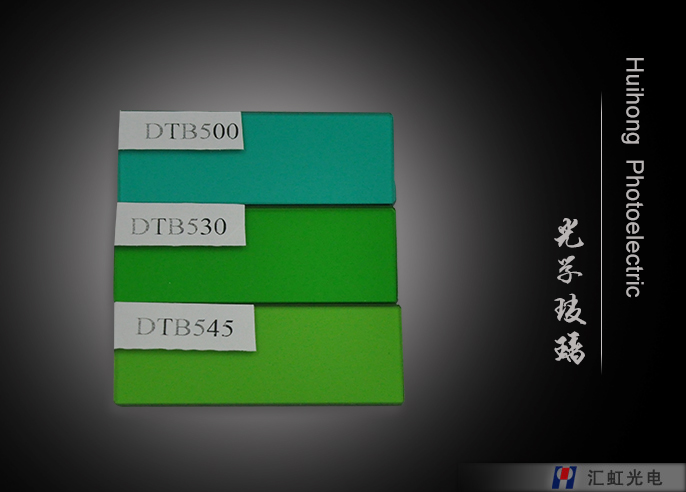
Bandpass Filter Glass DBT600
Bandpass filter glass, or bandpass glass, has a relatively narrow bandwidth and distinct short- and long-wavelength cutoffs, as shown in the figure. Its spectral properties are described by maximum transmittance (TM), its wavelength position (λM), short-wavelength cutoff, long-wavelength cutoff, and half-width. The source defines the half-width as the difference between wavelengths λ1 and λ2 at half the maximum transmittance, written as (λ1-λ1) nm. The short-wavelength cutoff is the wavelength on the short-wavelength side of the peak where transmittance is zero. The long-wavelength cutoff is the corresponding wavelength on the long-wavelength side. For some varieties whose long-wavelength transmittance does not reach zero, transmittance at a specified wavelength is used instead. Bandpass glass is named DTB in Chinese pinyin and numbered by the wavelength position of maximum transmittance.
 Save to Favorites
Overview
Specifications
| Parameter | Value |
|---|---|
| Thickness | 4 mm |
| Main Peak TM [Thickness 4mm; Separate Bandpass Table; TM Unit Not Specified in Source] | ≥36 |
| Peak Wavelength λM [Thickness 4mm; Separate Bandpass Table] | 600±2 nm |
| Short-Wavelength Cutoff Wavelength λ [Thickness 4mm; Separate Bandpass Table] | 470±5 nm |
| Long-Wavelength Cutoff T [Thickness 4mm; Separate Bandpass Table; T/λnm Numerator, T Unit Unspecified] | ≤1.0 |
| Long-Wavelength Cutoff Wavelength λ [Thickness 4mm; Separate Bandpass Table] | 800±5 nm |
| Half Bandwidth λ2-λ1 [Thickness 4mm; Separate Bandpass Table] | ≤95 nm |
Datasheet
Please provide your email to download the datasheet.
Invalid email format. Please try again.
Supplier Information
Related Products
-
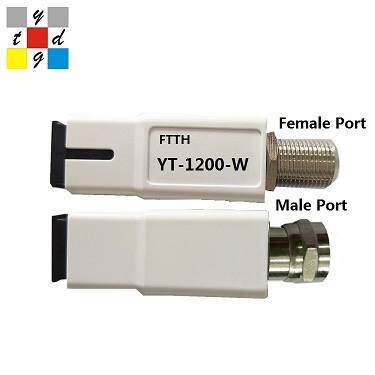 CATV FTTH Passive Optical node with Filter (1550nm)
Optical Filters
Ytdq
-
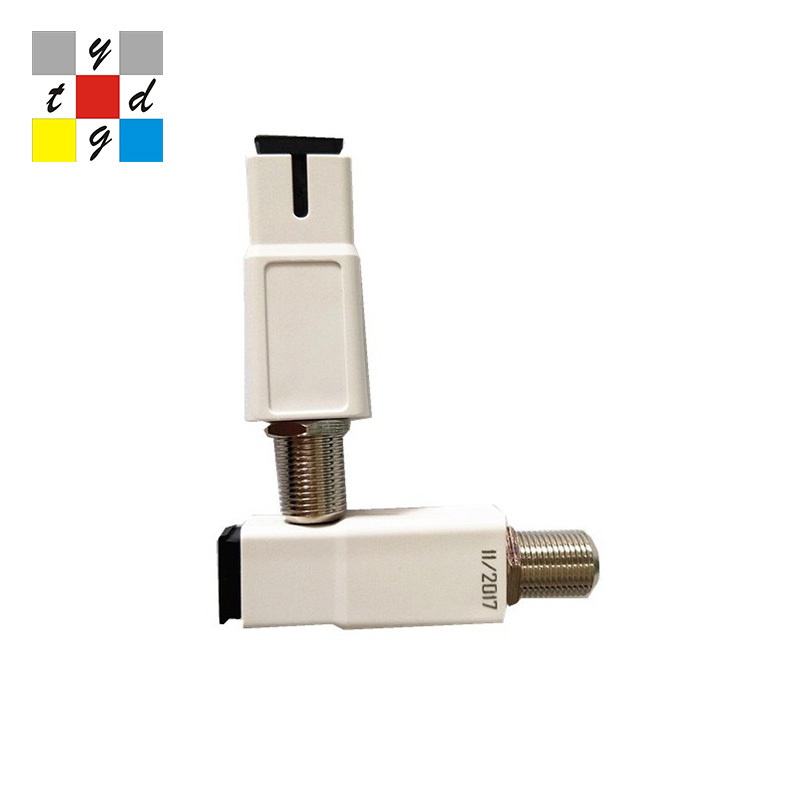 FTTH passive node with filter or without filter
Optical Filters
Ytdq
Optical parameters-Input optical power: -8~0 Optical parameters-Received light wavelength (with filter): 1550 (with filter) Optical parameters-Input optical interface: SC/APC
-
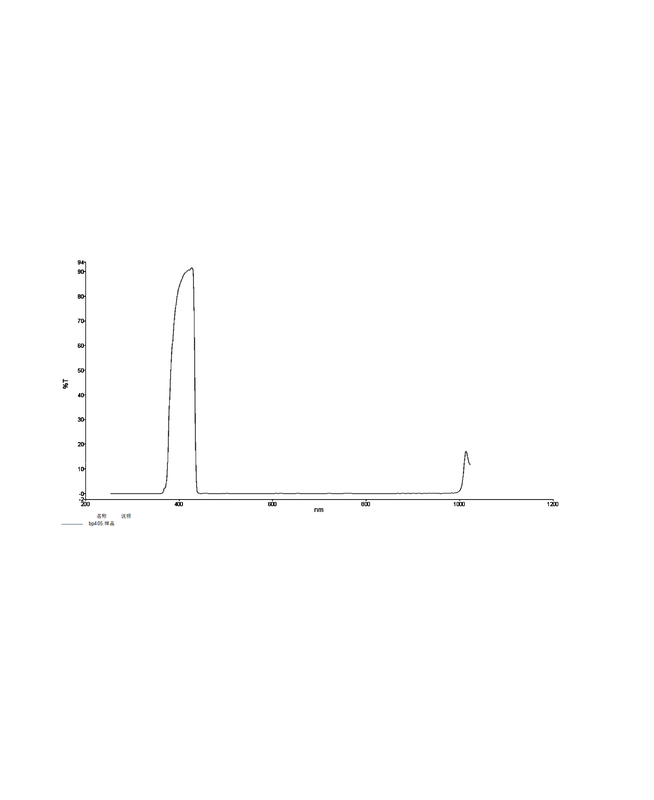 AZURE-BP405
Optical Filters
Azurephotonics
BP405 Transmission Data(Typical)-transmission [380nm]: 40.528018 % BP405 Transmission Data(Typical)-transmission [590nm]: 0.006293 % BP405 Transmission Data(Typical)-transmission [800nm]: 0.003187 %
-
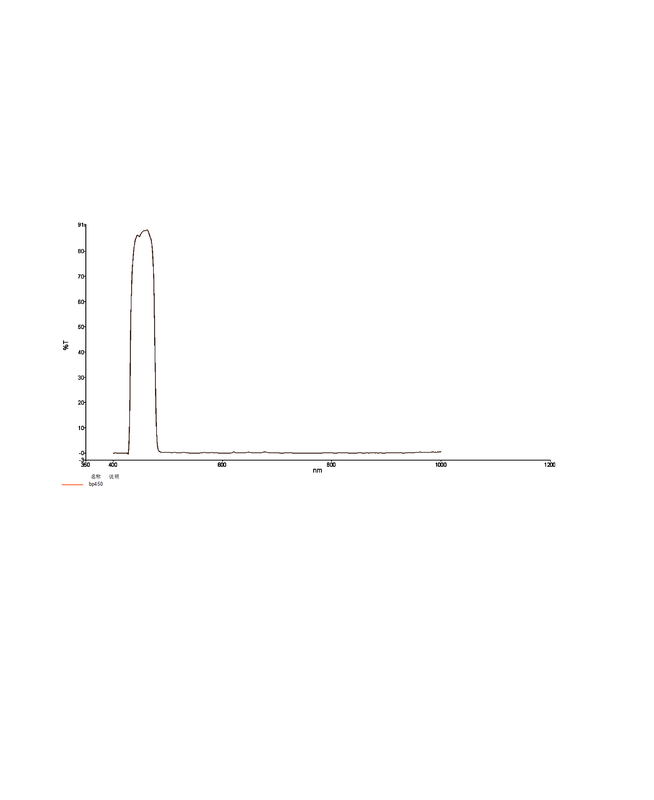 AZURE-BP450
Optical Filters
Azurephotonics
BP450 Transmission Data(Typical)-transmission [400nm]: 0.006605 % BP450 Transmission Data(Typical)-transmission [610nm]: 0.000929 % BP450 Transmission Data(Typical)-transmission [820nm]: 0.077472 %
-
 Filter film
Optical Filters
Bxoptic
Material [bandpass filters]: According to customers’ request Dimension Tolerance [bandpass filters]: ±0.01~±0.2 Chamfer [bandpass filters]: 0.5mm,45°
Related Articles
Against the evolving demands for military‑grade hardware, rail transit equipment and heavy‑duty machinery that run under high‑shock vibrating conditions, anti‑loose connectors serve as indispensable hardware for stable power delivery and high‑speed signal transmission.
A microlens array (MLA) is a high-precision optical component composed of hundreds or thousands of tiny, uniformly arranged micro lenses on a single flat substrate. Unlike traditional single lenses that focus one light beam, a microlens array can split, homogenize, and reshape light on a micro scale. It is widely paired with VCSELs, lasers, and image sensors, becoming a core part of modern miniature optical systems.
On January 21, 2026, SPIE Photonics West, one of the world’s leading photonics events, was held in San Francisco, USA. RaySea presented its latest self‑developed VCSEL achievements at this prestigious exhibition. Dr. Lai, the company’s senior R&D representative, delivered a technical speech during the dedicated VCSEL session. His presentation covered cutting‑edge progress of in‑house multi‑junction VCSEL solutions built for automotive lidar and embodied‑intelligence robots, drawing strong attention from the global photonics community.
Recently, the key laboratory of Functional Crystal Materials of Tianjin University has published a cutting-edge research paper titled Enhanced Second-Harmonic Generation in Quadratically Nonlinear Weyl Semimetal NbAs for Broadband Photodetection Applications on Advanced Science, a top-tier international academic journal.
Loading...
Name
Phone
Organization
Use Case

Database Platform