
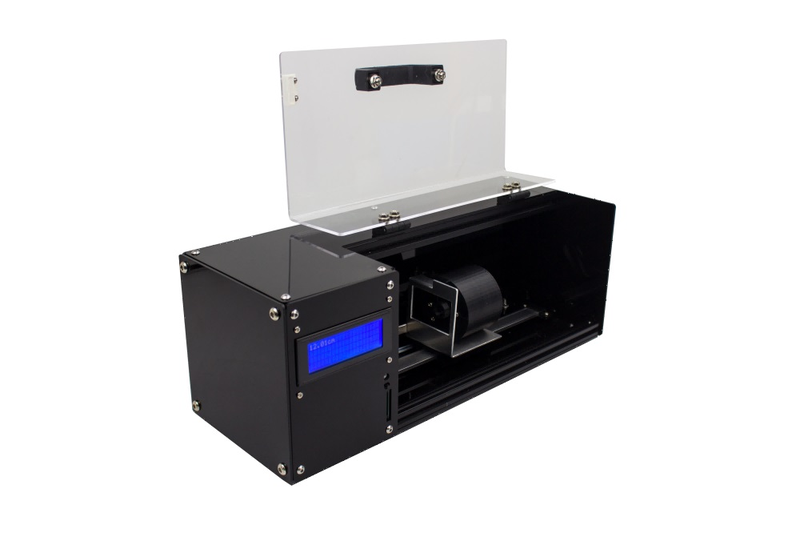
SEM-5704 simulated radiation experiment apparatus
The SEM-5704 simulated-radiation apparatus lets students observe results resembling nuclear-radiation phenomena without real nuclear sources or cumbersome radioactive-isotope handling, making it an ideal teaching aid. It simulates count-rate recording and background detection, inverse-square radiation intensity, isotope half-life decay, exponential attenuation through materials, random emissions and statistical distributions, and identification of unknown radiation-particle types. A large transparent window permits observation, source-detector distance is detected automatically, and data are recorded manually or automatically on an SD card.
 Save to Favorites
Overview
Specifications
| Parameter | Value |
|---|---|
| Simulated-radiation experimental apparatus main unit | 1) Audible effect emulating a Geiger-Muller counter. 2) Transparent hinged bottom cover for observation. |
| Absorption-sheet samples | Includes paper absorber, aluminum absorbers 0.08cm, 0.15cm, 0.25cm and 0.5cm, and lead absorber 0.5cm |
| Power cord - Length | 1.5meters |
Applications
Key Features
Datasheet
Please provide your email to download the datasheet.
Invalid email format. Please try again.
Supplier Information
Related Products
-
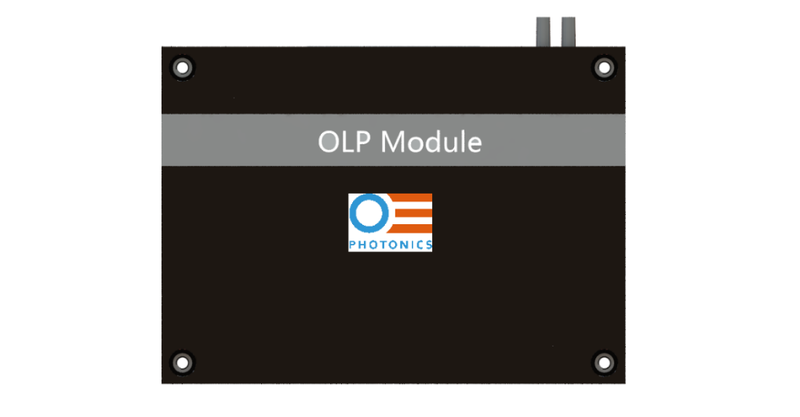 Customized OLP module
Research & Education
Oe-photonics
Wavelength Range: 1260~1650 nm Test Wavelength: 1310/1550 Switch Type: Latching/Non-Latching, 5V
OE photonics' OLP is a customer-specific module using optical switches, couplers, PDs, and related components for optical-path switching and monitoring. It is widely used in fronthaul and other optical networks.
-
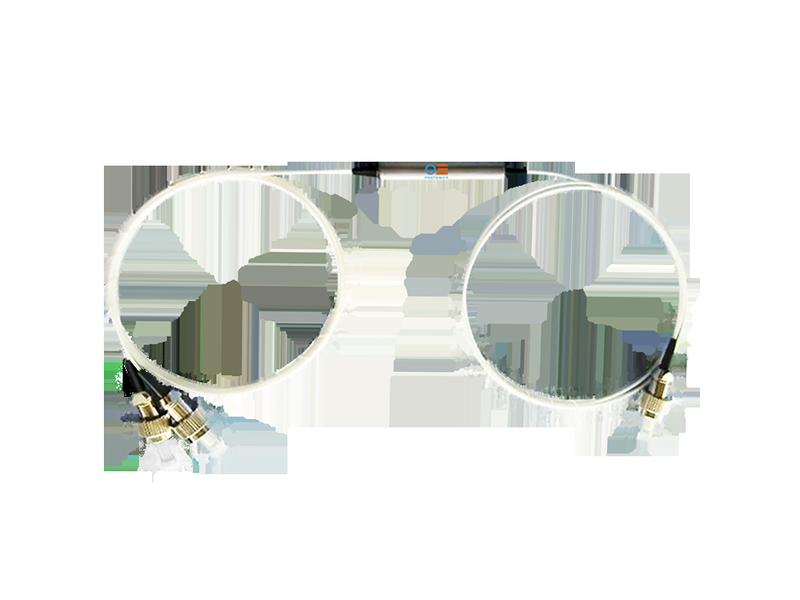 3-channel optical fiber circulator
Research & Education
Oe-photonics
Center Wavelength λc: 1310 or 1550 Wavelength Range: λc±20 Loss [λc at 23℃; IL excludes connectors]: ≤0.8 dB
OE Photonics' circulator uses the Faraday effect to transmit light in one direction while isolating reverse light. It is widely used in WDM and CATV systems.
-
 1x4/1x8 mechanical optical switch
Research & Education
Oe-photonics
Wavelength: 850±50/1310±50/1260~1650 Return Loss [MM]: ≥30 dB Return Loss [SM]: ≥50 dB
OE Photonics' mechanical 1x4 and 1x8 switches select channels between input and output light. Compact size, long life, and stable reliability suit optical-path protection, channel switching, and related optical networks.
-
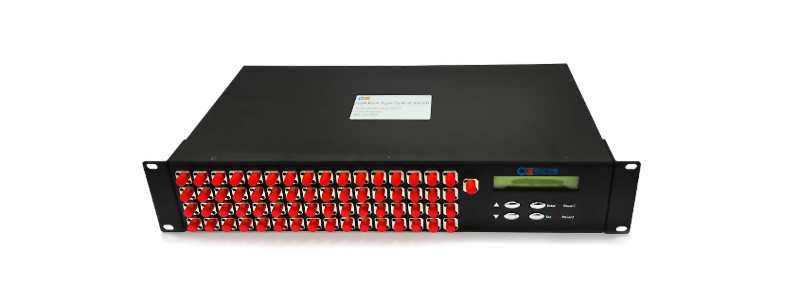 Optical switch test equipment
Research & Education
Oe-photonics
Polarization Dependent Loss PDL: ≤0.15 dB Wavelength Dependent Loss WDL [CWL±30nm,23℃]: ≤0.3 dB Temperature-Dependent Loss TDL: ≤0.3 dB
OE photonics' optical-switch tester changes channels through buttons or RS232 and is widely used in optical-communications manufacturing.
-
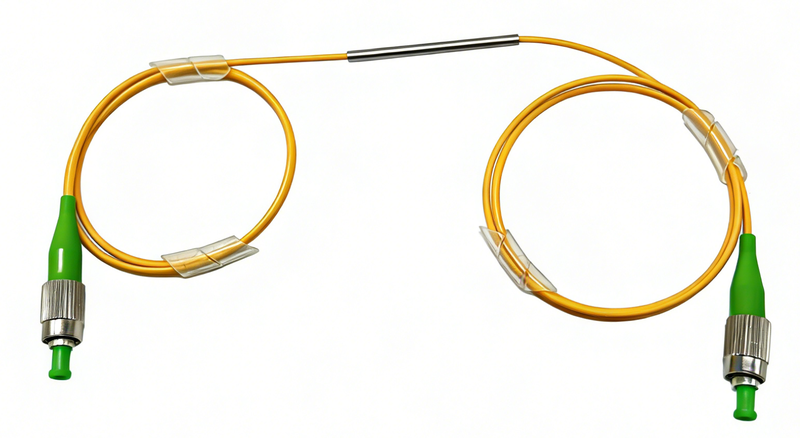 Mode-conversion patch cord
Research & Education
Oe-photonics
Mode field conversion: 9um to 6.5um Mode field conversion: 9um to 4.8um Mode field conversion: 9um to 4.0um
OE photonics' mode-field-conversion patch cord serves links between optical devices or between networks and devices requiring a mode-field change. After conversion and adjustment by equipment such as a power amplifier, the desired fiber mode field is obtained. It mainly converts between single-mode SM 9/125um and small mode fields of 6um, 4um, or 3um in patch-cord form. FC, SC, LC, and other connectors can be fitted to customer requirements.
Related Articles
The petrochemical industry features continuous high-risk production, where production equipment operates uninterruptedly under extreme working conditions including high temperature, high pressure, strong corrosion and oxidation.
Driven by the continuous pursuit of higher precision and efficiency in optical communication and optoelectronic device manufacturing, OLCR-1000 Low-Coherence Interferometer, independently developed by Wuhan Guanggu Interconnect Technology Co., Ltd., provides an innovative technical solution for distributed return loss testing of optical fibers and optoelectronic devices.
Driven by the rapid upgrading of intelligent vehicles, optoelectronic sensing technologies represented by laser sensing and infrared thermal imaging have become core pillars for high-level autonomous driving and smart cockpit iteration. Leveraging automotive-grade optoelectronic R&D advantages, Pilot Technology Group launches the VITAL intelligent vehicle solution. By integrating high-power VCSEL laser chips and vehicle infrared night-vision thermal imagers, the system comprehensively enhances vehicle environmental perception and realizes safer, smarter and more comfortable driving experiences.
Fiber lasers and fiber amplification systems require excitation sources with stable wavelength, narrow spectral linewidth and consistent output power.
Loading...
Name
Phone
Organization
Use Case

Database Platform