
PPKTP—Periodically Poled KTP Crystal
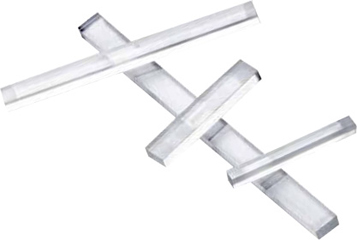
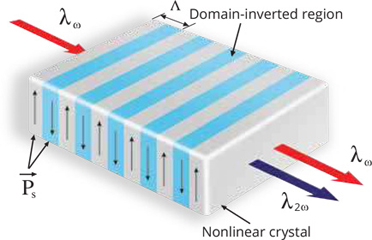
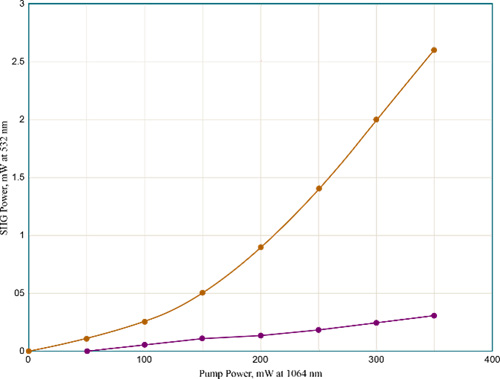
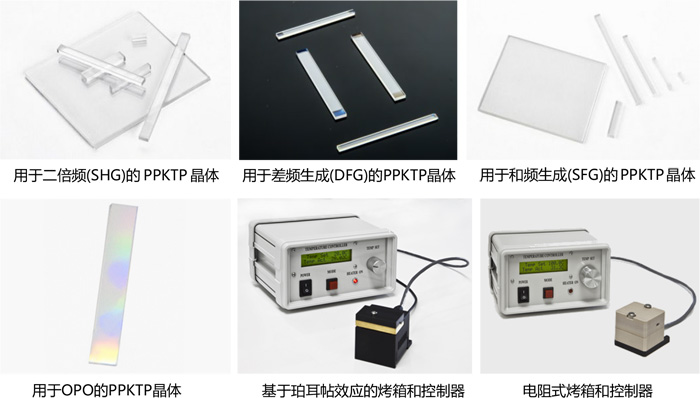
Wave propagation in periodic structures is a core concept in solid-state physics. Theory shows that reciprocal vectors corresponding to micrometer-scale modulation periods in dielectric crystals participate in classical-wave propagation and excitation, producing important optical and acoustic effects. Periodic changes in nonlinear susceptibility and quasi-phase matching enhance nonlinear processes. Periodically poled KTP, or PPKTP, is a distinctive QPM nonlinear material customizable for nonlinear applications throughout KTP's transparency range without the birefringent phase-matching constraints of conventional KTP. Its effective nonlinear coefficient is3 times that of conventional KTP. Conventional nonlinear KTP requires a single-domain structure; PPKTP has an artificially induced periodic domain structure. Poling periods range from a few to tens of micrometers, depending on application. Poling generally follows the direction of the largest nonlinear coefficient, whereas conventional crystal orientation is determined by phase-matching constraints. PPKTP combines a high permanent damage threshold, little photorefraction at room temperature, and a large nonlinear coefficient for efficient wavelength conversion. It is a core component in competitive short-wavelength sources. Birefringent matching has Poynting-vector walk-off that limits conversion efficiency; QPM avoids this, allowing noncritical matching throughout the crystal length without limiting interaction length and enabling harmonics across the transparency spectrum. High-voltage electric-field poling produces thicker PPKTP, and KTP's high damage threshold, low photorefraction, and room-temperature operation encourage parametric-oscillation research. Large-aperture PPKTP therefore enables high-power, high-repetition-rate, broadband tunable OPO conversion. Manufacture begins with microlithographic deposition of patterned electrodes on a single-domain KTP substrate. A precisely controlled electric field creates the required domain changes. Qualified poled crystals are cut to size, polished, and coated. The advanced process suits industrial mass production. Standard PPKTP SHG devices at1064nm and946nm and custom devices for other purposes are available. Temperature control is required in use. Custom apertures are available on request. Comparison of SHG efficiency with single-domain KTP:crystal length=10.0mm, laser pulse width=10ns. Mass-produced and customized PPKTP supports visible-to-mid-infrared SHG, DFG, SFG, and OPO at350-4000nm, with a standard1mm X2mm optical aperture.
 Save to Favorites
Overview
Specifications
| Parameter | Value |
|---|---|
| Transparency Range | 350-4000nm |
| Length | up to 30mm |
| Standard Aperture* | 1*2 |
| Operating Temperature | Near Room Temperature/On Request |
| Coating | Extracavity/Intracavity,AR/AR,AR/HR |
| Damage Threshold [Wavelength :1064 nm;10 ns Pulse] | 600MW/cm² at1064nm, Pulse Duration10ns |
Applications
Key Features
Datasheet
Please provide your email to download the datasheet.
Invalid email format. Please try again.
Supplier Information
Related Products
-
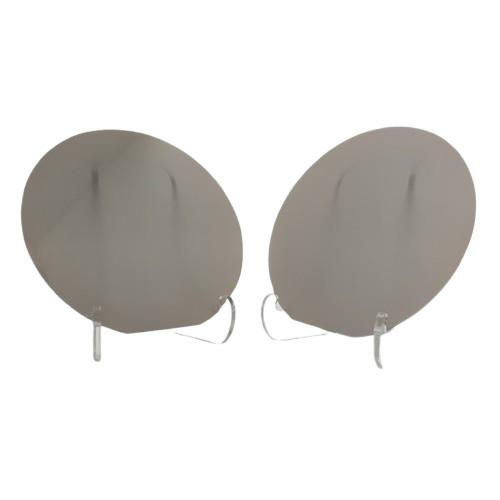 Lithium Tantalate Wafer LT
Optical Crystals
Jmwafer
Diameter [Lithium Tantalate Single-Crystal Substrate LiTaO3/LT (2~6 Inches)]: 2 inch - 50.8mm Diameter [Lithium Tantalate Single-Crystal Substrate LiTaO3/LT (2~6 Inches)]: 3 inch - 76.2mm Diameter [Lithium Tantalate Single-Crystal Substrate LiTaO3/LT (2~6 Inches)]: 4 inch - 100mm
LiTaO₃ Usually Colorless/Pale Yellow,Trigonal Distorted-Perovskite Structure,Excellent Electro-Optic,Piezoelectric/Pyroelectric Properties.
-
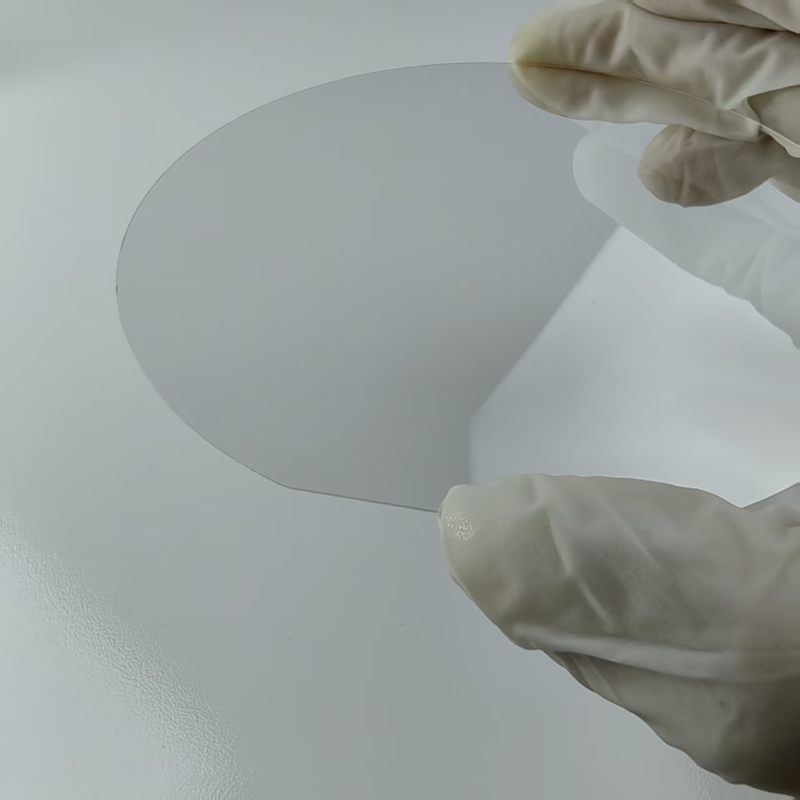 Lithium Niobate Wafer LN
Optical Crystals
Jmwafer
Diameter [Lithium Niobate Single-Crystal Substrate LiNbO3/LN (2~6 Inches)]: 2 inch - 50.8mm Diameter [Lithium Niobate Single-Crystal Substrate LiNbO3/LN (2~6 Inches)]: 3 inch - 76.2mm Diameter [Lithium Niobate Single-Crystal Substrate LiNbO3/LN (2~6 Inches)]: 4 inch - 100mm
LiNbO₃ Trigonal,Good Symmetry/Structural Stability,Piezoelectric,Ferroelectric,Photoelectric,Acousto-Optic/Nonlinear Properties,Curie up to1140℃,High Mechanical Quality/Chemical Stability.
-
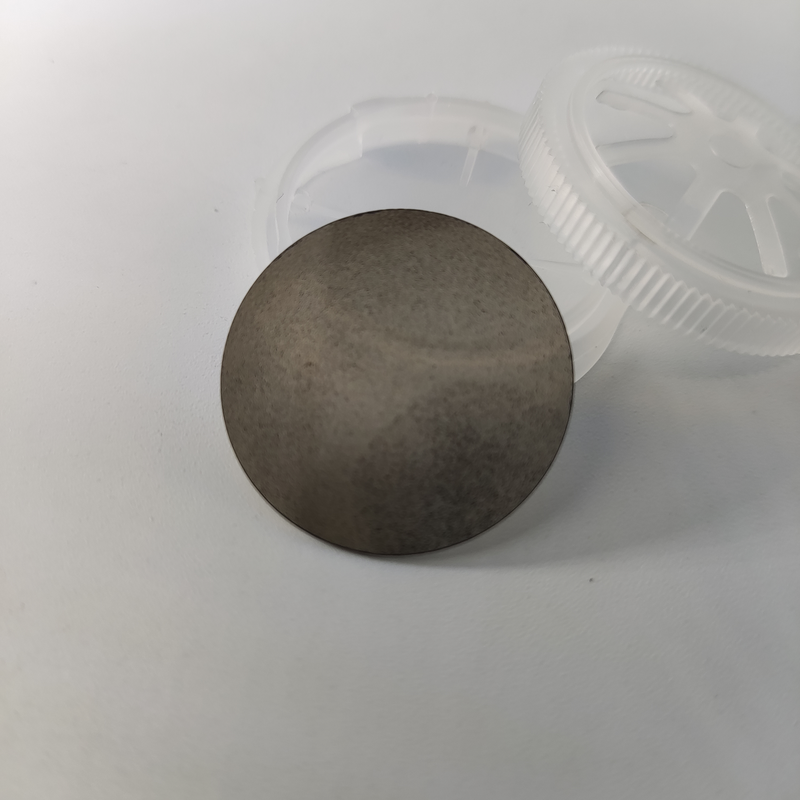 Polycrystalline Diamond
Optical Crystals
Jmwafer
Polycrystalline Diamond - Dimensions: 10 mm × 10 mm Polycrystalline Diamond - Dimensions: 1 inch - 25.4mm Polycrystalline Diamond - Dimensions: 2 inch - 50.8mm
Diamond:Tetrahedrally Packed Carbon,Extremely Hard,Excellent Thermal Conductivity/Broad Optical Transparency,Hardest Known Natural Material,Also Synthesized at High Pressure/Temperature.
-
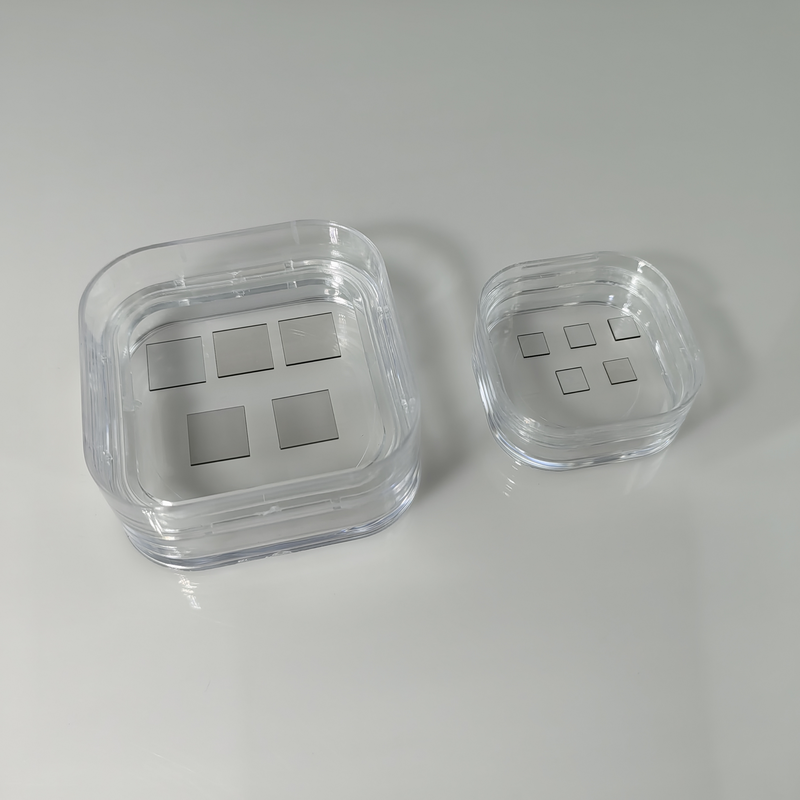 Single-Crystal Diamond
Optical Crystals
Jmwafer
Single-Crystal Diamond - Diameter: 5 mm × 5 mm Single-Crystal Diamond - Diameter: 10 mm × 10 mm Single-Crystal Diamond - Diameter: 20 mm × 20 mm
Diamond:Tetrahedrally Packed Carbon,Extremely Hard,Excellent Thermal Conductivity/Broad Optical Transparency,Hardest Known Natural Material,Also Synthesized at High Pressure/Temperature.
-
 Fluorophlogopite
Optical Crystals
Jmwafer
Fluoromica Substrate - Dimensions: 5 mm × 5 mm Fluoromica Substrate - Dimensions: 10 mm × 10 mm Fluoromica Substrate - Dimensions: 20 mm × 20 mm
Synthetic Fluorophlogopite Mica KMg3(AlSi3O10)F2,Melts1375℃/Long-Term up to1100℃,Colorless Transparent,Strong Acid-Alkali Inert,Stable/Pure/Complete Structure/Flat Cleavage,Easily Split Thin.
Related Articles
Driven by worldwide energy‑structure transformation, the lithium‑ion battery industry is expanding rapidly as green, high‑efficiency energy‑storage devices gain surging global market demand. With years‑long dedication to intelligent manufacturing, Han’s Laser Lithium‑battery Intelligent Equipment has accumulated solid R&D strength and rich practical experience. By integrating multiple cutting‑edge technologies, the company delivers high‑efficiency, eco‑friendly and sustainable lithium‑ion battery production lines, bringing revolutionary upgrades to the new‑energy battery sector.
A solid-state laser is one of the most common and reliable laser types used in modern industry, medical equipment, and scientific research. Unlike gas or fiber lasers, it uses solid materials as its gain medium to generate stable, high-brightness laser beams. Thanks to its high precision, long lifespan, and compact structure, solid-state lasers have become a mainstream solution for high-precision laser processing and optical systems.
FiDAR, the fiber‑optic radar vehicle positioning and tracking system developed by Jianhe Bafang, is a high‑sensitivity distributed fiber‑sensing solution designed for intelligent traffic road monitoring. It outputs real‑time spatial coordinates of every vehicle across the full road section around‑the‑clock, delivering a brand‑new sensing technology for vehicle‑road cooperation, smart highway construction and urban traffic management.
As a vital emerging sector of modern three-dimensional spatial economy, the low-altitude economy has become a new global growth driver. It covers a wide range of commercial scenarios, including UAV navigation and obstacle avoidance, precise airspace management, aerial mapping, low-altitude logistics distribution, security monitoring and emergency disaster rescue. Nevertheless, frequent extreme weather, complex terrain obstacles and increasingly dense low-altitude flight activities pose severe challenges to the safety and stability of low-altitude aircraft operations.
Loading...
Name
Phone
Organization
Use Case

Database Platform