
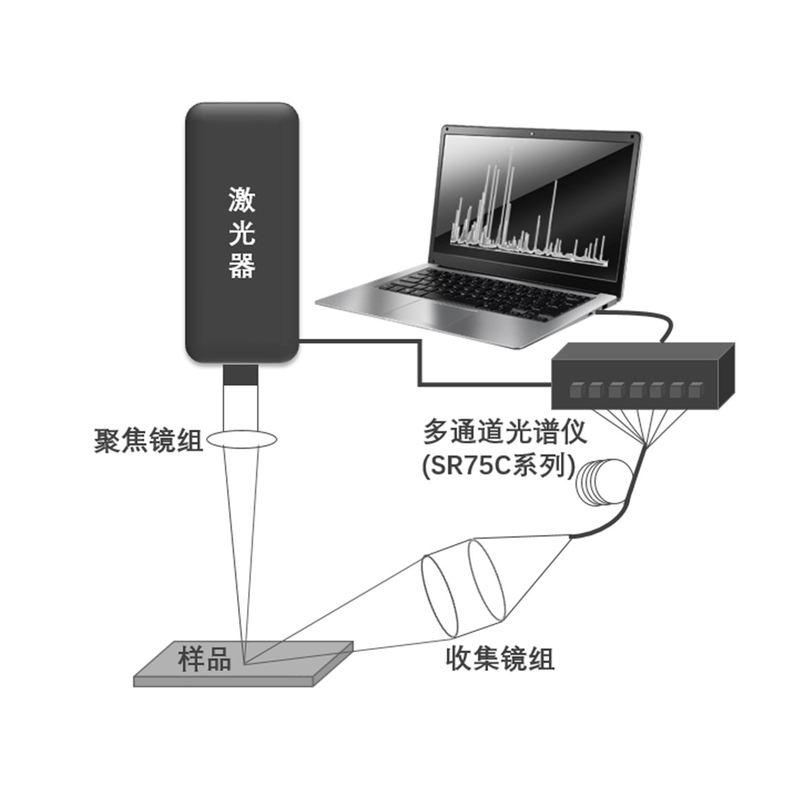
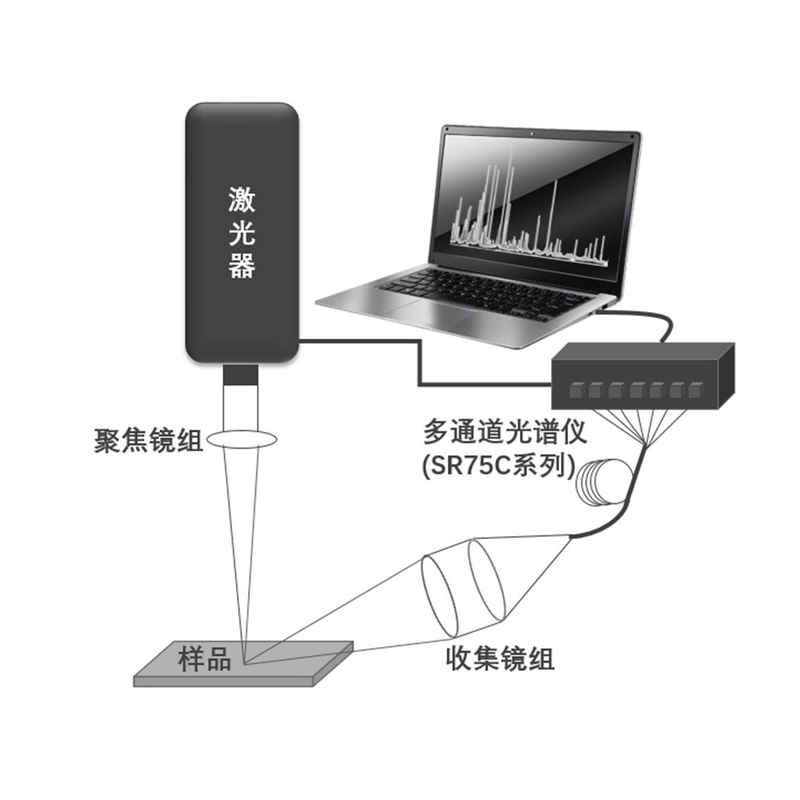
LIBS System
In a LIBS measurement system, the spectrometer generally sends a synchronized trigger to the laser, which focuses a pulse onto the sample. Within a specified time, collection optics direct the returning light into a multichannel spectrometer, such as the Jianzhi Technology SR75C fiber-spectrometer series. A computer processes the collected data, displays spectra and determines elemental identities and concentrations. LIBS relies on laser-material interaction: high-energy-density pulses rapidly excite the sample surface to form plasma, whose spectrum provides sample information. The process is very fast and suitable for rapid on-site analysis.
 Save to Favorites
Overview
Specifications
| Parameter | Value |
|---|---|
| Spectrometer - Spectral range | 180~1100nm (multichannel coverage range) |
| Spectrometer - Wavelength resolution | 0.15nm |
| Spectrometer - Number of channels | 1~8 Customizable |
| Spectrometer - Minimum integration time | As short as 1ms |
| Spectrometer - Timing controller trigger step | 1us |
| Spectrometer - Trigger delay | Minimum 10us (adjustable) |
| Spectrometer - Trigger jitter | ±0.4ns |
| Spectrometer - Trigger level | TTL no higher than 5V |
| Spectrometer - Data interface | USB2.0 |
| Laser - Wavelength | 266nm |
| Laser - Wavelength | 532nm |
| Laser - Wavelength | 1064nm |
| Laser - Power | 50mJ/100mJ/200mJ optional |
| Laser - Repetition Rate | 1Hz |
| Laser - Pulse width | 4~5ns |
| Optical fiber - Fiber Type | UV-resistant fiber |
| Optical fiber - Optical fiber Configuration | NA 0.22, Length Customizable |
| Optical fiber - Fiber interface | SMA905; other interfaces customizable |
Applications
Key Features
Datasheet
Please provide your email to download the datasheet.
Invalid email format. Please try again.
Supplier Information
Related Products
-
 100G OEO
Optical Transport Equipment
Visint
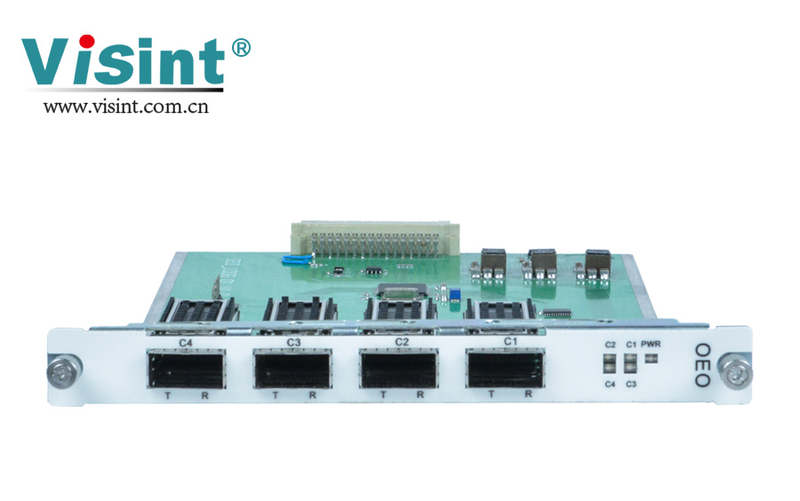
Maximum Line-Card Capacity: 2*100G Bidirectional Transmission 4*100G Unidirectional Transmission Wavelength Range: CWDM:1271~1611nm、 Multimode :850nm、1310nm DWDM:C-Band(100GHZ or 50GHZ) Service Access Type: SDH、SAN、SONET、ETHERNET、OTN
The 100G OEO amplifier card from Huixinte Communications regenerates 100G optical signals through optical-electrical-optical conversion, providing reamplification, reshaping and retiming. It converts to standard DWDM wavelengths and works with DWDM multiplexers/demultiplexers. Applications include SDH, SAN, SONET, ETHERNET, OTN and data-center interconnects, addressing limited fiber resources and high transmission loss.
-
 100G OTU
Optical Transport Equipment
Visint
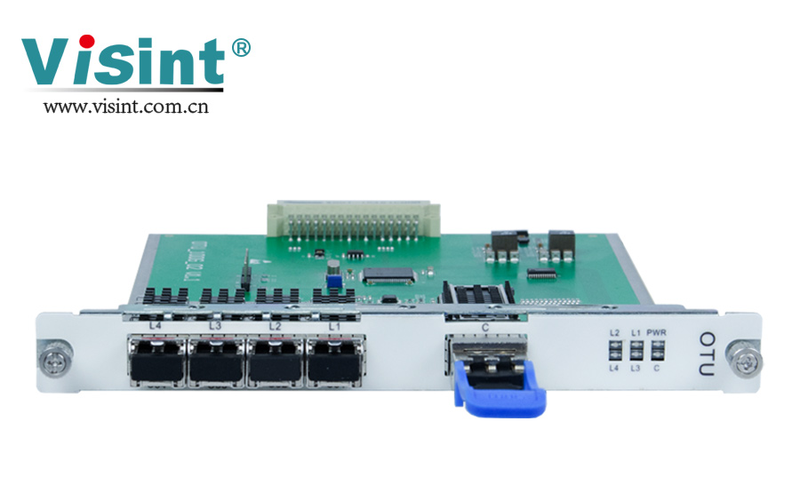
Maximum Line-Card Capacity: 1*100G Bidirectional Transmission 1*100G Unidirectional Transmission Wavelength Range: DWDM:C-Band(100GHZ or 50GHZ) Service Access Type: 100GE、OTU4
The 100G OTU card is a 100G fiber-link service access module developed by Huixinte Communications. It provides 3R regeneration (reamplification, reshaping and retiming) at any protocol rate from 103.125Gbit/s~111.81Gbit/s and converts signals to standard DWDM wavelengths. With DWDM multiplexers/demultiplexers, it enables WDM transmission for links with limited fibers and high loss.
-
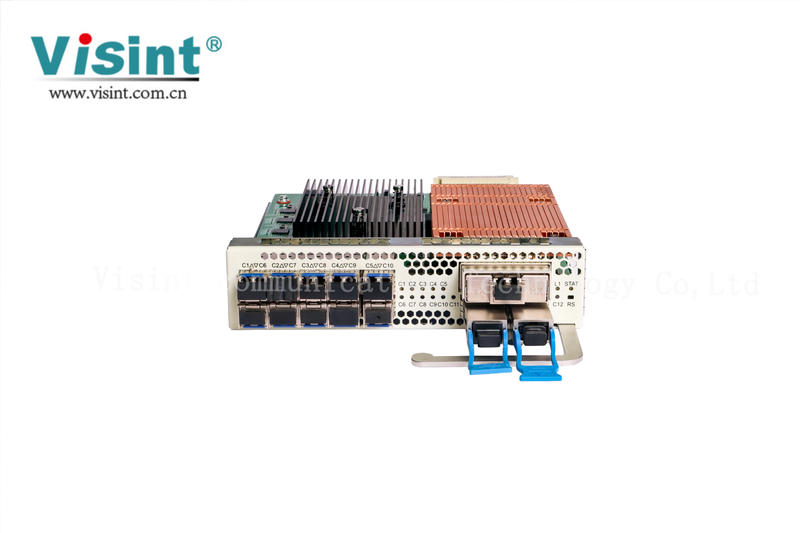 10*10G + 100G 200G TMUX Board
Optical Transport Equipment
Visint
Maximum Line-Card Capacity: a)10*10G Bidirectional Transmission +1*100G Bidirectional Transmission b)2*100G Bidirectional Transmission Wavelength ( Frequency ) Range: DWDM:1529.16nm-1567.14nm(191.3THz-196.05THz) Modulation Method [@100G / @200G;@100G;DP-16QAM@200G;DP-8QAM@200G;DP-QPSK@200G]: DP-QPSK@100G;DP-16QAM@200G;DP-8QAM@200G;DP-QPSK@200G
The 200G TMUX card converts either 10*10G SFP+ + 1*100G QSFP28 or 2*100G QSFP28 to 200G CFP2 DCO. The wavelength-tunable CFP2 DCO coherent module works with DWDM multiplexers/demultiplexers for wavelength-division multiplexed transmission, providing a high-quality solution for links with limited fiber resources and high fiber-line loss.
-
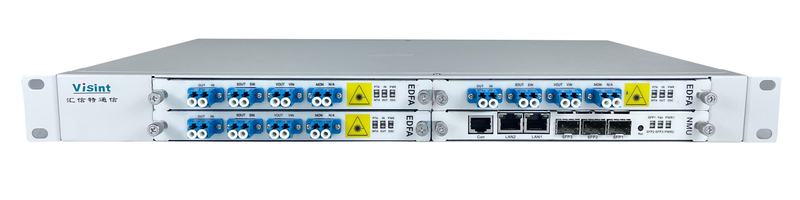 1U Integrated Transmission Platform Vispace 1000-1U
Optical Transport Equipment
Visint
Mechanical Parameters-Overall Dimensions: Width * Height * Depth =440*42*285mm Mechanical Parameters-Fully Configured Weight: ≤10KG Operating environment - Operating temperature: -10℃– 60℃
The Vispace 1000-1U integrated transmission platform is independently developed and manufactured to meet diverse market needs, greater integration and unified network management. Its standard 19-inch, 1U chassis fits most racks. Four slots accommodate 3 service boards and 1 network-element manager, normally in slot 4; that slot also accepts a service board when management is unnecessary. Mixed boards include OTU wavelength conversion, OEO regeneration, ETU optical/electrical conversion, OLP line protection, OBP bypass protection, OSS optical switching, ODM multiplexing/demultiplexing, OADM add/drop, EDFA amplification and DCM dispersion compensation. 2 rear power slots and all boards support hot swapping. Dual power slots support AC/DC, configured to customer needs.
-
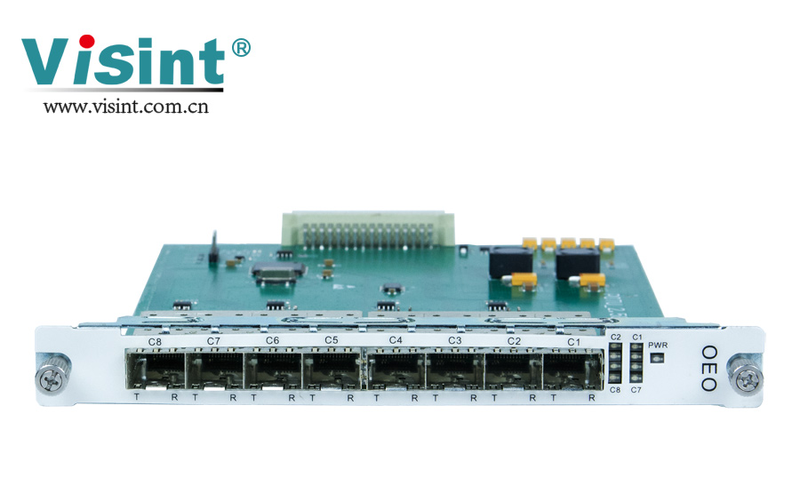 2.5G OEO
Optical Transport Equipment
Visint
Maximum Line-Card Capacity: 4*2.488G bidirectional or 8*2.488G unidirectional transmission Wavelength Range: CWDM:1271~1611nm、 Multimode :850nm、1310nm DWDM:C-Band(100GHZ or 50GHZ) Service Access Type: PDH、SDH:STM-1/STM-4/STM-16 SONET:OC-3/OC-12/OC-48、FE、GE、1G、2G、CPRI 1~3、POS、FICON、ESCON
The 2.5G OEO amplifier board developed by Huixinte Communications amplifies and reshapes signals during optical transmission. It saves fiber resources and networking costs, addresses excessive transmission distance and is widely used for long-distance transmission on trunk networks.
Related Articles
For pulsed laser and full-spectrum optical testing, photodiodes and thermopiles have inherent drawbacks. Photodiodes show weak response in infrared band, while thermopiles feature slow response and cannot capture nanosecond narrow pulses.
The CNGE 384 uncooled infrared core module is a high-performance core component for thermal imaging systems. Adopting mature uncooled infrared detection technology, it realizes all-weather thermal radiation perception and high-definition imaging without refrigeration equipment.
A solid-state laser is one of the most common and reliable laser types used in modern industry, medical equipment, and scientific research. Unlike gas or fiber lasers, it uses solid materials as its gain medium to generate stable, high-brightness laser beams. Thanks to its high precision, long lifespan, and compact structure, solid-state lasers have become a mainstream solution for high-precision laser processing and optical systems.
icrolight is a high-tech enterprise specializing in the R&D, manufacturing and sales of active and passive photonic devices for microwave photonics, LiDAR ranging, gas sensing, fiber optics and photomedicine.
Loading...
Name
Phone
Organization
Use Case

Database Platform