CNGE 384 Uncooled Infrared Core Module for Thermal Imaging
Published: 2026-08-24 17:14:39 Views: 62
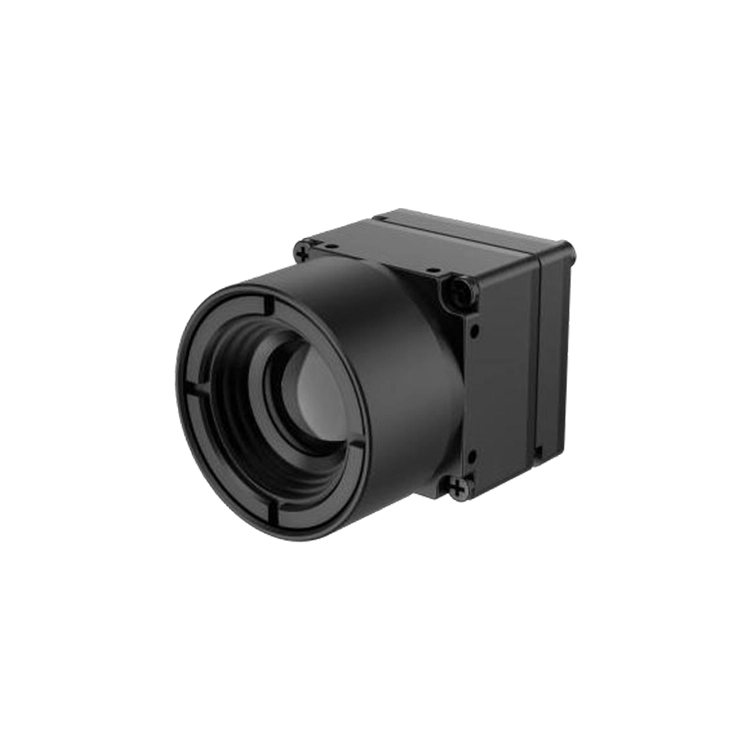
The CNGE 384 uncooled infrared core module is a high-performance core component for thermal imaging systems. Adopting mature uncooled infrared detection technology, it realizes all-weather thermal radiation perception and high-definition imaging without refrigeration equipment. Featuring compact size, low power consumption, high sensitivity and stable performance, the module is widely integrated into security monitoring, industrial detection, power inspection, fire rescue and autonomous driving devices, providing reliable core infrared imaging solutions for commercial and industrial scenarios.
Working Principle
Based on the microbolometer detection mechanism, the module captures infrared thermal radiation emitted by object surfaces. When infrared light irradiates the photosensitive layer of the detector, subtle temperature changes occur and cause resistance variation, converting invisible infrared optical signals into weak electrical signals.
The original electrical signals are amplified, filtered and digitally converted. Built-in intelligent image processing algorithms optimize image quality through non-uniformity correction, noise reduction and detail enhancement, finally outputting clear and high-contrast infrared thermal images for visual observation and temperature analysis.
Core Performance Parameters
Resolution: 384×288, delivering delicate image details and accurate target recognition for diverse application scenarios.
Pixel Pitch: 12μm / 17μm optional, realizing high spatial resolution and precise infrared radiation distribution capture.
Frame Rate: 50Hz, ensuring smooth dynamic imaging and real-time tracking of fast-moving targets.
Spectral Response: 8~14μm long-wave infrared band, with low atmospheric attenuation and excellent long-distance detection capability in harsh environments.
Noise Equivalent Temperature Difference: ≤40mK@25℃, F#1.0, achieving ultra-high temperature detection sensitivity for subtle temperature difference identification.
Product Features
Compact and Lightweight:Highly integrated structural design minimizes overall volume and weight, suitable for integration into UAVs, robots, individual portable devices and miniaturized terminal equipment.
Ultra-Low Power Consumption:Refrigeration-free design eliminates extra power consumption, supporting battery power supply and meeting the power-saving requirements of field operations and mobile monitoring scenarios.
Excellent Environmental Stability:Manufactured with mature and reliable processes, the module maintains long-term stable operation under complex working conditions, reducing equipment failure risks and maintenance costs.
Rich Image Processing Functions:Supports brightness adjustment, polarity conversion, electronic zoom, non-uniformity correction, intelligent noise reduction and digital detail enhancement, realizing adaptive image optimization and improving overall imaging quality.
Main Applications
Security Monitoring:Realizes 24-hour all-weather monitoring, unaffected by darkness, strong light, rain and fog. It is widely used in border defense, urban security and key facility protection to enhance early warning capabilities.
Industrial Detection:Accurately detects equipment overheating, circuit short circuits and mechanical wear, predicts potential safety hazards in advance, and ensures stable and efficient industrial production.
Power Inspection:Quickly locates heat faults and hidden dangers in power equipment such as transmission lines and transformers, improving the accuracy and efficiency of power operation and maintenance.
Fire Rescue:Penetrates smoke and dust in fire scenes to accurately locate fire sources and trapped personnel, providing reliable visual support for fire rescue operations and improving rescue efficiency.
Outdoor Search and Rescue:Identifies heat targets in dark and complex terrain environments, effectively improving the safety of outdoor exploration and the success rate of field rescue missions.
Autonomous Driving Perception:Compensates for the perception defects of visible light cameras and radars in fog, dust and night environments. It provides stable all-weather environmental perception data to improve driving safety and intelligence of autonomous vehicles.