
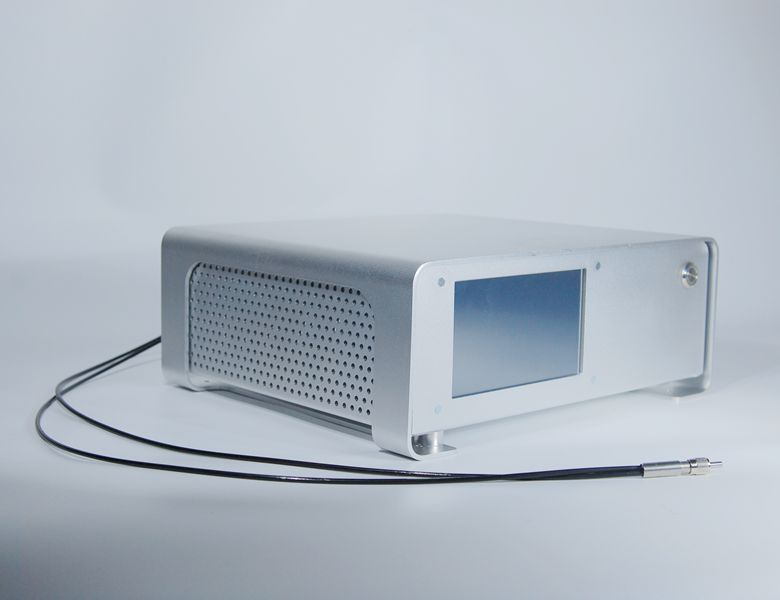
Optical System for Plastic Film Thickness Measurement UVS3-180-500
Plastic-film thickness optical system: UV xenon lamp, UV spectrometer and probe. White-light interference uses d = (wave2 - wave1)/deltaWave * K, where wave is wavelength, deltaWave the two-peak separation and K the refractive coefficient. Typical range is 0.5um -100um: approximately 200nm UV for 0.5um films, 500-600nm visible for 10-50um, and 800nm IR for around 80um. Above 100um, vernier calipers are recommended. Transparent films use transmission; opaque films, such as semiconductor etch endpoints, use reflection. A CMOS UV spectrometer and xenon source provide a cost-effective solution, with a JPN detector and USA/Germany hardware. 1. Integrated CMOS/xenon UV system simplifies measurement. 2. A high-performance flashing xenon lamp gives stable UV measurements. 3. Low-cost integration reduces complexity and provides a complete solution.
 Save to Favorites
Overview
Specifications
| Parameter | Value |
|---|---|
| Wavelength Range | 180-500nm |
| Grating | 1200line/mm |
| Resolution (FWHM) [MIN FWHM] | 0.2nm (MIN FWHM) |
| Detector | CMOS 2048 pixel from JAPAN |
| Xenon | Xenon from JAPAN |
| Xenon Power | 2W / 5W / 20W |
| Xenon Wavelength | 200-1200nm |
| Xenon Working Hour | 10x9 Flash |
| Integration Time | 0.06ms - 65 seconds |
| Optical Slit [25um(default)] | 25um(default) / 50um / 100um / 200um |
| Optical Fiber Interface | SMA905 |
| Absorption [MAX] | 3AU(MAX) |
| Probe | Reflex |
| Fan-Cooled | Yes |
| LCD Display | Supported |
| On-board Calculation | Yes |
| Fiber | 105um |
| Signal/Noise | 800:1 |
| Dimensions | 220 mm × 185 mm × 94 mm |
Applications
Key Features
Datasheet
Please provide your email to download the datasheet.
Invalid email format. Please try again.
Supplier Information
Related Products
-
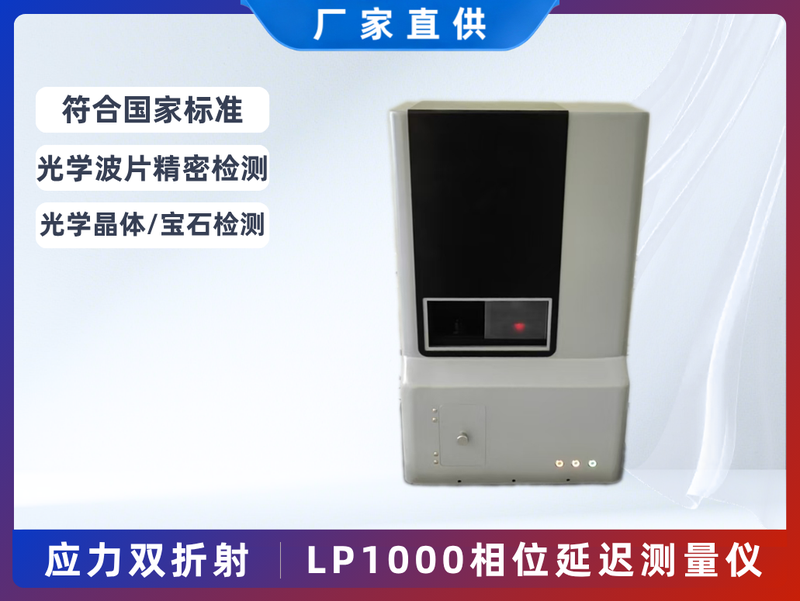 LP1000 Phase Retardation Measurement Instrument
Optical Metrology
Leice
Standard Light Source Wavelength: 633nm(632.8nm) Phase Retardation Measurement Interval: 0°~180° Measurement Repeatability: 0.2°
The LP1000 phase-retardation meter has received a second-class national invention award, and the company participated in drafting the national standard. Traceability, high precision, temperature compensation and multiwavelength conversion support stress and phase testing of waveplates, crystals and other optics. The core P1000 technology received the second-class National Technological Invention Award. We helped draft GB/T 26827-2011, Calibration Method for Waveplate Phase Retardation Measurement Devices. LP1000 is Leice's main traceable birefringence measurement model, intended for precision calibration of internal stress and phase retardation in optical elements. It tests transmissive materials such as waveplates, optical glass, display panels and crystals. A precision translation stage and temperature-compensation module are included, with customized nonstandard scanning solutions available.
-
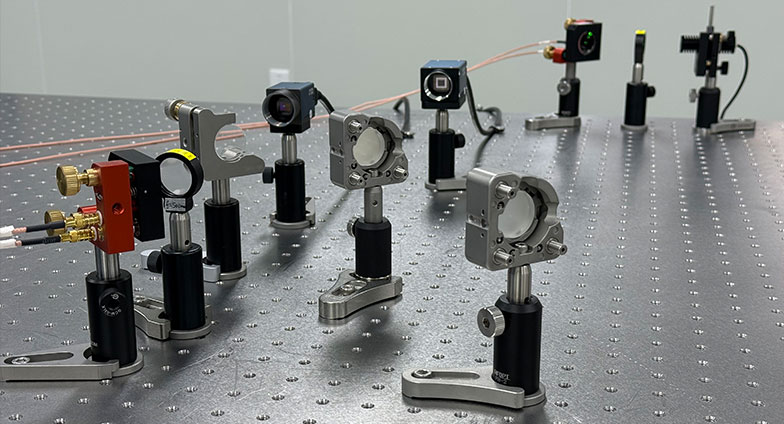 Beam-Pointing Stabilization System
Optical Metrology
Lumi-universe
Correction Capability [Single mirror, X,Y directions; correction range increases with multiple mirrors.]: Single mirror X,Y directions ± 0.4 mrad (correction range increases with multiple mirrors). Minimum Stride: ≤0.1μrad Direction LockingAccuracy [(@RMSE, Focal Point)]: ≤1urad (@RMSE, Focal Point)
In precision optics, thermal drift and stress relaxation can cause low-frequency beam disturbances and sustained spot drift. A highly sensitive camera detects disturbances in real time, while intelligent control dynamically steers an electrically controlled mirror to maintain a preset direction. Unlike other pointing-lock systems, camera detection with small pixels improves locking accuracy. During locking, users can observe spot shape and monitor beam power and its changes in real time.
-
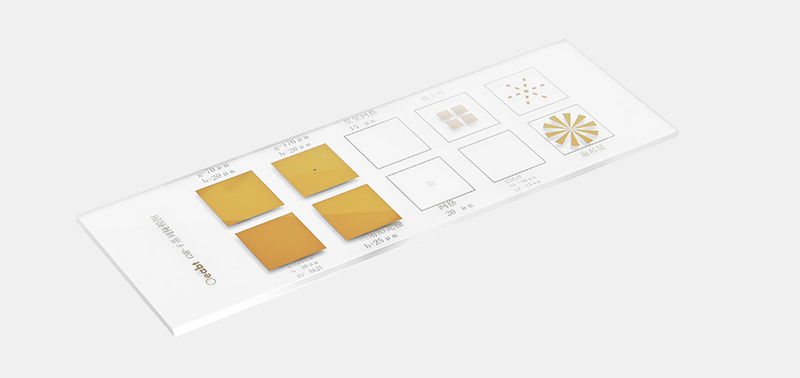 GMP-F Glass Mask Target
Optical Metrology
Oeabt
Specifications [±0.25]: 75*25*1.0mm(±0.25) Material: Quartz SiO₂, Chromium Coating Weight: 4.9g
Placing different masks, slits and apertures in the optical path at the Fourier plane before the beamsplitter allows pattern changes to be observed on the viewing screen.
-
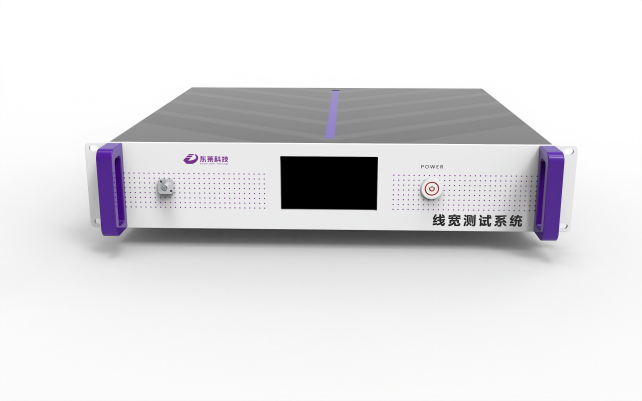 Laser Linewidth Test System
Optical Metrology
Dlphoton
Donglai Technology's laser linewidth test system uses delayed self-heterodyne interferometry, with an AOM as the interferometer's frequency shifter. The system includes a high-gain optical receiver/photodetector, a low-noise RF amplifier (LNA) and a high-resolution optical spectrum analyzer for measurement. High sensitivity permits measurement and analysis of laser linewidths down to 2kHz.
Related Articles
For pulsed laser and full-spectrum optical testing, photodiodes and thermopiles have inherent drawbacks. Photodiodes show weak response in infrared band, while thermopiles feature slow response and cannot capture nanosecond narrow pulses.
Driven by the rapid upgrading of intelligent vehicles, optoelectronic sensing technologies represented by laser sensing and infrared thermal imaging have become core pillars for high-level autonomous driving and smart cockpit iteration. Leveraging automotive-grade optoelectronic R&D advantages, Pilot Technology Group launches the VITAL intelligent vehicle solution. By integrating high-power VCSEL laser chips and vehicle infrared night-vision thermal imagers, the system comprehensively enhances vehicle environmental perception and realizes safer, smarter and more comfortable driving experiences.
As premium broadband light sources situated between traditional LEDs and laser diodes, MicroLight superluminescent‑diode (SLD) products combine broad spectral bandwidth, sufficient optical output power and low‑coherence performance.
Driven by worldwide energy‑structure transformation, the lithium‑ion battery industry is expanding rapidly as green, high‑efficiency energy‑storage devices gain surging global market demand. With years‑long dedication to intelligent manufacturing, Han’s Laser Lithium‑battery Intelligent Equipment has accumulated solid R&D strength and rich practical experience. By integrating multiple cutting‑edge technologies, the company delivers high‑efficiency, eco‑friendly and sustainable lithium‑ion battery production lines, bringing revolutionary upgrades to the new‑energy battery sector.
Loading...
Name
Phone
Organization
Use Case

Database Platform