
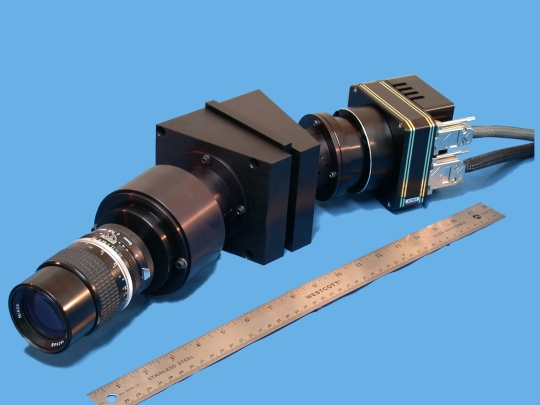
Raman spectrometer based on VPH spectroscopy technology
Raman spectrometer based on VPH spectroscopy technology; Compared with traditional non-scanning Raman spectrometers, P&P's VPH Raman spectrometer can collect more optical signals, and the signal-to-noise ratio (SNR) is greatly improved, so signals that could not be measured before can now be measured. Our Raman spectrometer can use a 12mm long slit to collect optical signals, obtaining higher signal without affecting the system's resolution. The optical design with low optical aberration allows the use of a very narrow slit (10 micrometers) and a 12 micrometer detector, thereby achieving very high spectral resolution on a non-scanning system.; Main features and applications:; ◆ With P&P Optica's spectrometer, it is possible to achieve remote and non-destructive detection of biomedical, pharmaceutical, and food processes.; ◆ The absorption and Raman spectrometers produced by P&P Optica can not only distinguish paracetamol with different molecular formulas, but also distinguish paracetamol with the same molecular formula and the same brand but from different production workshops.; ◆ Facts have proven that such high-performance instruments have opened the prelude to spectrochemical analysis without the need for chemical reagents.; ◆ As part of a project studying protein-drug interactions, Raman spectroscopy was used to perform remote full-column imaging of the isoelectric protein focusing process inside a 50mm long capillary at a distance of 700mm.; ◆ By using optical fibers, all P&P Optica spectrometers can be used for remote chemical analysis and process control. During the process, only one instrument is needed to detect up to 144 independent points. Due to its unique design, all channels are collected at the same time. Using one system for sample spectrum acquisition, imaging, and processing allows for in-situ process control sample handling.; Main system technical specifications; Parameter; Value; Size;32cm L x 12cm W x 10 cm H; Weight; typically <2 kg without detector; F/number F/ number; F/3; Spectral range (free of second order effects); 30% of an octave in the 350 nm to 2500 nm range; Spot diameter; 19 µm @ 1000 nm in 25.4 x 9 mm^2 area; Spectral resolution (0.024 mm wide pixels); 0.13 nm @ 532 nm and 0.17 785 @ 2000 nm; Linear dispersion; 30% of an octave per inch; Maximum detector size; 25.4 x 12.7 mm; Dynamic range of a single 0.024 by 0.024 mm^2 pixel; > 3,000; Dynamic range, binning along 2 mm slit;> 55,000 (detector dependent); Dynamic range, binning along 8 mm slit; Dynamic range, including 8 mm slit; > 300,000 (up to 1,000,000 with averaging over a number of measurements)
 Save to Favorites
Overview
Specifications
| Parameter | Value |
|---|---|
| Size | 32 cm L x 12 cm W x 10 cm H |
| Weight | typically <2 kg without detector |
| F/number | F/3 |
| Spot diameter [1000 nm in 25.4 x 9 mm² area] | 19 µm @ 1000 nm in 25.4 x 9 mm² area |
| Linear dispersion | 30 % of an octave per inch |
| Maximum detector size | 25.4 mm × 12.7 mm |
Datasheet
Please provide your email to download the datasheet.
Invalid email format. Please try again.
Supplier Information
Related Products
-
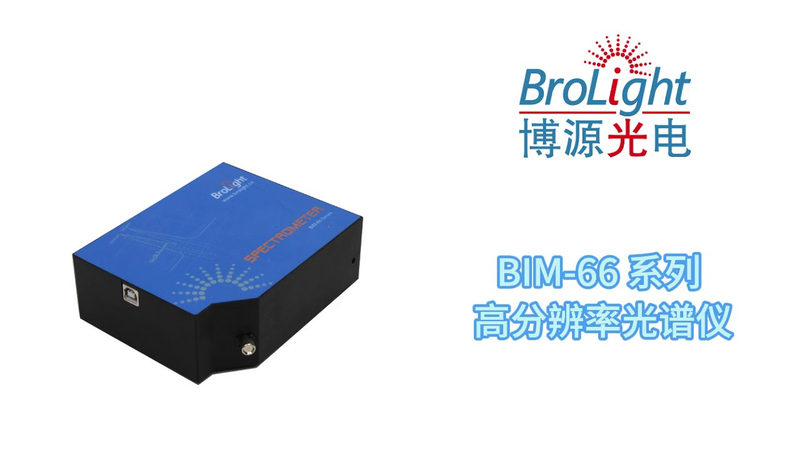 BIM-6602A series high-resolution spectrometers UV-NIR BIM-6602A-15
Spectrometers
Brolight
Fiber Connectors [BIM-6602A: Parameter Specifications]: SMA905 Detector [BIM-6602A: Parameter Specifications]: Hamamatsu S11639, Line-Array CMOS Detector Pixel [BIM-6602A: Parameter Specifications]: 2048 Pixels, Each Pixel 14μm×200μm
The BIM-6602A series spectrometer uses a high-resolution optomechanical structure in a compact, portable design, with resolution as fine as 0.08 nm. Interchangeable gratings adjust optical resolution and spectral range. Upgraded circuitry provides a 10000:1 dynamic range, minimum integration time of 0.5 milliseconds, and 600:1 signal-to-noise ratio for weak-signal detection. RS232 communication and improved interference resistance make it ideal for industrial and scientific applications.
-
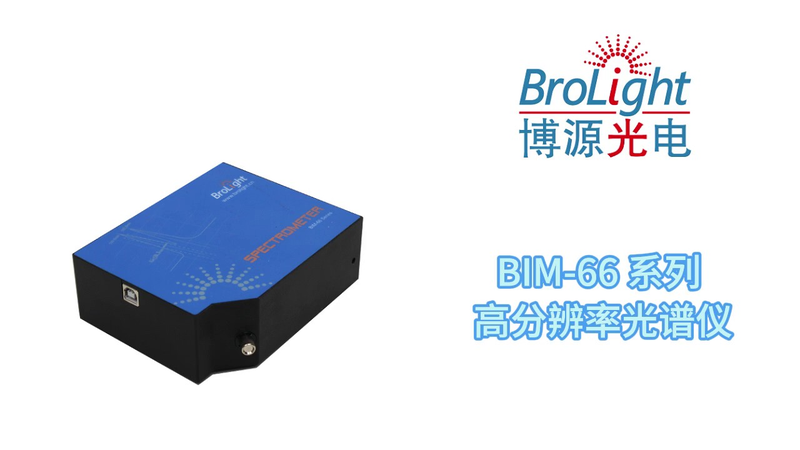 BIM-6602A series high-resolution spectrometers UV-NIR BIM-6602A-16
Spectrometers
Brolight
Fiber Connectors [BIM-6602A: Parameter Specifications]: SMA905 Detector [BIM-6602A: Parameter Specifications]: Hamamatsu S11639, Line-Array CMOS Detector Pixel [BIM-6602A: Parameter Specifications]: 2048 Pixels, Each Pixel 14μm×200μm
The BIM-6602A series spectrometer uses a high-resolution optomechanical structure in a compact, portable design, with resolution as fine as 0.08 nm. Interchangeable gratings adjust optical resolution and spectral range. Upgraded circuitry provides a 10000:1 dynamic range, minimum integration time of 0.5 milliseconds, and 600:1 signal-to-noise ratio for weak-signal detection. RS232 communication and improved interference resistance make it ideal for industrial and scientific applications.
-
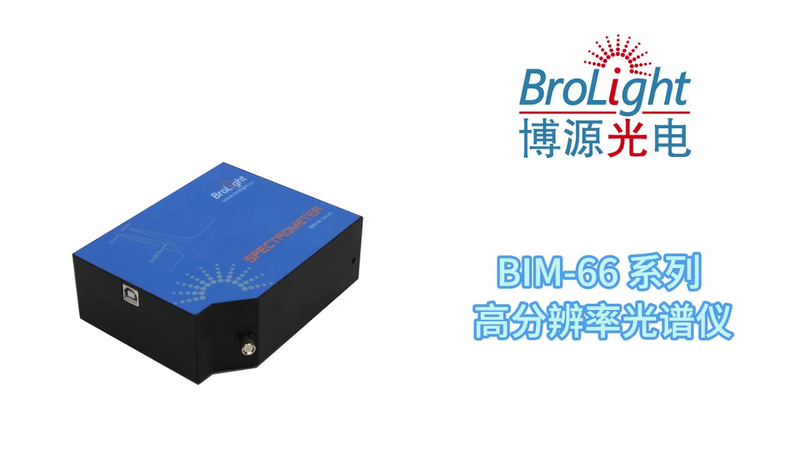 BIM-6602A series high-resolution spectrometers UV-NIR BIM-6602A-17
Spectrometers
Brolight
Fiber Connectors [BIM-6602A: Parameter Specifications]: SMA905 Detector [BIM-6602A: Parameter Specifications]: Hamamatsu S11639, Line-Array CMOS Detector Pixel [BIM-6602A: Parameter Specifications]: 2048 Pixels, Each Pixel 14μm×200μm
The BIM-6602A series spectrometer uses a high-resolution optomechanical structure in a compact, portable design, with resolution as fine as 0.08 nm. Interchangeable gratings adjust optical resolution and spectral range. Upgraded circuitry provides a 10000:1 dynamic range, minimum integration time of 0.5 milliseconds, and 600:1 signal-to-noise ratio for weak-signal detection. RS232 communication and improved interference resistance make it ideal for industrial and scientific applications.
-
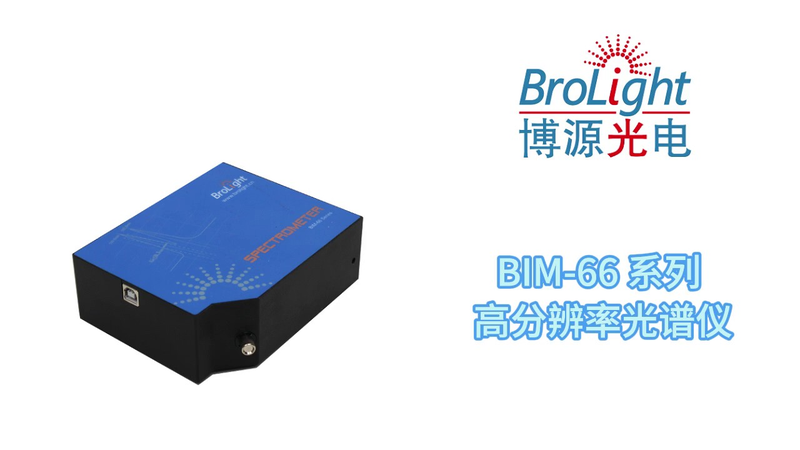 BIM-6602A series high-resolution spectrometers UV-NIR BIM-6602A-18
Spectrometers
Brolight
Fiber Connectors [BIM-6602A: Parameter Specifications]: SMA905 Detector [BIM-6602A: Parameter Specifications]: Hamamatsu S11639, Line-Array CMOS Detector Pixel [BIM-6602A: Parameter Specifications]: 2048 Pixels, Each Pixel 14μm×200μm
The BIM-6602A series spectrometer uses a high-resolution optomechanical structure in a compact, portable design, with resolution as fine as 0.08 nm. Interchangeable gratings adjust optical resolution and spectral range. Upgraded circuitry provides a 10000:1 dynamic range, minimum integration time of 0.5 milliseconds, and 600:1 signal-to-noise ratio for weak-signal detection. RS232 communication and improved interference resistance make it ideal for industrial and scientific applications.
-
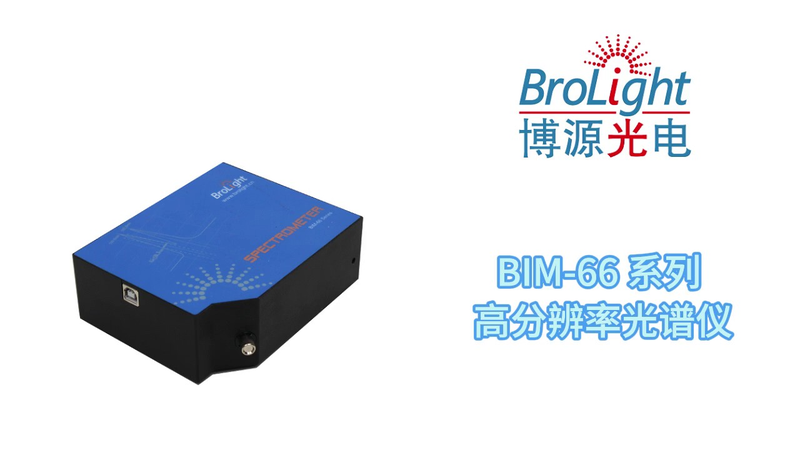 BIM-6602A series high-resolution spectrometers UV-NIR BIM-6602A-19
Spectrometers
Brolight
Fiber Connectors [BIM-6602A: Parameter Specifications]: SMA905 Detector [BIM-6602A: Parameter Specifications]: Hamamatsu S11639, Line-Array CMOS Detector Pixel [BIM-6602A: Parameter Specifications]: 2048 Pixels, Each Pixel 14μm×200μm
The BIM-6602A series spectrometer uses a high-resolution optomechanical structure in a compact, portable design, with resolution as fine as 0.08 nm. Interchangeable gratings adjust optical resolution and spectral range. Upgraded circuitry provides a 10000:1 dynamic range, minimum integration time of 0.5 milliseconds, and 600:1 signal-to-noise ratio for weak-signal detection. RS232 communication and improved interference resistance make it ideal for industrial and scientific applications.
Related Articles
The petrochemical industry features continuous high-risk production, where production equipment operates uninterruptedly under extreme working conditions including high temperature, high pressure, strong corrosion and oxidation.
Driven by the continuous pursuit of higher precision and efficiency in optical communication and optoelectronic device manufacturing, OLCR-1000 Low-Coherence Interferometer, independently developed by Wuhan Guanggu Interconnect Technology Co., Ltd., provides an innovative technical solution for distributed return loss testing of optical fibers and optoelectronic devices.
Driven by the rapid upgrading of intelligent vehicles, optoelectronic sensing technologies represented by laser sensing and infrared thermal imaging have become core pillars for high-level autonomous driving and smart cockpit iteration. Leveraging automotive-grade optoelectronic R&D advantages, Pilot Technology Group launches the VITAL intelligent vehicle solution. By integrating high-power VCSEL laser chips and vehicle infrared night-vision thermal imagers, the system comprehensively enhances vehicle environmental perception and realizes safer, smarter and more comfortable driving experiences.
Fiber lasers and fiber amplification systems require excitation sources with stable wavelength, narrow spectral linewidth and consistent output power.
Loading...
Name
Phone
Organization
Use Case

Database Platform