

USB4000 Fiber Optic Spectrometer
USB4000 Miniature Fiber Optic Spectrometer; The USB4000 Fiber Optic Spectrometer uses Toshiba's linear CCD detector with 3648 pixels to obtain a higher signal-to-noise ratio, and uses enhanced electronics to better control the spectrometer and its components.; Depending on the application, we make the optical bench an optional configuration, including entrance slit, grating, and order-sorting filter, etc.; The integration time in our software is set by the user. Similar to a camera's shutter speed: the specified integration time is the time the detector observes incident photons. Because the Toshiba detector's electronic shutter can be set via software to an integration time as short as 10 microseconds, you can measure instantaneous events like laser pulses. This capability solves saturation problems that may occur in advanced applications such as laser analysis.; The programmable microcontroller included with the USB4000 Fiber Optic Spectrometer provides great flexibility for controlling the spectrometer and its components. Through a 22-pin connector, you can execute all operating parameters in software: control light sources, create processes, and obtain information from external devices. You have 8 user-programmable digital input/output ports providing interfaces to other devices.; The USB4000 Fiber Optic Spectrometer uses Toshiba's high-performance 3648-pixel linear CCD detector, and an optical bench small enough to fit in the palm of your hand. Its working principle is the same as other spectrometers produced by Ocean Optics; it accepts light transmitted through a single-core optical fiber, disperses it through a fixed grating, and then irradiates the linear CCD detector, whose response wavelength range is 200-1100 nm.; The USB4000 Fiber Optic Spectrometer can easily be used with other Ocean Optics products. Most components have SMA905 connectors, making your application more flexible; the available products include: light sources, sample cells, filter holders, flow cells, fiber optic probes and sensors, collimating lenses, attenuators, diffuse reflectance standards, integrating spheres, and a large number of fiber optic products.; To properly configure a USB4000 spectrometer for your application, the specific optional detector models are listed in the table below. Our engineers will help you decide which one is best for you. The USB4000 spectrometer uses the Toshiba TCD1304AP 3648-pixel linear CCD array detector.; The USB4000 Fiber Optic Spectrometer connects to a PC, PLC, or other embedded controller via USB2.0 or RS-232 serial port. Each spectrometer's data is stored in a memory on the USB4000. Our spectrometer control software reads these values for real-time exchange between PCs and fast parameter setup.; Serial port operation tips: When using the serial port, the USB4000 Fiber Optic Spectrometer requires a single 5-volt power supply (not included). Also, SpectraSuite software does not support operating the spectrometer through the serial port. However, using the included serial command set, you can write your own software for serial port operation.; USB4000 Fiber Optic Spectrometer Specifications:; Spectrometer Physical Characteristics; Dimensions:; 89.1 mm x 63.3 mm x 34.4 mm; Weight:; 190 g; Detector Specifications; Detector:; Toshiba TCD1304AP linear CCD; Detection Range:; 200-1100nm; Pixels:; 3648 pixels; Pixel Size:; 8 μm x 200 μm; Pixel Well Depth:; 100,000 electrons; Signal-to-Noise Ratio:; 300:1 (full signal); A/D; 16-bit; Dark Noise; 12 RMS counts; Corrected Linearity; >99.8%; Sensitivity; 400 nm: 130 photons/count; 600 nm: 60 photons/count; Optical Bench; Design:; f/4, asymmetric crossed optical path; Input Focal Length:; 42mm; Output Focal Length:; 68mm; Entrance Aperture:; 5, 10, 25, 50, 100 or 200 µm slit or optical fiber (no slit); Grating Selection:; 14 different gratings, from UV to NIR; HC-1 Grating Selection:; None; Detector Collection Lens Selection:; Optional, L4; OFLV Filter Options:; OFLV-200-850; OFLV-350-1000; Other Filter Options:; Long-pass OF-1 filter; Optical Characteristics; Wavelength Range:; Based on grating selection; Spectral Resolution:; 0.3-10.0 nm FWHM; Integration Time:; 10 microseconds to 65 minutes; Dynamic Range:; 2 x 10^8 (system), 1300:1 single acquisition; Stray Light:; 0.05% at 600nm; 0.10% at 435 nm; Fiber Optic Connector:; SMA905; Electronic Characteristics; Power Consumption:; 90 mA @ 5 VDC; Data Transfer Speed:; Full scan to memory, 4ms for USB2.0, 18ms for USB1.1, 300ms for serial port.; Input/Output:; 8 digital, programmable general-purpose input/output ports; Analog Channels:; Pulse Functions; Single pulse and continuous pulse; Connector:; 22-pin connector; Computer; Operating Systems:; USB port: Windows 98/Me/2000/XP, Mac OS X and Linux; Serial port: any 32-bit Windows operating system; Computer Interface:; USB 2.0 @ 480 Mbps (USB1.1 compatible); RS-232 (2-wire) @ 115.2 K baud; Peripheral Interface:; SPI (3-wire); I 2C inter-integrated circuit
 Save to Favorites
Overview
Specifications
| Parameter | Value |
|---|---|
| Dimensions | 89.1 mm × 63.3 mm × 34.4 mm |
| Weight | 190 g |
| Detector | Toshiba TCD1304AP linear array CCD |
| Detection Range | 200-1100nm |
| Pixel | 3648 pixels |
| Pixel size | 8 μm × 200 μm |
| Pixel well depth | 100,000 electrons |
| Signal-to-noise ratio [Full Signal] | 300:1 (full signal) |
| A/D | 16-bit |
| Dark noise | 12RMS counts |
| Corrected linearity | >99.8 % |
| Sensitivity [400 nm] | 130 photons/count |
| Sensitivity [600 nm] | 60 photons/count |
| Design | f/4, asymmetric crossed optical path |
| Input focal length | 42 mm |
| Output focal length | 68 mm |
| Entrance aperture | 5 μm, 10 μm, 25 μm, 50 μm, 100 μm or 200 µm slits or fiber (slitless) |
| Grating Selection | 14 different gratings, UV to near-infrared |
| HC-1 grating selection | None |
| Detector collection lens options | Optional, L4 |
| OFLV filter option | OFLV-200-850; OFLV-350-1000 |
| Other filter options | Longpass OF-1 filter |
| Wavelength Range | Depending on grating selection |
| Spectral resolution | 0.3-10.0 nm FWHM |
| Integration time | 10 microseconds to 65 minutes |
| Dynamic range [System] | 2 x 10⁸ |
| Dynamic range [Single acquisition] | 1300:1 |
| Stray light [600nm] | <0.05 % |
| Stray light [435 nm] | 0.10 % |
| Fiber optic connector | SMA905 |
| Power Consumption [5 VDC] | 90 mA @ 5 VDC |
| Data transfer speed | Full scan to memory: 4 ms for USB2.0, 18 ms for USB1.1, 300 ms for serial port. |
| Input/Output | 8 digital, programmable general-purpose input/output ports |
| Analog channel | None |
| Auto zero | None |
| External enclosure | HR4-BREAKOUT |
| Trigger modes | 5 types |
| Pulse function | Single pulse and continuous pulse |
| Connector | 22-pin connector |
| Operating System | USB port: Windows 98/Me/2000/XP, Mac OS X and Linux; Serial port: any 32-bit Windows operating system |
| Computer interface [480 Mbps (USB1.1 compatible); RS-232 (2-wire) @ 115.2 K baud] | USB 2.0 @ 480 Mbps (USB1.1 compatible); RS-232 (2-wire) @ 115.2 K baud |
| Peripheral interface | SPI (3-wire); I 2 C inter-integrated circuit |
Key Features
Datasheet
Please provide your email to download the datasheet.
Invalid email format. Please try again.
Supplier Information
Related Products
-
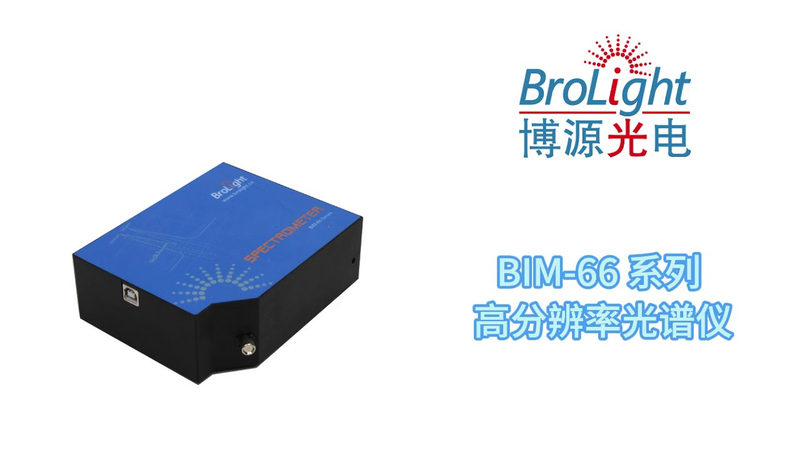 BIM-6602A series high-resolution spectrometers UV-NIR BIM-6602A-15
Spectrometers
Brolight
Fiber Connectors [BIM-6602A: Parameter Specifications]: SMA905 Detector [BIM-6602A: Parameter Specifications]: Hamamatsu S11639, Line-Array CMOS Detector Pixel [BIM-6602A: Parameter Specifications]: 2048 Pixels, Each Pixel 14μm×200μm
The BIM-6602A series spectrometer uses a high-resolution optomechanical structure in a compact, portable design, with resolution as fine as 0.08 nm. Interchangeable gratings adjust optical resolution and spectral range. Upgraded circuitry provides a 10000:1 dynamic range, minimum integration time of 0.5 milliseconds, and 600:1 signal-to-noise ratio for weak-signal detection. RS232 communication and improved interference resistance make it ideal for industrial and scientific applications.
-
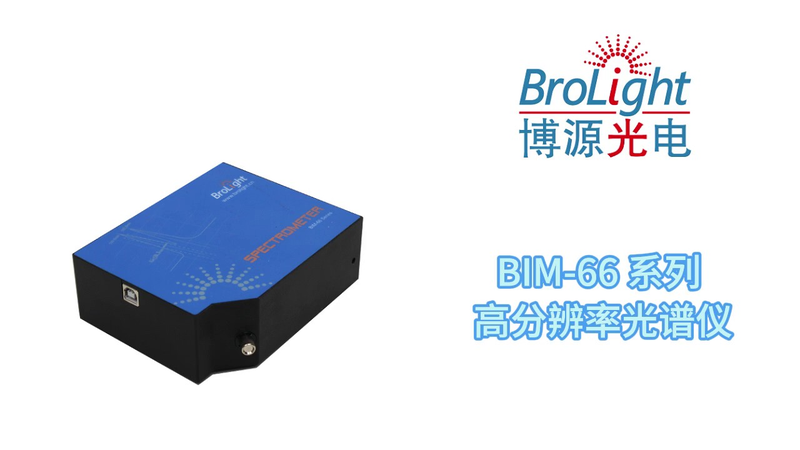 BIM-6602A series high-resolution spectrometers UV-NIR BIM-6602A-16
Spectrometers
Brolight
Fiber Connectors [BIM-6602A: Parameter Specifications]: SMA905 Detector [BIM-6602A: Parameter Specifications]: Hamamatsu S11639, Line-Array CMOS Detector Pixel [BIM-6602A: Parameter Specifications]: 2048 Pixels, Each Pixel 14μm×200μm
The BIM-6602A series spectrometer uses a high-resolution optomechanical structure in a compact, portable design, with resolution as fine as 0.08 nm. Interchangeable gratings adjust optical resolution and spectral range. Upgraded circuitry provides a 10000:1 dynamic range, minimum integration time of 0.5 milliseconds, and 600:1 signal-to-noise ratio for weak-signal detection. RS232 communication and improved interference resistance make it ideal for industrial and scientific applications.
-
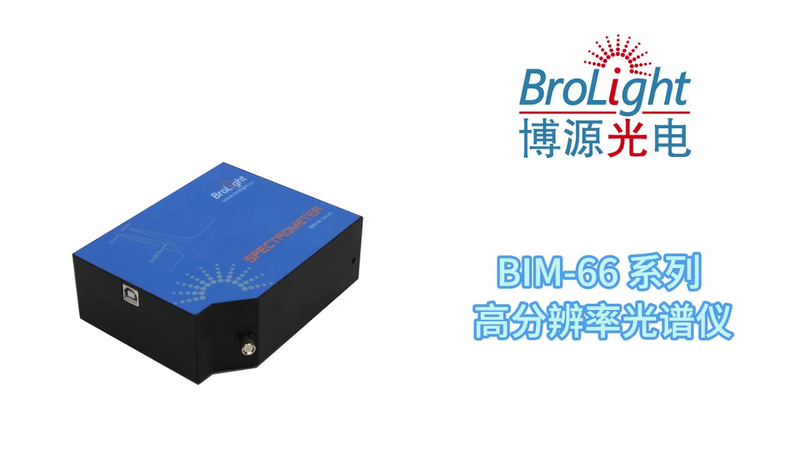 BIM-6602A series high-resolution spectrometers UV-NIR BIM-6602A-17
Spectrometers
Brolight
Fiber Connectors [BIM-6602A: Parameter Specifications]: SMA905 Detector [BIM-6602A: Parameter Specifications]: Hamamatsu S11639, Line-Array CMOS Detector Pixel [BIM-6602A: Parameter Specifications]: 2048 Pixels, Each Pixel 14μm×200μm
The BIM-6602A series spectrometer uses a high-resolution optomechanical structure in a compact, portable design, with resolution as fine as 0.08 nm. Interchangeable gratings adjust optical resolution and spectral range. Upgraded circuitry provides a 10000:1 dynamic range, minimum integration time of 0.5 milliseconds, and 600:1 signal-to-noise ratio for weak-signal detection. RS232 communication and improved interference resistance make it ideal for industrial and scientific applications.
-
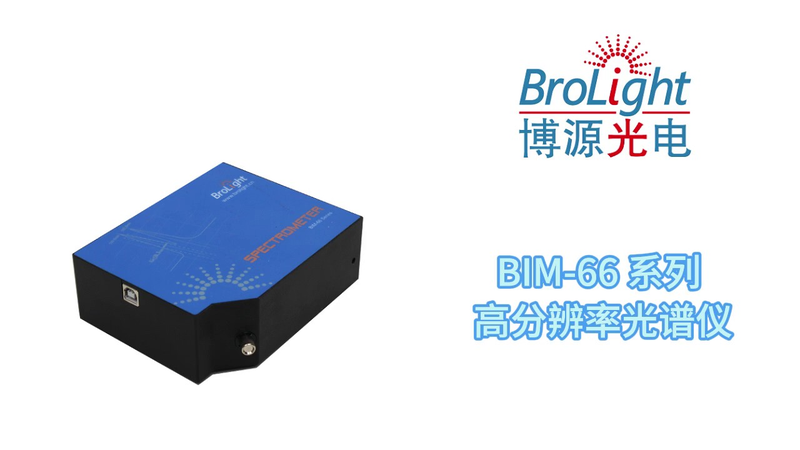 BIM-6602A series high-resolution spectrometers UV-NIR BIM-6602A-18
Spectrometers
Brolight
Fiber Connectors [BIM-6602A: Parameter Specifications]: SMA905 Detector [BIM-6602A: Parameter Specifications]: Hamamatsu S11639, Line-Array CMOS Detector Pixel [BIM-6602A: Parameter Specifications]: 2048 Pixels, Each Pixel 14μm×200μm
The BIM-6602A series spectrometer uses a high-resolution optomechanical structure in a compact, portable design, with resolution as fine as 0.08 nm. Interchangeable gratings adjust optical resolution and spectral range. Upgraded circuitry provides a 10000:1 dynamic range, minimum integration time of 0.5 milliseconds, and 600:1 signal-to-noise ratio for weak-signal detection. RS232 communication and improved interference resistance make it ideal for industrial and scientific applications.
-
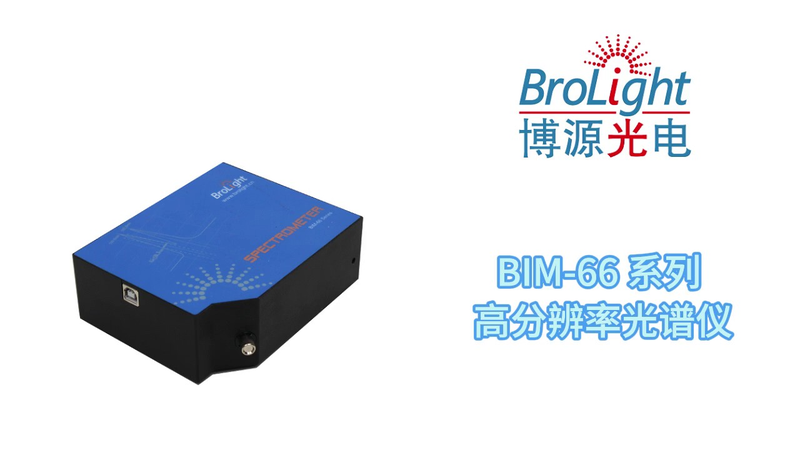 BIM-6602A series high-resolution spectrometers UV-NIR BIM-6602A-19
Spectrometers
Brolight
Fiber Connectors [BIM-6602A: Parameter Specifications]: SMA905 Detector [BIM-6602A: Parameter Specifications]: Hamamatsu S11639, Line-Array CMOS Detector Pixel [BIM-6602A: Parameter Specifications]: 2048 Pixels, Each Pixel 14μm×200μm
The BIM-6602A series spectrometer uses a high-resolution optomechanical structure in a compact, portable design, with resolution as fine as 0.08 nm. Interchangeable gratings adjust optical resolution and spectral range. Upgraded circuitry provides a 10000:1 dynamic range, minimum integration time of 0.5 milliseconds, and 600:1 signal-to-noise ratio for weak-signal detection. RS232 communication and improved interference resistance make it ideal for industrial and scientific applications.
Related Articles
The petrochemical industry features continuous high-risk production, where production equipment operates uninterruptedly under extreme working conditions including high temperature, high pressure, strong corrosion and oxidation.
Driven by the continuous pursuit of higher precision and efficiency in optical communication and optoelectronic device manufacturing, OLCR-1000 Low-Coherence Interferometer, independently developed by Wuhan Guanggu Interconnect Technology Co., Ltd., provides an innovative technical solution for distributed return loss testing of optical fibers and optoelectronic devices.
Driven by the rapid upgrading of intelligent vehicles, optoelectronic sensing technologies represented by laser sensing and infrared thermal imaging have become core pillars for high-level autonomous driving and smart cockpit iteration. Leveraging automotive-grade optoelectronic R&D advantages, Pilot Technology Group launches the VITAL intelligent vehicle solution. By integrating high-power VCSEL laser chips and vehicle infrared night-vision thermal imagers, the system comprehensively enhances vehicle environmental perception and realizes safer, smarter and more comfortable driving experiences.
Fiber lasers and fiber amplification systems require excitation sources with stable wavelength, narrow spectral linewidth and consistent output power.
Loading...
Name
Phone
Organization
Use Case

Database Platform