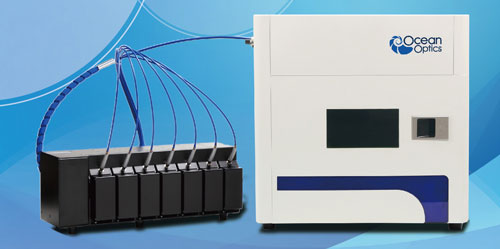
LIBS-Laser-Induced Breakdown Spectroscopy System (MX2500+)

LIBS-Laser-Induced Breakdown Spectroscopy System (MX2500+)

Supplier
Gzbiaoqi
Category
Spectrometers
Origin
China

What is a laser-induced breakdown spectroscopy system?;Laser-induced breakdown spectroscopy (LIBS) is an atomic emission spectrometer. It can perform qualitative and quantitative analysis of almost all elements in solid, liquid, and gas matrices. Unlike traditional detection methods such as ICP-OES or XRF, LIBS requires no complicated sample preparation during detection. To achieve this, LIBS uses a high-energy focused pulsed laser beam to excite the sample to a plasma state and analyzes the resulting emission spectra of the corresponding elements. The wavelength of the element emission spectrum is directly related to the type of element, while the intensity of the element spectral line is related to the element content.;Technical features of laser-induced breakdown spectroscopy;When performing elemental analysis, laser-induced breakdown spectroscopy systems require a very small amount of sample and cause little damage to the sample;they have self-cleaning capability and require almost no sample preparation;they can achieve rapid real-time online analysis;they have remote sensing capability, enabling long-distance, non-contact measurement in harsh environments such as toxic and highly radioactive ones;they have ppm-level detection sensitivity and can detect trace elements.;Composition of laser-induced breakdown spectroscopy products:;The multichannel spectrometer MX2500+, with its efficient external synchronization clock, perfectly coordinates all channels to achieve precise delayed acquisition, accurately acquiring the complete atomic spectral line signal when the atomic excitation radiation is prominent. At the same time, MX2500+ can freely configure the number of spectrometer channels and coverage within the range of 180-1037nm according to customer needs; the system's built-in efficient clock can perfectly synchronize all channels and simultaneously achieve precise triggering of two external devices. (such as lasers or microwave enhancement devices);Laser: Nd:YAG lasers are commonly used; the pulse width of the laser is generally on the order of nanoseconds, capable of concentrating a large amount of energy on a very small area in an extremely short time, serving as the system excitation source to ablate trace substances on the sample surface and excite plasma.;Sample chamber: a sealed and stable chamber structure, generally including a sample platform, laser focusing and light collection optical paths, gas purge system, imaging system, laser safety protection, and other supporting devices.

Request a Quote Download Datasheet
Save to Favorites Save to Favorites

Overview

What is a laser-induced breakdown spectroscopy system?;Laser-induced breakdown spectroscopy (LIBS) is an atomic emission spectrometer. It can perform qualitative and quantitative analysis of almost all elements in solid, liquid, and gas matrices. Unlike traditional detection methods such as ICP-OES or XRF, LIBS requires no complicated sample preparation during detection. To achieve this, LIBS uses a high-energy focused pulsed laser beam to excite the sample to a plasma state and analyzes the resulting emission spectra of the corresponding elements. The wavelength of the element emission spectrum is directly related to the type of element, while the intensity of the element spectral line is related to the element content.;Technical features of laser-induced breakdown spectroscopy;When performing elemental analysis, laser-induced breakdown spectroscopy systems require a very small amount of sample and cause little damage to the sample;they have self-cleaning capability and require almost no sample preparation;they can achieve rapid real-time online analysis;they have remote sensing capability, enabling long-distance, non-contact measurement in harsh environments such as toxic and highly radioactive ones;they have ppm-level detection sensitivity and can detect trace elements.;Composition of laser-induced breakdown spectroscopy products:;The multichannel spectrometer MX2500+, with its efficient external synchronization clock, perfectly coordinates all channels to achieve precise delayed acquisition, accurately acquiring the complete atomic spectral line signal when the atomic excitation radiation is prominent. At the same time, MX2500+ can freely configure the number of spectrometer channels and coverage within the range of 180-1037nm according to customer needs; the system's built-in efficient clock can perfectly synchronize all channels and simultaneously achieve precise triggering of two external devices. (such as lasers or microwave enhancement devices);Laser: Nd:YAG lasers are commonly used; the pulse width of the laser is generally on the order of nanoseconds, capable of concentrating a large amount of energy on a very small area in an extremely short time, serving as the system excitation source to ablate trace substances on the sample surface and excite plasma.;Sample chamber: a sealed and stable chamber structure, generally including a sample platform, laser focusing and light collection optical paths, gas purge system, imaging system, laser safety protection, and other supporting devices.

Specifications

ParameterValue
Detectable elements [System performance parameters]Atomic number Z≥1
Concentration range [System performance parameters]≥10 ppm, depending on the element type
Sample form [System performance parameters]Solid or pressed powder
Maximum sample size [System performance parameters]30 mm *30 mm *20 mm(x*y*z)
Maximum sample weight [System performance parameters]2 kg
Translation stage travel range [System performance parameters]60 mm *60 mm *60 mm(x*y*z)
Spot size [System performance parameters]≤50 um, laser wavelength 1064 nm
Laser wavelength [System performance parameters]Nd:YAG 1064 nm/532 nm optional
Laser energy [System performance parameters]50 mJ/200 mJ optional
Optical fiber [System performance parameters]UV-resistant optical fiber
Imaging [System performance parameters]Optional high-magnification microscopic field of view
Software [System performance parameters]Control hardware devices, acquire data
Software [System performance parameters]Supports secondary development, dynamic link library
Software [System performance parameters]Spectral processing algorithms, fluorescence background subtraction
Wavelength range [Spectrometer parameters]180 nm-1037nm
Number of channels [Spectrometer parameters]1~8 channels
Optical resolution [Spectrometer parameters]0.1 nm(FWHM)
Detector [Spectrometer parameters]Linear array CCD / area array CCD optional
Integration time [Spectrometer parameters]1 ms~65 s
Trigger delay [Spectrometer parameters]±450 ns
Trigger jitter [Spectrometer parameters]±10 ns
MX2500+ dimensions (8 channels) [Dimensions & weight]460 mm × 150 mm × 165 mm
MX2500+ weight (8 channels) [Dimensions & weight]7 kg
Sample chamber dimensions [Dimensions & weight]450 mm × 360 mm × 460 mm
Sample chamber weight [Dimensions & weight]25 kg
Laser driver dimensions [Dimensions & weight]360 mm × 133 mm × 435 mm
Laser driver weight [Dimensions & weight]14 kg

Applications

Environmental monitoring (soil pollution, industrial production); material analysis (metals, coal, plastics); medicine and biochemistry (bones, teeth); national security (explosives, biochemical weapons); art authentication (pigments, ceramics, gemstones); LIBS system applications:; soil & crop pollution detection:; in August 2012, a laser-induced breakdown spectroscopy system built with an Ocean Optics HR2000 spectrometer successfully completed an eight-month space journey and arrived at Mars. The National Aeronautics and Space Administration (NASA) launched the Mars Science Laboratory rover "Curiosity" in November 2011, carrying a customized Ocean Optics HR2000 spectrometer; upon arrival it will detect the composition of the Martian surface soil, using exactly this technology. With the development of industry, soil pollution has become increasingly serious, which in turn greatly affects plants, especially crops.; Ocean Optics customers use the MX2500+ spectrometer combined with a sample chamber to conduct research on heavy metal components in soil and crops using laser-induced breakdown spectroscopy technology in the laboratory; combined with concentration calibration of the corresponding heavy metal elements, measurement of the content of the corresponding elements in soil and crops can be achieved. Because laser-induced breakdown spectroscopy technology requires no sample preparation, it enables rapid measurement; therefore, the research results provide great guiding significance for future land pollution prevention and crop production.; Antique authentication:; In today's increasingly prosperous economy, antique collecting is no longer the exclusive domain of literati and scholars, but has gradually become a part of people's economic life. Beijing Antique City is Asia's largest antique trading center. Experts from the Beijing Antique City Antique and Jewelry Testing and Restoration Center recently introduced Ocean Optics' MX2500+ laser-induced plasma spectral analyzer into antique authentication, in order to achieve the purpose of faster and more accurate authentication of the authenticity of antiques.; The system uses an extremely tiny laser beam to strike the authentication sample, and through receiving the excited plasma, realizes spectral analysis of trace samples. The damage this detection causes to the sample is at the molecular level (even smaller than the damage caused by placing the sample on a table); at the same time, the MX2500+ has the advantages of small size and portability. For a long time, China's antique authentication has relied on "white-haired" experts; the MX2500+ system will bring higher accuracy to antique authentication experts, enabling this ancient industry to radiate youthful vitality.; Multi-channel applications:; Coal & metal measurement:; The metallurgical industry is a pillar industry of our national economy. Traditional alloy component measurement involves component analysis by sampling, processing, and preparing samples from finished products after alloy production is completed; the speed is relatively slow, and once the test result is found to be non-compliant, the entire batch of samples will be scrapped, causing great losses. The MX2500+ multi-channel spectrometer, as a flexibly configurable device, can demonstrate its prowess in online analysis and quality control applications during the alloy production process.; Ocean Optics provides complete system components for laser-induced breakdown spectroscopy. The Shenyang Institute of Automation used Ocean Optics' MX2500+ to conduct alloy component detection research, and at the same time carried out optimization of the algorithm model of the MX2500+ for alloy quantitative analysis; under the optimized model, qualitative and semi-quantitative analysis of alloy elements and online monitoring analysis of molten steel were carried out.; Coal, as our country's most important energy source, also has problems similar to those of the steel industry. Traditional coal analysis methods are time-consuming, and real-time component analysis cannot be achieved whether in coal production or use; in particular, real-time detection of the content of some of its components (sulfur) cannot be achieved, and thus real-time quality control cannot be carried out. The laser-induced breakdown spectroscopy measurement system composed of Ocean Optics' MX2500+ is a rapid component analysis device specially optimized for the ultraviolet band, and can realize real-time monitoring of every link from coal production to coal combustion.; Plasma luminescence measurement:; The MX2500+ can not only build laser-induced breakdown spectroscopy systems, but can also be used in various atomic spectroscopy measurement occasions. For example, it can be used in conjunction with inductively coupled plasma atomic emission spectrometry (ICP-OES) as a spectrometer backend spectral acquisition device.; The broadband, high-resolution multi-channel spectrometer MX2500+ is also a powerful tool in laser measurement applications.; The atmospheric pressure glow discharge process generates plasma; using the multi-channel spectrometer MX2500+ to measure the plasma enables real-time process monitoring of work using atmospheric pressure glow discharge.; Plasma etching is a key step in the semiconductor and microsystem manufacturing of ultra-large-scale integrated circuits; using the multi-channel spectrometer MX2500+ to monitor the plasma spectrum in real time allows precise positioning of the etching endpoint during the etching process, improving the process level of etching.

Key Features

Can be combined with a stable and efficient sample chamber system;Upgradeable spectral module;Supports dual-pulse lasers;Wide-spectrum high-resolution measurement, up to 16384 pixels within the 180-1037nm range;High trigger signal precision (±10ns)

Datasheet

Please provide your email to download the datasheet.

Your name
Email Address

Invalid email format. Please try again.

Send Request

Supplier Information

Gz
Gzbiaoqi
View Supplier →
Guangzhou Biaoqi Optoelectronics Technology Development Co., Ltd. was founded in 2005 and is an enterprise founded by leading entrepreneurial talents in Guangzhou Development District. It is a national high-tech enterprise and a national specialized and sophisticated "little giant" enterprise focusing on spectral rapid detection system integration and instrument development. The company integrates design, R&D, manufacturing, sales, and after-sales service, with spectral rapid detection and analysis technology as its core. Through high-speed acquisition, processing, and algorithm analysis of spectral data, it provides rapid, non-destructive, online, fully automatic detection equipment and high-end quality inspection and analysis solutions for various industries. Biaoqi Optoelectronics has established the Guangdong Provincial Engineering Technology Research Center for Rapid Spectral Measurement. Its products cover many fields such as optical component inspection, semiconductors, new energy vehicles, environmental monitoring, solar photovoltaics, new materials, biology, optoelectronics, and chemicals. Relying on strong independent R&D capabilities and independent demonstrative diversified operational advantages, Biaoqi Optoelectronics has achieved rapid development in recent years and is a leader in the domestic spectral rapid detection application industry. It has obtained numerous qualifications and honors, including national specialized and sophisticated "little giant" enterprise, national high-tech enterprise, Guangdong Province specialized and sophisticated enterprise, Guangdong Province intellectual property demonstration enterprise, and Guangzhou Development District gazelle enterprise. Under the guidance of its core corporate values of "prudent thinking, earnest practice, innovation, and win-win", Biaoqi Optoelectronics continuously accumulates experience, builds a domestic independent brand, and customizes spectral detection application solutions for customers, developing spectral rapid detection and analysis instruments suitable for different application fields. These include the optical component inspection industry: optical component spectral sorting instruments, reflectance spectral analyzers, transmittance spectral analyzers, etc.; the jewelry identification industry: UV-visible spectral analyzers (jewelry detectors), jewelry luminescence imaging analyzers, etc.; and the scientific research field: quantum efficiency spectral analysis systems, portable Raman spectral analyzers, photoluminescence spectral analyzers, etc. Biaoqi Optoelectronics' non-destructive rapid spectral analyzers have significant advantages, featuring high efficiency, speed, and accuracy, which can help users greatly improve detection efficiency and assist the high-quality development of application industries. At the same time, Biaoqi Optoelectronics is the South China general agent for Ocean Optics, the inventor of micro fiber optic spectrometers, an internationally renowned enterprise. With the rapid development of science and technology, Biaoqi Optoelectronics keeps pace with technological progress and the development of the times, forging ahead on the road of rapid spectral detection, striving for perfection.

Request a Quote

Our team responds within 24–48 hours
LIBS-Laser-Induced Breakdown Spectroscopy System (MX2500+)
Gzbiaoqi · Spectrometers
Direct from Manufacturer
Your inquiry will be sent directly to the manufacturer
Photonics Source Platform
We handles the inquiry on your behalf
Your information is protected and will never be shared without consent.
Contact Us

Loading...

GetExperimental Plan

Name

Phone

+86

Organization

Use Case

AI Parametric Selection
Smart Match · Precise Recs
Enter Specifications
AI Smart Matching
Get Best Matches
Skip Manual Comparison
Find Best Solutions Fast
Select Now →