

HR4000 UV-Vis Fiber Optic Spectrometer
HR4000 UV-Vis Fiber Optic Spectrometer; our next-generation high-resolution fiber optic spectrometer is a combination of new optical and electronic devices, ideal for applications in laser characterization, measuring gas absorbance, and determining atomic emission lines.; The HR4000 features a new Toshiba 3648-pixel CCD array detector, with optical resolution up to 0.2 nm (FWHM); optical resolution (FWHM) up to 0.02nm; electronic shutter prevents saturation; onboard microcontroller; plug-and-play USB; optical bench; installation and operation manual; sampling accessories; specifications; spectral resolution (FWHM) up to 0.02nm The HR4000 UV-Vis Fiber Optic Spectrometer is our next-generation high-resolution fiber optic spectrometer; it uses Toshiba's 3648-pixel linear CCD, with optical resolution up to 0.02nm (FWHM). The HR4000 has a spectral range of 200-1100nm; the specific spectral range and resolution configuration depends on the choice of the actual grating and slit. The HR4000 is suitable for fields such as laser measurement, gas absorption measurement, and atomic emission line measurement.; Electronic shutter prevents saturation. The integration time is set by the user in the software, similar to a camera's shutter speed: the integration time is the total time the detector "observes" incident photons. Because Toshiba's CCD has an electronic shutter, users can set a minimum integration time of 3.8ms via software, enabling measurement of transient events such as laser pulses. This avoids saturation phenomena that easily occur in laser analysis.; Onboard Microcontroller The onboard microcontroller of the HR4000 UV-Vis Fiber Optic Spectrometer makes control of the spectrometer very convenient. Through a 30-pin connector, you can set all spectrometer operating parameters in the software: controlling light sources, generating processes, and acquiring information from external objects, etc. You can access 10 user-programmable I/O ports for external device interfaces, one analog input and one analog output interface, and a pulse generator for triggering other devices. (Programming the GPIO requires SpectraSuite software, OmniDriver, or other device drivers); The HR4000 UV-Vis Fiber Optic Spectrometer connects to a PC, PLC, or other embedded systems via USB2.0 or RS-232 serial port. In serial mode, the HR4000 requires an additional 5-volt power supply (not included). The parameters unique to each fiber optic spectrometer are programmed and stored in the system's memory chip and can be read very conveniently by the spectrometer operating software.; Users typically require spectrometers to suit their special needs, so the HR4000 spectrometer can be configured with an optical bench according to your application needs. You can choose slit size, detector, filters, and gratings, etc. Our application engineers can help you.; Installation and Operation Manual; The HR4000 manual can provide you with guidance on configuring, calibrating, and experimenting with the HR4000; Sampling Accessories; Obtain higher spectral resolution from your HR4000 spectrometer. Ocean Optics' partner Spectral Applications Research's SHA-1 spectral super adapter further improves the optical resolution of the high-performance HR4000.; HR4-BREAKOUT is a passive module that provides an interface for the various functions of the HR2000+. The BREAKOUT box allows multiple connections to the spectrometer such as: external trigger, GPIO, light source, RS-232, and analog input/output.; HR4000 UV-Vis Fiber Optic Spectrometer - Specifications; Physical; Dimensions; 148.6 mm x 104.8 mm x 45.1 mm; Weight; 570 grams; Detector; Toshiba TCD1304AP linear CCD array; Detector range; 200-1100 nm; Pixels; 3648 pixels; Pixel size; 8 μm x 200 μm; Pixel well depth; ~100,000 electrons; Sensitivity; 130 photons/count at 400 nm; 60 photons/count at 600 nm; Design; f/4, Symmetrical crossed Czerny-Turner; Focal length; 101.6 mm input and output; Entrance; 5, 10, 25, 50, 100 or 200 μm wide slits or fiber (no slit); Grating selection; 14 different gratings, UV through Shortwave NIR; HC-1 grating selection; provides 200-1100 nm range; Detector collection lens selection; Yes, L4; OFLV filter selection; OFLV-H4; Other platform filter selection; Longpass OF-1 filters; Calibration and focusing mirror; Standard or SAG+UPG-HR; UV enhancement window; Yes, UV4; Fiber connection; SMA 905 to 0.22 numerical aperture single-strand optical fiber; UV-Vis Fiber Optic Spectrometer - Spectrograph; Wavelength range; Grating dependent; Optical resolution; ~0.02-8.4 nm FWHM; Signal-to-noise ratio; 300:1 (at full signal); A/D resolution; 14 bit; Dark noise; 12 RMS counts; Dynamic range; 2 x 10^9 (system); 1300:1 for a single acquisition; Integration time; 10 μs to 6
 Save to Favorites
Overview
Specifications
| Parameter | Value |
|---|---|
| Dimensions | 148.6 mm × 104.8 mm × 45.1 mm |
| Weight | 570 grams |
| Detector | Toshiba TCD1304AP linear CCD array |
| Detector range | 200-1100 nm |
| Pixel | 3648 pixels |
| Pixel size | 8 μm × 200 μm |
| Pixel well depth | ~100,000 electrons |
| Sensitivity [400 nm] | 130 photons/count |
| Sensitivity [600 nm] | 60 photons/count |
| Design | f/4, Symmetrical crossed Czerny-Turner |
| Focal Length | 101.6 mm input and output |
| Entrance | 5 μm, 10 μm, 25 μm, 50 μm, 100 μm or 200 μm wide slits or fiber (no slit) |
| Grating Selection | 14 different gratings, UV through Shortwave NIR |
| HC-1 grating option | provides 200-1100 nm range |
| Detector Collection Lens Selection | Yes, L4 |
| OFLV Filter Selection | OFLV-H4 |
| Other Platform Filter Selection | Longpass OF-1 filters |
| Calibration and focusing mirror | Standard or SAG+UPG-HR |
| UV Upgrade Window | Yes, UV4 |
| Fiber connection | SMA 905 to 0.22 numerical aperture single-strand optical fiber |
| Wavelength Range | Grating dependent |
| Optical resolution | ~0.02-8.4 nm FWHM |
| Signal-to-noise ratio | 300:1 (at full signal) |
| A/D resolution | 14 bit |
| Dark Noise | 12 RMS counts |
| Dynamic range | 2 x 10^9 (system); 1300:1 for a single acquisition |
| Integration time | 10 μs to 65 s (15 s typical max.) |
| Polarization [600 nm] | <0.05 % |
| Polarization [435 nm] | <0.10 % |
| Linearity correction | >99.8 % |
| Power consumption [5 VDC] | 450 mA @ 5 VDC |
| Data transfer rate | Full scans to memory every 4 ms with USB 2.0 port, 18 ms with USB 1.1 port |
| Input/Output | Yes, 10 onboard digital user-programmable GPIOs |
| Analog channel | One 13-bit analog input; one 9-bit analog output |
| Auto zero | No |
| Compatibility | Yes, HR4-BREAKOUT |
| Division mode | 4 modes |
| Filtering function | Yes |
| Delay characteristics | No |
| Connector | 30-pin connector |
| Operating System | Windows 98/Me/2000/XP, Mac OS X and Linux with USB port; Any 32-bit Windows OS with serial port |
| Computer interface [480 Mbps;RS-232 (2-wire) @ 115.2 K baud] | USB 2.0 @ 480 Mbps; RS-232 (2-wire) @ 115.2 K baud |
| Peripheral interface | SPI (3-wire); I2C inter-integrated circuit |
Datasheet
Please provide your email to download the datasheet.
Invalid email format. Please try again.
Supplier Information
Related Products
-
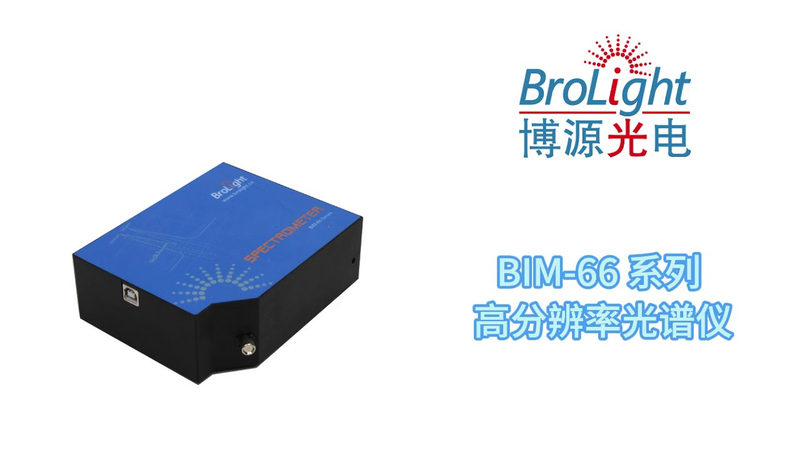 BIM-6602A series high-resolution spectrometers UV-NIR BIM-6602A-15
Spectrometers
Brolight
Fiber Connectors [BIM-6602A: Parameter Specifications]: SMA905 Detector [BIM-6602A: Parameter Specifications]: Hamamatsu S11639, Line-Array CMOS Detector Pixel [BIM-6602A: Parameter Specifications]: 2048 Pixels, Each Pixel 14μm×200μm
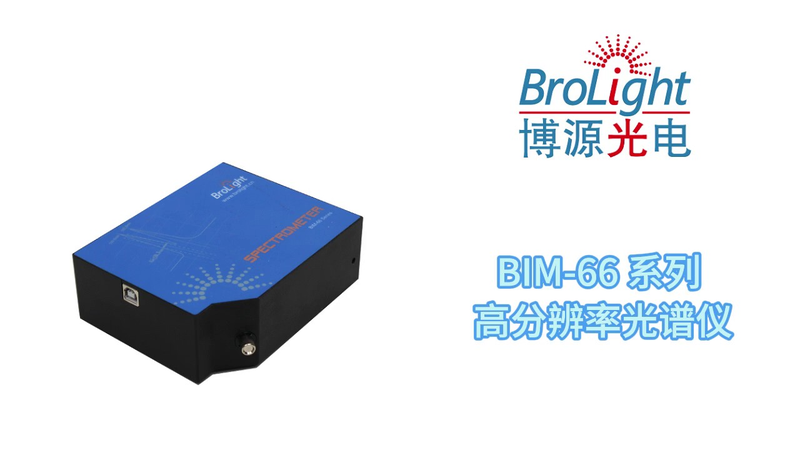
The BIM-6602A series spectrometer uses a high-resolution optomechanical structure in a compact, portable design, with resolution as fine as 0.08 nm. Interchangeable gratings adjust optical resolution and spectral range. Upgraded circuitry provides a 10000:1 dynamic range, minimum integration time of 0.5 milliseconds, and 600:1 signal-to-noise ratio for weak-signal detection. RS232 communication and improved interference resistance make it ideal for industrial and scientific applications.
-
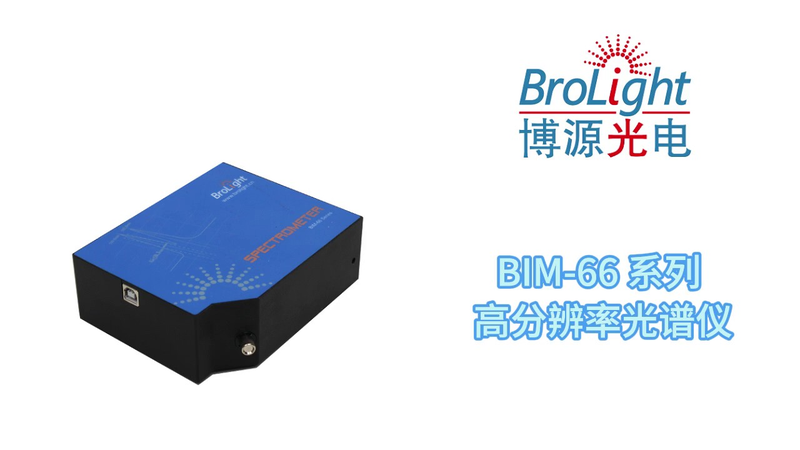 BIM-6602A series high-resolution spectrometers UV-NIR BIM-6602A-16
Spectrometers
Brolight
Fiber Connectors [BIM-6602A: Parameter Specifications]: SMA905 Detector [BIM-6602A: Parameter Specifications]: Hamamatsu S11639, Line-Array CMOS Detector Pixel [BIM-6602A: Parameter Specifications]: 2048 Pixels, Each Pixel 14μm×200μm
The BIM-6602A series spectrometer uses a high-resolution optomechanical structure in a compact, portable design, with resolution as fine as 0.08 nm. Interchangeable gratings adjust optical resolution and spectral range. Upgraded circuitry provides a 10000:1 dynamic range, minimum integration time of 0.5 milliseconds, and 600:1 signal-to-noise ratio for weak-signal detection. RS232 communication and improved interference resistance make it ideal for industrial and scientific applications.
-
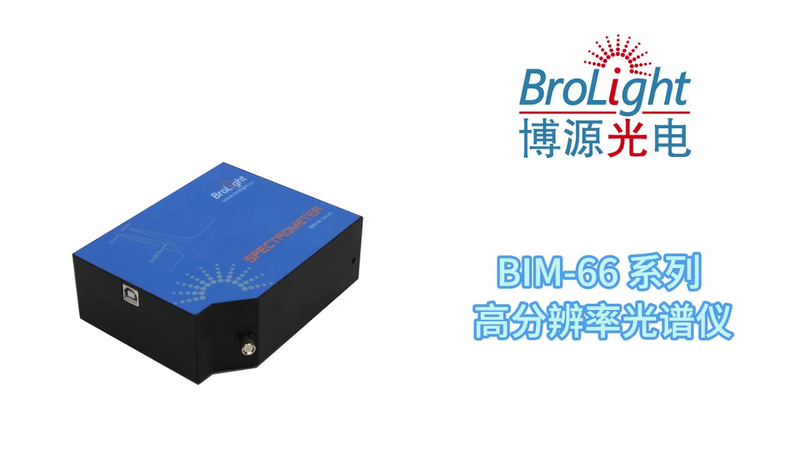 BIM-6602A series high-resolution spectrometers UV-NIR BIM-6602A-17
Spectrometers
Brolight
Fiber Connectors [BIM-6602A: Parameter Specifications]: SMA905 Detector [BIM-6602A: Parameter Specifications]: Hamamatsu S11639, Line-Array CMOS Detector Pixel [BIM-6602A: Parameter Specifications]: 2048 Pixels, Each Pixel 14μm×200μm
The BIM-6602A series spectrometer uses a high-resolution optomechanical structure in a compact, portable design, with resolution as fine as 0.08 nm. Interchangeable gratings adjust optical resolution and spectral range. Upgraded circuitry provides a 10000:1 dynamic range, minimum integration time of 0.5 milliseconds, and 600:1 signal-to-noise ratio for weak-signal detection. RS232 communication and improved interference resistance make it ideal for industrial and scientific applications.
-
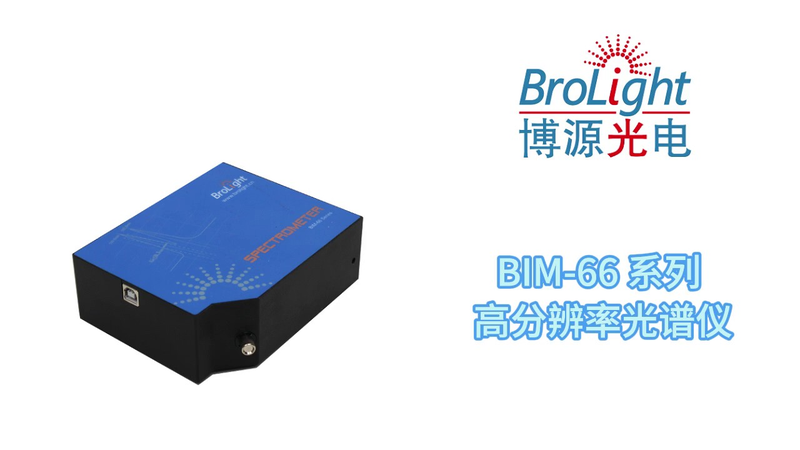 BIM-6602A series high-resolution spectrometers UV-NIR BIM-6602A-18
Spectrometers
Brolight
Fiber Connectors [BIM-6602A: Parameter Specifications]: SMA905 Detector [BIM-6602A: Parameter Specifications]: Hamamatsu S11639, Line-Array CMOS Detector Pixel [BIM-6602A: Parameter Specifications]: 2048 Pixels, Each Pixel 14μm×200μm
The BIM-6602A series spectrometer uses a high-resolution optomechanical structure in a compact, portable design, with resolution as fine as 0.08 nm. Interchangeable gratings adjust optical resolution and spectral range. Upgraded circuitry provides a 10000:1 dynamic range, minimum integration time of 0.5 milliseconds, and 600:1 signal-to-noise ratio for weak-signal detection. RS232 communication and improved interference resistance make it ideal for industrial and scientific applications.
-
 BIM-6602A series high-resolution spectrometers UV-NIR BIM-6602A-19
Spectrometers
Brolight
Fiber Connectors [BIM-6602A: Parameter Specifications]: SMA905 Detector [BIM-6602A: Parameter Specifications]: Hamamatsu S11639, Line-Array CMOS Detector Pixel [BIM-6602A: Parameter Specifications]: 2048 Pixels, Each Pixel 14μm×200μm
The BIM-6602A series spectrometer uses a high-resolution optomechanical structure in a compact, portable design, with resolution as fine as 0.08 nm. Interchangeable gratings adjust optical resolution and spectral range. Upgraded circuitry provides a 10000:1 dynamic range, minimum integration time of 0.5 milliseconds, and 600:1 signal-to-noise ratio for weak-signal detection. RS232 communication and improved interference resistance make it ideal for industrial and scientific applications.
Related Articles
The petrochemical industry features continuous high-risk production, where production equipment operates uninterruptedly under extreme working conditions including high temperature, high pressure, strong corrosion and oxidation.
Driven by the continuous pursuit of higher precision and efficiency in optical communication and optoelectronic device manufacturing, OLCR-1000 Low-Coherence Interferometer, independently developed by Wuhan Guanggu Interconnect Technology Co., Ltd., provides an innovative technical solution for distributed return loss testing of optical fibers and optoelectronic devices.
Driven by the rapid upgrading of intelligent vehicles, optoelectronic sensing technologies represented by laser sensing and infrared thermal imaging have become core pillars for high-level autonomous driving and smart cockpit iteration. Leveraging automotive-grade optoelectronic R&D advantages, Pilot Technology Group launches the VITAL intelligent vehicle solution. By integrating high-power VCSEL laser chips and vehicle infrared night-vision thermal imagers, the system comprehensively enhances vehicle environmental perception and realizes safer, smarter and more comfortable driving experiences.
Fiber lasers and fiber amplification systems require excitation sources with stable wavelength, narrow spectral linewidth and consistent output power.
Loading...
Name
Phone
Organization
Use Case

Database Platform