Wuhan Optics Valley Quantum Technology: High‑Performance Domestic‑Made InGaAs Avalanche Photodiode Chips

Published: 2026-08-07 16:17:46 Views: 29

Wuhan Optics Valley Quantum Technology Co., Ltd. is a leading domestic developer of high‑speed semiconductor optical chips and photodetector components. Our product portfolio covers InGaAs avalanche photodiode bare dies and PIN photodetector chips designed for fiber‑optic communication, fiber sensing, spectroscopy, LiDAR and industrial optical‑detection applications.
The company focuses on high‑performance photodetector chip development, optical‑signal‑reception optimization and high‑speed optical‑detection technology to deliver precise, stable and dependable photonic receiver components.
Our chip technologies support extensive application scenarios, including 5G‑base‑station front‑haul, gas sensing, long‑haul fiber‑optic links, RF‑over‑fiber transmission, heterodyne detection, machine vision, laser pumping, material processing, remote‑sensing, autonomous‑vehicle systems, optoelectronic defense equipment, test‑and‑measurement and advanced photonics research.
ImageDescription

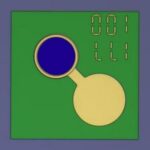
2.5Gbps InGaAs APD Photodiode Chip‑ Chips for Optical‑Fiber‑Communication and OTDR Sensing
ImageDescription

The 2.5Gbps InGaAs APD photodiode chip is a front‑illuminated planar‑structure bare die with separated PN electrodes. Equipped with a 50‑μm‑diameter photosensitive area, it delivers ample light‑receiving aperture, fast‑response capacity and stable wavelength‑operating performance.
This avalanche photodiode features low‑bandwidth noise and excellent side‑mode suppression ratio for premium‑grade spectral performance. It provides steady output characteristics for high‑speed dynamic signal reception and its robust die‑structure supports varied packaging solutions.
Operating within the ‑40℃~+85℃ wide‑temperature range, the bare die is compatible with customized control circuits for high‑speed optical‑signal acquisition. It is available as unpackaged chip‑die and well‑suited for fiber‑optic hardware, OTDR instrument modules, optical network units and scanning‑imaging equipment.


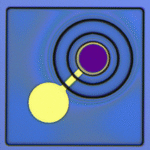
D‑10A40F‑01 10Gbps InGaAs APD Photodiode Chip‑ High‑Speed Receiver Chip for 5G‑Front‑Haul and 10G‑PON
ImageDescription

Model D‑10A40F‑01 is a mesa‑type front‑illuminated avalanche photodiode bare die optimized for the 1550‑nm telecommunication band, with a 40‑μm photosensitive‑surface diameter.
Working under the photoconductive mode, the component specializes in high‑speed, low‑noise optical detection. It comes with high responsivity, low parasitic capacitance, ultra‑low dark‑current and low noise‑equivalent power to enhance receiving sensitivity and signal quality. Its low excess‑noise factor improves detection accuracy, and it is supplied in bare‑die form.
The chip is ideal for 10Gbps optical transceivers, 10G‑PON passive optical‑network hardware, 5G radio‑unit front‑haul modules, LiDAR ranging, free‑space optical communication, remote sensing, industrial machine‑vision and optoelectronic security‑defence systems.

Feel free to get in touch with our Photonics Source team for samples, customized specifications and bulk‑order enquiries.
Related Products

Image Name Category Manufacturer Parameters Description
  • Non-Contact Type Laser-to-Fiber Coupler - Adapter Interface Fiber Optic Couplers Non-Contact Type Laser-to-Fiber Coupler - Adapter Interface Fiber Optic Couplers Shconnet

    In non-contact laser-to-fiber couplers, there is a certain air gap between the fiber and the coupling lens. This design is very flexible, allowing the use of various types of lenses with various focal lengths. The distance between the fiber and the lens in this coupler can be adjusted to compensate for small changes in laser wavelength. In high-power multimode fiber coupling systems, the distance between the fiber and the lens can be adjusted for defocusing to avoid fiber damage.

  • Non-Contact Type Laser-to-Fiber Coupler - Adapter Interface Fiber Optic Couplers Non-Contact Type Laser-to-Fiber Coupler - Adapter Interface Fiber Optic Couplers Shconnet

    In non-contact laser-to-fiber couplers, there is a certain air gap between the fiber and the coupling lens. This design is very flexible, allowing the use of various types of lenses with various focal lengths. The distance between the fiber and the lens in this coupler can be adjusted to compensate for small changes in laser wavelength. In high-power multimode fiber coupling systems, the distance between the fiber and the lens can be adjusted for defocusing to avoid fiber damage.

  • Non-Contact Type Laser-to-Fiber Coupler - Adapter Interface Fiber Optic Couplers Non-Contact Type Laser-to-Fiber Coupler - Adapter Interface Fiber Optic Couplers Shconnet

    In non-contact laser-to-fiber couplers, there is a certain air gap between the fiber and the coupling lens. This design is very flexible, allowing the use of various types of lenses with various focal lengths. The distance between the fiber and the lens in this coupler can be adjusted to compensate for small changes in laser wavelength. In high-power multimode fiber coupling systems, the distance between the fiber and the lens can be adjusted for defocusing to avoid fiber damage.

  • Non-Contact Type Laser-to-Fiber Coupler - Adapter Interface Fiber Optic Couplers Non-Contact Type Laser-to-Fiber Coupler - Adapter Interface Fiber Optic Couplers Shconnet

    In non-contact laser-to-fiber couplers, there is a certain air gap between the fiber and the coupling lens. This design is very flexible, allowing the use of various types of lenses with various focal lengths. The distance between the fiber and the lens in this coupler can be adjusted to compensate for small changes in laser wavelength. In high-power multimode fiber coupling systems, the distance between the fiber and the lens can be adjusted for defocusing to avoid fiber damage.

  • Non-Contact Type Laser-to-Fiber Coupler - Adapter Interface Fiber Optic Couplers Non-Contact Type Laser-to-Fiber Coupler - Adapter Interface Fiber Optic Couplers Shconnet

    In non-contact laser-to-fiber couplers, there is a certain air gap between the fiber and the coupling lens. This design is very flexible, allowing the use of various types of lenses with various focal lengths. The distance between the fiber and the lens in this coupler can be adjusted to compensate for small changes in laser wavelength. In high-power multimode fiber coupling systems, the distance between the fiber and the lens can be adjusted for defocusing to avoid fiber damage.

Contact Us

Loading...

A global database of 100,000 photonics products helps match you with the right product.

  • Expert Selection
  • Verified Suppliers
  • Quality Assured
AI Parametric Selection
Smart Match · Precise Recs
Enter Specifications
AI Smart Matching
Get Best Matches
Skip Manual Comparison
Find Best Solutions Fast
Select Now →