Breakthrough Innovation From Optics‑Valley Quantum Chips Enables LiDAR Detection Range Up to 389 Meters

Published: 2026-08-11 14:45:32 Views: 27

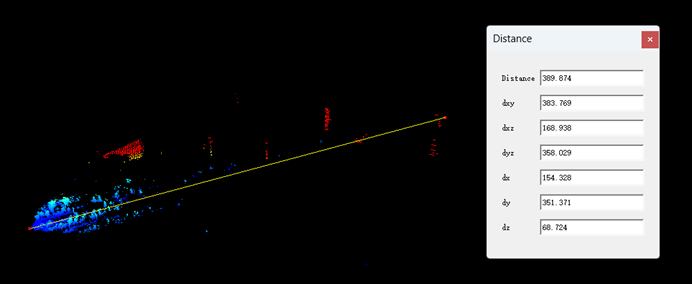
Recently, our R&D crew carried‑out performance tests on domestically‑made third‑party LiDAR hardware. The original built‑in sensor chip was replaced by Optics‑Valley Quantum’s new‑generation D‑XXLA200‑02 chip. Comprehensive comparative tests were conducted on long‑range detection capacity and imaging quality.
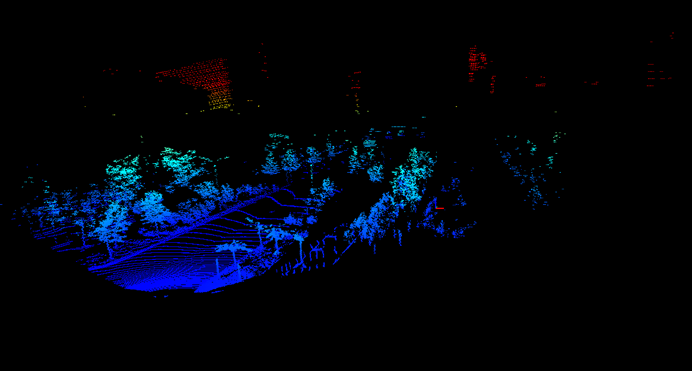
ImageDescription

ImageDescription

Benefiting from the chip’s minimized dark‑current and outstanding signal multiplication capacity, the LiDAR preserves its original detection field‑of‑view and ranging precision. Its maximum effective detection range has been extended from 309 meters to 389 meters, marking a major performance upgrade.

Optics‑Valley Quantum’s front‑illumination planar‑structured InP/InGaAs APD avalanche photodiode chip set delivers high‑speed photoresponse, superior signal gain, ultra‑low dark‑current and dependable long‑term stability. Its spectral response spans 0.9 μm to 1.7 μm, with available photosensitive‑surface diameters of 200 μm, 350 μm, 500 μm and 1 mm.

These chips serve eye‑safe LiDAR, laser rangefinders and other optical‑sensing applications. We supply unpackaged APD dies and TO‑packaged components, alongside bespoke chip‑development services for clients. All products satisfy the reliability specifications of Telcordia‑GR‑468‑CORE.
Related Products

Image Name Category Manufacturer Parameters Description
  • Non-Contact Type Laser-to-Fiber Coupler - Adapter Interface Fiber Optic Couplers Non-Contact Type Laser-to-Fiber Coupler - Adapter Interface Fiber Optic Couplers Shconnet

    In non-contact laser-to-fiber couplers, there is a certain air gap between the fiber and the coupling lens. This design is very flexible, allowing the use of various types of lenses with various focal lengths. The distance between the fiber and the lens in this coupler can be adjusted to compensate for small changes in laser wavelength. In high-power multimode fiber coupling systems, the distance between the fiber and the lens can be adjusted for defocusing to avoid fiber damage.

  • Non-Contact Type Laser-to-Fiber Coupler - Adapter Interface Fiber Optic Couplers Non-Contact Type Laser-to-Fiber Coupler - Adapter Interface Fiber Optic Couplers Shconnet

    In non-contact laser-to-fiber couplers, there is a certain air gap between the fiber and the coupling lens. This design is very flexible, allowing the use of various types of lenses with various focal lengths. The distance between the fiber and the lens in this coupler can be adjusted to compensate for small changes in laser wavelength. In high-power multimode fiber coupling systems, the distance between the fiber and the lens can be adjusted for defocusing to avoid fiber damage.

  • Non-Contact Type Laser-to-Fiber Coupler - Adapter Interface Fiber Optic Couplers Non-Contact Type Laser-to-Fiber Coupler - Adapter Interface Fiber Optic Couplers Shconnet

    In non-contact laser-to-fiber couplers, there is a certain air gap between the fiber and the coupling lens. This design is very flexible, allowing the use of various types of lenses with various focal lengths. The distance between the fiber and the lens in this coupler can be adjusted to compensate for small changes in laser wavelength. In high-power multimode fiber coupling systems, the distance between the fiber and the lens can be adjusted for defocusing to avoid fiber damage.

  • Non-Contact Type Laser-to-Fiber Coupler - Adapter Interface Fiber Optic Couplers Non-Contact Type Laser-to-Fiber Coupler - Adapter Interface Fiber Optic Couplers Shconnet

    In non-contact laser-to-fiber couplers, there is a certain air gap between the fiber and the coupling lens. This design is very flexible, allowing the use of various types of lenses with various focal lengths. The distance between the fiber and the lens in this coupler can be adjusted to compensate for small changes in laser wavelength. In high-power multimode fiber coupling systems, the distance between the fiber and the lens can be adjusted for defocusing to avoid fiber damage.

  • Non-Contact Type Laser-to-Fiber Coupler - Adapter Interface Fiber Optic Couplers Non-Contact Type Laser-to-Fiber Coupler - Adapter Interface Fiber Optic Couplers Shconnet

    In non-contact laser-to-fiber couplers, there is a certain air gap between the fiber and the coupling lens. This design is very flexible, allowing the use of various types of lenses with various focal lengths. The distance between the fiber and the lens in this coupler can be adjusted to compensate for small changes in laser wavelength. In high-power multimode fiber coupling systems, the distance between the fiber and the lens can be adjusted for defocusing to avoid fiber damage.

Contact Us

Loading...

A global database of 100,000 photonics products helps match you with the right product.

  • Expert Selection
  • Verified Suppliers
  • Quality Assured
AI Parametric Selection
Smart Match · Precise Recs
Enter Specifications
AI Smart Matching
Get Best Matches
Skip Manual Comparison
Find Best Solutions Fast
Select Now →