
What Is a Spatial Modulator? Key Uses & Working Basics
Published: 2026-07-23 14:14:22 Views: 60
What Is a Spatial Modulator?
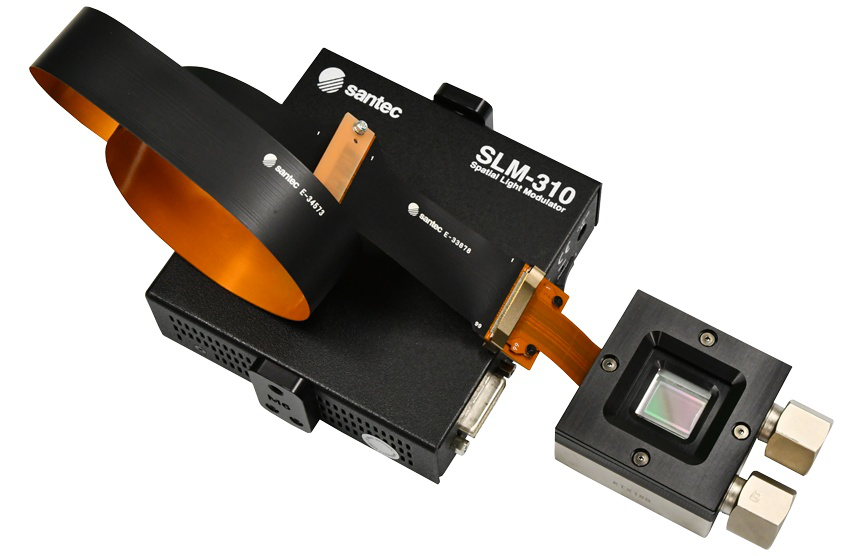
A spatial modulator is a pixel-based optical component designed to spatially adjust light properties in real time. It can modify the amplitude, phase, or polarization of incident light beams through computer programming, converting digital signals into customized optical field patterns.
Unlike fixed optical lenses or filters, it offers flexible, reprogrammable light control without hardware replacement. The most mainstream types include liquid crystal SLMs and DMD (Digital Micromirror Device) modulators, featuring high precision and fast response for diverse optical scenarios.
How Does a Spatial Modulator Work?
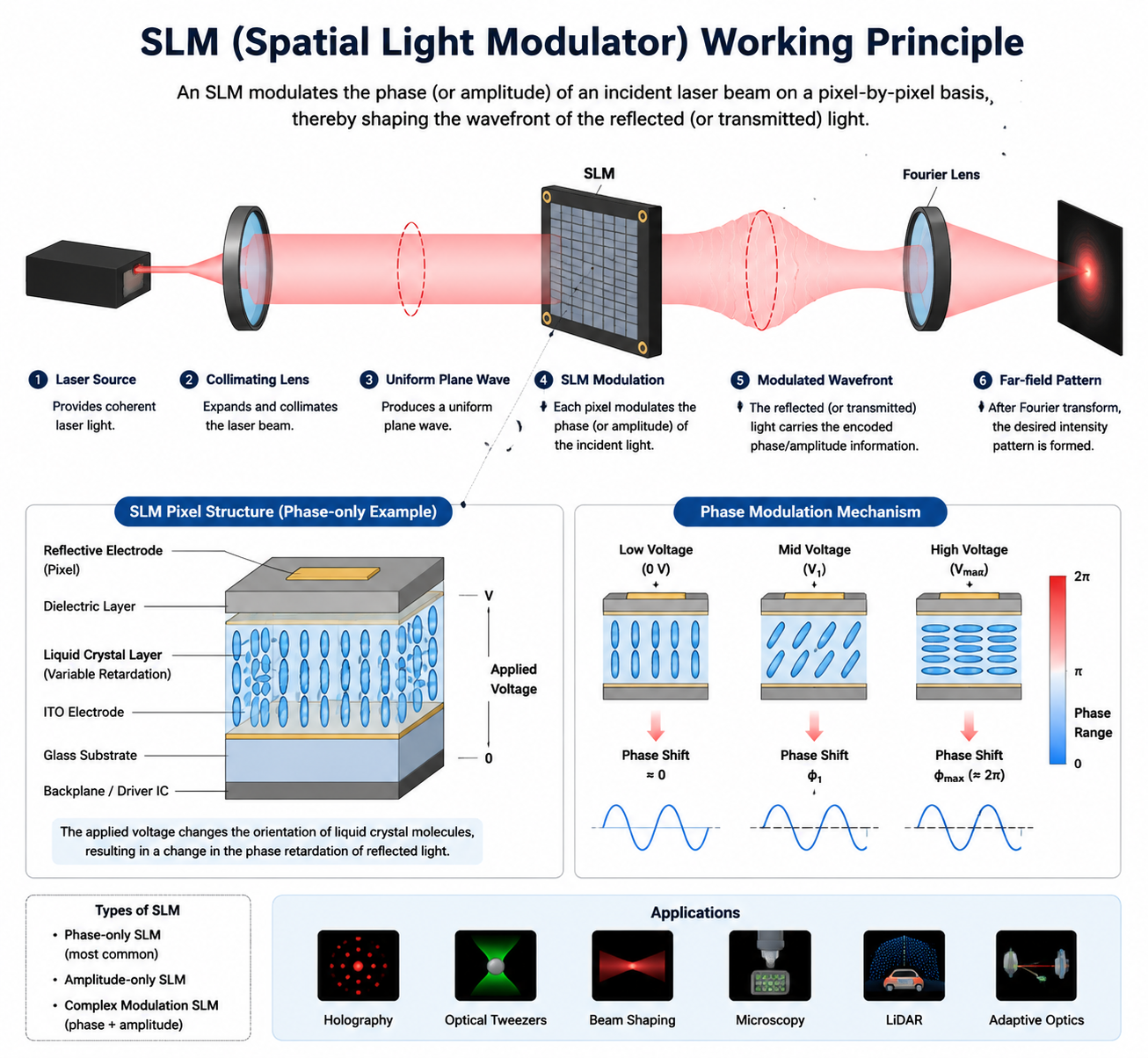
Its working mechanism is simple and intuitive. The device receives digital control signals from a host system, then adjusts the optical parameters of each pixel unit independently. By altering how light passes through or reflects off each pixel, it reshapes laser beams, corrects optical aberrations, or generates dynamic holographic light fields to meet different optical processing needs.
Key Applications of Spatial Modulators
Thanks to its flexible and precise light control capability, spatial modulators cover a wide range of scientific, industrial, and commercial applications:
- Holography & 3D Display: Generate dynamic computer-generated holograms for AR/VR devices, 3D imaging systems, and immersive display solutions.
- Laser Processing & Industrial Optics: Achieve precise laser beam shaping, beam steering, and aberration correction for laser cutting, engraving, and precision machining equipment.
- Scientific Research & Microscopy: Applied in optical tweezers, high-resolution microscopic imaging, and optical computing for academic and laboratory research.
- Optical Communication: Optimize light beam transmission, improve signal stability, and support high-speed optical communication system calibration and testing.
- Semiconductor & Lithography: Used for maskless lithography and precision optical patterning in semiconductor chip manufacturing.
Conclusion
Spatial modulators (SLMs) are vital programmable optical devices that bridge digital control and optical beam manipulation. With unmatched flexibility, high precision, and wide adaptability, they have become core components in holographic display, industrial laser processing, scientific optics, and semiconductor manufacturing, supporting the innovation of modern optical technologies.




