

Microprojection Engine
Miniature laser projection uses two-axis MEMS scanning mirrors and RGB lasers to scan an image. The source describes three projection generations: CRT, expanded as Crystal Ray Tube with the Chinese meaning cathode-ray tube; LCD (Liquid Crystal Display); and LCOS/DLP (Digital Light Processor). Early CRT has a long history in aerospace and remote monitoring. Texas Instruments' DLP micromirror reflection improves brightness/contrast and reduces size/weight. LCOS (Liquid Crystal on Silicon) combines semiconductor processing with LCD, emerging in the late1990s; the source credits Aurora Systems'2000 products, with high resolution, low price and reflective imaging. Low power, cost and high resolution are strengths. Unlike glass-based LCD, LCOS is built on silicon. Compared with projector high-temperature-polysilicon LCD using transmission, with about3% light efficiency and difficult resolution scaling, reflective LCOS exceeds40% efficiency. Common low-cost CMOS processes avoid extra investment and scale with semiconductor miniaturization, while specialized polysilicon LCD needs separate equipment and is harder to make cheaper. The description references a technology comparison.
 Save to Favorites
Overview
Datasheet
Please provide your email to download the datasheet.
Invalid email format. Please try again.
Supplier Information
Related Products
-
 Case Collection - 05
Custom and Other Services
Situoli
Custom Cases:Brightfield Flow-Cell Imaging,Olympus Heated Slide Holder,Fiber Centering Device,Olympus Fluorescence Cube.
-
 Case Collection - 03
Custom and Other Services
Situoli
Custom Cases:Live-Cell Environment Simulator,Olympus CX23 Binocular-to-Tube-Lens Imaging Conversion,Nikon TS2R Added IR Laser.
-
 Case Collection - 04
Custom and Other Services
Situoli
Custom Cases:Motorized Fluorescence Test Platform,Olympus CKX41 Halogen-to-LED Conversion,Olympus SZX7 Added UV Source.
-
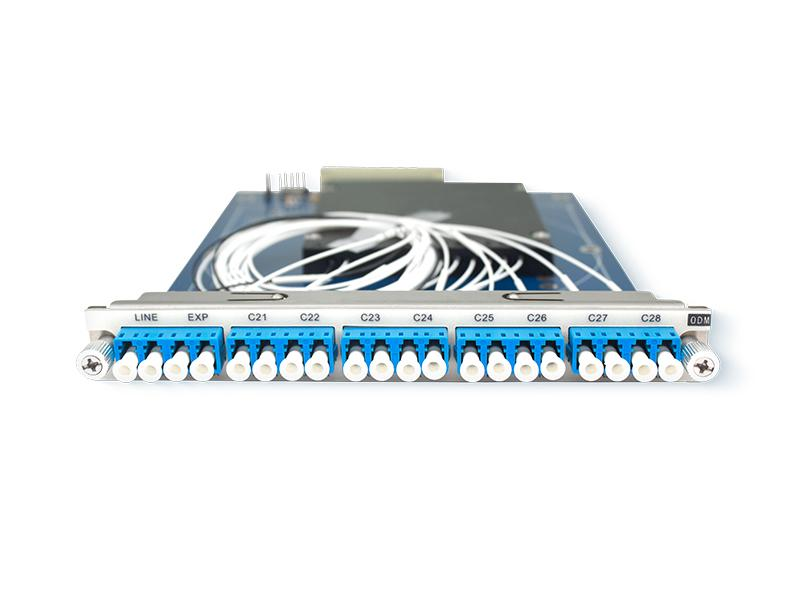 Multiplexing / Demultiplexing Board (ODM)
Custom and Other Services
Fiberwdm
Wavelength Range: CWDM:1271~1611nm DWDM:C-Band(100GHZ/75GHZ/50GHZ) Channel Spacing: CWDM:20nm DWDM:0.8nm/0.6nm/0.4nm Passband Width: CWDM:±6.5nm DWDM:0.1nm
The ODM multiplexer/demultiplexer board from FIBERWDM瑞东科技 combines or separates CWDM/DWDM channels, saving fiber resources and enabling flexible network configuration. DWDM systems smoothly upgrade to48 wavelengths at100GHz spacing,64 at75GHz and96 at50GHz. CWDM supports upgrades to18 wavelengths. Higher spectral utilization saves frequency-band resources.
-
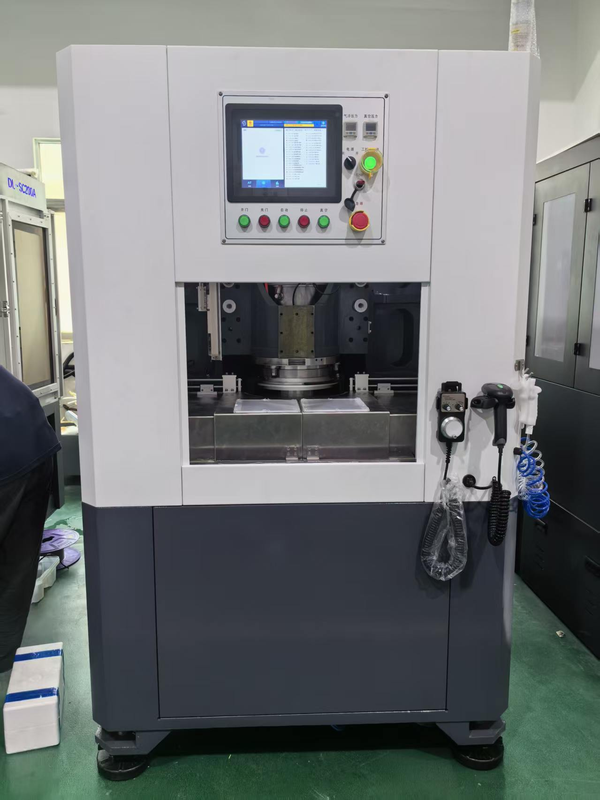 Grinding, Polishing and Thinning
Custom and Other Services
Jmwafer
One-Stop Wafer Grinding/Thinning through Mirror Polishing,Ultrathin Thickness Control,Nanometre Flatness/Low-Damage Surfaces for Advanced Chips,Power/RF Devices,Packaging.
Related Articles
Raybowlaser, a professional manufacturer of high-power laser chips, has officially launched its upgraded new-generation 1470nm high-performance laser chip. Achieving groundbreaking progress in rated output power and wall-plug efficiency (WPE), this innovative laser chip delivers superior and reliable core light source solutions for medical cosmetology, industrial processing, agricultural applications and scientific research equipment.
Electro-optic deflectors (EODs) are optical devices used to steer or deflect light beams by applying an electric field to a specialized optical crystal. Unlike mechanical beam steering systems that rely on moving mirrors, electro-optic deflectors enable high-speed, non-mechanical beam control with exceptional precision and responsiveness. They are widely used in laser scanning, optical communications, microscopy, laser printing, spectroscopy, and scientific research, where rapid and accurate laser beam positioning is essential.
Founded in 2004, Wuhan Union Optic Inc. is a National Specialized, Refined, Unique & Innovative "Little Giant" high-tech enterprise located in Wuhan East Lake High-Tech Development Zone.
Precise spectral screening is essential for high-precision medical detection, spectroscopic analysis and intelligent imaging systems. Tailored for visible and near-infrared spectral separation, the SP900 shortpass optical filter delivers high-efficiency light transmission and deep infrared blocking performance. It effectively eliminates stray light interference, improves signal-to-noise ratio (SNR), and serves as a core optical component for biomedical instruments, scientific analysis equipment and machine vision systems.
Loading...
Name
Phone
Organization
Use Case

Database Platform