
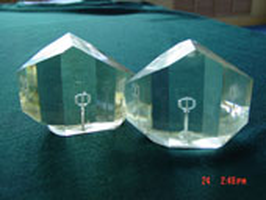
S-KTP
S-KTP Super Potassium Titanyl Phosphate(S-KTP) is a positive biaxial crystal, with the principal axes X, Y, and Z (n z >n y >n x ) parallel to the crystallographic axes a, b, and c, respectively. KTP for SHG of Nd:lasers KTP is the most commonly used material for frequency doubling of Nd:YAG lasers and other Nd-doped lasers, particularly at the low or medium power density. KTP for OPO As an efficient OPO crystal pumped by the fundamental and second harmonics of a Nd:YAG or Nd:YLF laser, KTP plays an important role in parametric sources for tunable output from visible (0.6mm) to mid-IR (4.5mm). NCPM KTP OPO pumped by 1064nm, the signal output is around eye safe wavelength, find applications in eye-safe devices. The NCPM KTP OPO keeps the KTP crystal fixed in X-axis and tunes the pumping wavelength. If 1064nm pumping source, the output will be at 1.57mm (signal) and 3.3 mm (idler).
 Save to Favorites
Overview
Specifications
| Parameter | Value |
|---|---|
| Crystal structure | Orthorhombic, space group Pna2 1 ,point group mm2 |
| Cell parameters | a=6.404Å; b=10.616Å; c=12.814Å; Z=8 |
| Melting point | 1172¡ãC incongruent |
| Curie point | 936°C |
| Mohs hardness | »5 |
| Density | 3.01 g/cm 3 |
| Color | colorless |
| Hygroscopic susceptibility | no |
| Specific heat | 0.1643 cal/g°C |
| Thermal conductivity | 0.13 W/cm/°K |
| Electrical conductivity [c-axis, 22°C, 1KHz] | 3.5x10 -8 s/cm (c-axis, 22°C, 1KHz) |
| Transmitting range | 350 nm - 4500 nm |
| Refractive indices [1064nm] | n x = 1.7377; n y = 1.7453; n z = 1.8297 |
| Refractive indices [532nm] | n x = 1.7780; n y = 1.7886; n z = 1.8887 |
| Sellmeier equations: (l in mm) | n x 2 =3.0065+0.03901/( l 2 -0.04251)-0.01327 l 2; n y 2 =3.0333+0.04154/( l 2 -0.04547)-0.01408 l 2; n z 2 =3.0065+0.05694/( l 2 -0.05658)-0.01682 l 2 |
| Therm-optic coefficients | dn x /dT=1.1x10 -5 /° C; dn y /dT=1.3x10 -5 /° C; dn z /dT=1.6x10 -5 /° C |
| Absorption coefficient a [@1064nm and 532nm] | a < 1% cm -1 @1064nm and 532nm |
| Phase matchable SHG range | 497 - 1800nm |
| Nonlinear optical coefficients | d 31 =6.5pm/v; d 32 =5pm/v; d 33 =13.7pm/v; d 24 =7.6pm/v; d 15 =6.1pm/v |
| PM angle [For type II SHG of a Nd:YAG: Laser at 1064nm] | q=90¡ã, f=23.5¡ã |
| Effective SHG coefficient [For type II SHG of a Nd:YAG: Laser at 1064nm] | d eff »8.3xd 36 (KDP) |
| Angular acceptance [For type II SHG of a Nd:YAG: Laser at 1064nm] | 20 mrad-cm |
| Temperature acceptance [For type II SHG of a Nd:YAG: Laser at 1064nm] | 25¡ãC-cm |
| Spectral acceptance [For type II SHG of a Nd:YAG: Laser at 1064nm] | 5.6 Å -cm |
| Walk-off angle [For type II SHG of a Nd:YAG: Laser at 1064nm] | 4.5 mrad (0.26¡ã) |
| Optical damage threshold [For type II SHG of a Nd:YAG: Laser at 1064nm;@1064nm, 10ns, 10Hz] | > 450MW/cm 2 , (@ 1064nm, 10ns, 10Hz) |
| Electro-optic coefficient r 13 [Low frequency] | 9.5 pm/V |
| Electro-optic coefficient r 13 [High frequency] | 8.8 pm/V |
| Electro-optic coefficient r 23 [Low frequency] | 15.7 pm/V |
| Electro-optic coefficient r 23 [High frequency] | 13.8 pm/V |
| Electro-optic coefficient r 33 [Low frequency] | 36.3 pm/V |
| Electro-optic coefficient r 33 [High frequency] | 35.0 pm/V |
| Electro-optic coefficient r 51 [Low frequency] | 7.3 pm/V |
| Electro-optic coefficient r 51 [High frequency] | 6.9 pm/V |
| Electro-optic coefficient r 42 [Low frequency] | 9.3 pm/V |
| Electro-optic coefficient r 42 [High frequency] | 8.8 pm/V |
| Dielectric constant | e eff =13 |
| Dimension tolerance | ± 0.1 mm |
| Wavefront distortion [@ 633 nm] | lambda /8 @ 633 nm |
| Clear aperture | > 90% central area |
| Flatness [@ 633 nm] | lambda /8 @ 633 nm |
| S/D | 10/5 to MIL-O-13830A |
| Parallelism | better than 20 arc seconds |
| Perpendicularity | 12 arc minutes |
| Angle tolerance | Δθ < ±0.2°, Δφ < ± 0.2° |
| AR coating [at 1064nm / at 532 nm] | R< 0.1% at 1064nm and R<0.4% at 532 nm. |
| Optical damage threshold [@ 1.064mm, 10ns, 10Hz] | 500MW/cm 2 , (@ 1.064mm, 10ns, 10Hz) |
Key Features
Datasheet
Please provide your email to download the datasheet.
Invalid email format. Please try again.
Supplier Information
Related Products
-
 BBO Crystal
Optical Crystals
Oplentics-optics
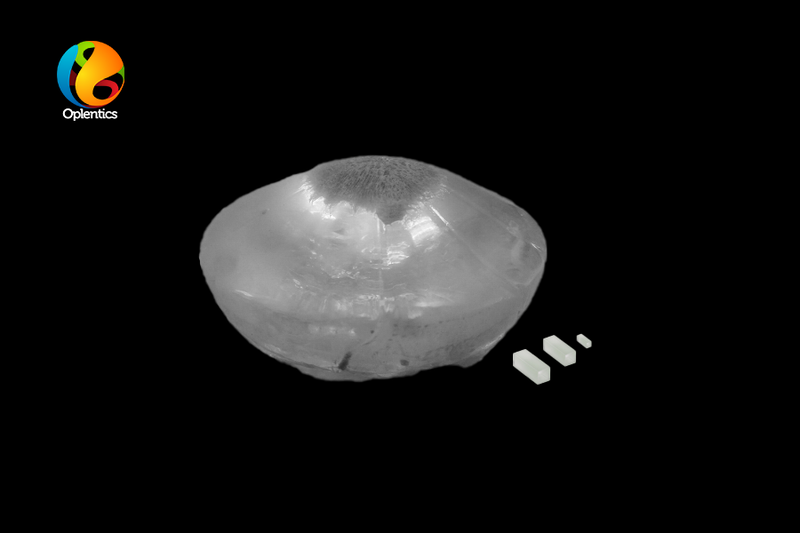
Machining Specifications - Material: Domestic or Imported Materials as Specified by the Customer Machining Accuracy-Dimensions(W*H): 1x1~15x15 Machining Accuracy-Length(L): 0.05~20 mm
-
 Cr4+:YAG Crystal
Optical Crystals
Oplentics-optics
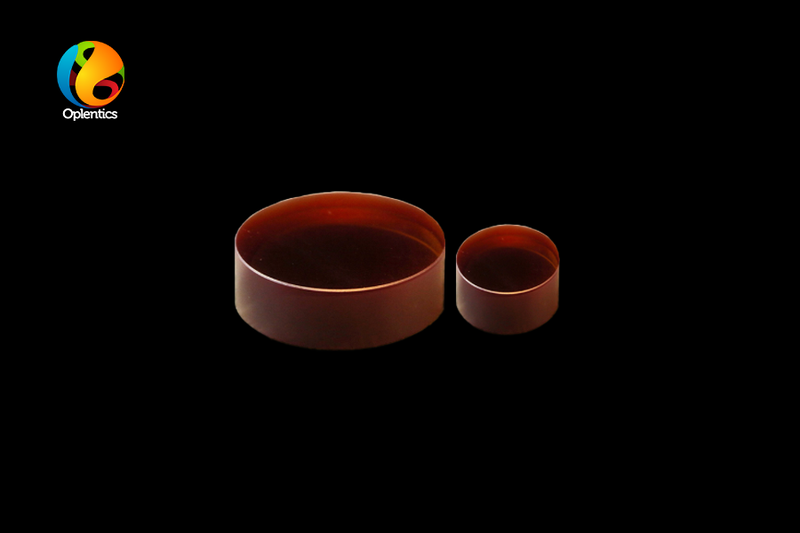
Machining Specifications - Material: Domestic or Imported Materials as Specified by the Customer Machining Accuracy-Crystal Structure: Cubic Machining Accuracy-Hardness: Mohs 8.5
-
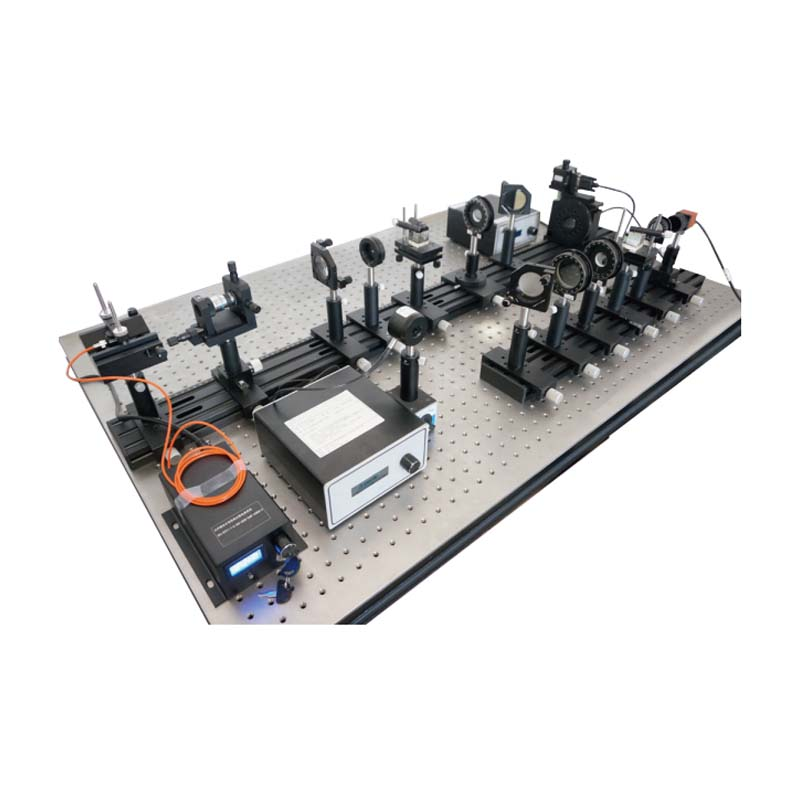 ROE-ME05 Comprehensive Experiment on Light Polarization and Crystal Optics Fundamentals
Optical Crystals
Yixist
-
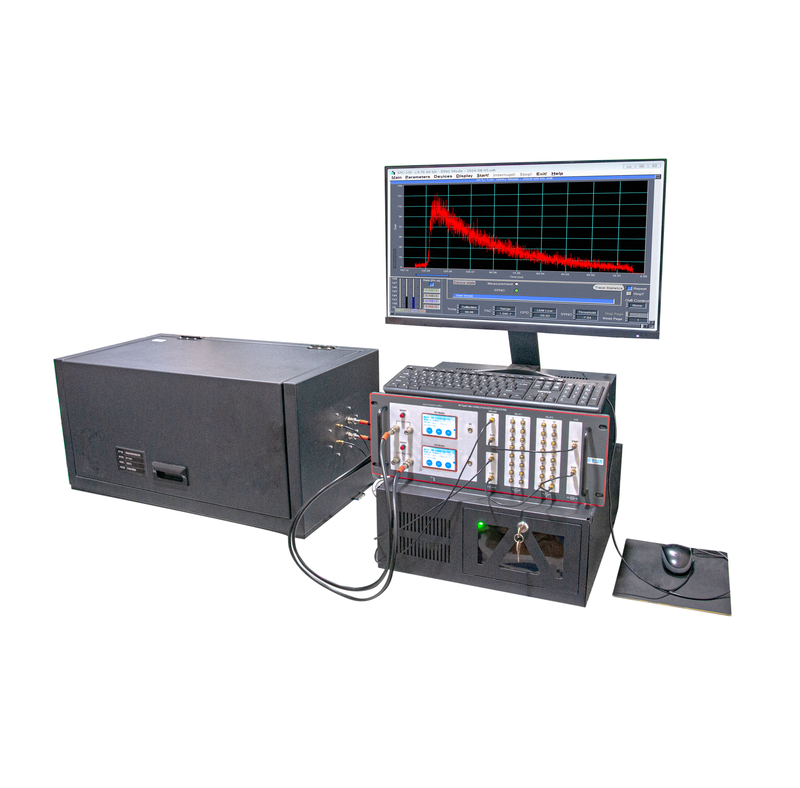 Scintillation Crystal Decay Time Test System (NP-Tau65)
Optical Crystals
Novaphoton
-
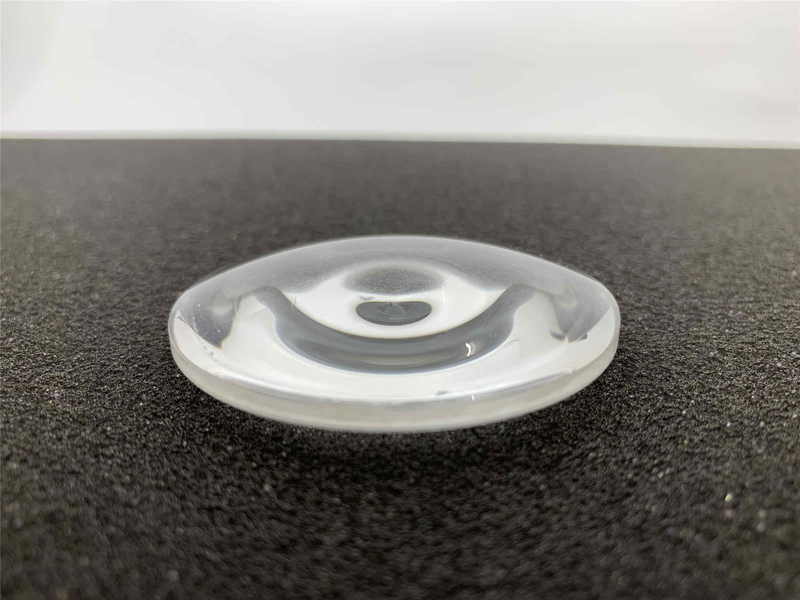 Metals & Crystals Processing
Optical Crystals
Bxoptic
Materials: Laser crystals, fused silica, radiation-resistant glass, UV and IR materials, fiber optic glass, metal materials, such as: CaF₂, BaF₂, ZnSe, ZnS, Ge, Si, Al, Cu, etc. Product Types: Spherical mirrors, aspherical mirrors, etc. Processing Size Range: 5-330
Related Articles
A microlens array (MLA) is a high-precision optical component composed of hundreds or thousands of tiny, uniformly arranged micro lenses on a single flat substrate. Unlike traditional single lenses that focus one light beam, a microlens array can split, homogenize, and reshape light on a micro scale. It is widely paired with VCSELs, lasers, and image sensors, becoming a core part of modern miniature optical systems.
icrolight is a high-tech enterprise specializing in the R&D, manufacturing and sales of active and passive photonic devices for microwave photonics, LiDAR ranging, gas sensing, fiber optics and photomedicine.
The CNGE 384 uncooled infrared core module is a high-performance core component for thermal imaging systems. Adopting mature uncooled infrared detection technology, it realizes all-weather thermal radiation perception and high-definition imaging without refrigeration equipment.
Shandong Haucore Optoelectronics Co., Ltd. introduces the HGLD‑792‑COS‑D‑10WB semiconductor laser within its COS series. Delivering an output power of 10 W at a central wavelength of 792 nm, this device adopts gold‑tin bonding COS packaging. Featuring high reliability and long service life, it serves as a preferred pump source for solid‑state lasers and is widely deployed in industrial processing, laser display, medical & aesthetic treatment, scientific research and other fields.
Loading...
Name
Phone
Organization
Use Case

Database Platform