
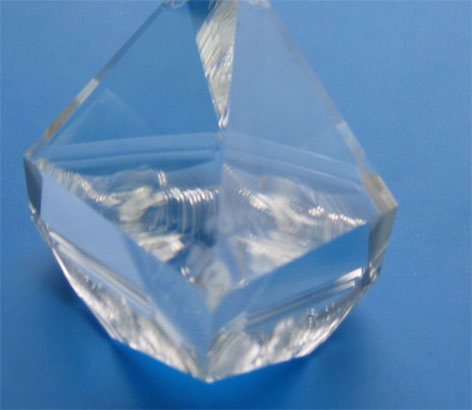
LBO
Introduction Lithium triborate (LiB 3 O 5 or LBO) has the following exceptional properties that make it a very important nonlinear crystal: LBO is grown with the flux method. It is a negative biaxial crystal, with the principal axes X, Y, and Z (n z >n y >n x ) parallel to the crystallographic axes a, c, and b, respectively. LBO has the highest damage threshold in all the commonly-used inorganic NLO crystals. Therefore, it is the best candidate for high average power SHG and other nonlinear optical processes. SHG and THG at Room Temperature LBO is phase matchable for the SHG and THG of Nd:YAG and Nd:YLF lasers, using either type I or type II interaction. For the SHG at room temperature, type I phase matching can be reached and has the maximum effective SHG coefficient in the principal XY and XZ planes in a wide wavelength range from 551nm to about 3000nm. LBO is the first choice for making doubler or tripler for lasers such as Nd:YAG where high power density, high stability, and long time operation are required. Non-Critical Phase-Matching (NCPM) of LBO is featured by no walk-off, very wide acceptance angle and maximum effective coefficient. It promotes LBO to work in its optimal condition. As shown, type I and type II non-critical phase-matching can be reached along x-axis ( q =90 ° , f =0 ° ) and z-axis ( q =0 ° , f =0 ° ) at room temperature, respectively. SHG conversion efficiencies of more than 70% for pulse and 30% for cw Nd:YAG lasers, and THG conversion efficiency over 60% for pulse Nd:YAG laser have been observed. with good output stability and beam quality. LBO's OPO and OPA LBO is an excellent NLO crystal for OPOs and OPAs with a widely tunable wavelength range and high powers. The unique properties of type I and type II phase matching as well as the NCPM leave a big room in the research and applications of LBO's OPO and OPA. NOTE: LBO has a very low susceptibility to moisture. Users are advised to provide dry conditions for both the use and preservation of LBO. Polished surfaces of LBO requires precautions to prevent any damage.
 Save to Favorites
Overview
Specifications
| Parameter | Value |
|---|---|
| Crystal Structure | Orthorhombic, Space group Pna2 1 , Point group mm2 |
| Cell Parameters | a=8.4473 Å; b=7.3788 Å; c=5.1395 Å; Z=2 |
| Melting point | About 834 ° C |
| Optical homogeneity | d n » 10 -6 /cm |
| Mohs hardness | 6 |
| Density | 2.47 g /cm 3 |
| Thermal expansion coefficients | a x =10.8x10 -5 /K; a y = -8.8x10 -5 /K; a z =3.4x10 -5 /K |
| Hygroscopic susceptibility | Low |
| Absorption coefficient [at 1064nm] | <0.01%/cm at 1064nm |
| Thermal conductivity | 3.5 W/mK |
| Transparency range | 155-3200 nm |
| Sellmeier equations ( l in m m) | n 2 x =2.454140+0.011249 /( l 2 -0.011350)-0.014591 l 2 -6.60x10 - 5 l 4; n 2 y =2.539070+0.012711/ ( l 2 -0.012523)-0.018540 l 2 +2.00x10 -4 l 4; n 2 z =2.586179+0.013099/( l 2 -0.011893)-0.017968 l 2 -2.26x10 -4 l 4 |
| Refractive indices [at 1064 nm] | n x = 1.5656; n y = 1.5905; n z =1.6055 |
| Refractive indices [at 532 nm] | n x = 1.5785; n y = 1.6065; n z =1.6212 |
| Refractive indices [at 266 nm] | n x = 1.5973; n y = 1.6286; n z =1.6444 |
| Therm-optic coefficients (/K, l in m m) | Dn x /dT = -1.8x 10 -6; dn y /dT = -13.6 x 10 -6; Dn z /dT = (-6.3-2.1 l ) x 10 -6 |
| NLO coefficients | d 31 =1.05 ± 0.09 pm/V; d 32 = -0.98 ± 0.09 pm/V; d 33 =0.05 ± 0.006 pm/V |
| Effective nonlinearity expressions | d ooe =d 32 cos f (in XY plane) |
| Effective nonlinearity expressions | d eeo =d 31 cos 2 q +d 32 sin 2 q (in XZ plane) |
| Effective nonlinearity expressions | d oeo =d 31 cos q (in YZ plane) |
| Effective nonlinearity expressions | d eoe =d 31 cos 2 q +d 32 sin 2 q (in XZ plane) |
| Damage threshold [at 1064nm] | 9GW/cm 2 (9 ns); 19 GW/cm 2 (1.3 ns) |
| Damage threshold [at 532nm] | 2.2 GW/cm 2 (10 ns); 45 GW/cm 2 (100 ps) |
| Properties of type I NCPM SHG at 1064nm-NCPM Temperature | 148 ° C |
| Properties of type I NCPM SHG at 1064nm-Acceptance Angle | 52 mrad-cm 1/2 |
| Properties of type I NCPM SHG at 1064nm-Temperature Bandwidth | 4 ° C-cm |
| Properties of type I NCPM SHG at 1064nm-Effective SHG Coefficient | 2.69 d 36 (KDP) |
| Transmitting wavefront distortion [@ 633nm] | less than l /8 @ 633nm |
| Dimension tolerance | (W ± 0.1mm )x(H ± 0.1mm )x(L+0.2/ -0.1mm ) |
| Clear aperture | central 90% of the diameter |
| Flatness [@ 633nm] | l /8 @ 633nm |
| Scratch/Dig code | 10/ 5 to MIL-O -13830A |
| Parallelism | better than 20 arc seconds |
| Perpendicularity | 5 arc minutes |
| Angle tolerance | D q < ± 0.2 ° , D f < ± 0.2 ° |
| Coating | High Damage Threshold DBAR and THG coating for 1064nm laser |
| Visible scattering paths or centers [when inspected by a 50mW green laser] | No visible scattering paths or centers |
Applications
Key Features
Datasheet
Please provide your email to download the datasheet.
Invalid email format. Please try again.
Supplier Information
Related Products
-
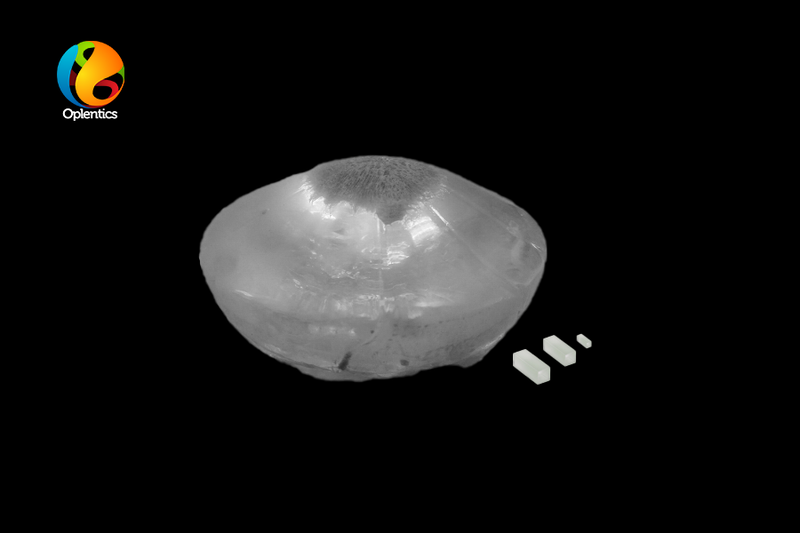 BBO Crystal
Optical Crystals
Oplentics-optics
Machining Specifications - Material: Domestic or Imported Materials as Specified by the Customer Machining Accuracy-Dimensions(W*H): 1x1~15x15 Machining Accuracy-Length(L): 0.05~20 mm
-
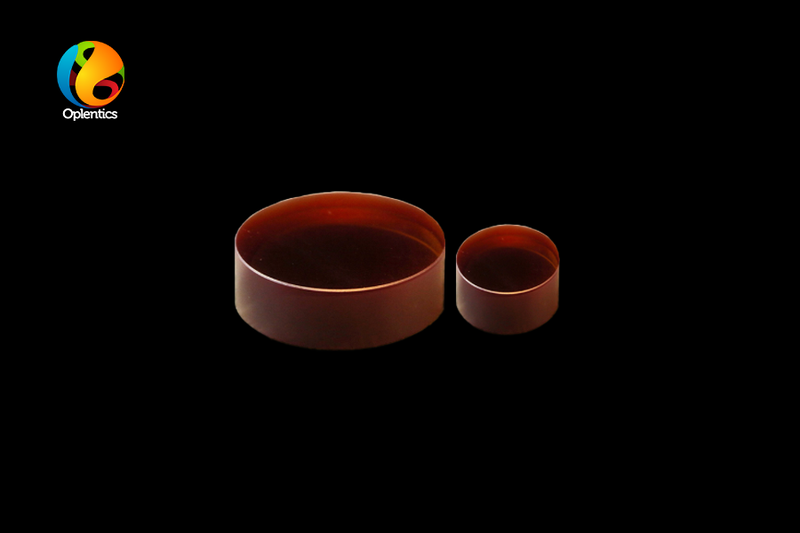 Cr4+:YAG Crystal
Optical Crystals
Oplentics-optics
Machining Specifications - Material: Domestic or Imported Materials as Specified by the Customer Machining Accuracy-Crystal Structure: Cubic Machining Accuracy-Hardness: Mohs 8.5
-
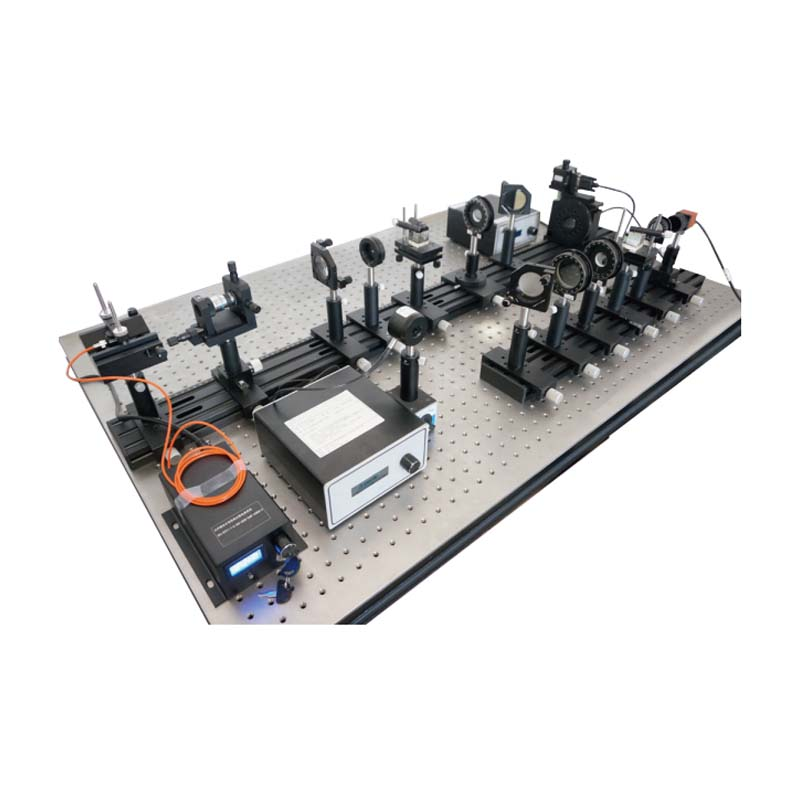 ROE-ME05 Comprehensive Experiment on Light Polarization and Crystal Optics Fundamentals
Optical Crystals
Yixist
-
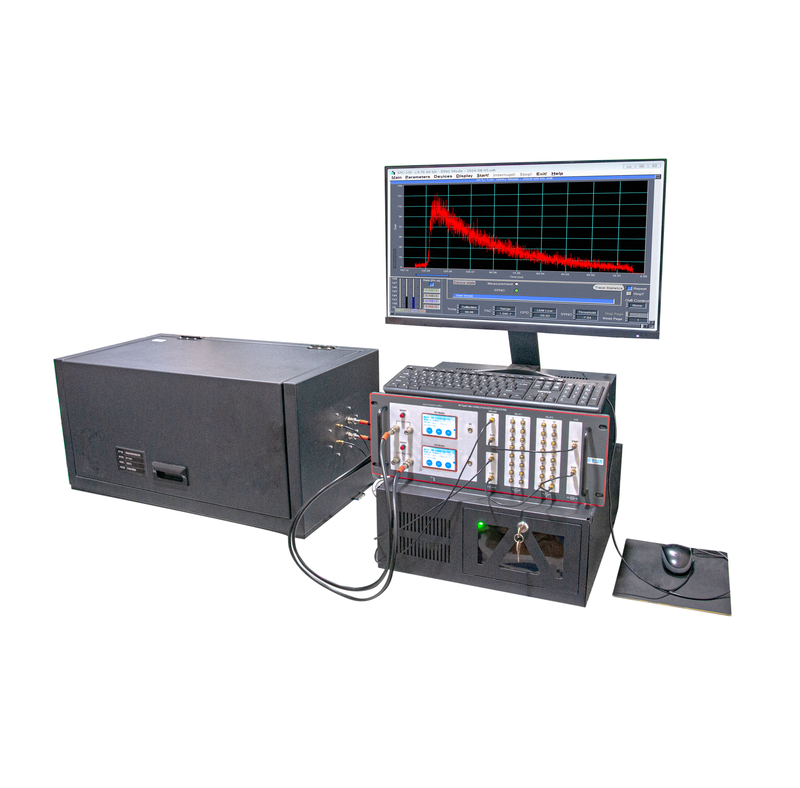 Scintillation Crystal Decay Time Test System (NP-Tau65)
Optical Crystals
Novaphoton
-
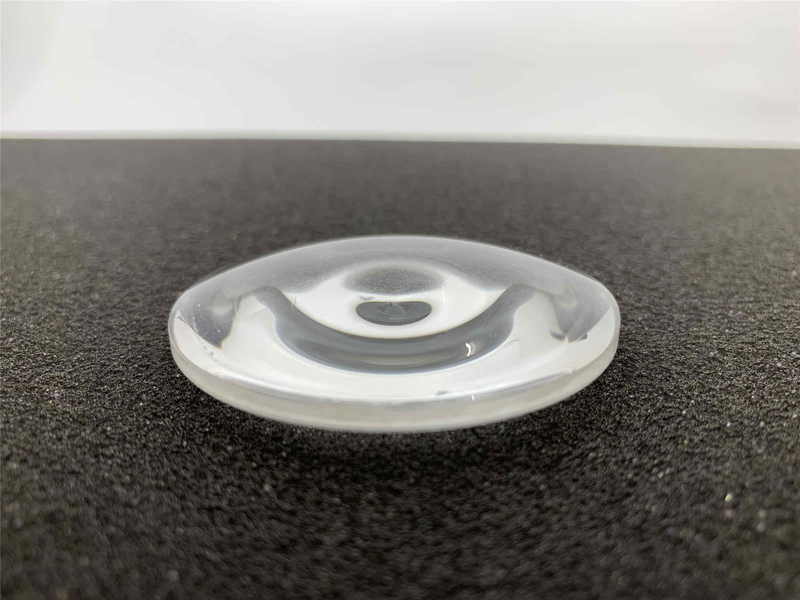 Metals & Crystals Processing
Optical Crystals
Bxoptic
Materials: Laser crystals, fused silica, radiation-resistant glass, UV and IR materials, fiber optic glass, metal materials, such as: CaF₂, BaF₂, ZnSe, ZnS, Ge, Si, Al, Cu, etc. Product Types: Spherical mirrors, aspherical mirrors, etc. Processing Size Range: 5-330
Related Articles
A microlens array (MLA) is a high-precision optical component composed of hundreds or thousands of tiny, uniformly arranged micro lenses on a single flat substrate. Unlike traditional single lenses that focus one light beam, a microlens array can split, homogenize, and reshape light on a micro scale. It is widely paired with VCSELs, lasers, and image sensors, becoming a core part of modern miniature optical systems.
icrolight is a high-tech enterprise specializing in the R&D, manufacturing and sales of active and passive photonic devices for microwave photonics, LiDAR ranging, gas sensing, fiber optics and photomedicine.
The CNGE 384 uncooled infrared core module is a high-performance core component for thermal imaging systems. Adopting mature uncooled infrared detection technology, it realizes all-weather thermal radiation perception and high-definition imaging without refrigeration equipment.
Shandong Haucore Optoelectronics Co., Ltd. introduces the HGLD‑792‑COS‑D‑10WB semiconductor laser within its COS series. Delivering an output power of 10 W at a central wavelength of 792 nm, this device adopts gold‑tin bonding COS packaging. Featuring high reliability and long service life, it serves as a preferred pump source for solid‑state lasers and is widely deployed in industrial processing, laser display, medical & aesthetic treatment, scientific research and other fields.
Loading...
Name
Phone
Organization
Use Case

Database Platform