
Sapphire
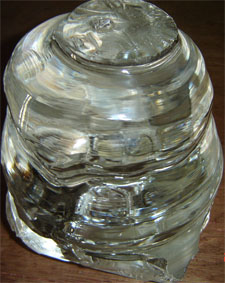
Sapphire Due to the hardest of the oxide crystals, Sapphire has a combination of optical and physical properties that makes it the best choice for a variety of demanding applications. Sapphire maintains its strength even at high temperatures. It has good thermal properties, excellent electrical and dielectric properties and is resistant to chemical attack. These properties encourage the use of Sapphire in aggressive environments where reliability, optical transmission or strength is required. Optoaxis offer the sapphire crystal with high quality, low cost. Careful selection of raw materials and strictly quality control at every stage of growth, ensure the best specifications for different application.
 Save to Favorites
Overview
Specifications
| Parameter | Value |
|---|---|
| Crystal Structure | Hexagonal System |
| Lattice | a=4.785A; c=12.991A |
| Density | 3.98g/cm 3 |
| Transmission Range | 0.15-5.5µm |
| Melting Point | 2042°C |
| Specific Heat | 0.418W×s/g/k |
| Thermal Conductivity [@100°C] | 25.12W/m/k(@100°C) |
| Thermal Shock Resistance | 790W/m |
| Thermal Expansion Coefficient | 5.8´10 -6 /K |
| dn/dt (@633nm) [@633nm;@633nm)] | 13´10 -6 /K |
| Mohs Hardness | 9 |
| Refractive Index(n o ) | 1.83(0.26mm); 1.76(0.63mm); 1.58(5.57mm) |
| Diameter | +0.0, -0.1mm |
| Thickness | ±0.1mm |
| Flatness | l/4 |
| Parallelism | better than 1' |
| Perpendicularity | better than 5' |
| Scratch-Dig | 40/20 per MIL-O-13830A |
| Wavefront Distortion [per inch @1064nm] | l /4 per inch @1064nm |
Datasheet
Please provide your email to download the datasheet.
Invalid email format. Please try again.
Supplier Information
Related Products
-
 Custom Sapphire Flat Surface Machining
Optical Material
Hbjir
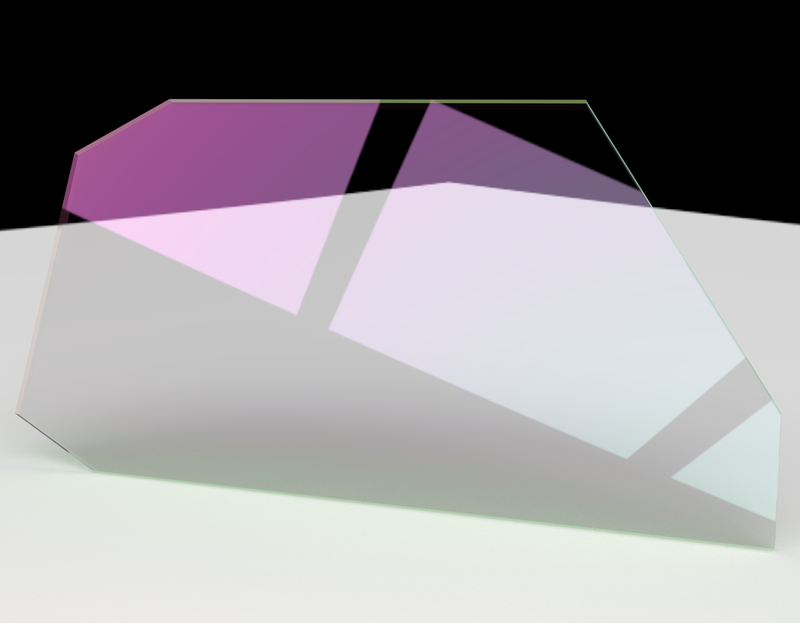
Machined Surface Shape: Flat surface Custom Material: Sapphire Custom Aperture: Φ20m to Φ750 mm (diagonal)
-
 Silicon-Based ABF Chip AB003BF
Optical Material
Raytrontek
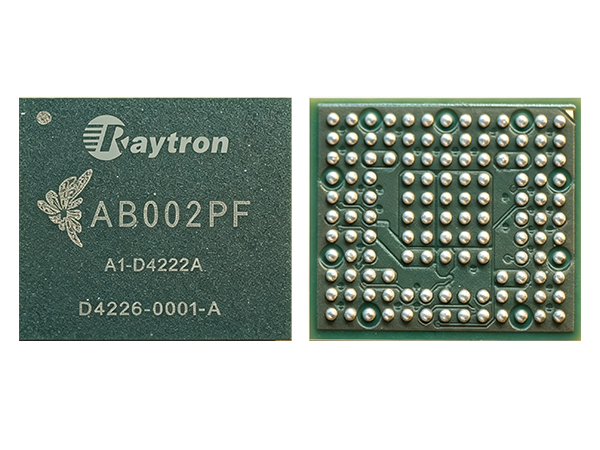
Function Description: X-band 4-channel 8-beam receiver chip Operating Frequency: 7.5~9GHz Main Specifications: Gain 7.3dB, NF≤11.5dB
-
 Silicon-Based ABF Chip AB301PF
Optical Material
Raytrontek
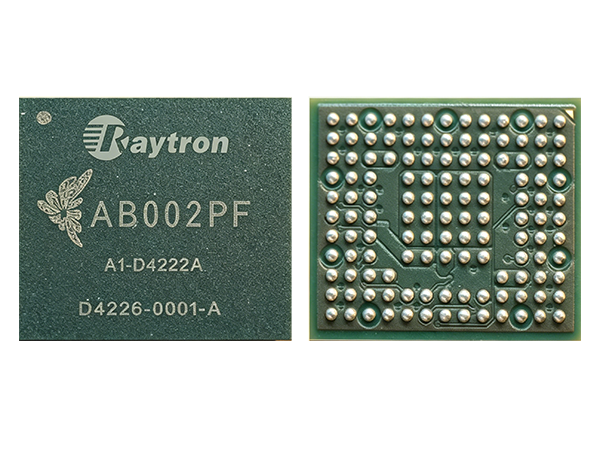
Function Description: K-band 8-channel dual-beam receive chip Operating Frequency: 17.7~21.2GHz Main Specifications: Gain 25dB, NF≤3dB
-
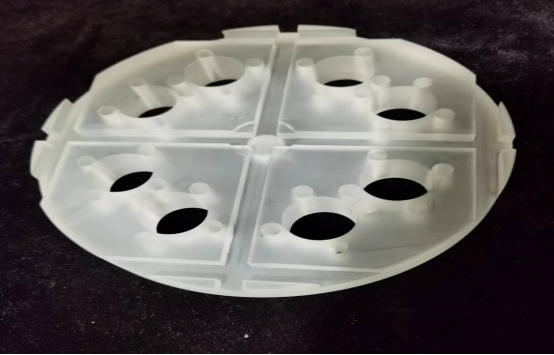 Multi-Hole Special-Shaped Blank
Optical Material
Hjgdkeji
-
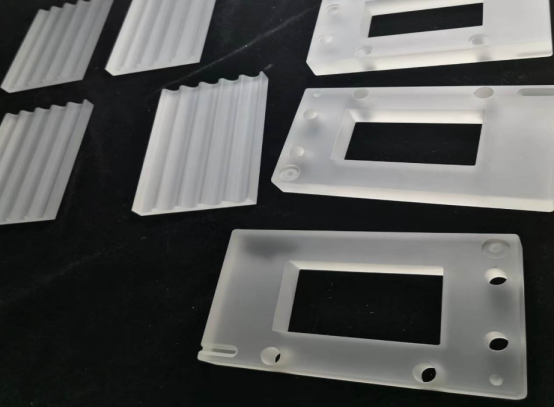 Special-Shaped Blank
Optical Material
Hjgdkeji
Related Articles
A microlens array (MLA) is a high-precision optical component composed of hundreds or thousands of tiny, uniformly arranged micro lenses on a single flat substrate. Unlike traditional single lenses that focus one light beam, a microlens array can split, homogenize, and reshape light on a micro scale. It is widely paired with VCSELs, lasers, and image sensors, becoming a core part of modern miniature optical systems.
icrolight is a high-tech enterprise specializing in the R&D, manufacturing and sales of active and passive photonic devices for microwave photonics, LiDAR ranging, gas sensing, fiber optics and photomedicine.
The CNGE 384 uncooled infrared core module is a high-performance core component for thermal imaging systems. Adopting mature uncooled infrared detection technology, it realizes all-weather thermal radiation perception and high-definition imaging without refrigeration equipment.
Shandong Haucore Optoelectronics Co., Ltd. introduces the HGLD‑792‑COS‑D‑10WB semiconductor laser within its COS series. Delivering an output power of 10 W at a central wavelength of 792 nm, this device adopts gold‑tin bonding COS packaging. Featuring high reliability and long service life, it serves as a preferred pump source for solid‑state lasers and is widely deployed in industrial processing, laser display, medical & aesthetic treatment, scientific research and other fields.
Loading...
Name
Phone
Organization
Use Case

Database Platform