
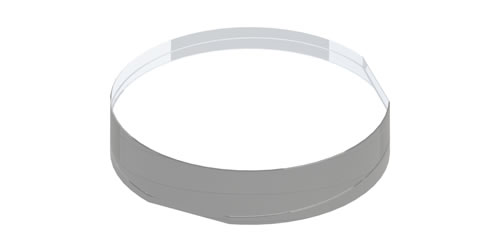
QLD3325
Linearly polarized light is undesirable in some optical systems. In reflective spectrometers, for example, polarization effects can affect detector sensitivity. Depolarizers convert polarized light into randomly polarized light and are widely used in polarization-sensitive systems and instruments. Achromatic depolarizers primarily convert polarized beams into randomly polarized beams. For a linearly polarized monochromatic source, the output polarization state varies spatially; for a broadband source, the spatial variation also depends on wavelength. An achromatic depolarizer consists of two crystalline-quartz wedges, cemented or optically contacted, with one twice as thick as the other. Each wedge's optical axis is parallel to its transmitting face, and the axes of the two wedges are at 45° to each other. This design requires no particular orientation of the depolarizer's optical axis, which is useful when the incident polarization is unknown or varies over time. For monochromatic light, the incident beam diameter must be >6mm for good depolarization because polarization randomness is produced by spatial variation across the beam. Broadband sources have no beam-diameter requirement: wavelength-dependent phase retardation, in addition to spatial variation, also randomizes the transmitted polarization.
 Save to Favorites
Overview
Specifications
| Parameter | Value |
|---|---|
| Material | Quartz Crystal |
| Type | Optical Contacting |
| Dimensions | 25.4 mm |
| Thickness | 7.5 mm |
| Design Wavelength | 220-2500 nm |
| Dimensional Tolerance | +0/-0.2mm |
| Thickness Tolerance | ±0.2mm |
| Surface Quality | 60/40 |
| Clear Aperture Dimension | >90% |
| Surface Figure [@632.8nm] | <λ/8@632.8nm |
| Parallelism | <1minutes |
| Beam Deviation | <3minutes |
| Coating [Standard product] | Standard Products Are Uncoated; Coating Available on Request |
| Damage Threshold [20ns, 20Hz @1064nm] | >5J/cm², 20ns, 20Hz @1064nm |
Key Features
Datasheet
Supplier Information
Related Products
-
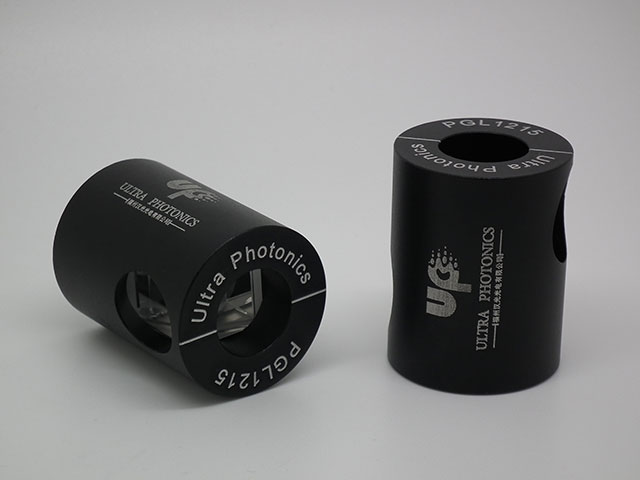 Glan-Laser Prism PGL1215
Polarization Optics
U-photonics
Material: a-BBO, Calcite or YVO₄ Wavelength Range: BBO: 200~3500 nm; Calcite: 350~2300 nm; YVO₄: 500~4000 nm Extinction Ratio: Calcite: <5x10⁻⁵; a-BBO: <5x10⁻⁶; YVO₄: <5x10⁻⁶
Glan-Laser Air-Spaces Two Same Birefringent Prisms,Modified Glan-Taylor Reduces Junction Reflection,Two Escape Windows Release Rejected Beam for High-Energy Lasers.
-
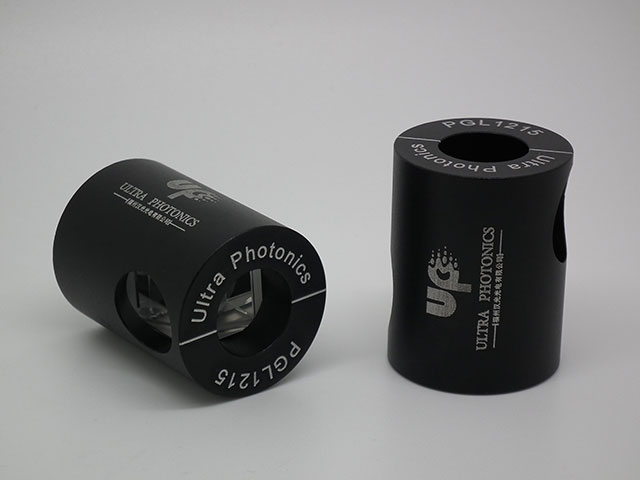 Glan-Laser Prism PGL1308
Polarization Optics
U-photonics
Material: a-BBO, Calcite or YVO₄ Wavelength Range: BBO: 200~3500 nm; Calcite: 350~2300 nm; YVO₄: 500~4000 nm Extinction Ratio: Calcite: <5x10⁻⁵; a-BBO: <5x10⁻⁶; YVO₄: <5x10⁻⁶
Glan-Laser Air-Spaces Two Same Birefringent Prisms,Modified Glan-Taylor Reduces Junction Reflection,Two Escape Windows Release Rejected Beam for High-Energy Lasers.
-
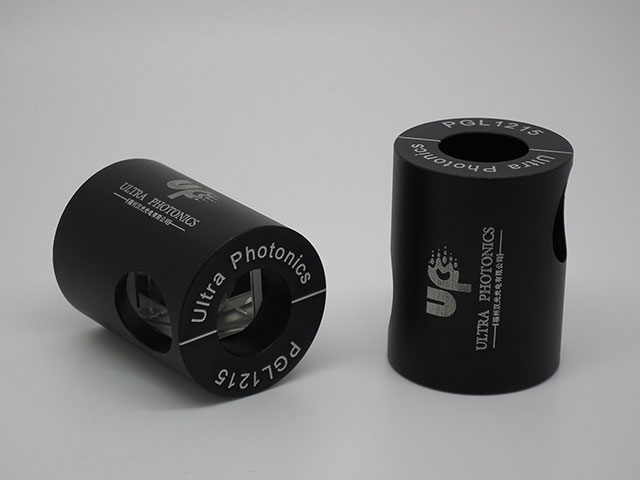 Glan-Laser Prism PGL1310
Polarization Optics
U-photonics
Material: a-BBO, Calcite or YVO₄ Wavelength Range: BBO: 200~3500 nm; Calcite: 350~2300 nm; YVO₄: 500~4000 nm Extinction Ratio: Calcite: <5x10⁻⁵; a-BBO: <5x10⁻⁶; YVO₄: <5x10⁻⁶
Glan-Laser Air-Spaces Two Same Birefringent Prisms,Modified Glan-Taylor Reduces Junction Reflection,Two Escape Windows Release Rejected Beam for High-Energy Lasers.
-
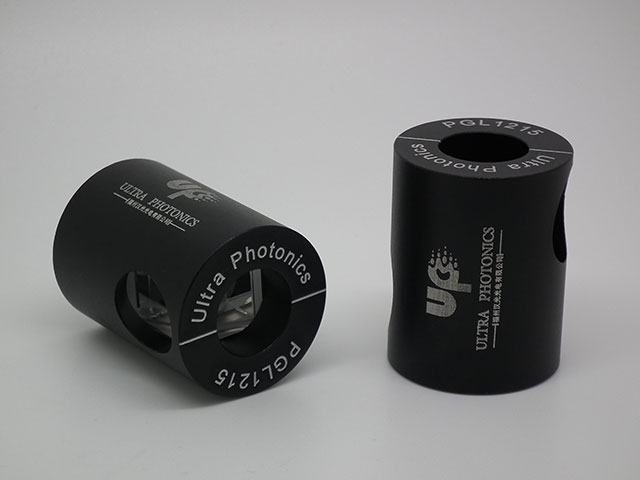 Glan-Laser Prism PGL1312
Polarization Optics
U-photonics
Material: a-BBO, Calcite or YVO₄ Wavelength Range: BBO: 200~3500 nm; Calcite: 350~2300 nm; YVO₄: 500~4000 nm Extinction Ratio: Calcite: <5x10⁻⁵; a-BBO: <5x10⁻⁶; YVO₄: <5x10⁻⁶
Glan-Laser Air-Spaces Two Same Birefringent Prisms,Modified Glan-Taylor Reduces Junction Reflection,Two Escape Windows Release Rejected Beam for High-Energy Lasers.
-
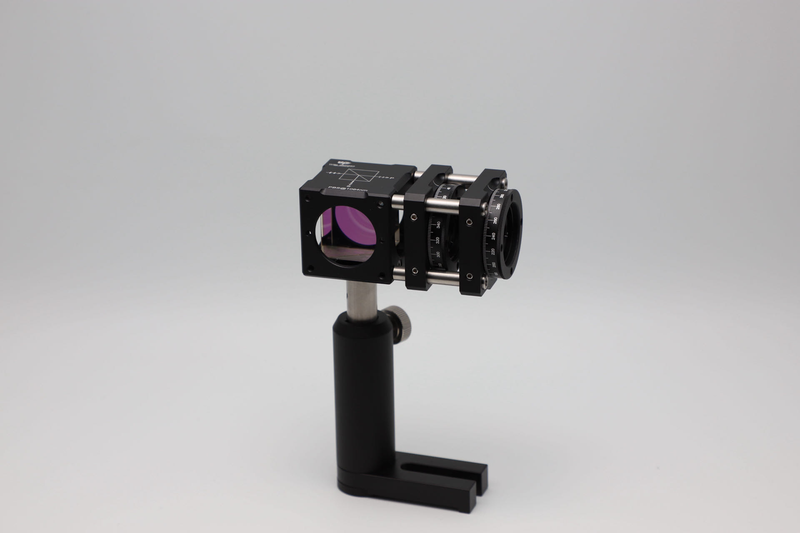 Optical Isolator
Polarization Optics
U-photonics
Material: K9 + Quartz Dimensional Tolerance: ±0.2mm Surface Quality: 60/40
Isolator Uses PBS/Quarter-Wave Zero-Order Plate at45°;P Becomes Circular,Reflected Return Pass Becomes S/Rejected by PBS for Isolation.
Related Articles
VCSEL, short for Vertical Cavity Surface Emitting Laser, is a widely used semiconductor laser component in modern optoelectronics. Unlike traditional edge-emitting lasers, VCSEL emits laser light vertically from its chip surface. Thanks to its low power consumption, stable beam quality, low cost, and easy integration, it has become the core light source for 3D sensing, wearable devices, and high-speed optical communication.
Founded in Beijing in 2011, Beijing FJR Opto-electronic Technology Co., Ltd. specializes in R&D, manufacturing and sales of infrared thermal imaging equipment and complete optoelectronic systems.
The ElFys PD25s series photodetectors adopt ElFys‑patented Black Silicon Induced Junction technology, delivering excellent spectral response spanning deep‑ultraviolet, visible and near‑infrared bands for diverse high‑precision photometry applications. Sub‑variants including H, M, HG and MG are optimised for low‑capacitance, low‑dark‑current and high‑reverse‑bias guard‑ring operations respectively. Multiple packaging configurations are available to satisfy various system‑design requirements.
Fiber lasers and fiber amplification systems require excitation sources with stable wavelength, narrow spectral linewidth and consistent output power.
Loading...
Name
Phone
Organization
Use Case

Database Platform