
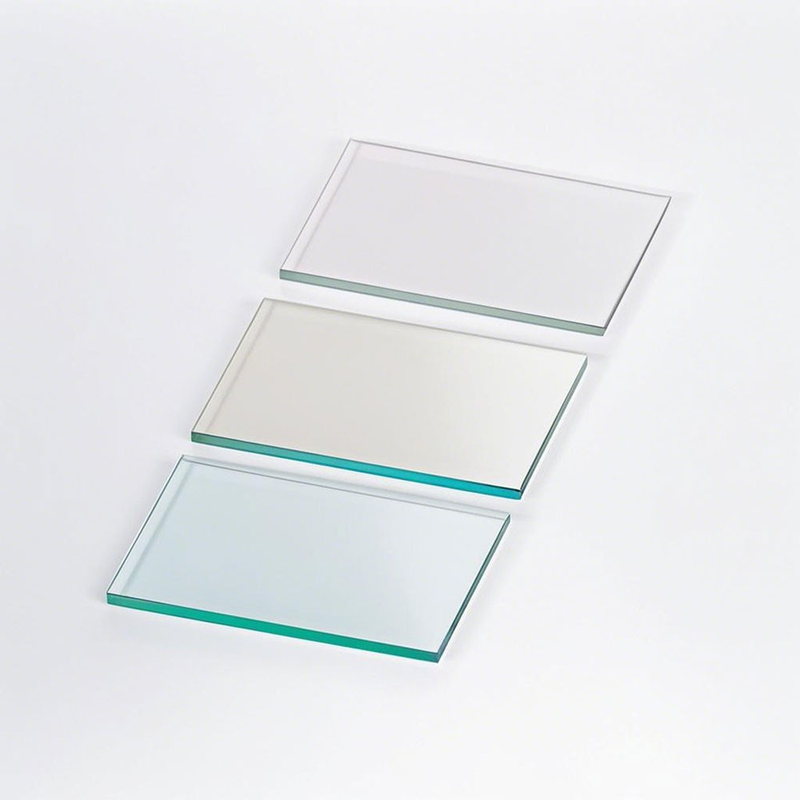
Glass Polarizer
Glass Polarizer is One that uses optical. Material Functional device for vertigating light , Used in optical instruments 、 Display Technology 、 Fields Including Photographic Equipment 。 Core functions is Natural light through specific structures ( Non-prejudiced photo ) Turned into a shivers. , Or selective diagonal light through a particular direction. 。 Glass Polarizer The key is to the polarization layer. , The layer is luminous by controlling the vibration of the light. 。 Based on vacuum Coating Processed Glass Polarizer , One. 、 Glass Polarizer Core structure Glass Polarizer Usually by Optical Glass ( Like K9 Glass 、 Melt Quartz Wait. ) As Glass Substrate , High-perceived light (≥90%)、 High-level integer ( Surface Roughness Ra≤1nm)、 Hear tolerance and stable optical performance , It provides physical support. , And as the foundation of optical access 。 Coating Functional level , Through a vacuum Coating Technology ( Like a magnetic spatter. 、 Electronic beam evaporation 、 Ion Plasma ) is. Glass Surface sediment multi-layer nanoscale optical thin film , These film films contain a two-way color. Material ( Like Metal Nanoparticle 、 Iodized compounds 、 LCD-guided layers, etc. ), Or a rupee function through multi-layered interferometry. , It can be divided into two. ! Two. Typical Technical route : Two-way colored film : Sedimenting iodized molecules ( Like quinin iodide sulfuric acid. ) or Metal Nanoline ( Silver 、 Quinna-Miline ) Thin Film of , These substances are absorbed into the light vibrations in a given direction. , Allow only vertical light passage , And it creates a ray of oscillation. 。 Multi-layer clemency persimulator : High refraction rate by alternating sediments ( Like TiO₂) And low refraction rate ( Like SiO₂) The medium membrane , The light is separated from the light of the different oscillations by the intervention effect of the light. ( If a sub-trigger is the oscillator )。 Auxiliary layer Antireflection Coating (AR Membrane ): Through a vacuum Coating Sediment multilayer media membrane , Lower Glass Surface Reflectance ( It can be down to <0.5%), Reduced loss of light energy 。 Protective film : High plating hardness SiO₂ or Al₂O₃ Layer , Prevent the erosion of the oscillation function. , Increased durability 。 And traditional painting ( Such as Wet Coating of Organic Polarizing Material Dye ) Compare , Vacuum Coating Process in Glass Polarizer The advantage is obvious. : Different layers of sediment in a single process Material ( Like Metal Layer + Media Layer + Functional coating ), Achieving oscillation and other optical properties ( Such as Beamsplitting 、 Filter 、 Phase Delay ) Integrated design 。
 Save to Favorites
Overview
Specifications
| Parameter | Value |
|---|---|
| Anti-reflection / Stun-resistant. | By nanostructure or by roughening , Reduced environmental photoreflection , Raise visual clarity ( For example, for display Polarizer )。 |
| Vacuum Coating Process advantages | 1. High Precision Equality with |
| Vacuum Coating Process advantages | Vacuum environment , Coating The thickness can be accurately controlled to nanoscale. ( Error ±1%), And the membrane is extremely uniform. ( Inner thickness deviation <2%), Fits to high-resolution optical systems ( Like a light machine. 、 Microscope )。 |
| Vacuum Coating Process advantages | 2. High stability and durability |
| Vacuum Coating Process advantages | Vacuum Coating By combining physical or chemical forces Glass Substrate Combined , The membrane is strong. ( It's a way to draw the rules. ISO 2409 Test ), Wet-resistant heat (85℃/85%RH Performance is stable in the environment. )、 Anti-corrosion , Fit for outdoor or harsh environmental applications 。 |
| Vacuum Coating Process advantages | 3. Multifunctional Integration |
| Vacuum Coating Process advantages | 4. Wideband Adaptation |
| Vacuum Coating Process advantages | By optimizing the membrane structure , Achieved Ultraviolet (UV)、 Visible Light (VIS)、 Near Infrared (NIR) The polarisation of the wave segment ( If it's a bias Cutoff Wavelength Could be set precisely as 380nm~1500nm)。 |
| Material | Custom |
Applications
Datasheet
Please provide your email to download the datasheet.
Invalid email format. Please try again.
Supplier Information
Related Products
-
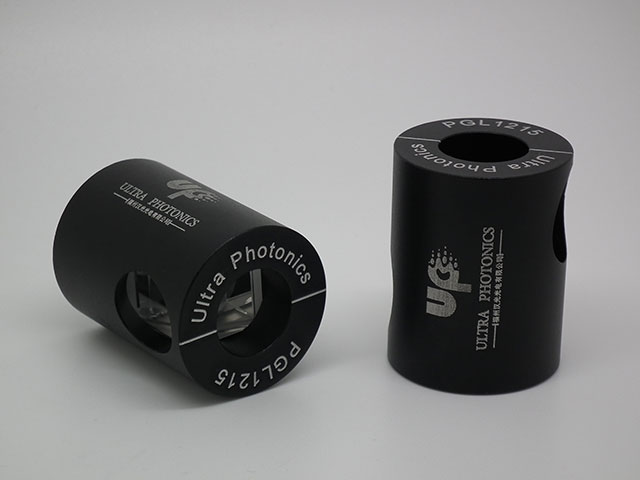 Glan-Laser Prism PGL1215
Polarization Optics
U-photonics
Material: a-BBO, Calcite or YVO₄ Wavelength Range: BBO: 200~3500 nm; Calcite: 350~2300 nm; YVO₄: 500~4000 nm Extinction Ratio: Calcite: <5x10⁻⁵; a-BBO: <5x10⁻⁶; YVO₄: <5x10⁻⁶
Glan-Laser Air-Spaces Two Same Birefringent Prisms,Modified Glan-Taylor Reduces Junction Reflection,Two Escape Windows Release Rejected Beam for High-Energy Lasers.
-
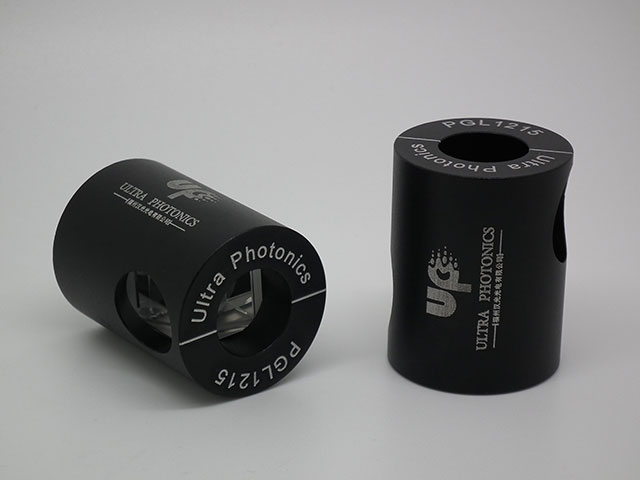 Glan-Laser Prism PGL1308
Polarization Optics
U-photonics
Material: a-BBO, Calcite or YVO₄ Wavelength Range: BBO: 200~3500 nm; Calcite: 350~2300 nm; YVO₄: 500~4000 nm Extinction Ratio: Calcite: <5x10⁻⁵; a-BBO: <5x10⁻⁶; YVO₄: <5x10⁻⁶
Glan-Laser Air-Spaces Two Same Birefringent Prisms,Modified Glan-Taylor Reduces Junction Reflection,Two Escape Windows Release Rejected Beam for High-Energy Lasers.
-
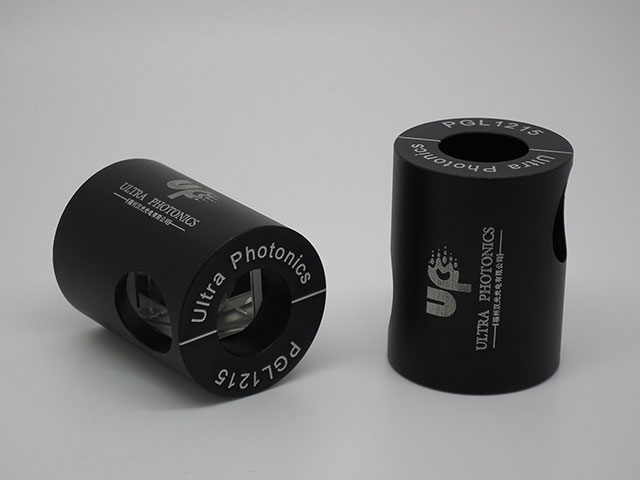 Glan-Laser Prism PGL1310
Polarization Optics
U-photonics
Material: a-BBO, Calcite or YVO₄ Wavelength Range: BBO: 200~3500 nm; Calcite: 350~2300 nm; YVO₄: 500~4000 nm Extinction Ratio: Calcite: <5x10⁻⁵; a-BBO: <5x10⁻⁶; YVO₄: <5x10⁻⁶
Glan-Laser Air-Spaces Two Same Birefringent Prisms,Modified Glan-Taylor Reduces Junction Reflection,Two Escape Windows Release Rejected Beam for High-Energy Lasers.
-
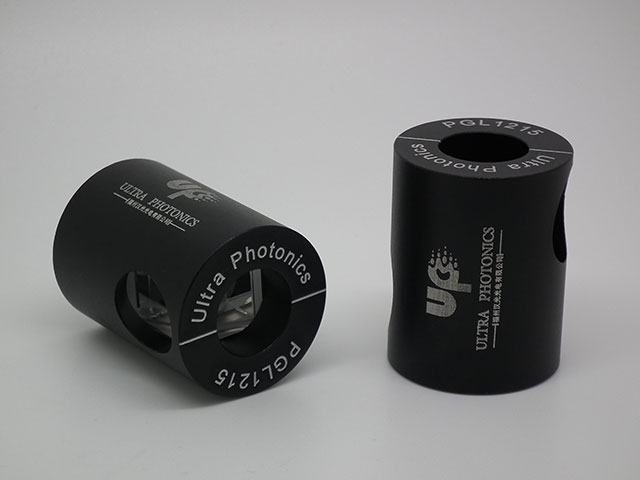 Glan-Laser Prism PGL1312
Polarization Optics
U-photonics
Material: a-BBO, Calcite or YVO₄ Wavelength Range: BBO: 200~3500 nm; Calcite: 350~2300 nm; YVO₄: 500~4000 nm Extinction Ratio: Calcite: <5x10⁻⁵; a-BBO: <5x10⁻⁶; YVO₄: <5x10⁻⁶
Glan-Laser Air-Spaces Two Same Birefringent Prisms,Modified Glan-Taylor Reduces Junction Reflection,Two Escape Windows Release Rejected Beam for High-Energy Lasers.
-
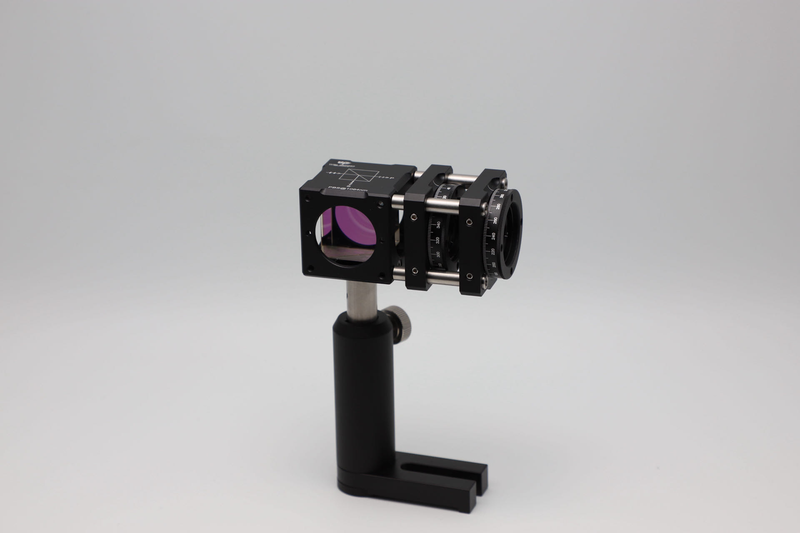 Optical Isolator
Polarization Optics
U-photonics
Material: K9 + Quartz Dimensional Tolerance: ±0.2mm Surface Quality: 60/40
Isolator Uses PBS/Quarter-Wave Zero-Order Plate at45°;P Becomes Circular,Reflected Return Pass Becomes S/Rejected by PBS for Isolation.
Related Articles
For low-frequency RF, electromagnetic testing and power combining systems, conventional resistive power dividers bring high insertion loss, while standard directional couplers cannot provide equal-amplitude signals with 180° phase shift. They fail differential circuits, balanced amplifiers and signal cancellation systems.
Wuhan Optics Valley Quantum Technology Co., Ltd. is a leading domestic developer of high‑speed semiconductor optical chips and photodetector components. Our product portfolio covers InGaAs avalanche photodiode bare dies and PIN photodetector chips designed for fiber‑optic communication
Recently, the key laboratory of Functional Crystal Materials of Tianjin University has published a cutting-edge research paper titled Enhanced Second-Harmonic Generation in Quadratically Nonlinear Weyl Semimetal NbAs for Broadband Photodetection Applications on Advanced Science, a top-tier international academic journal.
Driven by fast‑growing demands of 3D perception, biometric authentication and machine‑vision industries, near‑infrared imaging optics have become a vital hardware component for intelligent sensing systems.
Loading...
Name
Phone
Organization
Use Case

Database Platform