
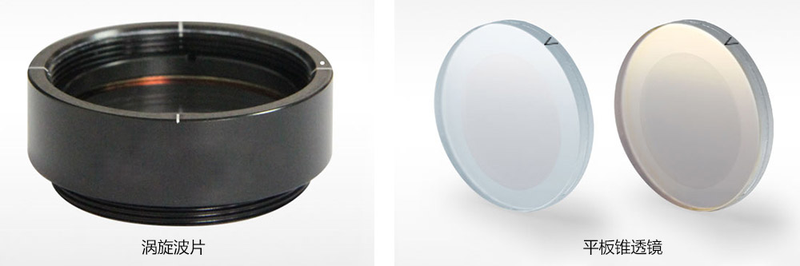
Ring Beam Shaping DOE SLB-PBA25-633-10
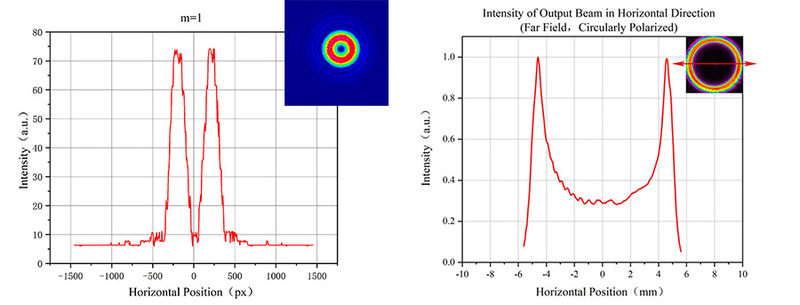
Ring-shaping DOEs use different phase profiles to produce different ring-shaping effects, such as vortex light from vortex retarders and far-field ring light from diffractive axicons. Vortex light is commonly used in optical tweezers, super-resolution microscopy and lithography, while far-field rings are used in atom traps, corneal surgery and laser drilling. A vortex retarder (Vortex Retarder, VR) uses N-BK7 glass substrates and liquid crystal polymers (Liquid Crystal Polymers, LCP), forming a sandwich of front and rear glass substrates with an intermediate LCP functional film, mounted in a standard SM1 lens tube. In the LCP layer, the liquid-crystal fast-axis orientation is constant radially and varies continuously around the azimuth. The retardance is λ/2 throughout the device plane, and the device operates at a single wavelength. Depending on incident polarization, its polarization-dependent optical properties allow generation of vector-polarized beams or vortex beams with a spiral phase wavefront. It converts TEM00 Gaussian beams into a hollow Laguerre-Gaussian (LG) intensity distribution; further details are provided in the technical notes. Compared with conventional light-field control, vortex retarders are efficient, stable, easy to operate and dedicated to their function. Their true-zero-order characteristics also give lower wavelength sensitivity, greater temperature stability and a wider incidence-angle range. A planar axicon (PB Axicon, PBA) also uses N-BK7 glass substrates and liquid crystal polymers (Liquid Crystal Polymers, LCP) in a sandwich with an intermediate LCP film. Its liquid-crystal fast-axis orientation varies periodically along the radial direction. It provides λ/2 retardance throughout the device plane and operates at a single wavelength. Depending on incident polarization, it produces annular beam convergence or divergence. With left-handed circularly polarized incident light, it can also generate a Bessel beam with non-diffracting and self-healing properties. Compared with conventional axicons, our planar axicon has a flat structure without a physical cone tip, making integration easier. Its tip structure is formed through changes in liquid-crystal orientation, allowing micrometer-scale machining accuracy, and it also has high dispersion. Our standard vortex retarders operate at 405~1550 nm, with order m from 1~128. Standard 1-inch planar axicons operate at 532nm,633nm and 1064nm, with deflection half-angles of 0.5 °,1 °,2.0 °,2.3 ° and 4.7 °. Flexible customization of specifications is available alongside standard products to meet varied application needs. Parameter definitions: Deflection angle is half the convergence or divergence angle of the output beam for collimated input. Conversion efficiency is the fraction of all output energy contained in the 1st-order Laguerre-Gaussian energy distribution. Zero-order fraction is the fraction of all output energy contained in the zero-order spot produced by extended-depth-of-focus shaping.
 Save to Favorites
Overview
Specifications
| Parameter | Value |
|---|---|
| Operating Wavelength [Standard Product - Vortex Optical Field] | 405-1550nm |
| Operating Wavelength [Custom - Vortex Optical Field] | 400-1700nm |
| Operating Wavelength [Standard Product - Far-Field Ring Optical Field] | 532 ,633,1064nm |
| Operating Wavelength [Custom - Far-Field Ring Optical Field] | 400-1700nm |
| Element Dimensions and Mounting Method [Standard Product - Vortex Optical Field] | Ø25.4x3.2mm, mounted in an SM1-8A mechanical housing |
| Element Dimensions and Mounting Method [Custom - Vortex Optical Field] | 3-160mm (side length or diameter specification) |
| Element Dimensions and Mounting Method [Standard Product - Far-Field Ring Optical Field] | Ø25.4x3.2mm, compatible with 1-inch optic mounts |
| Element Dimensions and Mounting Method [Custom - Far-Field Ring Optical Field] | 3-160mm (side length or diameter specification) |
| Order m [Standard Product - Vortex Optical Field] | 1-128 Optional |
| Order m [Custom - Vortex Optical Field] | 1-128 Optional |
| Input Beam Quality Requirements [Standard Product - Vortex Optical Field] | TEM00 |
| Input Beam Quality Requirements [Custom - Vortex Optical Field] | TEM00 |
| Input Beam Quality Requirements [Standard Product - Far-Field Ring Optical Field] | TEM00,M2 <1.3 |
| Input Beam Quality Requirements [Custom - Far-Field Ring Optical Field] | TEM00,M2 <1.3 |
| Input Beam Polarization State Requirements [Standard Product - Vortex Optical Field] | Linearly Polarized Light/Circularly Polarized Light |
| Input Beam Polarization State Requirements [Custom - Vortex Optical Field] | Linearly Polarized Light/Circularly Polarized Light |
| Input Beam Polarization State Requirements [Standard Product - Far-Field Ring Optical Field] | Circularly Polarized Light |
| Input Beam Polarization State Requirements [Custom - Far-Field Ring Optical Field] | Circularly Polarized Light |
| Input Beam Size [Standard Product - Vortex Optical Field] | Depends on order m |
| Input Beam Size/Clear Aperture/Deflection Angle [Custom vortex field; the source is a merged cell spanning 3 rows, retained as a combined value without inferring separate values] | ≤Substrate Inscribed-Circle Diameter x90 % |
| Input Beam Size [Standard Product - Far-Field Ring Optical Field] | ≤ Clear Aperture |
| Input Beam Size [Custom - Far-Field Ring Optical Field] | ≤ Clear Aperture |
| Clear Aperture Dimension [Standard Product - Vortex Optical Field] | Ø21.5 mm |
| Clear Aperture Dimension [Standard Product - Far-Field Ring Optical Field] | Ø20 mm |
| Clear Aperture Dimension [Custom - Far-Field Ring Optical Field] | ≤ substrate inscribed-circle diameter x90% |
| Deflection Angle [Standard Product-Far-Field Ring Optical Field; Deflection Angle: half the convergence or divergence angle of the output beam for collimated input] | 0.5°,1.0°,2.3°,4.7° |
| Deflection Angle [Custom-Far-Field Ring Optical Field; Deflection Angle: half the convergence or divergence angle of the output beam for collimated input] | 0.2°-7.0° |
| Transmittance [Standard Product - Vortex Optical Field ;400-450nm] | >85% |
| Transmittance [Standard Product - Vortex Optical Field ;450-1700nm] | >96% |
| Transmittance [Custom - Vortex Optical Field ;400-450nm] | >85% |
| Transmittance [Custom - Vortex Optical Field ;450-1700nm] | >96% |
| Transmittance [Standard Product - Far-Field Ring Optical Field] | >97% |
| Transmittance [Custom - Far-Field Ring Optical Field ;400-450nm] | >85% |
| Transmittance [Custom - Far-Field Ring Optical Field ;450-1700nm] | >96% |
| Reflectance Ravg [Standard Product - Vortex Optical Field ;0° Angle of Incidence] | <0.5% |
| Reflectance Ravg [Custom - Vortex Optical Field ;0° Angle of Incidence] | <0.5% |
| Reflectance Ravg [Standard Product - Far-Field Ring Optical Field ;0° Angle of Incidence] | <0.5% |
| Reflectance Ravg [Custom - Far-Field Ring Optical Field ;0° Angle of Incidence] | <0.5% |
| Conversion Efficiency [Standard Product-Vortex Optical Field; Conversion Efficiency: the fraction of total output energy contained in the 1st-order Laguerre-Gaussian energy distribution] | >99.5% |
| Conversion Efficiency [Custom-Vortex Optical Field; Conversion Efficiency: the fraction of total output energy contained in the 1st-order Laguerre-Gaussian energy distribution] | >97%, with a maximum achievable value >99.5% |
| Zero-Order Fraction [Standard far-field annular field; zero-order fraction: the zero-order spot energy from extended-depth-of-focus shaping divided by all output optical energy] | <4% |
| Zero-Order Fraction [Custom far-field annular field; zero-order fraction: the zero-order spot energy from extended-depth-of-focus shaping divided by all output optical energy] | <4% |
Key Features
Datasheet
Please provide your email to download the datasheet.
Invalid email format. Please try again.
Supplier Information
Related Products
-
 Photomask
Diffractive Optics
Jzkgd
-
 Photomask
Diffractive Optics
Jzkgd
-
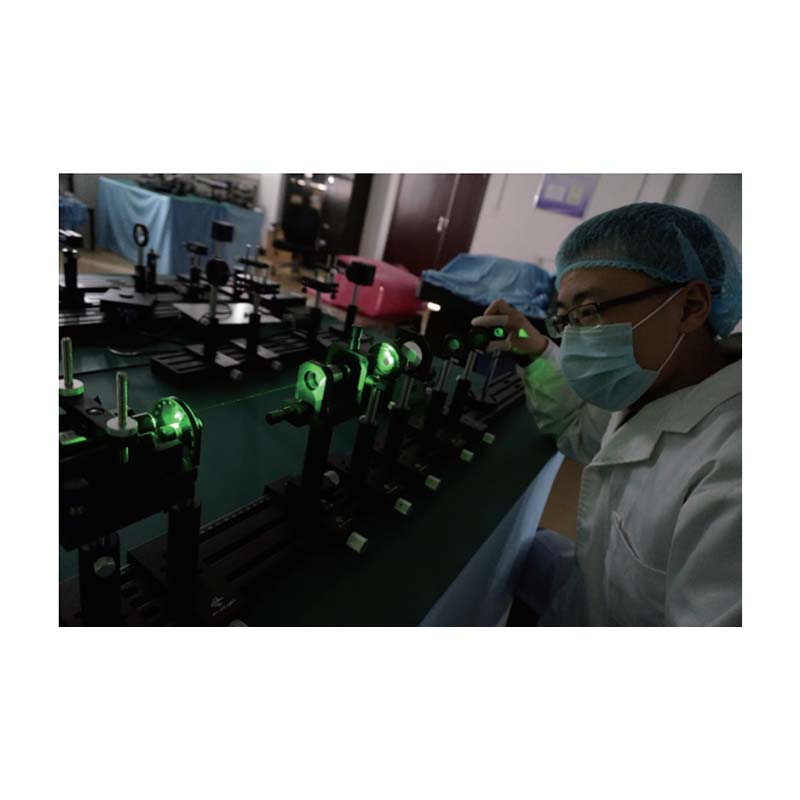 ROT-OT08 Station 8: Beam-Splitting, Polarizing, and Diffractive Optical Component Testing
Diffractive Optics
Yixist
-
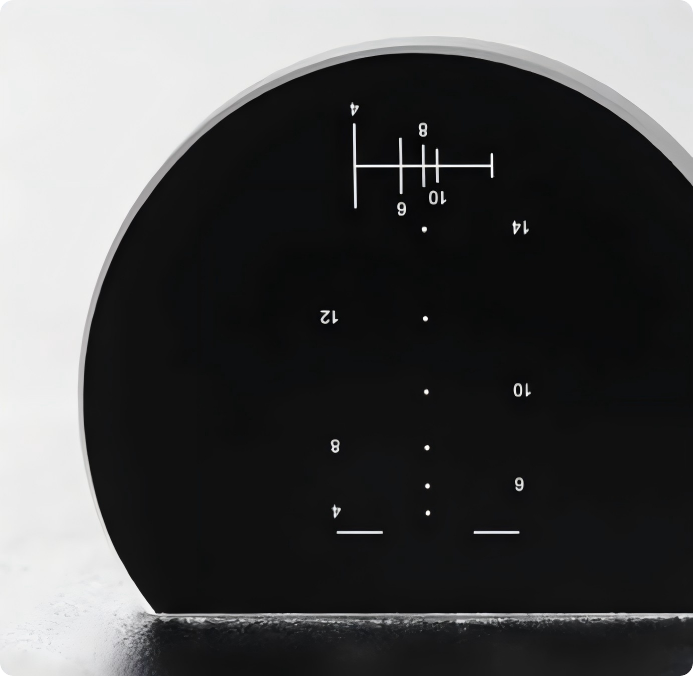 Rulings
Diffractive Optics
Sanhai-optics
Material: Green glass/B270/BK7/quartz Product Performance - Thickness: 0.1~10±0.015mm Product Performance - Appearance Style: 0-10/20-40
-
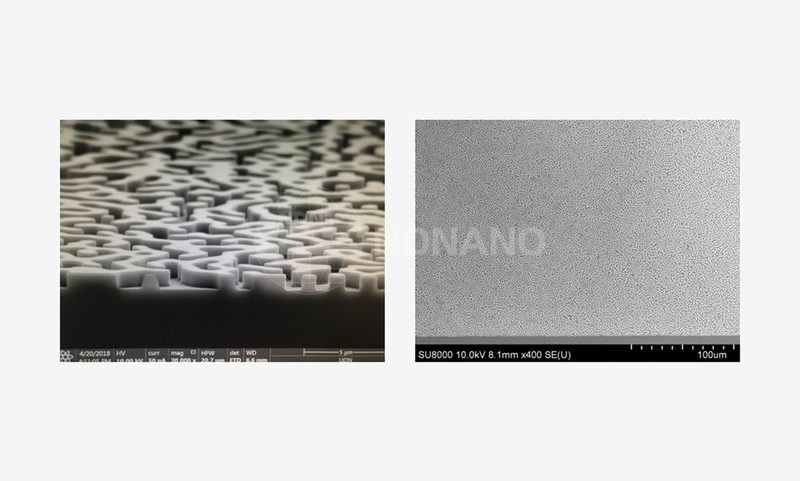 DOE Diffractive Optical Element
Diffractive Optics
Ndnano
Related Articles
Wuhan Optical Valley Interlink Technology Co., Ltd. was founded in 2013 by a technical team from Huazhong University of Science and Technology.
Recently, our R&D crew carried‑out performance tests on domestically‑made third‑party LiDAR hardware. The original built‑in sensor chip was replaced by Optics‑Valley Quantum’s new‑generation D‑XXLA200‑02 chip.
The CNGE 384 uncooled infrared core module is a high-performance core component for thermal imaging systems. Adopting mature uncooled infrared detection technology, it realizes all-weather thermal radiation perception and high-definition imaging without refrigeration equipment.
In UV laser testing, UV spectroscopy and lithography optical experiments, excessive light intensity will lead to detector saturation, optical component damage and overexposed imaging.
Loading...
Name
Phone
Organization
Use Case

Database Platform