Silver Mirror
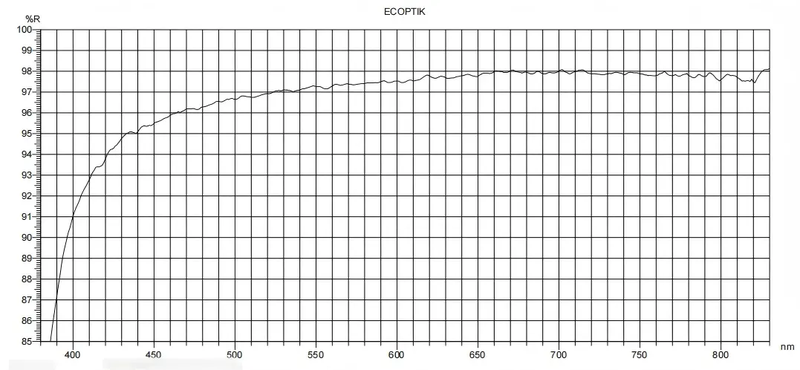
Silver mirror is a type of mirror formed by depositing a layer of pure silver on the surface of an optical substrate (usually glass) using chemical or physical methods, and then covering it with a protective layer. Despite its tendency to oxidize, silver mirrors remain the preferred choice in certain specific fields due to their unparalleled high reflectivity.
Request a Quote
Download Datasheet
Overview
Silver mirror is a type of mirror formed by depositing a layer of pure silver on the surface of an optical substrate (usually glass) using chemical or physical methods, and then covering it with a protective layer. Despite its tendency to oxidize, silver mirrors remain the preferred choice in certain specific fields due to their unparalleled high reflectivity.
Applications
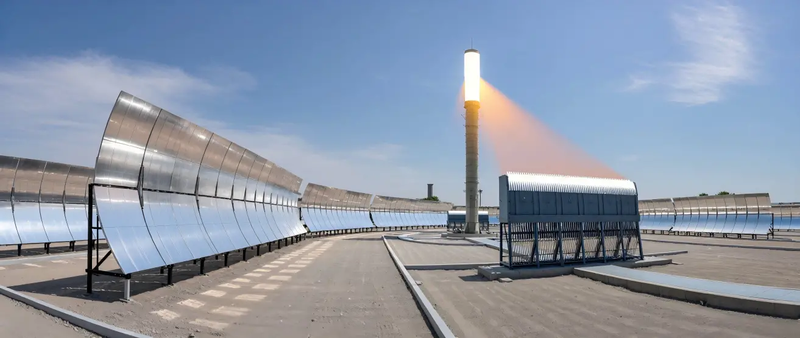
High-end Optical Instruments:Such as high-precision interferometers, spectrometers, and research-grade telescopes, where extremely high light throughput is required. Laser Optics:Particularly for laser resonator mirrors and reflectors of certain wavelengths, which require extremely high reflectivity to reduce losses. Solar Energy:In concentrated solar power systems, where as much sunlight as possible needs to be reflected and focused onto the collector, silver mirrors are an ideal choice (usually with a robust outer protective layer).
Key Features
Structure:-Substrate: Usually optical glass (such as K9, fused silica, etc.), requiring a high surface finish and no defects. -Underlayer: Sometimes a layer of other metal (such as copper) is deposited first as a bonding layer to enhance the adhesion between the silver layer and the glass. -Silver Layer: The core functional layer, formed through physical vapor deposition (PVD). Physical Vapor Deposition:Silver is heated and evaporated or sputtered onto the substrate in a high vacuum environment. This method can obtain a purer, denser, and higher-performance silver film for use in high-end optics. Protective Layer:To overcome the problem of silver's easy oxidation, one or more protective films must be covered on top of the silver layer. Dielectric Protective Film: In the optical field, a transparent, chemically stable dielectric thin film, such as SiO₂ (silicon dioxide) or Al₂O₃ (alumina), is deposited. These films can effectively block moisture and corrosive gases, extending the life of the lenses. Advantages:1. Highest reflectivity in the visible light range. 2. Extremely high reflectivity in the near-infrared band, superior to aluminum. 3. For the same reflectivity, silver mirrors can be made simpler (fewer layers) than dielectric film mirrors.
Datasheet
Please provide your email to download the datasheet.
Your name
Email Address
Invalid email format. Please try again.
Send Request
Supplier Information
ECOPTIK has been researching optical component fabrication technology for 15 years. We manufacture precision optics such as dome, spherical lens, micro-optical component, cylindrical mirror, filter, prism, and window. We offer glass materials from Schott, CDGM, Corning, and Sapphire, CaF2, MgF2, Fused Silica, Si, etc. We offer lens assembly service. We possess ZYGO laser interferometers, ZEISS CMM Spectrum, and Agilent Cary 7000 UMS for testing and providing product reports.
Contact Us
Loading...
GetExperimental Plan
Name
Phone
+86
Organization
Use Case

Global Photonics Products
Database Platform
Database Platform
With 16 years of experience, we provide high-quality products and services to universities, research institutes, and industry.
50+ Detailed Categories · 3,000+ Global Brands · 100,000+ Photonics Products
1 Million+
In-depth analysis of professional academic resources in photonics
300,000
ProductsDatasheets Available Free
We will keep your personal information strictly confidential.
Product Quote
+86
* Select the quoting party:
By submitting, you agree to the User Service Agreement and Privacy Policy