

Etalon
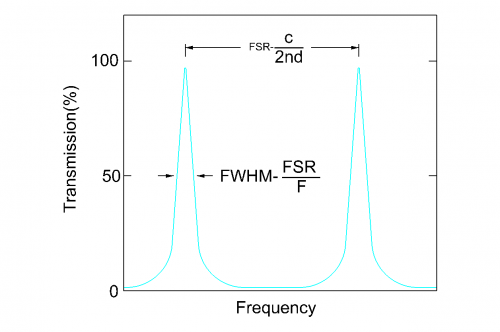
A Fabry-Pérot etalon is a high-resolution optical device invented by French physicists Fabry and Pérot in 1897, based on multiple-beam interference. It typically uses two parallel, high-reflection-coated plates, or a single parallel plate coated on both sides, forming a fixed-spacing interference cavity. Coating-surface flatness must be controlled within 1/20 to 1/100 wavelength for precise interference. Sharp, fine fringes and strong wavelength selectivity make it effectively a precision narrowband filter, transmitting resonant wavelengths and reflecting or filtering others. Higher reflectivity narrows bright fringes and improves wavelength discrimination, making etalons important in precision optical measurement.
 Save to Favorites
Overview
Applications
Datasheet
Please provide your email to download the datasheet.
Invalid email format. Please try again.
Supplier Information
Related Products
-
 Etalon
s
Dowell-optics
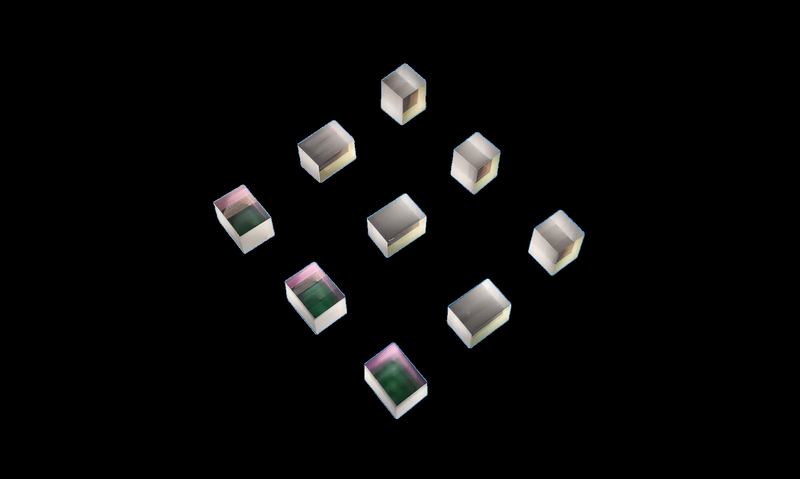
Etalon products with various customized FSRs can be provided.
-
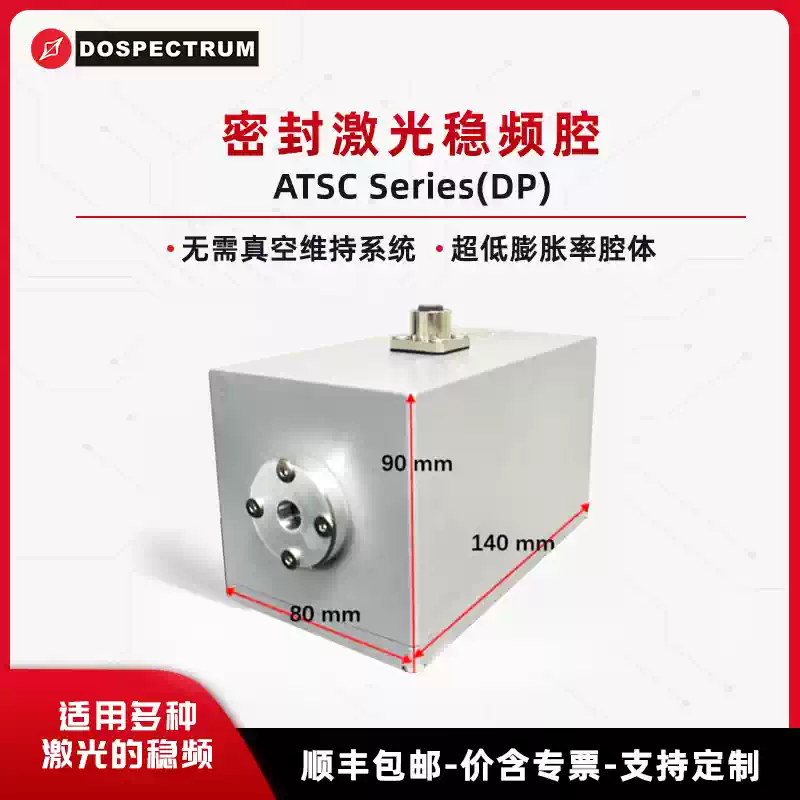 Sealed Laser Frequency-Stabilization Cavity ATSC Series(DP)
Etalons
Dospectrum
Wavelength Range: 400~2000nm Free Spectral Range: 3GHz Cavity Finesse: >100
-
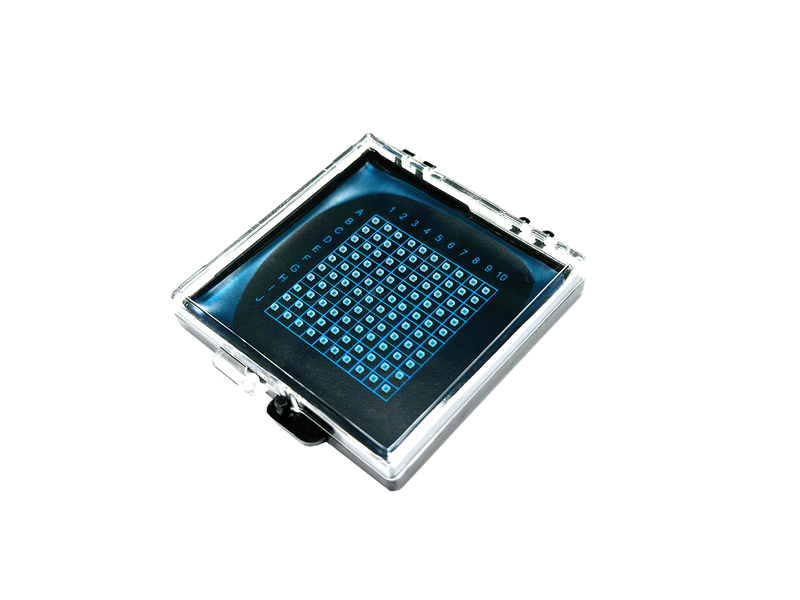 Etalon Etalons
Etalons
Eternopto
Free Spectral Range: 10~2000 GHz Material: Fused Silica Parallelism [@633nm]: λ/100 @633nm
In transmission mode, etalons exhibit a series of transmission peaks with periodic frequency spacing and are commonly used for wavelength locking in telecommunications. Key characteristics are free spectral range (FSR), the frequency interval between peaks, and finesse, which largely determines peak shape. An etalon filter generally comprises a spacer between two reflective stacks.
-
Etalon -100G Etalons Hhguanglian
Optical Specifications -Free Spectral Range: 100 +/- 0.05 Temperature 20℃±1℃ Optical Specifications - Operating Wavelength: 1520 ~ 1570 nm Optical Specifications - Effective Aperture: > central 80%
Related Articles
Driven by the continuous pursuit of higher precision and efficiency in optical communication and optoelectronic device manufacturing, OLCR-1000 Low-Coherence Interferometer, independently developed by Wuhan Guanggu Interconnect Technology Co., Ltd., provides an innovative technical solution for distributed return loss testing of optical fibers and optoelectronic devices.
icrolight is a high-tech enterprise specializing in the R&D, manufacturing and sales of active and passive photonic devices for microwave photonics, LiDAR ranging, gas sensing, fiber optics and photomedicine.
BEIJING JIEPU TREND supplies YAG+Er:YAG+YAG bonded composite slab laser crystals for high‑power solid‑state laser systems. The monolithic slab consists of two undoped YAG end‑cap layers and a central Er‑doped YAG gain segment. The overall dimension is 9 mm×9 mm×9 mm.
Shanghai Connet Laser Technology Co., Ltd. focuses on technological innovation, delivering cutting-edge photonic products & solutions for industrial lasers, LiDAR, fiber optic sensing, coherent telecom, cold atom physics and precision spectroscopy research & mass manufacturing.
Loading...
Name
Phone
Organization
Use Case

Database Platform