

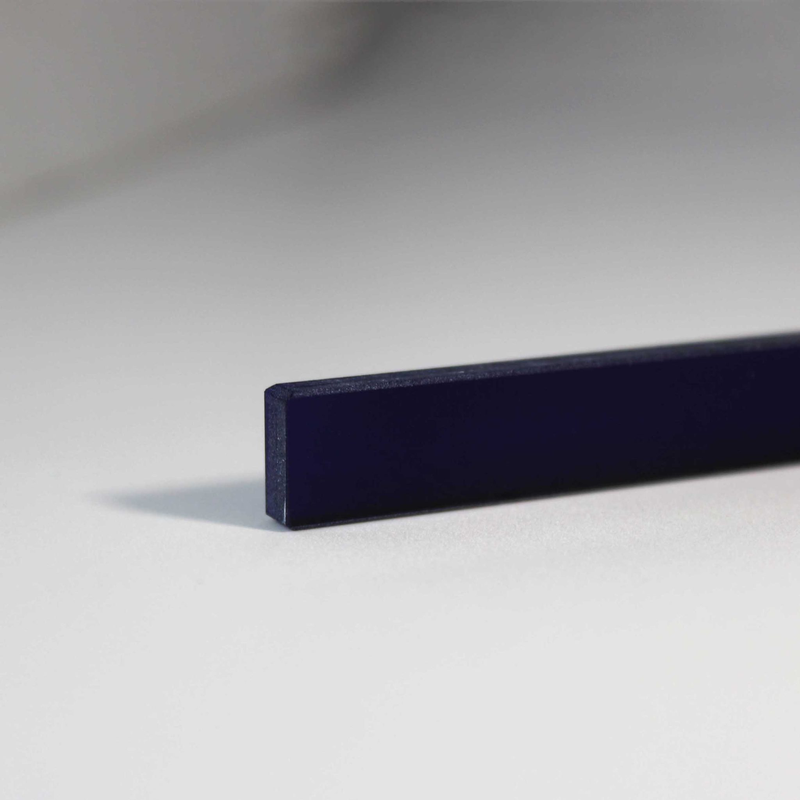
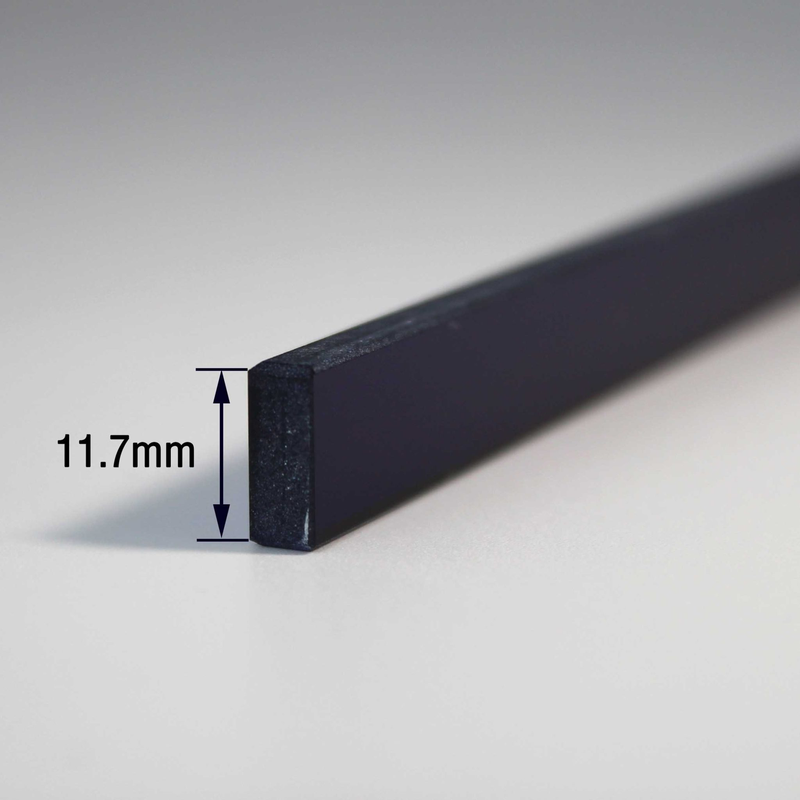
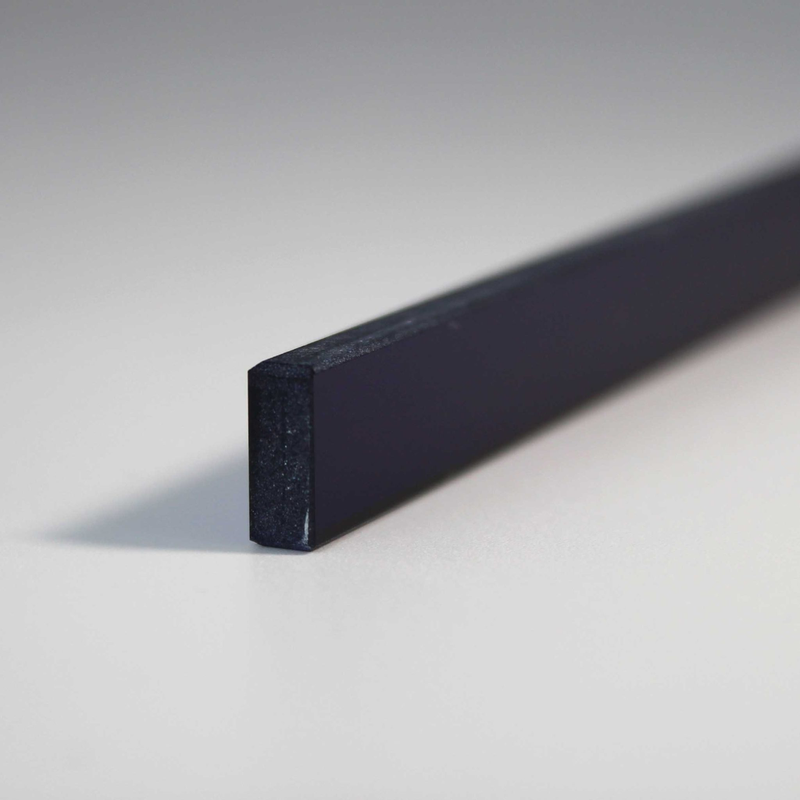
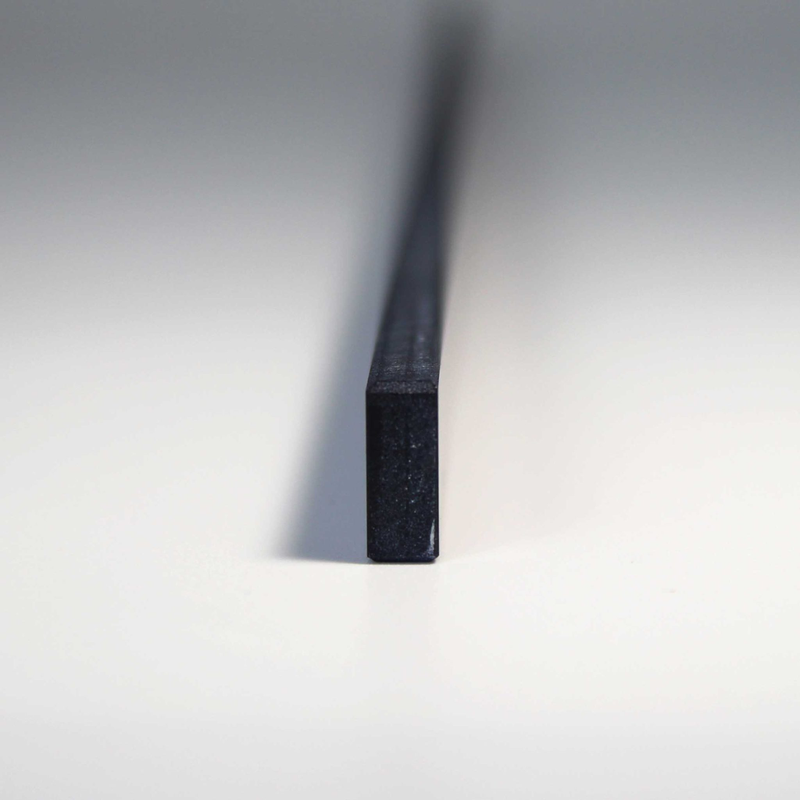
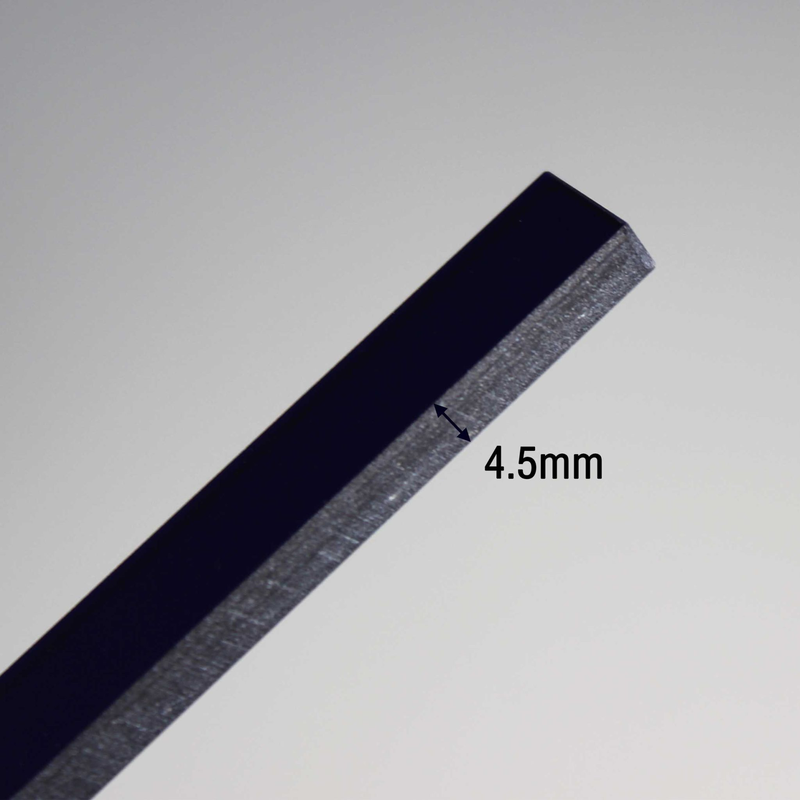
Optical Stage Lamp Color Violet Purple Glass BG3 Filter X-P22F3C2701
A UV blue bandpass filter that selectively transmits certain wavelength ranges (pass band).The bandpass filter is precision polished for demanding research or OEM applications. Dimension: 3mm-300mm Thickness: 1.0mmm, 1.10mm CWL: 808nm+/-5nm, 920nm, 880nm or as requested FWHM: 20nm Transmission: 90% A glass band pass filter is defined as a device that allows frequencies within a specific frequency range and rejects frequencies outside that range. Center Wavelength (CWL), used in defining bandpass filters, describes the midpoint of spectral bandwidth over which the filter transmits. Traditional Coated Optical Filters tend to achieve a maximum transmission near the center wavelength, whereas Hard Coated Optical Filters tend to have a fairly flat transmission profile over the spectral bandwidth. Bandwidth is a wavelength range used to denote a specific part of the spectrum that passes incident energy through filters. Bandwidth is also referred to as FWHM (Figure 1). FIGURE 1: ILLUSTRATION OF CENTER WAVELENGTH AND FULL WIDTH AT HALF MAXIMUM Full Width-Half Maximum (FWHM) describes the spectral bandwidth over which a bandpass filter will transmit. The upper and lower limit of that bandwidth is defined at the wavelengths where the filter achieves 50% of the maximum transmission. For example, if the maximum transmission of the filter is 90%, the wavelengths at which the filter achieves 45% transmission will define the upper and lower limits of the FWHM. FWHM’s of 10nm or less are considered narrow band and often used for laser clean-up and chemical detection. FWHM’s of 25 – 50nm are often used in machine vision applications; FHWM’s of more than 50nm are considered broadband and typically used in fluorescence microscopy applications. Blocking Range is wavelength interval used to denote a spectral region of energy that is attenuated by the filter (Figure 2). The degree of its blocking is typically specified in terms of optical density. FIGURE 2: ILLUSTRATION OF BLOCKING RANGE Slope is a specification often defined on edge filters, such as short pass or long pass filters, to describe the bandwidth over which the filter transitions from high blocking to high transmission. Given as the percent of the cut-wavelength, slope can be specified from a variety of starting and end points. Optical Density (FIGURE 3) describes the amount of energy blocked or rejected by a filter. A high optical density value indicates low transmission, and low optical density indicates high transmission. Optical densities of 6 or greater are used for extreme blocking needs such as Raman spectroscopy or fluorescence microscopy. Optical densities of 3.0 – 4.0 are ideal for laser separation and clean-up, machine vision, and chemical detection, while optical densities of 2.0 or less are ideal for color sorting and separating spectral orders. FIGURE 3: ILLUSTRATION OF OPTICAL DENSITY Cut-On Wavelength is a term used to denote the wavelength at which the transmission increases to 50% throughput in a long pass filter. Cut-on wavelength is indicated by λ cut-on in Figure 4. FIGURE 4: ILLUSTRATION OF CUT-ON WAVELENGTH Cut-Off Wavelength is a term used to denote the wavelength at which the transmission decreases to 50% throughput in a short pass filter. Cut-off wavelength is indicated by λ cut-off in Figure 5. FIGURE 5: ILLUSTRATION OF CUT-OFF WAVELENGTH VY Optoelectronics Co.,Ltd. can supply a full range of filter.They are short pass Filter, long pass Filter, band pass Filter, ultraviolet Filter, infrared Filter, heat absorbing Filter, and color temperature conversion filters. We use material by China to Schott, Hoya, and other manufacturers to process them. Metallic films, colored glasses and thin dielectric films filter are all available per your requirements. People also ask Is bandpass filter better than low pass filter? Unlike the low pass filter which only pass signals of a low frequency range or the high pass filter which pass signals of a higher frequency range, a Band Pass Filters passes signals within a certain “band” or “spread” of frequencies without distorting the input signal or introducing extra noise. What is bandpass vs notch filter? The main difference between a bandpass filter and notch filter is that bandpass filter allows signals within a particular frequency range to pass and a notch filter will filter those signals out in that one frequency range. What is the difference between bandpass filter and low pass filter? A bandpass filter allows signals between two specific frequencies to pass, but that discriminates against signals at certain frequencies. A low pass filter is a filter that passes signals with a frequency lower than a certain cutoff frequency and minimizes signals with frequencies higher than the cutoff. What does an optical filter do? Optical filters are passive optical devices that consist of specialized optical coatings applied onto a substrate. The coatings modify the refractive index of the substrate, enabling them to reflect, transmit, or absorb incoming light depending on its wavelength.
 Save to Favorites
Overview
Specifications
| Parameter | Value |
|---|---|
| Material | BG3 |
| Length | 425mm |
| Width | 11.7mm |
| Thickness | 4.5mm |
Applications
Datasheet
Please provide your email to download the datasheet.
Invalid email format. Please try again.
Supplier Information
Related Products
-
BIM-5003 flashing xenon lamp power supply Lamps Brolight
Operating Voltage [DC]: DC 12V/24V optional Trigger Voltage [DC]: DC 5V/0V (high/low level) Output Waveform: Square Wave
The BIM-5003 is a palm-sized portable supply developed for modular xenon flash lamps. As a driver for the SIM-6205 series pulsed xenon lamp, it supplies stable 12V/24V operating power and 5V trigger pulses at 10Hz–95Hz. The BIM-5003 primarily serves the SIM-6205 series and also supports Hamamatsu modules including L9455, L11316, L11317, L12745, L13651, and L13821.
-
BIM-6203 deuterium-tungsten lamp light source Lamps Brolight
Wavelength Range: 230-2500 nm Bulb power - Deuterium lamp: 25W Bulb power - Tungsten lamp: 20W
The BIM-6203 deuterium-tungsten source combines highly stable deuterium and tungsten lamps. Innovative filtering suppresses characteristic deuterium peaks for highly stable, smooth, continuous output over 230-2500nm. It is well suited to high-precision quantitative absorbance, concentration, and transmittance measurements. The BIM-6203's two sources switch independently through housing buttons or individual remote TTL control.
-
Light-source device teaching experiment system SPT-EDU Lamps Cotest
Ketai distilled standard optoelectronics-industry source-testing methods into the SPT-EDU system for vocational-college and university optoelectronics students. At an acceptable cost, students learn and operate methods close to industrial practice. The basic version teaches LIV and parameters such as threshold current, operating current, and operating voltage. It expands to spectra, near-field optics, far-field optics, and other key parameters. Teachers can use these experiments to prompt reflection on influencing factors and further exploration. Within specified performance limits, it also supports university research testing for multipurpose use.
-
Collimator alignment system Lamps Chinaddwy
-
 M3L
Lamps
Cctc
Capacitance Range: 1.3pF~100nF Tolerance [Usually]: ±5%/±10% Tolerance [Cp≤10pF]: ±0.05/±0.1/±0.25/±0.5
Related Articles
Founded in 2004, Wuhan Union Optic Inc. is a National Specialized, Refined, Unique & Innovative "Little Giant" high-tech enterprise located in Wuhan East Lake High-Tech Development Zone.
Founded in Beijing in 2011, Beijing FJR Opto-electronic Technology Co., Ltd. specializes in R&D, manufacturing and sales of infrared thermal imaging equipment and complete optoelectronic systems.
CytoViva delivers comprehensive hyperspectral imaging solutions covering visible to near-infrared spectrum, compatible with brightfield, fluorescence and proprietary enhanced darkfield microscopy modes.
Macro channel water-cooled stacked laser diodes integrate dozens of laser bars into one vertical stacked module with large-diameter macro flow cooling channels.
Loading...
Name
Phone
Organization
Use Case

Database Platform