

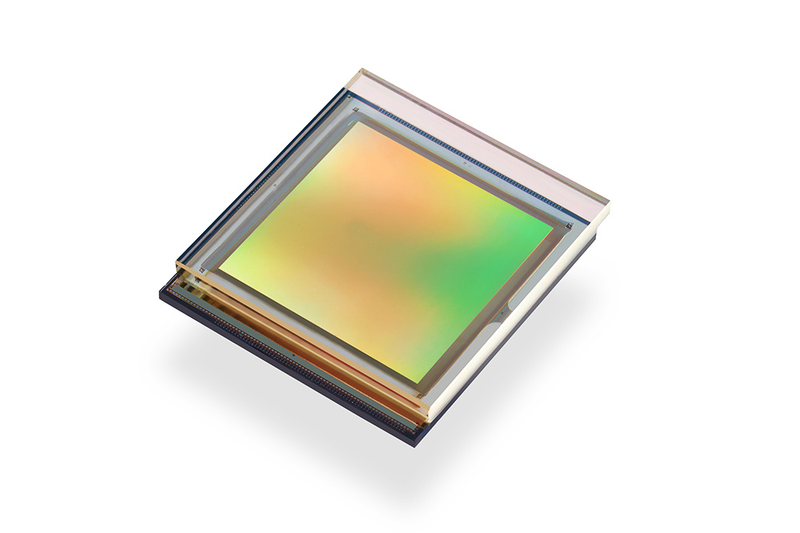
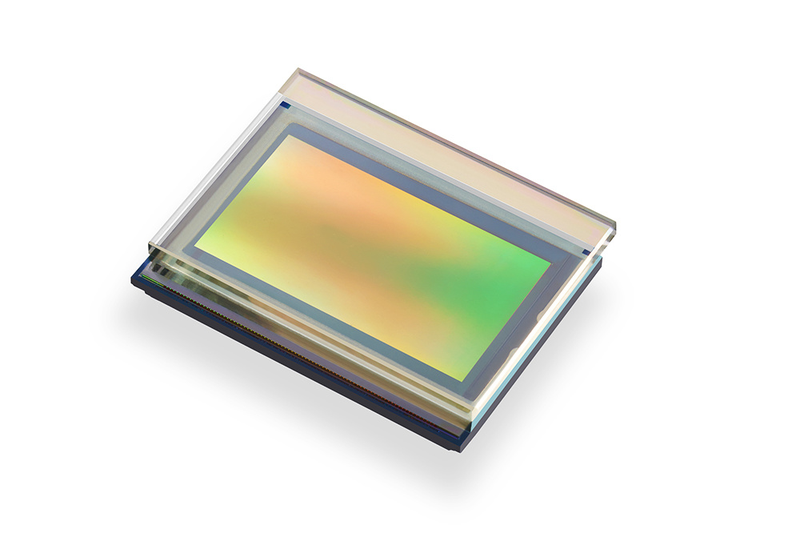
R&D Sample Packaging
Jianxin Optoelectronics has independently developed advanced packaging processes and can provide high-quality customization of wavelength, liquid-crystal cell thickness, device dimensions, device operating mode, and liquid-crystal materials to specific customer requirements. Customer case: the School of Electronics and Information Engineering at Anhui University published the paper "Switching Dynamics Mechanism of Liquid-Crystal Cells under High-Frequency Pulse Driving," DOI: 10.37188/CJLCD.2025-0168. Abstract: High-resolution liquid-crystal spatial light modulators driven by high-frequency pulses are widely used in holographic imaging, near-eye AR/VR, and optical communications. However, insufficiently fast liquid-crystal cell response and output jitter remain technical problems requiring solutions. Existing studies mainly focus on static or slowly varying low-frequency electric fields, and the complex relationship between high-frequency pulse driving and switching dynamics remains unclear. Based on the Ericksen-Leslie dynamic theory for nematic liquid crystals, this paper discusses and simulates characteristic curves of the equations under inertia-dominated or viscosity-dominated conditions. Based on this discussion, a parallel-aligned liquid-crystal cell with a cell thickness of approximately 1 μm is driven by rectangular pulses at 1~10 kHz, and the relaxation process is observed using light intensity measurements. The results show that, after the driving field is switched off, relaxation of the nematic liquid-crystal deformation is jointly governed by inertial and viscous properties. Based on this finding, the paper considers that this model can explain liquid-crystal cell switching dynamics more precisely and will help optimize liquid-crystal spatial light modulator designs. The authors also hope the work will encourage further investigation of liquid-crystal cell switching dynamics under high-frequency pulse driving. Keywords: liquid-crystal spatial light modulator; high-frequency pulse driving; Ericksen-Leslie dynamic theory; director switching dynamics; inertial and viscous effects.
 Save to Favorites
Overview
Datasheet
Please provide your email to download the datasheet.
Invalid email format. Please try again.
Supplier Information
Related Products
-
TO Window Packages Dahengoptics
Daheng Thin Film Center provides TO caps with optical windows. Windows may be flat plates with filter or beamsplitter coatings, inclined flat windows, ball lenses and other types. These products are mainly used in TOSA, ROSA and other photodetectors.
-
R4023 ZOS-R4023-20 Packages Zgy-led
Input emitter maximum power Pd [Absolute Maximum Ratings ;Ta=25℃]: 75 mW Input emitter maximum reverse voltage V_R [Absolute Maximum Ratings ;Ta=25℃]: 5 V Input emitter maximum continuous forward current I_F [Absolute Maximum Ratings ;Ta=25℃]: 50 mA
ZOS-R4023-20 is a compact reflective photointerrupter with phototransistor output. The emitter and detector face the same direction in a molded package for noncontact sensing. The compact package series combines transfer and injection molding using unique technology and blocks visible light to reduce false detection. The device has a long focal length and a lead-free (T&R) package suitable for reflow soldering. Measurement notes: forward-voltage measurement tolerance ±0.1V; luminous-intensity measurement tolerance ±10%; peak-wavelength measurement tolerance ±1.0nm.
-
ZALS-4439C ZALS-4439C-12B120-Z1(CAR) Packages Zgy-led
Maximum Power P_C [Absolute Maximum Ratings ;Ta=25℃]: 150 mW Reverse Voltage V_R [Absolute Maximum Ratings ;Ta=25℃]: 32 V Operating Temperature Topr [Absolute Maximum Ratings ;Ta=25℃]: -40~+85 ℃
ZALS-4439C-12B120-Z1(CAR) is a high-speed, high-sensitivity miniature flat-top PIN photodiode in a lens surface-mount package molded from clear plastic. The source's incomplete spectral statement refers to visible-light and infrared emitting diodes.
-
ZSPIR-2415-4428-C Packages Zgy-led
Maximum Power Power Dissipation Pd [Absolute Maximum Ratings;Ta=25℃;First Maximum Power Row in Source Table]: 140 mW Maximum Reverse Voltage VR [Absolute Maximum Ratings ;Ta=25℃]: 5 V Maximum Continuous Forward Current IF [Absolute Maximum Ratings ;Ta=25℃]: 100 mA
Package dimensions. Notes: all dimensions are in millimeters; unspecified dimensional tolerances are±0.3mm. Electro-optical characteristics. Absolute maximum ratings.
Related Articles
Driven by the continuous pursuit of higher precision and efficiency in optical communication and optoelectronic device manufacturing, OLCR-1000 Low-Coherence Interferometer, independently developed by Wuhan Guanggu Interconnect Technology Co., Ltd., provides an innovative technical solution for distributed return loss testing of optical fibers and optoelectronic devices.
icrolight is a high-tech enterprise specializing in the R&D, manufacturing and sales of active and passive photonic devices for microwave photonics, LiDAR ranging, gas sensing, fiber optics and photomedicine.
BEIJING JIEPU TREND supplies YAG+Er:YAG+YAG bonded composite slab laser crystals for high‑power solid‑state laser systems. The monolithic slab consists of two undoped YAG end‑cap layers and a central Er‑doped YAG gain segment. The overall dimension is 9 mm×9 mm×9 mm.
Shanghai Connet Laser Technology Co., Ltd. focuses on technological innovation, delivering cutting-edge photonic products & solutions for industrial lasers, LiDAR, fiber optic sensing, coherent telecom, cold atom physics and precision spectroscopy research & mass manufacturing.
Loading...
Name
Phone
Organization
Use Case

Database Platform