
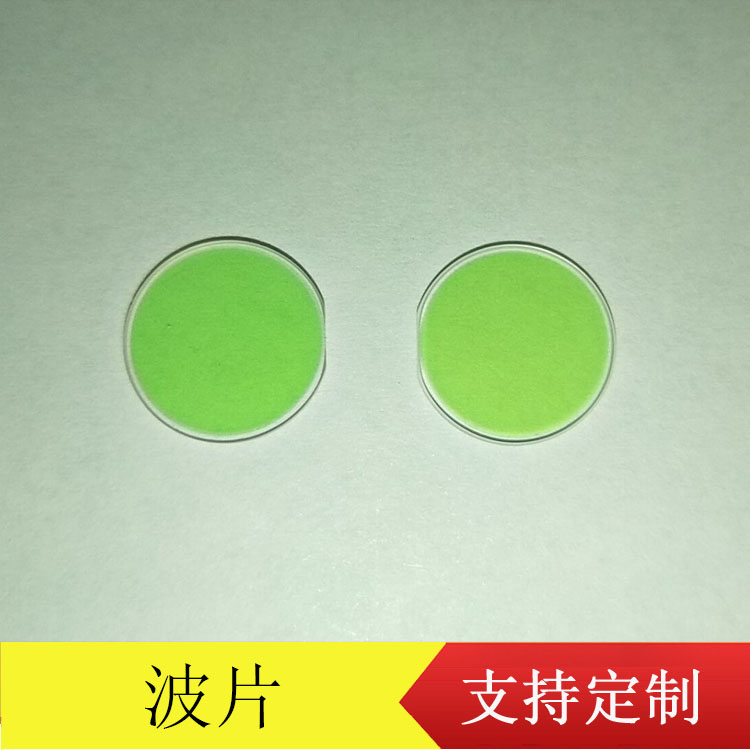
Waveplate
A waveplate, also called a phase retarder, is made from birefringent material. It introduces a phase shift between two orthogonal polarization components to adjust the beam's polarization state. Common waveplates are made of quartz crystal and include half-wave and quarter-wave types. 1. Low-order waveplates introduce several orders of phase retardation. They are generally about 0.5mm thick, have narrow spectral bandwidth and require highly monochromatic light. Temperature stability and retardance accuracy are lower than those of zero-order waveplates, but mechanical strength and laser damage threshold are higher. Typical thickness is 0.2-0.5mm, with a high damage threshold. 2. Dual-wavelength waveplates are special multiple-order waveplates that provide the desired retardation at two wavelengths simultaneously. They are widely used in frequency-doubled solid-state lasers to improve conversion efficiency. Typical thickness is 2mm, with a high damage threshold. 3. Cemented zero-order waveplates combine two quartz plates with orthogonal optical axes. Their thickness difference produces zero-order retardation, with low temperature and wavelength sensitivity. The two retarders are UV-cemented, 1.5~2mm thick, offer broad wavelength and temperature bandwidths, and have antireflection coatings on both sides and a mount. 4. Optically contacted zero-order waveplates combine two quartz plates with orthogonal optical axes. Their thickness difference produces zero-order retardation with low temperature and wavelength sensitivity. These two optically contacted retarders are 1.5~2mm thick, offer broad wavelength and temperature bandwidths and a high damage threshold, and have antireflection coatings on both sides and a mount. 5. Achromatic waveplates combine birefringent crystals of two materials with different dispersion, providing relatively uniform retardation over a broad wavelength range. They also have low temperature sensitivity, accept larger incidence angles, operate over a broad temperature range and have a high damage threshold. They eliminate chromatic aberration over an extended wavelength band. 6. Air-spaced zero-order waveplates mount two quartz plates with orthogonal optical axes with an air gap. These two air-spaced retarders are 1.5~2mm thick, offer broad wavelength and temperature bandwidths and a high damage threshold, and have antireflection coatings on all surfaces and a mount.
 Save to Favorites
Overview
Specifications
| Parameter | Value |
|---|---|
| Material | Quartz |
| Diameter Tolerance | +0.0,-0.1mm |
| Wavefront distortion [@632.8nm] | λ/10@632.8nm |
| Phase retardation accuracy | λ/500 |
| Parallelism | <1 arc second |
| Surface finish | 20/10 |
| Standard Dimensions | φ12.7 φ15 φ20 φ25.4 φ30 |
Applications
Datasheet
Please provide your email to download the datasheet.
Invalid email format. Please try again.
Supplier Information
Related Products
-
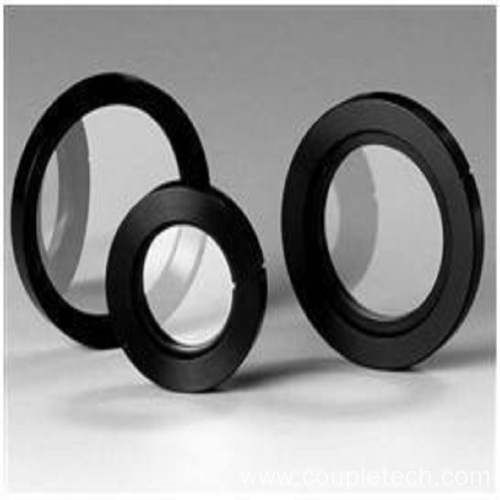 Achromatic Wave Plates AWP Product Attributes
Waveplates
Coupletech
Brand: COUPLETECH Surface Quality: 20/10 Scratch And Dig Material: Crystal Quartz
An Achromatic Waveplate, AWP, is similar to a Zero-Order Waveplate, which is made from two pieces of Crystal Quartz except that the AWP is composed of one piece of Crystal Quartz and one piece of Magnesium Fluoride, MgF2. As a kind of optical elemtents, achromatic waveplate is similar to Zero-order waveplate except that the two plates are made from different materials, such as crystal quartz and magnesium fluoride. Since the dispersion of the birefringence can be different for the two materials, it is possible to specify the retardation values at a wavelength range. Unlike standard waveplates, Achromatic Waveplates (Retarders) provide a constant phase shift independent of the wavelength of light that is used. This wavelength independence is achieved by using two different birefringent crystalline materials. Both of these materials are birefringent, however, by proper matching of the birefringent changes in one material with those of the second, retardation changes are minimized as the wavelength changes. This phenomenon produces a waveplate whose change in retardation is extremely small for large variations in wavelength. Hence, the retardation of the resulting waveplate can be made to low sensitivity to wavelength change. In other words, it can be used at a broad-band wavelength range. Based on the contact methods of two plates, we classify the achromatic waveplate to two types: Airspaced and Cemented. Features of Achromatic wave plate are wide spectral bandwidth, low temperature sensitivity and large sizes available. Besides, Lambda/4 achromatic wave plate and lambda/2 achromatic wave plate are available. Coupletech off standard and custom design achromatic waveplate. Please contact us for more information. Also provide other kind of optical products such as : Optical Lenses, Optical Filters, Beamsplitter, Optical Windows, Optical Mirrors and optical prism.
-
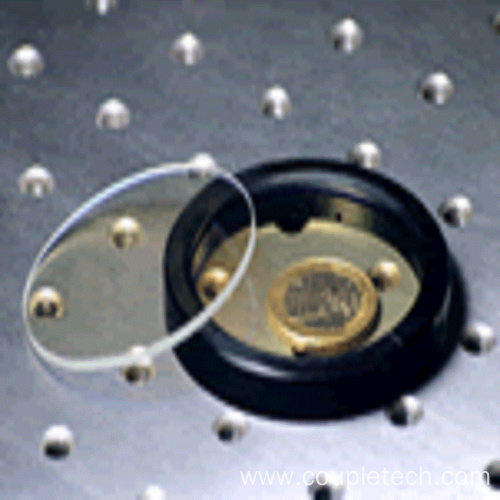 Dual Wavelength Wave Plate Product Attributes
Waveplates
Coupletech
Brand: COUPLETECH Surface Quality: 20/10 Scratch And Dig Material: Crystal Quartz
Dual Wavelength Wave Plate is made from Birefringent Crystals which introduce a phase difference between the fast and slow principal axis of the waveplate, it can be used to control polarization state of polarized beam. It's a remarkable kind of Optical Element which belong to Polarizing Optic. Normally, Dual Wavelength Wave plate and Multiwavelength Wave plate are made of crystal quartz. Dual Wavelength Waveplate is a special kind of multi order waveplates. Dual wavelength waveplate is designed to be used in dual wavelength setups, for example, it can be operated as a quarter waveplates at 1064nm and as a half waveplate at 532nm at the same time. It's always used to manage the states of polarization of laser beams to obtain maximum conversion efficiency. And it is a kind of Laser Component as well. Multiple wavelength wave plate is made of single crystal or MgF2 expressed the crystals can provide different wavelength of a quarter or half of phase delay, and can also be customized according to the requirements of any delay of multi wavelength wave plate. It is often used in solid - frequency laser to improve the efficiency of laser conversion. The multi-wavelength wave plate is a special multistage wave plate, which can obtain the desired phase delay according to the fitting of the refractive index at different wavelengths, but the phase delay is usually multistage.
-
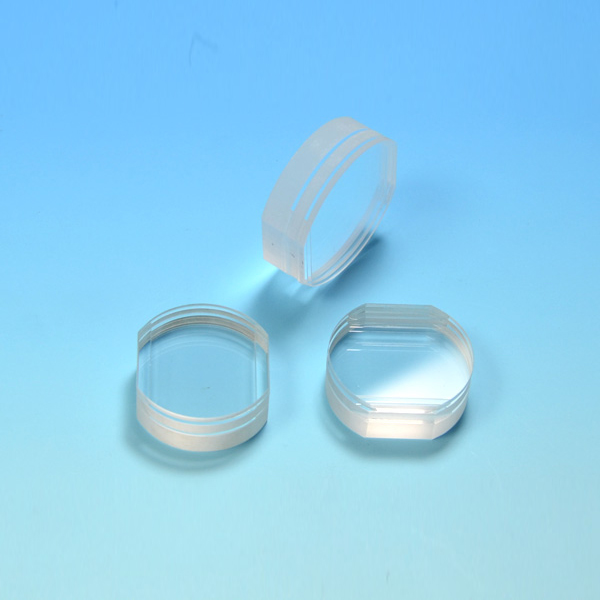 Achromatic Waveplates
Waveplates
Xkpho
Material [Commercial / High Precision]: Crystal quartz Dimension X×Y(φ) [Commercial / High Precision]: 1×1mm;3×3mm;φ3~φ25.4mm Dimension tolerance [Commercial]: ±0.1mm
Achromatic waveplate is constructed of two plates which are made from different materials, such as crystal quartz and magnesium fluoride. Since the dispersion of the birefringence can be different for the two materials, it is possible to specify the retardation values at a wavelength range. Accordingly, the retardation of the resulting waveplate can be made to low sensitivity to wavelength. We can supply the achromatic waveplate of two types: airspaced and cemented according to the contact methods of two plates.
-
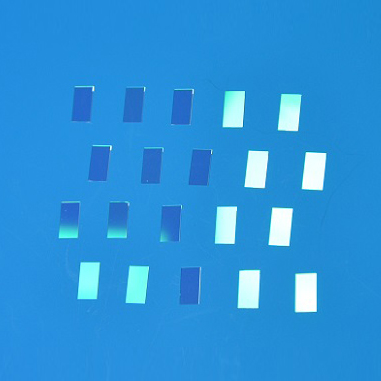 Low order Waveplates
Waveplates
Xkpho
Material [Commercial / High Precision]: Crystal quartz Dimension X×Y(φ) [Commercial / High Precision]: 1×1mm;3×3mm;φ3~φ25.4mm Dimension tolerance [Commercial]: ±0.1mm
Its thinner thickness is less than 0.5mm. Better temperature (380C), wavelength (1.5nm) and incident angle (4.50) bandwidth and high damage threshold make it widely used in common application. Furthermore, it is economical.
-
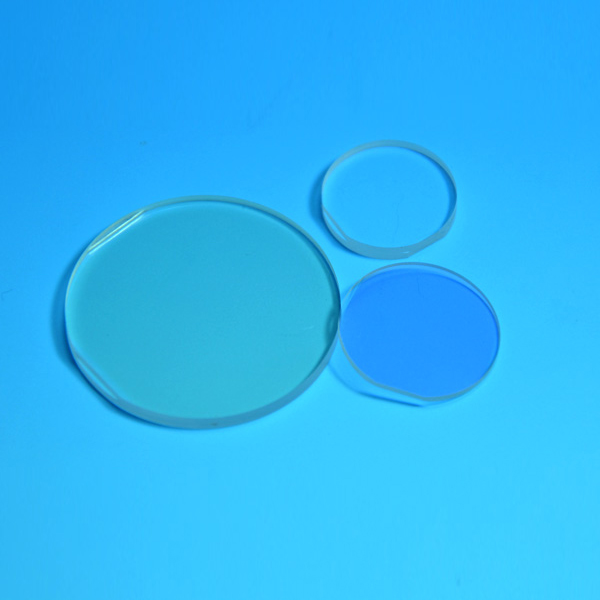 True zero order Waveplates
Waveplates
Xkpho
Material [Commercial / High Precision]: Crystal quartz Dimension X×Y(φ) [Commercial / High Precision]: 1×1mm;3×3mm;φ3~φ25.4mm Dimension tolerance [Commercial]: ±0.1mm
True zero-order waveplates are constructed of a crystal quartz waveplate in drect bonding with a high-precision BK7 glass window.The thickness of the true zero-order waveplate is very thin (less than 0.1mm).it make the true zero-order waveplate excellent in temperature, wavelength and incident angle (about 20º) bandwidth. Therefore, it is excellent choice for the highly accurate application. Meanwhile we also supply the single True zero-order waveplates In order to enable the waveplate suitible for high damage threshold (more than 1GW/cm2) application. The thickness of this waveplate means handling can be difficult, we can provide mounts upon request.
Related Articles
As a core precision optical component for wavelength screening, frequency locking and spectral demodulation, optical etalons are widely used in high-end scientific research and precision laser equipment.
As a vital emerging sector of modern three-dimensional spatial economy, the low-altitude economy has become a new global growth driver. It covers a wide range of commercial scenarios, including UAV navigation and obstacle avoidance, precise airspace management, aerial mapping, low-altitude logistics distribution, security monitoring and emergency disaster rescue. Nevertheless, frequent extreme weather, complex terrain obstacles and increasingly dense low-altitude flight activities pose severe challenges to the safety and stability of low-altitude aircraft operations.
Laser pump sources are the core energy input component of solid-state lasers and laser amplifiers, and their performance directly determines the output power, beam quality and service life of the entire laser system. In scenarios such as industrial processing, scientific research experiments and high-end equipment, improper pump source selection will not only result in substandard system performance, but also bring a series of problems such as rapid device degradation and high operation and maintenance costs. This article sorts out the core selection logic and key pitfalls of pump source procurement, and provides selection references based on mature, mass-produced high-reliability products to help purchasers efficiently screen suitable products.
Shandong Haucore Optoelectronics Co., Ltd. introduces the HGLD‑792‑COS‑D‑10WB semiconductor laser within its COS series. Delivering an output power of 10 W at a central wavelength of 792 nm, this device adopts gold‑tin bonding COS packaging. Featuring high reliability and long service life, it serves as a preferred pump source for solid‑state lasers and is widely deployed in industrial processing, laser display, medical & aesthetic treatment, scientific research and other fields.
Loading...
Name
Phone
Organization
Use Case

Database Platform