
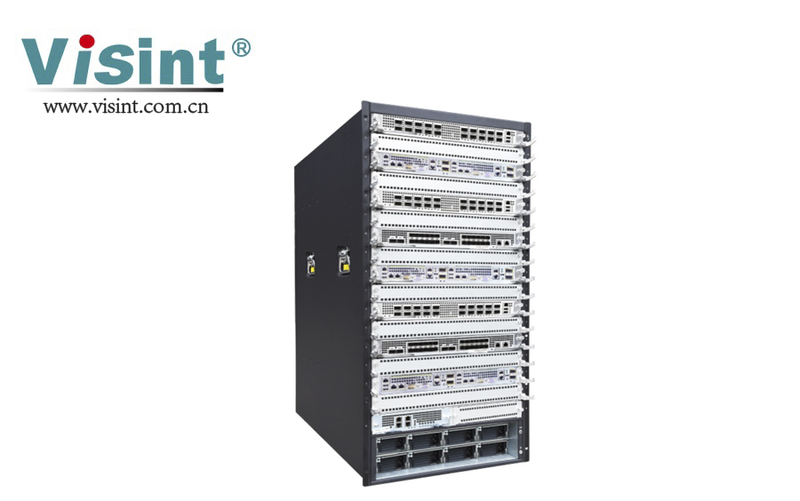
Aggregation and Distribution Equipment
The Vispace 1000 aggregation/distribution platform is Huixinte's flagship network-visibility product. It processes incoming signals for mobile, IDC and metropolitan networks, integrating access, processing and forwarding for high-volume filtering/distribution, dense mobile signaling analysis and high-performance DPI. Improving on ATCA architecture, it adopts OCP (Open Compute Project), a new backplane-free design, new network processors and high-capacity switching chips. Interface density, computation and switching double versus conventional ATCA, with up to 800Gbps per service board. Supported long-/ultralong-reach ports include 10G POS/WAN, 10GE, 25GE, 40GE and 100GE. Packet-processing, compute, switch-management, main-control and fan boards form the chassis. Three sizes support maximum ingress of 6T, 16T and 32T.
 Save to Favorites
Overview
Specifications
| Parameter | Value |
|---|---|
| Rule Capacity-Total IMSI, MSISDN, IMEI, TAC, ECI and APN Rule Capacity [Shared] | 13w( Shared ) |
| Rule capacity - IPv4 exact-match five-tuple rules | 800W、1500W Strips |
| Rule capacity - IPv6 exact-match five-tuple rules | 200W、800W、500W Strips |
| Rule Capacity-Dynamically Bound Signature IPv4 Five-Tuple Rule Capacity | 500W Strips |
| Rule Capacity-Dynamically Bound Signature IPv6 Five-Tuple Rule Capacity | 100W Strips |
| Rule Capacity-IPv4 Masked Five-Tuple Rule Capacity [Shared] | 52W strip (shared) |
| Rule Capacity-IPv6 Masked Five-Tuple Rule Capacity [Shared] | 26W strip (shared) |
| Rule Capacity-Fixed-Position Signature Rule Capacity [Shared] | 13W strip (shared) |
| Rule Capacity-IPv4 Composite Rule Capacity [Shared] | 10W strip (shared) |
| Rule Capacity-IPv6 Composite Rule Capacity [Shared] | 6.5W and 6W strips (shared) |
| Rule Capacity -TCPFlag Rule Capacity [Shared] | 104W strip (shared) |
| Rule Capacity -MAC Rule Capacity [Shared] | 104W strip (shared) |
| Rule Capacity-Simultaneous Online User Sessions Supported per Operator | 10000W |
| Flow Table Capacity -IPv4 Flow Table Capacity | 5000W、26000W Strips |
| Flow Table Capacity -IPv6 Flow Table Capacity | 5000W、4000W Strips |
| Processing Performance | Processing capacity up to 800Gbps per board, supporting total chassis capacities of 1.2T, 2.4T, 4.8T, 6.4T and 12.8T. |
| Multi-user | Supports management of up to 4 data-plane service users. Each operates independently with separate service data, rule import and operating permissions. |
| Multiple Operators | Supports simultaneous access and processing for multiple operators. Access, processing and distribution output are independent for each operator, and each supports multiuser configuration. |
| Port Mirroring-Input Port Mirroring | One card supports mirroring of 4 configured input ports in 1 to 1 mode. |
| Port Mirroring-Output Port Mirroring | Unlimited mirror-port count; supports 1 to 1 and 1-to-many modes |
| Rule Matching-Rule Type | Supports exact IPv4/Ipv6 five-tuple, LTE, flexible five-tuple, masked five-tuple, fixed-position signatures, composite rules and floating-position full-packet signatures. Each rule element is matched exactly against the corresponding IP packet element. |
| Data Processing - Forwarding Action | Supports 4 forwarding actions: forwarding, dropping, flow sampling, and flow locking. |
| Data Processing-Packet Identification | Identifies common fixed-network and mobile-internet packets and outputs unrecognized packets through specified distribution groups. Parsing L2-L4 information identifies packet protocols for differentiated processing. Unrecognized packet types are dropped or forwarded to a specified port. |
| Data Processing-Unrecognized Packet Output | Supports default handling of unrecognized packets. When a distribution group has multiple ports, traffic is output using the Round_Robin distribution algorithm. |
| Data Processing-Packet Information Carrying | Supports carrying MAC-field information including matched rule ID from front-end acquisition equipment, packet five-tuple HASH and front-end output port number. The packet MAC header can be tagged with machine number, user ID, input port direction and source MAC address. |
| Data Processing-Tunneled Packet Processing | Supports matching and HASH output based on the inner or outer five-tuple of tunneled packets. Recognizes mainstream tunneled packets and supports global configuration. |
| Data Processing-Packet Header Stripping | Supports stripping and output of headers including MPLS, VLAN and IP channel (including GTP and GRE), with up to 10 layers for VLAN and MPLS. |
| Data Processing-Packet Header Output | Supports output of packet headers from a specified port group of the common port. Packet-header output can be enabled or disabled. |
| Data Processing-Packet Truncation Function | Packet truncation supported; output contains original network-layer and transport-layer headers. |
| Data Processing-Packet Sampling | Supports packet sampling for all packets except unidentified packets. |
| Data Processing-Signaling Reconstruction | Supports signaling reconstruction on S1-MME, S11, S6a and Gn interfaces. Supported call records include attach, detach, location update, periodic update, X2 and S1 handover, service request, session creation/deletion, authentication, verification, security mode, SMS status reports and online/offline events. |
| Data Processing-Signaling Decryption | Supports NAS signaling decryption in S1-MME and decryption-success-rate statistics queries. |
| Data Processing-Correlated Marking | Uses signaling-message parsing results to associate user-plane data, learn associations and label user-plane packets according to the tag format. |
| Data Processing-Port Prefiltering | Supports prefiltering on Gn and Rp interfaces. Gn filtering can allow only GTP and SCTP traffic; Rp filtering supports signaling data from a10 and a11 interfaces. |
| Data Processing-Network Element Statistics | Supports queries of traffic statistics for logical interfaces including S1-MME, S11 and Gn, and data tagging rates for each logical interface. |
| Flow Management | Supports sampling and output of the first N packets of each flow. TCP and UDP flow management are independently configurable, with the first N packets in each direction output through specified port groups. Global configuration outputs the first N packets of incoming traffic and discards packets starting from N+1. N ranges from 1~10. |
| Flow Management-Flow Statistics | Supports globally enabling flow statistics for incoming traffic and outputting NetFlow statistics, with output ratios of 1:1~1:1000. |
| Flow Management-Flow Association | Supports parsing and correlation of OPC_DA, passive FTP, RTSP, SIP and other protocols to output multimedia and other data streams through specified ports. |
| Flow Management-Load Balancing | Supports static load balancing across members of a port group according to incoming-traffic hash results, based on source IP, destination IP, source port, destination port and protocol type. |
| Hash Method | Supports 9 Hash-based aggregation and distribution methods, including source IP Hash, destination IP Hash and round-robin Hash, for consistent source/destination routing and load balancing. |
| Server Dynamic Scheduling Rules | Supports remote dynamic rule scheduling from a rule server, rule addition and deletion, rapid bulk rule downloads and rule synchronization. |
| Network-Management Functions | The network management system provides configuration, log management, operation and maintenance, real-time equipment monitoring and fault alarms. Access is available through serial modes (SNMPv1, v2c, V3, CLI) and remote modes (telnet, SNMP, SSH). |
Applications
Key Features
Datasheet
Please provide your email to download the datasheet.
Invalid email format. Please try again.
Supplier Information
Related Products
-
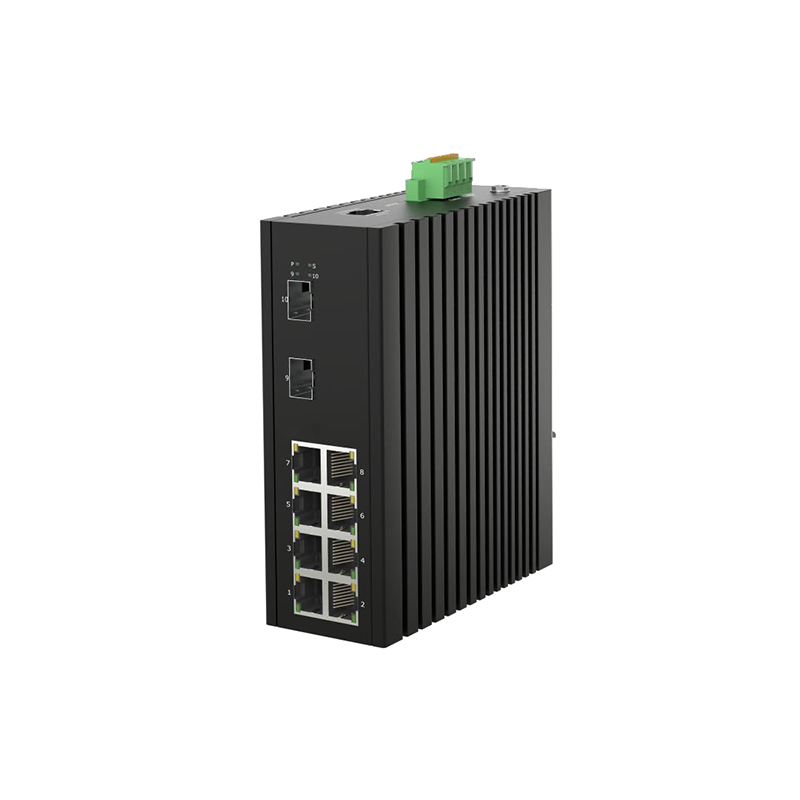 KB-2GF8GE-M Series Industrial Gigabit Ring-Network Switch KB-2GF8GE-MT
Optical Networking
Xkkb
Fixed port: 2 1G/2.5G SFP Optical Ports, 8 10/100/1000M Autosensing Electrical Ports, External Power Supply Switching capacity: 26Gbps Packet forwarding rate: 19.34Mpps
The KB-2GF8GE-M series comprises all-Gigabit, 10-port Layer 2 managed switches with PoE support. The standard configuration has 8 auto-negotiating 10/100/1000Mbps RJ45 ports and 2 Gigabit SFP optical ports. The IS6210G-E series uses highly reliable industrial-grade components and industrial hardware construction for harsh industrial environments with extremely high reliability requirements. Applications include energy, rail transport, smart cities, automation and other harsh environments.
-
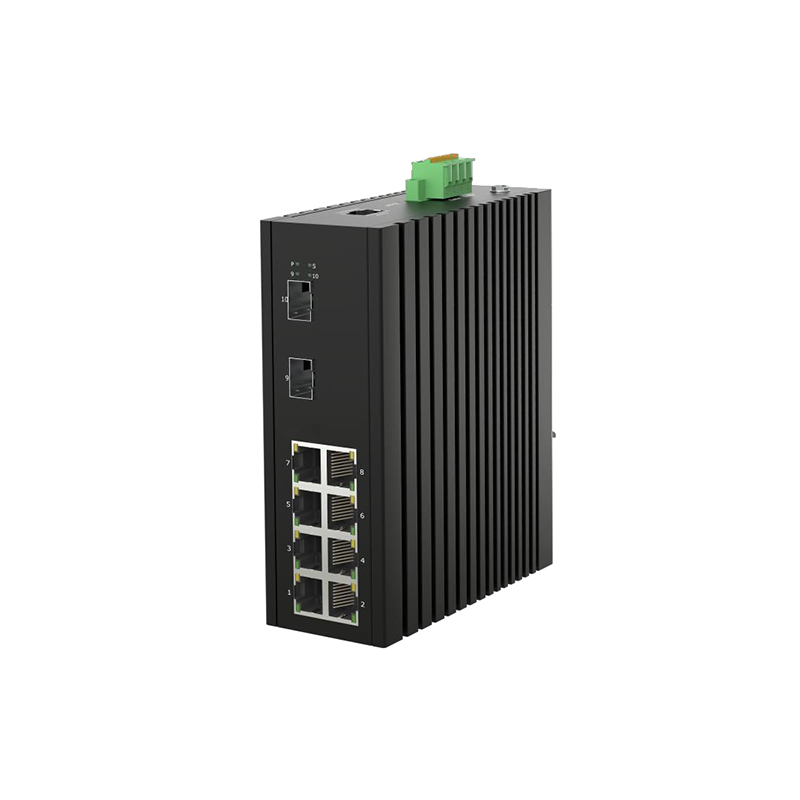 KB-2GF8GE-M Series Industrial Gigabit Ring-Network Switch KBP-2GF8GE-M
Optical Networking
Xkkb
Fixed port: 2 1G/2.5G SFP Optical Ports, 8 10/100/1000M Autosensing Po E Electrical Ports, External Power Supply Switching capacity: 26Gbps Packet forwarding rate: 19.34Mpps
The KB-2GF8GE-M series comprises all-Gigabit, 10-port Layer 2 managed switches with PoE support. The standard configuration has 8 auto-negotiating 10/100/1000Mbps RJ45 ports and 2 Gigabit SFP optical ports. The IS6210G-E series uses highly reliable industrial-grade components and industrial hardware construction for harsh industrial environments with extremely high reliability requirements. Applications include energy, rail transport, smart cities, automation and other harsh environments.
-
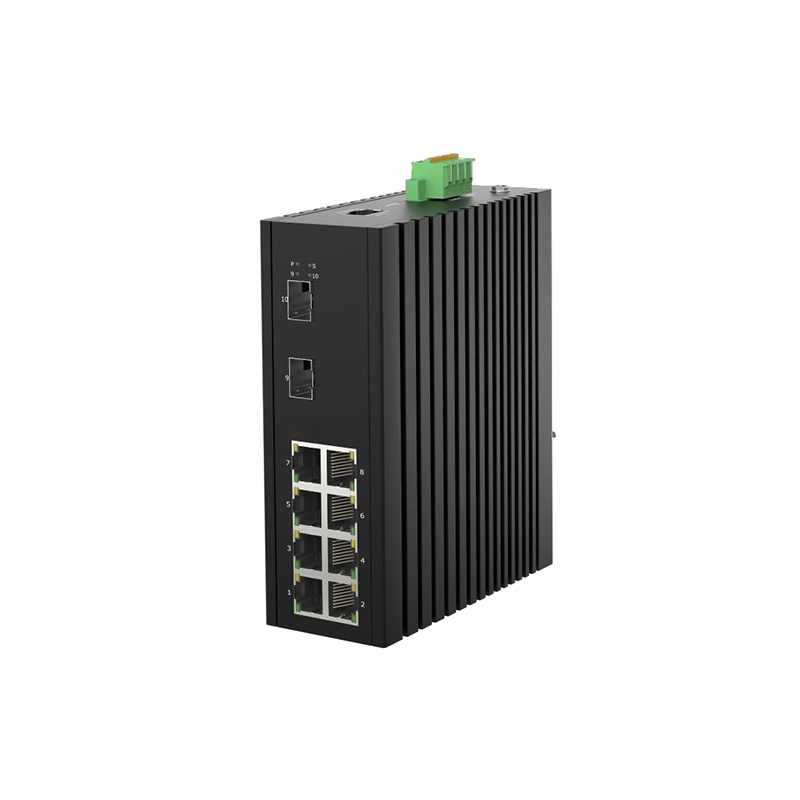 KB-2GF8GE-M Series Industrial Gigabit Ring-Network Switch KB-2GF8GE-MT
Optical Networking
Xkkb
Fixed port: 2 1G/2.5G SFP Optical Ports, 8 10/100/1000M Autosensing Electrical Ports, External Power Supply Switching capacity: 26Gbps Packet forwarding rate: 19.34Mpps
The KB-2GF8GE-M series comprises all-Gigabit, 10-port Layer 2 managed switches with PoE support. The standard configuration has 8 auto-negotiating 10/100/1000Mbps RJ45 ports and 2 Gigabit SFP optical ports. The IS6210G-E series uses highly reliable industrial-grade components and industrial hardware construction for harsh industrial environments with extremely high reliability requirements. Applications include energy, rail transport, smart cities, automation and other harsh environments.
-
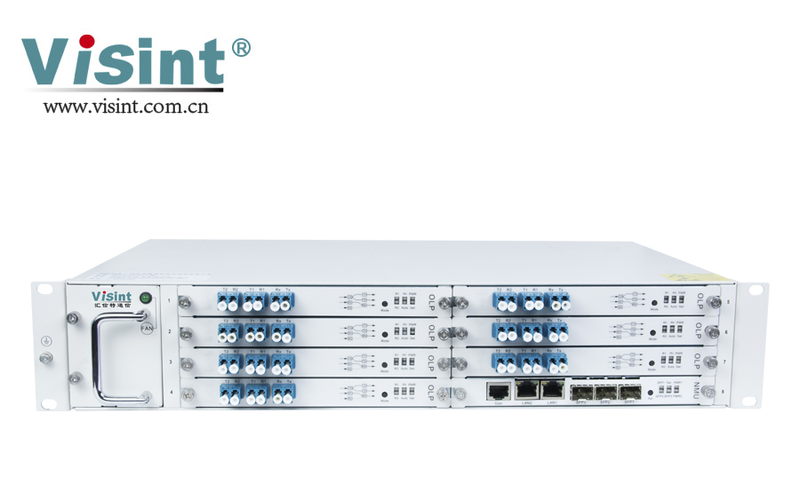 Optical Link Protection System (2U)
Optical Networking
Visint
Maximum Single-System Capacity: 4, 8, 16 or 40 wavelengths Wavelength Range: Complies with ITU-T G.692 and ITU-T G.695 standards Service Access Type: PDH 、EPON、GPON SDH:STM-1/STM-4/STM-16/STM-64/STM-256 SONET:OC-3/OC-12/OC-48/OC-192/OC-768 FE、GE、10GE、40GE、100GE、CPRI 1~7、POS FICON、ESCON、CATV
The Vispace 1000 series 2U integrated transmission platform is highly integrated and compact, using a standard 19-inch 2U rack. Optional AC/DC power offers 1+1 redundancy, with convenient installation and use. Up to 8 service slots support mixed card types and hot swapping, with in-band and out-of-band network management. Per-wavelength bandwidth can be selected as needed. Remote online upgrades simplify maintenance.
Related Articles
Medical disposable‑device manufacturers have long demanded high‑performance interconnect accessories for single‑use equipment. The newly‑launched REDEL‑P disposable‑connector family addresses this requirement and delivers premium‑grade electrical connections for varied one‑time‑use medical instruments.
A microlens array (MLA) is a high-precision optical component composed of hundreds or thousands of tiny, uniformly arranged micro lenses on a single flat substrate. Unlike traditional single lenses that focus one light beam, a microlens array can split, homogenize, and reshape light on a micro scale. It is widely paired with VCSELs, lasers, and image sensors, becoming a core part of modern miniature optical systems.
BEIJING JIEPU TREND supplies YAG+Er:YAG+YAG bonded composite slab laser crystals for high‑power solid‑state laser systems. The monolithic slab consists of two undoped YAG end‑cap layers and a central Er‑doped YAG gain segment. The overall dimension is 9 mm×9 mm×9 mm.
Driven by the rapid upgrading of industrial automation, high-precision displacement sensing technology has become a core foundation of intelligent manufacturing.
Loading...
Name
Phone
Organization
Use Case

Database Platform