
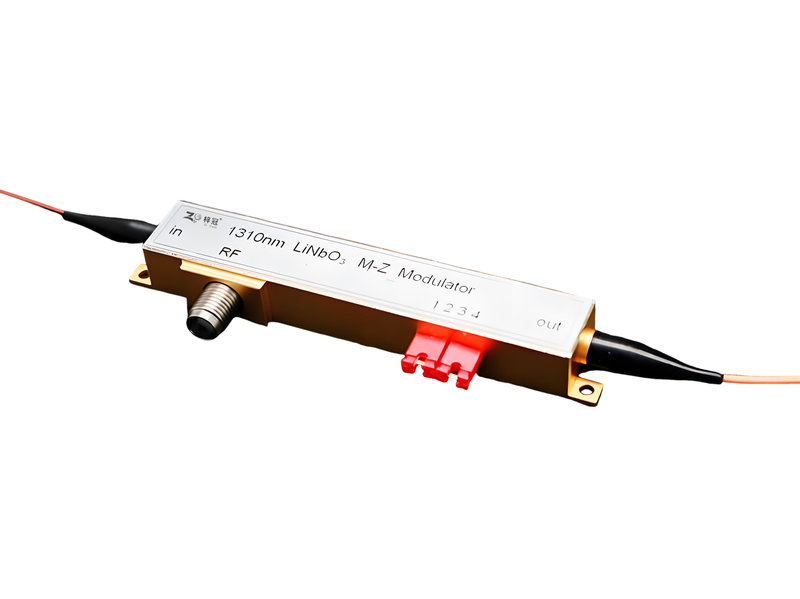
1310nm Polarization-Maintaining Lithium Niobate Intensity Modulator
The 1310nm lithium niobate 3GHz intensity modulator is an optical modulation device that uses lithium niobate (LiNbO3) material and fabricates a Mach-Zehnder type optical waveguide through titanium diffusion or proton exchange process. This device is designed specifically for the 1310nm wavelength and features a 3GHz electro-optic bandwidth, used to achieve intensity modulation of optical signals.
 Save to Favorites
Overview
Specifications
| Parameter | Value |
|---|---|
| Wavelength [1064nm, 850nm wavelength customizable] | 1310 nm |
| Half-Wave Voltage DC Electrode | 6.5/7 V |
| Electro-Optic Bandwidth S21@-3dB | 3 GHz |
| RF Half-Wave Voltage@DC | 3.5/4 V |
| Bias Half-Wave Voltage | 5 V |
| Jitter | 0.5/1 dB |
| Electrical Return Loss S110-20GHz (S11) | -12/-10 dB |
| RF Connector Input Resistance | 40 Ω |
| Input Impedance DC Connector | >1M |
| Crystal: Lithium Niobate | X-cut Y-propagation |
| Waveguide Fabrication (waveguide process) | APE Process |
| Insertion Loss | 3/4 dB |
| Optical Return Loss | <-45 dB |
| Wavelength-Dependent Loss (1480-1600nm) | 0.5/1 dB |
| DC (DC) Extinction Ratio | 20/22 dB |
| Input fiber | Panda polarization-maintaining fiber 1.5 m long, 900 um |
| Output Fiber [PMF optional] | SMF-28 single-mode fiber 1.5 m long, 900 um (PMF optional) |
| Input RF Connector | SMA |
| DC Connector | Pin feed-through diameter: 1.0 mm |
| Package Dimensions | 110 mm × 12.5 mm × 9.0 mm |
| Operating Temperature | 0~ +70 ℃ |
| Storage Temperature | -40 ~ +85 ℃ |
| Maximum DC Input Voltage | ±20 V |
| Maximum RF Input Power | 28 dBm |
| Maximum Input Optical Power [APE Process] | 200 mW (APE process) |
Applications
Key Features
Datasheet
Please provide your email to download the datasheet.
Invalid email format. Please try again.
Supplier Information
Related Products
-
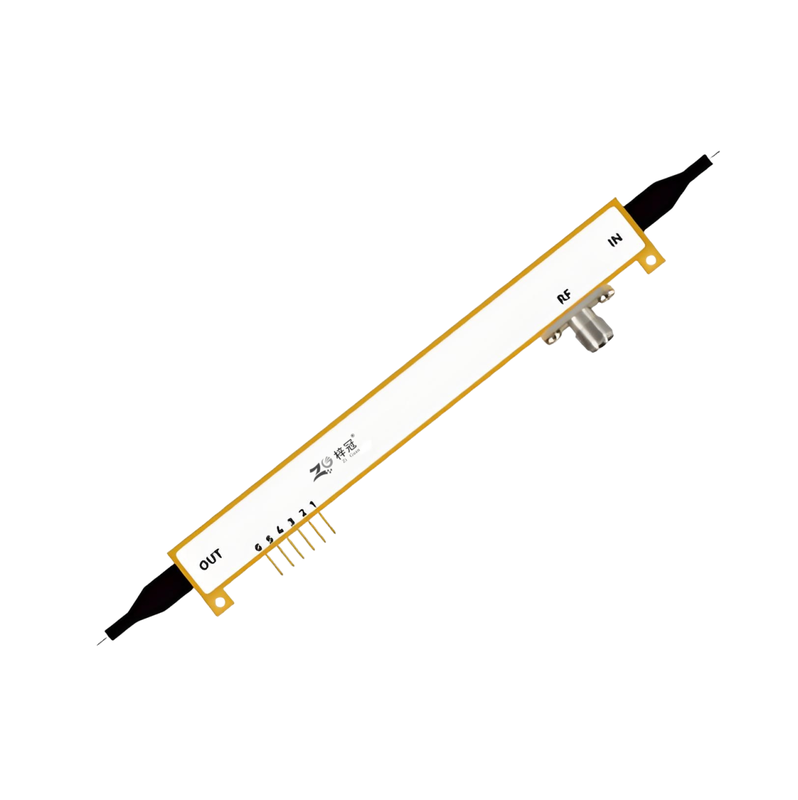 10GHz Extra-Long Phase Modulator
EOM
Zg-photonics
Material: LiNbO3 Crystal Orientation: X-cut, Y-propagating Waveguide Process: APE Annealed Proton Exchange
The 10GHz extra-long phase modulator is a high-performance phase modulator designed specifically for the C-band, manufactured using lithium niobate (LiNbO3) material. This modulator features a 10GHz bandwidth and can achieve efficient phase modulation at low driving voltage, making it suitable for high-speed, large-capacity optical communication and optical signal processing systems. This modulator is manufactured using annealed proton exchange (APE) optical waveguides and uses polarization-maintaining (PM) input and output fibers, ensuring the polarization state of the optical signal remains stable during transmission.
-
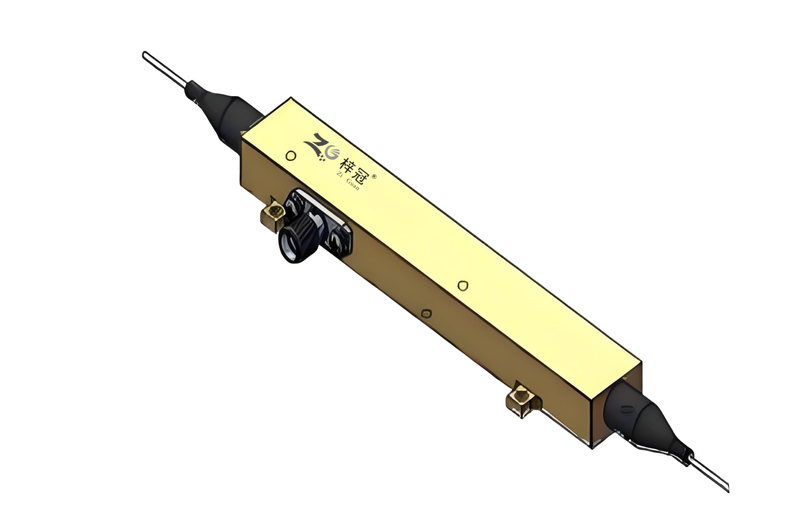 200MHz Phase Modulator
EOM
Zg-photonics
Maximum input optical power: 300 mW Operating Wavelength: 1030-1070 nm Insertion loss: ≤3.5 dB,3.0 dB typ.
The 200MHz phase modulator is a high-performance phase modulator manufactured using lithium niobate (LiNbO3) material. This modulator is designed to operate in the wavelength range of 1030nm to 1070nm, has a bandwidth of 200MHz, and can achieve efficient phase modulation at ultra-low drive voltage. At the same time, this modulator is manufactured using annealed proton exchange (APE) optical waveguides and uses polarization-maintaining (PM) input and output fibers, ensuring that the polarization state of the optical signal remains stable during transmission and making it easy to integrate with other optical components.
-
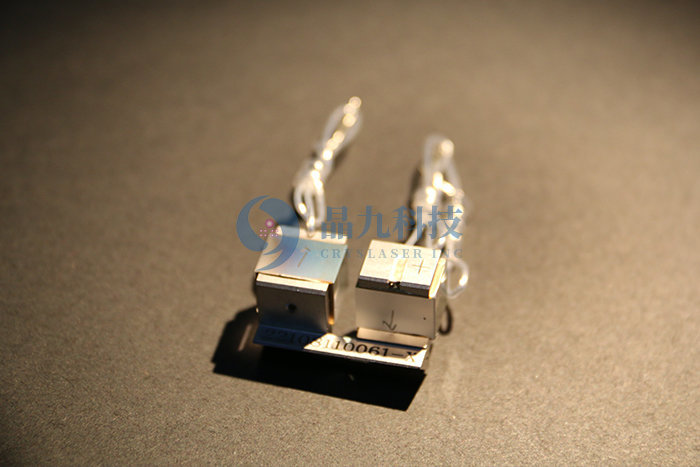 RTP Switch
EOM
Cryslaser
RTP (rubidium titanyl phosphate) crystal belongs to the KTP family of crystals. Owing to its good electrical and optical properties, including relatively high resistivity (about 10¹¹-10¹² Ω·cm) and laser-damage threshold.
-
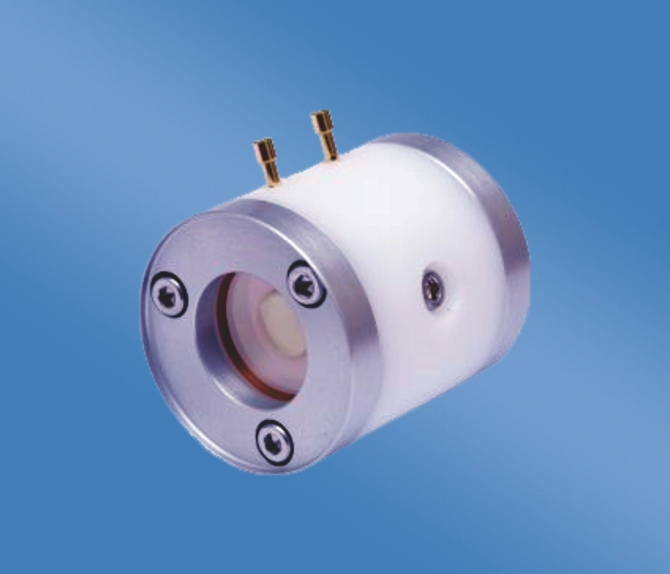 Passive Q-Switch Crystal
EOM
Intpho
Related Articles
Wuhan Optical Valley Interlink Technology Co., Ltd. was founded in 2013 by a technical team from Huazhong University of Science and Technology.
Shanghai Connet Laser Technology Co., Ltd. focuses on technological innovation, delivering cutting-edge photonic products & solutions for industrial lasers, LiDAR, fiber optic sensing, coherent telecom, cold atom physics and precision spectroscopy research & mass manufacturing.
Against the evolving demands for military‑grade hardware, rail transit equipment and heavy‑duty machinery that run under high‑shock vibrating conditions, anti‑loose connectors serve as indispensable hardware for stable power delivery and high‑speed signal transmission.
BEIJING JIEPU TREND supplies YAG+Er:YAG+YAG bonded composite slab laser crystals for high‑power solid‑state laser systems. The monolithic slab consists of two undoped YAG end‑cap layers and a central Er‑doped YAG gain segment. The overall dimension is 9 mm×9 mm×9 mm.
Loading...
Name
Phone
Organization
Use Case

Database Platform