

SHIS-N220 Staring Hyperspectral Camera ( Visible-Near Infrared )
This series of products is independently developed and manufactured by Zhongda Ruihe. It is based on liquid crystal tunable filter (LCTF) and applies gaze-type hyperspectral imaging technology in the 420-750nm spectral range. It uses electronically controlled LCTF to continuously subdivide narrow-band light splitting and perform high-resolution two-dimensional area array imaging for each band. After image processing, a complete hyperspectral high-definition image sequence can be obtained
 Save to Favorites
Overview
Specifications
| Parameter | Value |
|---|---|
| Imaging Method | Liquid Crystal Tunable Filter (LCTF) Staring Spectral Imaging |
| Scanning Accuracy | 1nm |
| Horizontal Field of View | 9.5° |
| Optical Lens | 80mm, Manual |
| Image Sensor Type | CMOS |
| Image Sensor Size | 1.2 |
| Image Sensor Pixel Size | 6.5 μm x 6.5 μm |
| Data Depth | 12bit |
| Image Format | img (ENVI )/tif (16 ) |
| Image Data Interface | USB 3.0 Type B |
| LCTF Interface | USB 2.0 Type B |
| Temperature Control Interface | M12 ( 5 ) |
| External Power Supply | USB Power Supply |
| Computer Configuration | Intel Core 22.8 GHz |
| Operating System | Microsoft Windows 7/8/10 (64bit) |
| Camera Parameter Settings | Exposure Time |
| Other Software Functions | Supported, ROI, Spectrum. Automatic |
Key Features
Datasheet
Supplier Information
Related Products
-
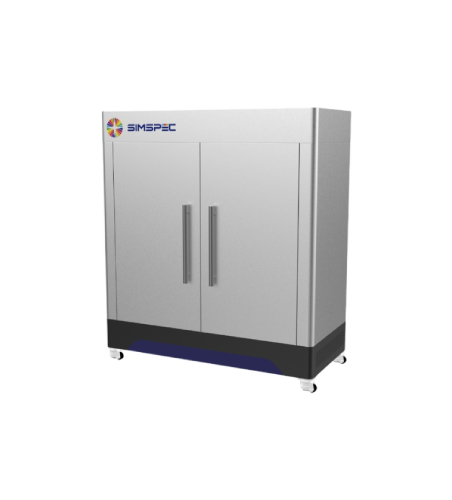 SIMSPEC Laboratory Darkroom Hyperspectral Imaging System EHL10-B
Scientific & Industrial Cameras
Whhxykj
Hyperspectral Camera - Spectral Bands: 1200 Hyperspectral Camera - Spectral Resolution: 2.5nm Hyperspectral Camera - Spatial Pixels: 1920
Motorized Translation Stage Motorized Translation Stage Rotation Stage Motorized Lab Jack Motorized Goniometer Stage Combined Motorized Translation Stage Manual Translation Stage Translation Stage Rotation Stage Manual Lab Jack Manual Goniometer Stage Tilt Stage Series Translation Stage Optical Table Optical Breadboard Optical Table Optical Table Active Vibration Isolation System Optical Table / Optical Rail Optical Components and Systems Lens Mirror Filter Window Coupling System Coupling System Coupling System Plant Phenotyping Plant Phenotyping Plant Phenotyping Benchtop Organizer Retaining Ring Spanner LED Laboratory Tool Kit Spanner Miniature Vacuum Pump CAD Hyperspectral Camera Motorized Translation Stage Manual Translation Stage Optical Table Optical Components and Systems Coupling System Plant Phenotyping CAD | 400-1618-188 QQ 400-1618-188 TOP / / Hyperspectral Camera / SIMSPEC Laboratory Darkroom Hyperspectral Imaging System. 1000 SIMSPEC Laboratory Darkroom Hyperspectral Imaging System
-
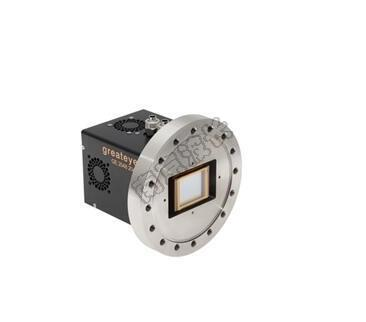 Spectroscopic CCD Camera
Scientific & Industrial Cameras
Wave-optics
Cooled CCD camera, used for imaging and spectral analysis, covering wavelengths from X-ray to near-infrared, integrated with scientific research and CCD sensors, with low electronic noise, achieving optimal performance for low-photon signal detection. This series of products can be applied in many fields of scientific research and industry.
-
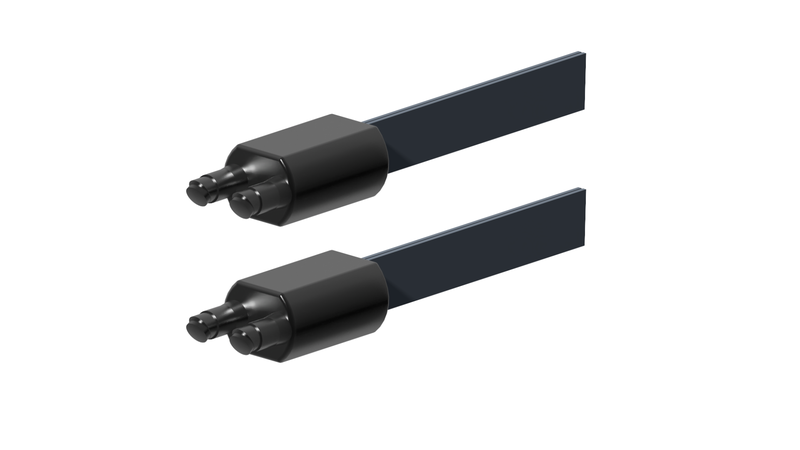 3D4K Fluorescence Module
Scientific & Industrial Cameras
Yxopt
The 3D4K Fluorescence Module is a fusion platform of white-light vision and molecular imaging. Building on top-tier 3D stereoscopic vision, it integrates near-infrared fluorescence imaging capability, enabling real-time, in-situ display of tissue blood flow, lymphatic systems, or specific tumor markers that are invisible to the naked eye, achieving same-screen visualization of function and anatomy.
-
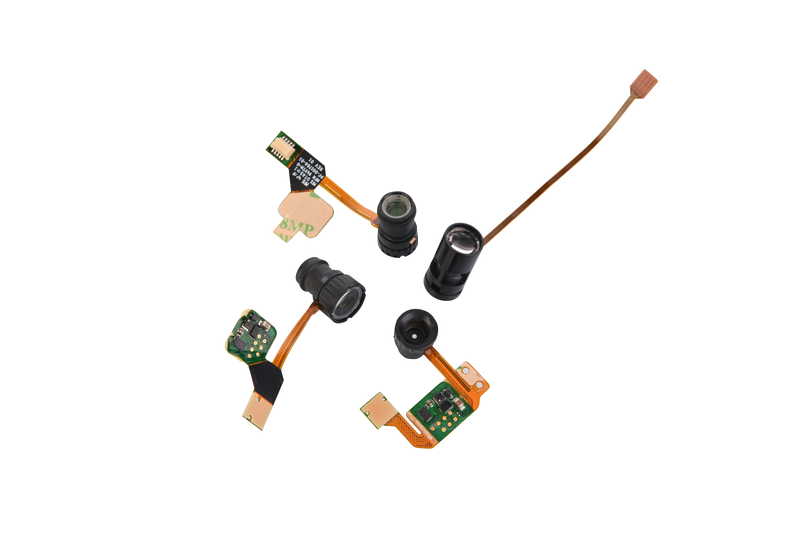 Imaging Module
Scientific & Industrial Cameras
Yxopt
An imaging module is an integrated imaging component that integrates "optical lens + photosensitive element + drive circuit + signal processing unit". Its core function is to focus the optical signal reflected by an external object through the optical system, convert it into an electrical signal through the photosensitive element, and then, after circuit processing and algorithm optimization, finally output a recognizable digital image. Imaging modules have the following types: endoscope imaging modules, automotive imaging modules, line-scan imaging modules, etc.
-
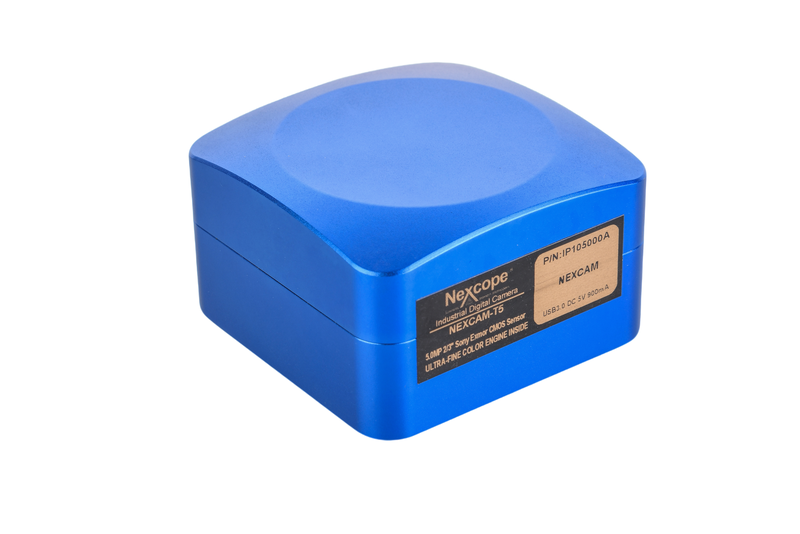 Camera
Scientific & Industrial Cameras
Yxopt
With a diverse selection of cameras and corresponding software, you can configure an ideal microscope imaging system according to the needs of the sample and application.
Related Articles
Wuhan Optical Valley Interlink Technology Co., Ltd. was founded in 2013 by a technical team from Huazhong University of Science and Technology.
Shanghai Connet Laser Technology Co., Ltd. focuses on technological innovation, delivering cutting-edge photonic products & solutions for industrial lasers, LiDAR, fiber optic sensing, coherent telecom, cold atom physics and precision spectroscopy research & mass manufacturing.
Against the evolving demands for military‑grade hardware, rail transit equipment and heavy‑duty machinery that run under high‑shock vibrating conditions, anti‑loose connectors serve as indispensable hardware for stable power delivery and high‑speed signal transmission.
BEIJING JIEPU TREND supplies YAG+Er:YAG+YAG bonded composite slab laser crystals for high‑power solid‑state laser systems. The monolithic slab consists of two undoped YAG end‑cap layers and a central Er‑doped YAG gain segment. The overall dimension is 9 mm×9 mm×9 mm.
Loading...
Name
Phone
Organization
Use Case

Database Platform