
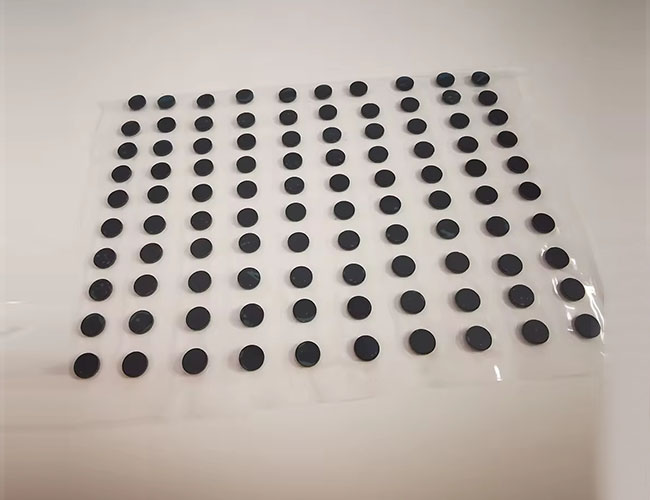
Optical IR Bandpass Filters
An infrared bandpass filter is an optical element that selectively transmits a specific infrared wavelength while blocking light outside of that wavelength (including UV, visible and other non-targeted infrared light). The working principle of IR bandpass filters Passband: the centre wavelength (e.g. 3.4μm) and full width at half maximum (e.g. ±0.2 μm) allowed to be transmitted, usually achieved by multilayer dielectric coatings or interference structures. Blocking Range: light outside the passband is strongly attenuated (OD>4, i.e. transmittance<0.01%). What are the key characteristics of IR bandpass filters? CWL: the wavelength corresponding to the peak of the passband. FWHM: half height full width, divided into narrow band (e.g. 10 nm) and wide band (e.g. 500 nm). Transmittance: usually T>80% in the passband, up to T>90% for high-end filters. Blocking: very low transmittance outside the passband (e.g., OD>6 in the UV-VIS, OD>4 in the IR). Angular Sensitivity: increased angle of incidence leads to a blue shift in the passband (collimation needs to be considered).
 Save to Favorites
Overview
Datasheet
Please provide your email to download the datasheet.
Invalid email format. Please try again.
Supplier Information
Related Products
-
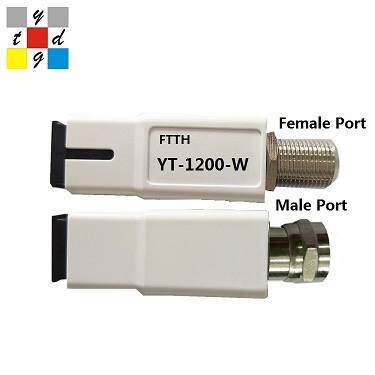 CATV FTTH Passive Optical node with Filter (1550nm)
Optical Filters
Ytdq
-
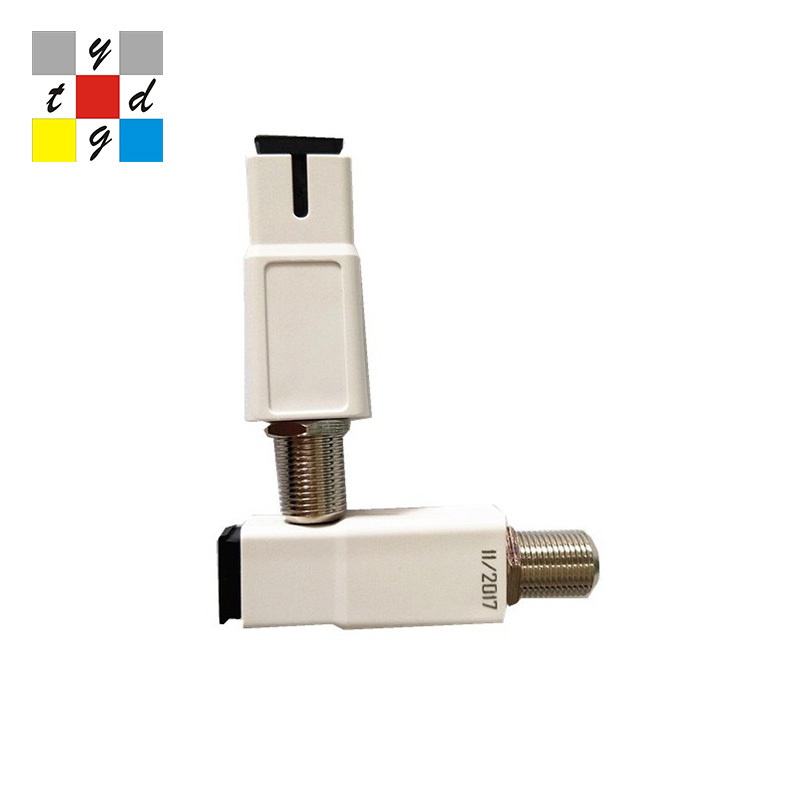 FTTH passive node with filter or without filter
Optical Filters
Ytdq
Optical parameters-Input optical power: -8~0 Optical parameters-Received light wavelength (with filter): 1550 (with filter) Optical parameters-Input optical interface: SC/APC
-
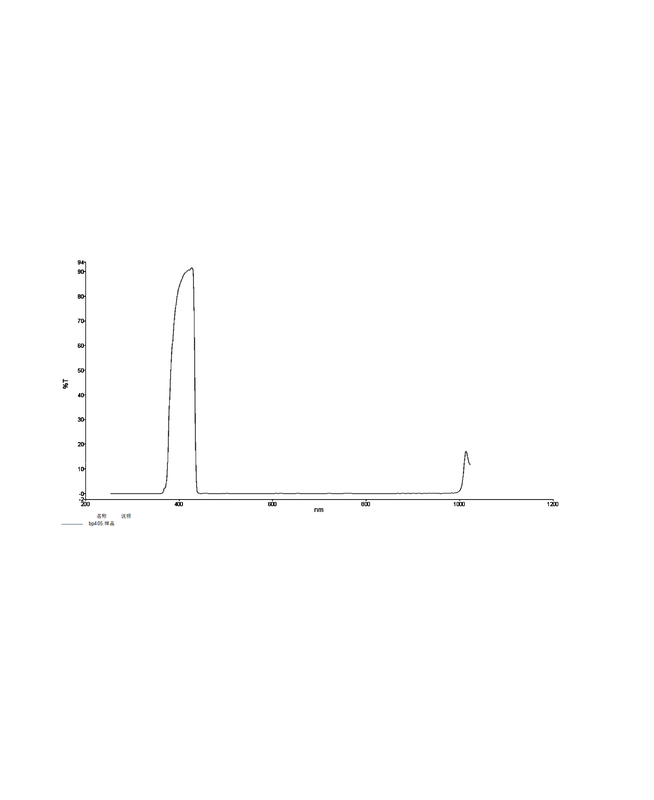 AZURE-BP405
Optical Filters
Azurephotonics
BP405 Transmission Data(Typical)-transmission [380nm]: 40.528018 % BP405 Transmission Data(Typical)-transmission [590nm]: 0.006293 % BP405 Transmission Data(Typical)-transmission [800nm]: 0.003187 %
-
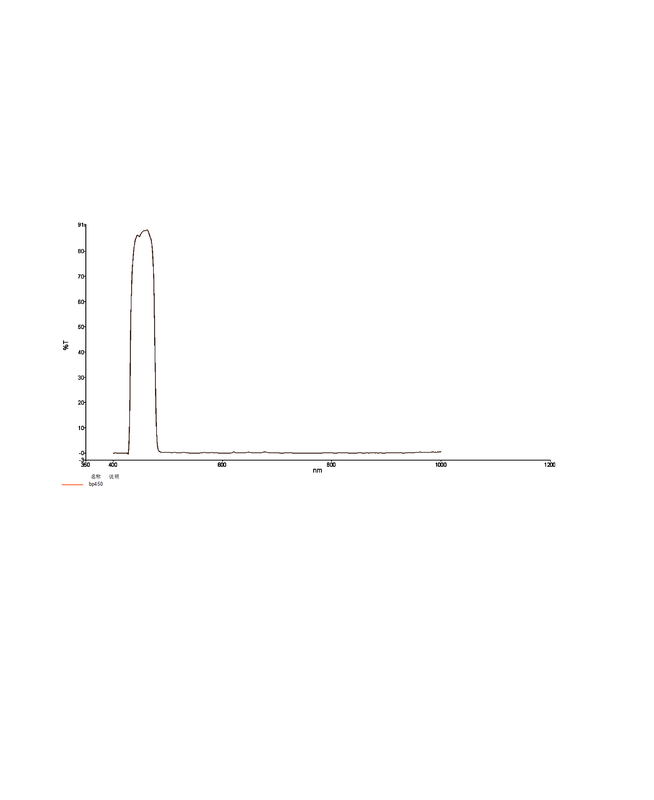 AZURE-BP450
Optical Filters
Azurephotonics
BP450 Transmission Data(Typical)-transmission [400nm]: 0.006605 % BP450 Transmission Data(Typical)-transmission [610nm]: 0.000929 % BP450 Transmission Data(Typical)-transmission [820nm]: 0.077472 %
-
 Filter film
Optical Filters
Bxoptic
Material [bandpass filters]: According to customers’ request Dimension Tolerance [bandpass filters]: ±0.01~±0.2 Chamfer [bandpass filters]: 0.5mm,45°
Related Articles
Widely adopted in small home appliances, industrial instruments, smart toys and atomization devices, the 0603 patch emerald green LED serves as a core status-indicating optical component.
BEIJING JIEPU TREND supplies YAG+Er:YAG+YAG bonded composite slab laser crystals for high‑power solid‑state laser systems. The monolithic slab consists of two undoped YAG end‑cap layers and a central Er‑doped YAG gain segment. The overall dimension is 9 mm×9 mm×9 mm.
Precise spectral screening is essential for high-precision medical detection, spectroscopic analysis and intelligent imaging systems. Tailored for visible and near-infrared spectral separation, the SP900 shortpass optical filter delivers high-efficiency light transmission and deep infrared blocking performance. It effectively eliminates stray light interference, improves signal-to-noise ratio (SNR), and serves as a core optical component for biomedical instruments, scientific analysis equipment and machine vision systems.
Laser pump sources are the core energy input component of solid-state lasers and laser amplifiers, and their performance directly determines the output power, beam quality and service life of the entire laser system. In scenarios such as industrial processing, scientific research experiments and high-end equipment, improper pump source selection will not only result in substandard system performance, but also bring a series of problems such as rapid device degradation and high operation and maintenance costs. This article sorts out the core selection logic and key pitfalls of pump source procurement, and provides selection references based on mature, mass-produced high-reliability products to help purchasers efficiently screen suitable products.
Loading...
Name
Phone
Organization
Use Case

Database Platform