

Fused Silica Retroreflectors
A fused silica retroreflector is a special optical element consisting of three mutually perpendicular reflective surfaces capable of reflecting incident light back along its original path. Its high precision, stability and environmental resistance make it an important application in several fields. What is the structure of a retroreflector? How does it work? Retroreflectors consist of three high precision perpendicular reflecting surfaces (usually right angled) shaped to resemble a corner of a cube. The material can be optical glass (fused silica, BK7), metal (aluminum), or plastic (for low cost applications). The retroreflectors processed by Yutai Optics are made of optical glass material. They are usually coated with a reflective coating (silver, aluminum, gold) to improve reflective efficiency. What are the optical properties of retroreflectors? Incident light is reflected back parallel to the direction of incidence (with a slight offset, but in the opposite direction), regardless of the direction of entry, as long as it enters the effective aperture. Alignment independent: unlike conventional plano mirrors, retroreflectors are highly tolerant of incident angles and require no precision adjustment. Phase conjugate reflection: maintains the wavefront characteristics of the beam (suitable for interferometry).
 Save to Favorites
Overview
Applications
Key Features
Datasheet
Please provide your email to download the datasheet.
Invalid email format. Please try again.
Supplier Information
Related Products
-
 Custom Sapphire Flat Surface Machining
Optical Material
Hbjir
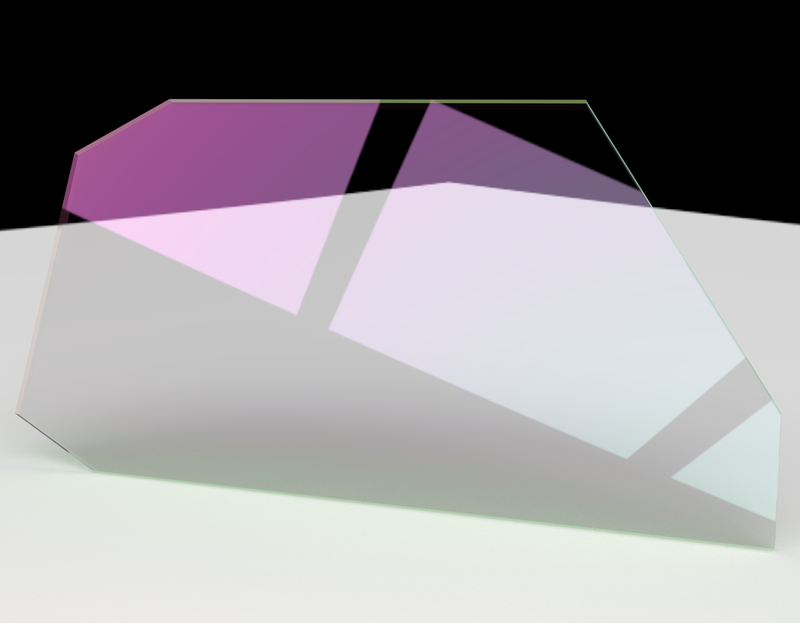
Machined Surface Shape: Flat surface Custom Material: Sapphire Custom Aperture: Φ20m to Φ750 mm (diagonal)
-
 Silicon-Based ABF Chip AB003BF
Optical Material
Raytrontek
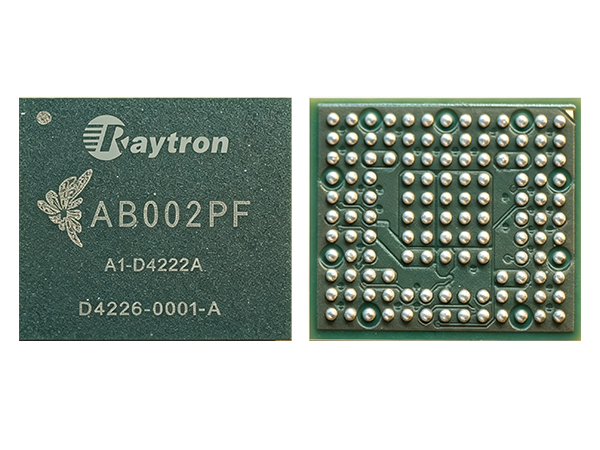
Function Description: X-band 4-channel 8-beam receiver chip Operating Frequency: 7.5~9GHz Main Specifications: Gain 7.3dB, NF≤11.5dB
-
 Silicon-Based ABF Chip AB301PF
Optical Material
Raytrontek
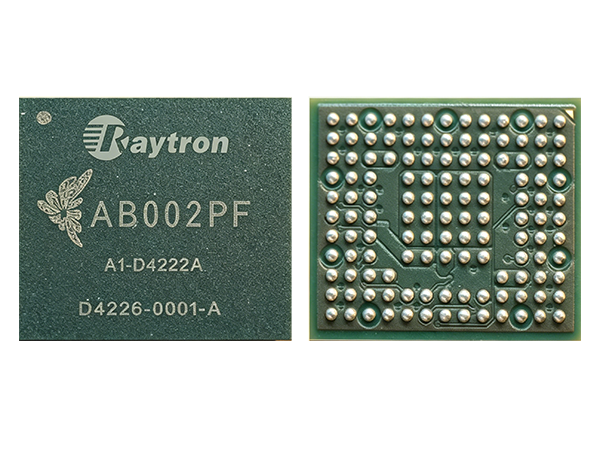
Function Description: K-band 8-channel dual-beam receive chip Operating Frequency: 17.7~21.2GHz Main Specifications: Gain 25dB, NF≤3dB
-
 Multi-Hole Special-Shaped Blank
Optical Material
Hjgdkeji
-
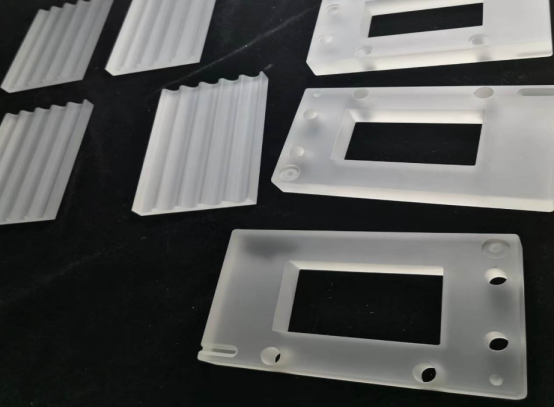 Special-Shaped Blank
Optical Material
Hjgdkeji
Related Articles
Laser pump sources are the core energy input component of solid-state lasers and laser amplifiers, and their performance directly determines the output power, beam quality and service life of the entire laser system. In scenarios such as industrial processing, scientific research experiments and high-end equipment, improper pump source selection will not only result in substandard system performance, but also bring a series of problems such as rapid device degradation and high operation and maintenance costs. This article sorts out the core selection logic and key pitfalls of pump source procurement, and provides selection references based on mature, mass-produced high-reliability products to help purchasers efficiently screen suitable products.
Widely adopted in small home appliances, industrial instruments, smart toys and atomization devices, the 0603 patch emerald green LED serves as a core status-indicating optical component.
An infrared transmitter (IR transmitter) is a basic electronic component that sends invisible infrared light signals for short-range wireless control. It is widely used in daily electronics, smart home devices, and industrial equipment due to its low cost, low power consumption, and stable performance.
Fluoride crystal glass and K9 optical glass are two core optical substrates widely used in precision optical systems, laser equipment and photoelectric scientific research.
Loading...
Name
Phone
Organization
Use Case

Database Platform