

Achromatic Lens
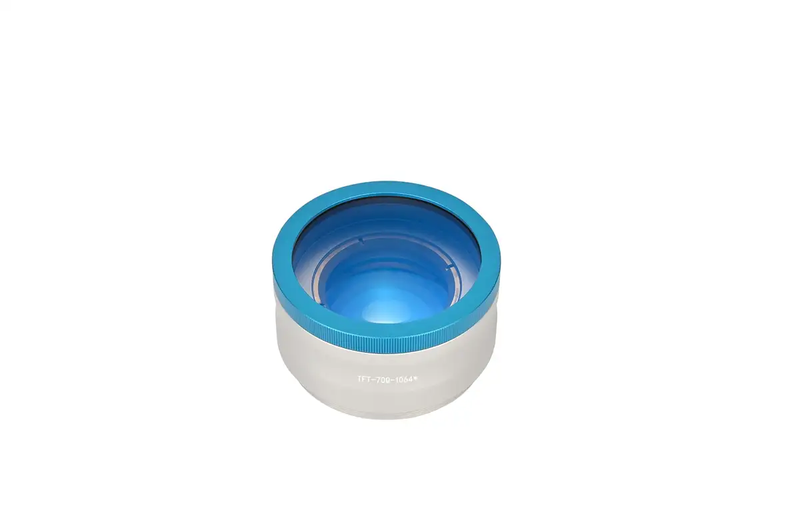
Achromatic lenses. An achromatic lens is a compound optical component formed by closely bonding lenses with different optical characteristics using optical adhesive. Its basic construction consists of two or more singlets, such as achromatic doublets and triplets. These singlets differ in material, curvature radius, and thickness. Common combinations bond positive and negative lenses to balance focal length and aberrations. Different glass dispersions reduce chromatic aberration. Broadband antireflection coatings also reduce surface-reflection losses and increase transmission to improve overall system performance. CLZ Optical Co., Ltd. offers catalog achromats in materials such as optical glass and fused silica and in various specifications, as well as custom lenses manufactured to customer drawings or specifications. Precision processing and coatings can be tailored to requirements. Definitions. Axial chromatic aberration: white light combines many wavelengths. When it passes through lenses or other optical components, wavelength-dependent refractive indices cause different amounts of refraction. Different colors therefore focus at different positions along the optical axis rather than a common point; this axial focus difference is axial chromatic aberration. Field of view: the spatial range observable or photographable through an optical instrument, generally expressed as an angle. Object-space field is the spatial range containing the observed object; image-space field is the image-receiving range on the image plane. Depth of field: when a lens focuses clearly on an object, scenery within a certain distance in front of and behind it also appears relatively clear. This clear range is the depth of field.
 Save to Favorites
Overview
Applications
Key Features
Datasheet
Please provide your email to download the datasheet.
Invalid email format. Please try again.
Supplier Information
Related Products
Related Articles
Laser pump sources are the core energy input component of solid-state lasers and laser amplifiers, and their performance directly determines the output power, beam quality and service life of the entire laser system. In scenarios such as industrial processing, scientific research experiments and high-end equipment, improper pump source selection will not only result in substandard system performance, but also bring a series of problems such as rapid device degradation and high operation and maintenance costs. This article sorts out the core selection logic and key pitfalls of pump source procurement, and provides selection references based on mature, mass-produced high-reliability products to help purchasers efficiently screen suitable products.
Widely adopted in small home appliances, industrial instruments, smart toys and atomization devices, the 0603 patch emerald green LED serves as a core status-indicating optical component.
An infrared transmitter (IR transmitter) is a basic electronic component that sends invisible infrared light signals for short-range wireless control. It is widely used in daily electronics, smart home devices, and industrial equipment due to its low cost, low power consumption, and stable performance.
Fluoride crystal glass and K9 optical glass are two core optical substrates widely used in precision optical systems, laser equipment and photoelectric scientific research.
Loading...
Name
Phone
Organization
Use Case

Database Platform