Meniscus Lens
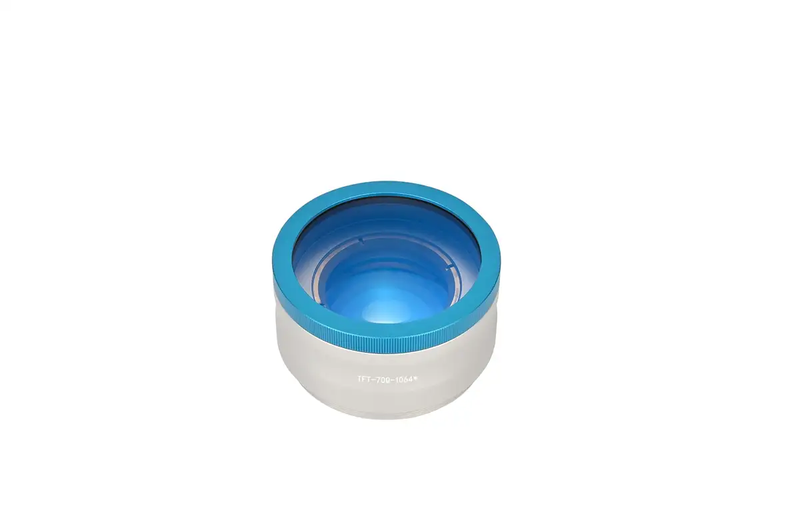
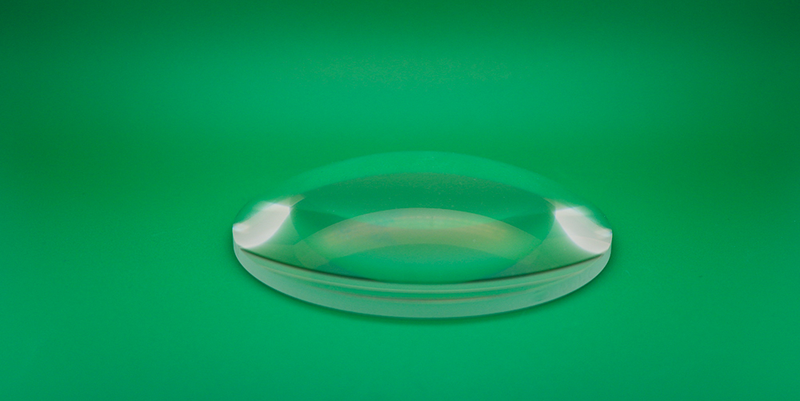
Meniscus lenses have an asymmetric form with one convex and one concave surface, producing particular refraction and focusing effects. The difference between center and edge thicknesses, together with the radii of the convex and concave surfaces, determines optical performance. CLZ Optical Co., Ltd. offers catalog meniscus lenses in various materials, including optical glass and fused silica, and specifications, as well as custom fabrication to customer drawings or requirements. Precision machining and coatings can be tailored to customer needs.
Request a Quote
Download Datasheet
Overview
Meniscus lenses have an asymmetric form with one convex and one concave surface, producing particular refraction and focusing effects. The difference between center and edge thicknesses, together with the radii of the convex and concave surfaces, determines optical performance. CLZ Optical Co., Ltd. offers catalog meniscus lenses in various materials, including optical glass and fused silica, and specifications, as well as custom fabrication to customer drawings or requirements. Precision machining and coatings can be tailored to customer needs.
Applications
Camera lenses: meniscus surfaces compensate spherical aberration for consistent center-to-edge imaging. In apochromats, combination with fluorite reduces red/blue focus differences for accurate primary-color overlap. Microscope objectives: as field lenses in high magnification, they compensate primary-objective field curvature; confocal systems use them to control laser focus and improve axial resolution. Medical imaging: endoscopes use them to adjust illumination and improve clarity and field, while ophthalmic instruments correct ray direction and widen retinal scans. Lasers: a fused silica meniscus, convex side toward the source, combines with a focusing lens in fiber cutting systems to reduce wavefront distortion and higher-order aberrations. In lidar, asymmetric curvature controls wavefront phase and divergence, reducing original divergence to improve long-range signal-to-noise.
Key Features
Positive and negative focal lengths: flexible optical control. Meniscus lenses can have positive or negative focal lengths depending on shape and material. A positive meniscus lens, with greater convex-surface curvature, converges parallel light to a focus like a magnifier. A negative meniscus lens, with greater concave-surface curvature, diverges light like a concave lens, often for beam expansion or path adjustment. Focusing and divergence: precise path control. In positive meniscus lenses, convex-surface convergence exceeds concave-surface divergence, producing overall convergence for laser focusing, microscope objectives, and similar uses. Negative meniscus lenses have stronger concave-surface divergence, suitable for laser beam expanders, telescope eyepieces, and other uses requiring expansion or path adjustment. Asymmetric design: distinctive optical advantages. The convex/concave combination differs from ordinary lenses. This asymmetry enables special optical functions, compressing or expanding beams for different needs and adjusting direction, such as fine beam-angle adjustment in lasers. Aberration correction: improved optical clarity. Uneven refraction often causes spherical and chromatic aberrations, blurring images or distorting color. Precise control of both curvatures reduces these aberrations. Meniscus lenses optimize convergence for sharper focus and spherical-aberration correction, and reduce separation of different colors to suppress chromatic aberration and improve image quality. Beam handling: acting as beam regulators, they adjust diameter by expanding or compressing beams, change direction through fine path adjustment, and optimize focusing by improving energy density or uniformity. Combining them with positive or negative lenses and appropriate optical design satisfies diverse functional requirements.
Datasheet
Please provide your email to download the datasheet.
Your name
Email Address
Invalid email format. Please try again.
Send Request
Supplier Information
Changchun Longze Precision Optical Instrument Co., Ltd., established in 2012, specializes in the processing and manufacturing of precision optical components. Its products are applied in fields such as optical imaging instruments, optical testing instruments, medical instruments, and laser instruments. With excellent quality and exquisite craftsmanship, it has won wide acclaim from customers at home and abroad. Adhering to the concept of 'fine products, dedicated to quality' and strictly following the ISO9001 quality certification system, the company possesses advanced inspection equipment such as ZYGO interferometers, Agilent Cary 5000 spectrophotometers, etc., ensuring each product meets specifications. Its products are widely exported to developed markets like the US, EU, and Japan. Main products include precision optical lenses, optical domes, filters, mirrors, optical windows, prisms, assembly, and coatings, used in various commercial, medical, scientific research, imaging systems, and laser systems.
Contact Us
Loading...
GetExperimental Plan
Name
Phone
+86
Organization
Use Case

Global Photonics Products
Database Platform
Database Platform
With 16 years of experience, we provide high-quality products and services to universities, research institutes, and industry.
50+ Detailed Categories · 3,000+ Global Brands · 100,000+ Photonics Products
1 Million+
In-depth analysis of professional academic resources in photonics
300,000
ProductsDatasheets Available Free
We will keep your personal information strictly confidential.
Product Quote
+86
* Select the quoting party:
By submitting, you agree to the User Service Agreement and Privacy Policy