
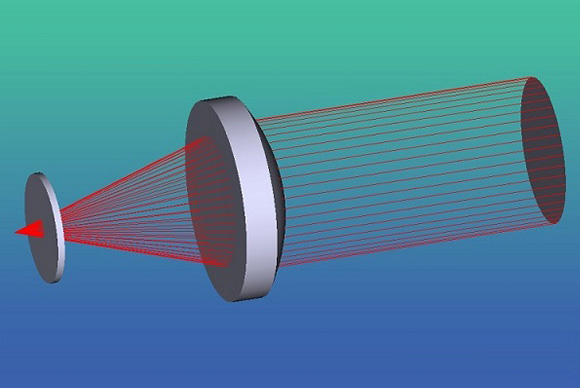
Optical Path Design
Optical design determines system structures, performance, dimensions, and alternative solutions from customer operating conditions. We offer distinctive professional designs for volume customization. Four stages are dimensional calculations, initial structures, aberration correction/balancing, and image-quality evaluation. Dimensions: establish the schematic and basic characteristics—magnification/focal length, linear/angular field, NA/relative aperture, conjugates, rear working distance, stop location, and overall size—to meet requirements. Account for mechanics/electronics to ensure feasibility. Excess requirements cause complexity/waste; insufficient ones fail needs. Initial structures: derive from primary-aberration theory or select existing designs. Existing designs are practical and often successful but require deep theory/experience to choose a simple suitable structure. Poor starting structures cannot be rescued by good automatic programs or experienced designers. Correction/balancing: analyze and ray-trace the selected structure using ZEMAX, CODEⅤ, etc., calculating aberrations/curves. Identify dominant image-quality errors, develop improvements, and iterate until requirements are met. Evaluation: image quality depends on aberration. All aberrations neither can nor need be zero; residuals remain and affect quality. Designers must understand allowable residuals/tolerances to assess systems. Methods include: Rayleigh criterion—maximum actual-to-ideal wavefront difference ≤1/4 wavelength, a strict method for small-aberration telescopes/objectives. Optical transfer function MTF—the object is treated as a spectrum of frequencies, and optics as a linear invariant system. Imaging transfers sinusoidal distributions at unchanged frequency but reduced contrast. Frequency-dependent contrast reduction/phase shifts define the optical transfer function. Since it depends on aberration, it objectively/reliably evaluates images and is readily calculated/measured. It evaluates designs and also controls design processes, lens inspection, and overall optical design.
 Save to Favorites
Overview
Datasheet
Please provide your email to download the datasheet.
Invalid email format. Please try again.
Supplier Information
Related Products
-
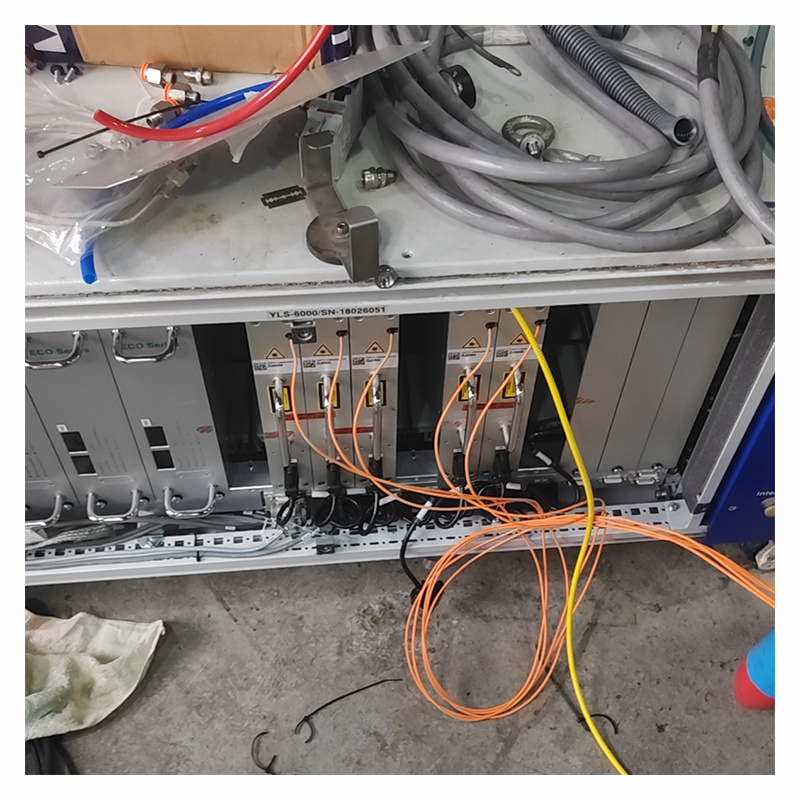 Multi Mode IPG Laser Source Repair
Technical Services
Auroralaser
Laser upgrade and renovation, carbon dioxide cutting machine renovation, cutting head renovation. Fiber laser module, power supply maintenance, PC104, high reflection alarm processing, fiber end face cleaning and fiber replacement, critical error reset; Water cooler maintenance, various cutting head cleaning, lens replacement, sensor maintenance, etc. We also provide various repair tools for you to purchase and choose from.
-
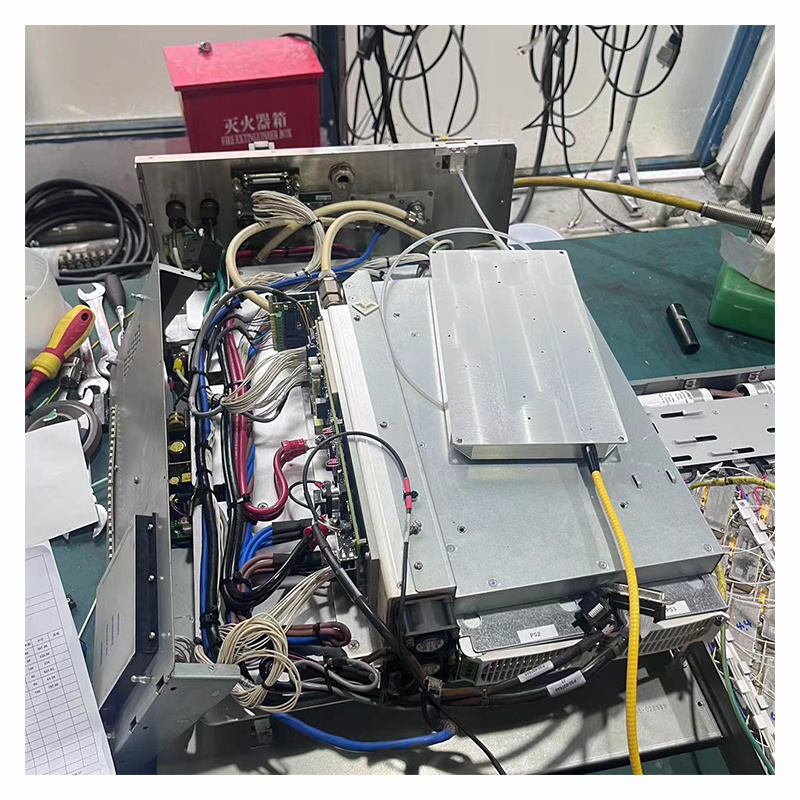 Single Mode IPG Laser Source Repair
Technical Services
Auroralaser
Laser upgrade and renovation, carbon dioxide cutting machine renovation, cutting head renovation. Fiber laser module, power supply maintenance, PC104, high reflection alarm processing, fiber end face cleaning and fiber replacement, critical error reset; Water cooler maintenance, various cutting head cleaning, lens replacement, sensor maintenance, etc. We also provide various repair tools for you to purchase and choose from.
-
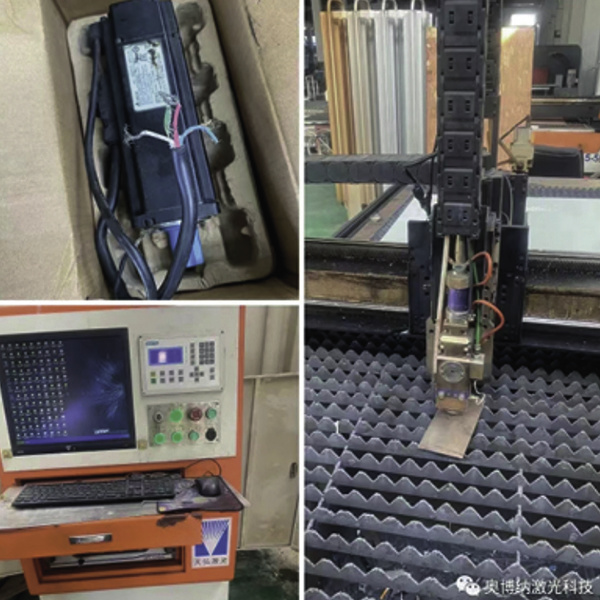 Laser Cutting Machine Maintenance
Technical Services
Auroralaser
Laser upgrade and renovation, carbon dioxide cutting machine renovation, cutting head renovation. Fiber laser module, power supply maintenance, PC104, high reflection alarm processing, fiber end face cleaning and fiber replacement, critical error reset; Water cooler maintenance, various cutting head cleaning, lens replacement, sensor maintenance, etc. We also provide various repair tools for you to purchase and choose from.
-
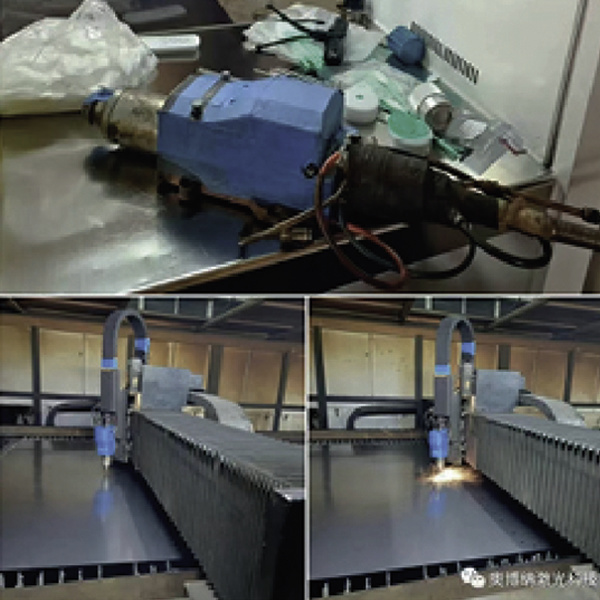 Laser Cutting Head Maintenance
Technical Services
Auroralaser
Laser upgrade and renovation, carbon dioxide cutting machine renovation, cutting head renovation. Fiber laser module, power supply maintenance, PC104, high reflection alarm processing, fiber end face cleaning and fiber replacement, critical error reset; Water cooler maintenance, various cutting head cleaning, lens replacement, sensor maintenance, etc. We also provide various repair tools for you to purchase and choose from.
-
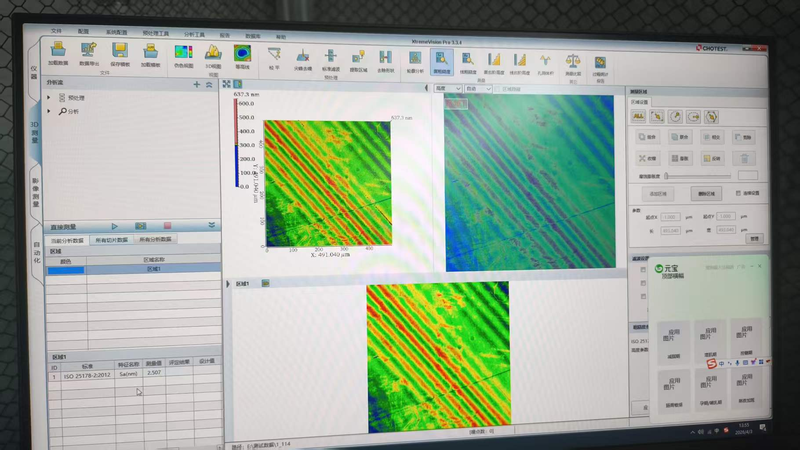 Testing Service
Technical Services
Jmwafer
Related Articles
In photonics and laser technology, devices that manipulate optical signals via the electro-optic effect form the backbone of precision optical systems. Electro-optic phase modulators and electro-optic deflectors are two prominent examples of this device category. As a critical hardware solution for high-speed, high-accuracy laser beam direction control, electro-optic deflectors are widely deployed across industrial and research settings. Below is a detailed overview of their core structure, key performance drivers, and primary use cases.
GYOPTICS 30 W collimated isolator is a highly‑reliable passive optical component optimized for 1064 nm high‑power laser systems. Characterized by low insertion loss and superior backward‑light suppression capability, it effectively blocks reflected light traveling back toward the laser resonator, eliminating back‑reflection‑induced instability and protecting fiber or solid‑state laser sources during long‑term operation.
For 1D optical detection scenarios such as spectrum acquisition, dimensional measurement and optical scanning, area array CMOS/CCD suffer redundant pixels, high cost and slow row readout speed.
Laser pump sources are the core energy input component of solid-state lasers and laser amplifiers, and their performance directly determines the output power, beam quality and service life of the entire laser system. In scenarios such as industrial processing, scientific research experiments and high-end equipment, improper pump source selection will not only result in substandard system performance, but also bring a series of problems such as rapid device degradation and high operation and maintenance costs. This article sorts out the core selection logic and key pitfalls of pump source procurement, and provides selection references based on mature, mass-produced high-reliability products to help purchasers efficiently screen suitable products.
Loading...
Name
Phone
Organization
Use Case

Database Platform