
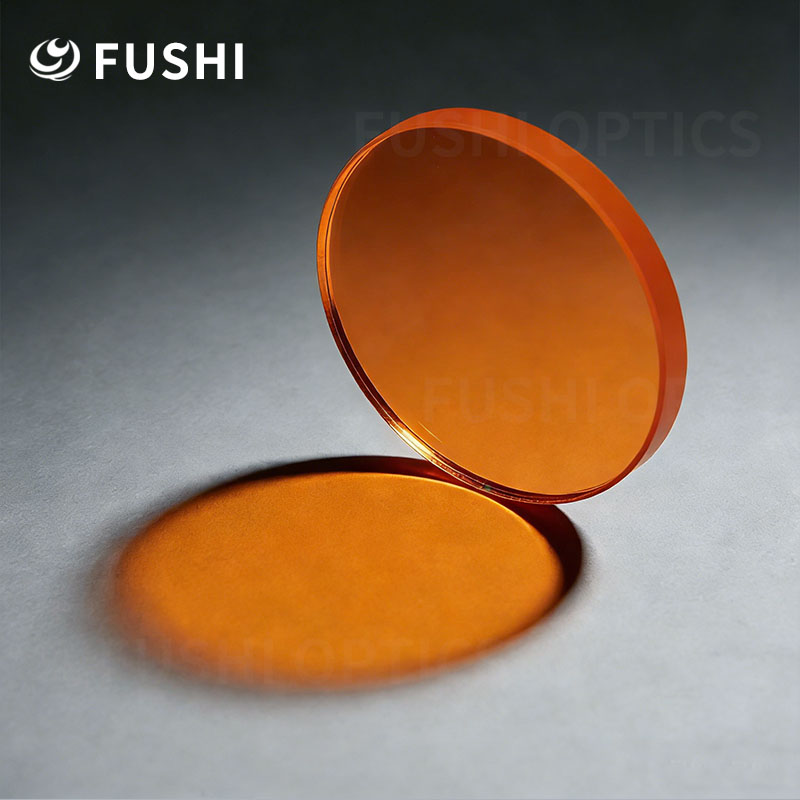
Zinc Selenide Window (ZnSe)
Zinc selenide windows are transmitting optics with excellent mid-/far-infrared performance, especially for CO₂ lasers at 10.6μm. Their main function is providing highly transmitting protective or sealing windows for infrared systems, lasers, and detection instruments while maintaining excellent optical performance. Zinc selenide (ZnSe) is a high-purity polycrystalline material made by chemical vapor deposition (CVD), known for extremely broad infrared transmission and very low absorption. Unlike lenses, windows mainly transmit and protect rather than focus. Both surfaces are generally flat and can receive AR, high-reflective, or protective coatings. Use and maintenance: soft zinc selenide scratches easily, so correct handling is essential. Always wear clean gloves and touch only the ground edges. First blow off dust with dry, clean compressed air or nitrogen. For liquid cleaning, wet lint-free tissue, such as swabs or dedicated lens paper, with analytical-grade acetone or anhydrous ethanol and gently drag in one direction without circular rubbing. During mounting, apply uniform retaining-ring force to prevent local stress, deformation, or fracture. Store in dry, clean conditions in dedicated soft-lined containers. Window-selection comparisons: germanium (Ge) windows do not transmit visible light, preventing coaxial visible-guide alignment, and exhibit stronger thermal lensing with temperature changes. ZnSe is preferable for visible guidance, high power, or broad temperature ranges. Zinc sulfide (ZnS), especially multispectral ZnS, is harder and more resistant to sand erosion and wiping, suitable for missile domes and harsh-environment windows. ZnSe generally has higher absolute transmission and laser damage threshold than ZnS. Choose ZnSe for ultimate optical performance and ZnS for environmental durability. Silicon (Si) absorption rises sharply at 8-12μm, making it wholly unsuitable for CO₂ laser wavelengths. It is an economical alternative only for cost-sensitive 3-5μm applications.
 Save to Favorites
Overview
Specifications
| Parameter | Value |
|---|---|
| Material | Chemical Vapor Deposition (CVD) Zinc Selenide, Polycrystalline Structure |
| Transmission Range | 0.55 – 18 μm |
| Refractive Index at 10.6μm | ~2.402 |
| Knoop Hardness | ~120 Kg/mm² (Relatively Soft Material, Requires Protection) |
| Density | ~5.27 g/cm³ |
| Coefficient of Thermal Expansion | ~7.1×10⁻⁶/K |
| dn/dT | ~60×10⁻⁶/K |
| Surface Quality | 40-20, 20-10 or Higher Specifications Available as Required |
| Surface Figure Accuracy | λ/4 @632.8nm or Better (Customizable on Request) |
| Coating Options | Standard AR coating: for a single wavelength of 10.6μm or the 8-12μm broadband range. Dual-band AR coating: for example, 10.6μm and a 633nm visible aiming beam. Optional DLC protection: a hard diamond-like carbon coating greatly improves abrasion resistance for harsh conditions including sand, dust and wiping. |
| Transmittance After Coating | >99% @10.6μm (Single-Wavelength AR Coating, Both Sides) |
Applications
Key Features
Datasheet
Please provide your email to download the datasheet.
Invalid email format. Please try again.
Supplier Information
Related Products
-
 Laser Protective Window
Optical Windows
Puyaxcl
-
 Dust Cover Plate
Optical Windows
Sanhai-optics
-
 Laser Protective Window
Optical Windows
Vislaser
Laser Protective Window - Dimensions (Diameter × Thickness): D10*1 Laser Protective Window-Coating: AR T>99.8%@1030-1090nm (355nm, 532nm etc.) T>85%@632-650nm Laser Protective Window - Dimensions (Diameter × Thickness): D18*2
-
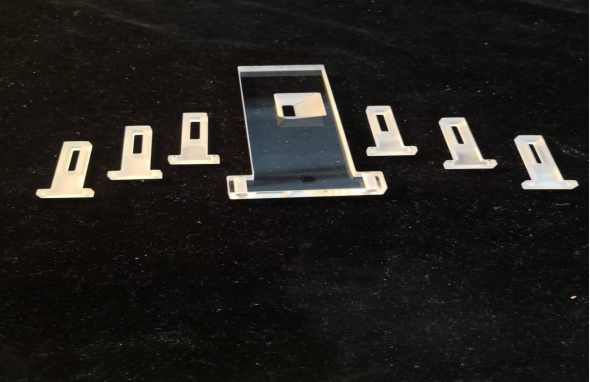 High-Precision Trapezoidal Tapered-Hole Mirror
Optical Windows
Hjgdkeji
Surface Finish on Both Sides: 10/5
-
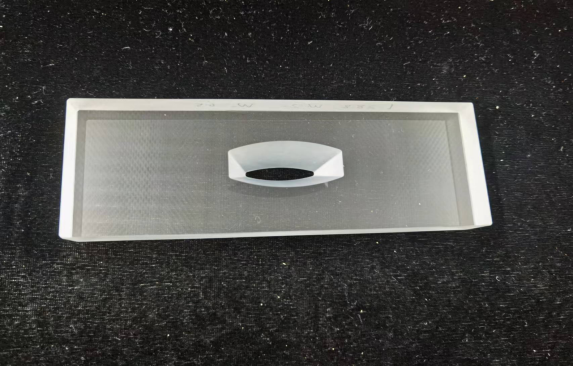 High-Precision Tapered-Bore Mirror
Optical Windows
Hjgdkeji
Surface Finish on Both Sides: 10/5
Related Articles
Driven by the rapid upgrading of industrial automation, high-precision displacement sensing technology has become a core foundation of intelligent manufacturing.
Widely adopted in small home appliances, industrial instruments, smart toys and atomization devices, the 0603 patch emerald green LED serves as a core status-indicating optical component.
Raybowlaser, a professional manufacturer of high-power laser chips, has officially launched its upgraded new-generation 1470nm high-performance laser chip. Achieving groundbreaking progress in rated output power and wall-plug efficiency (WPE), this innovative laser chip delivers superior and reliable core light source solutions for medical cosmetology, industrial processing, agricultural applications and scientific research equipment.
A solid-state laser is one of the most common and reliable laser types used in modern industry, medical equipment, and scientific research. Unlike gas or fiber lasers, it uses solid materials as its gain medium to generate stable, high-brightness laser beams. Thanks to its high precision, long lifespan, and compact structure, solid-state lasers have become a mainstream solution for high-precision laser processing and optical systems.
Loading...
Name
Phone
Organization
Use Case

Database Platform