
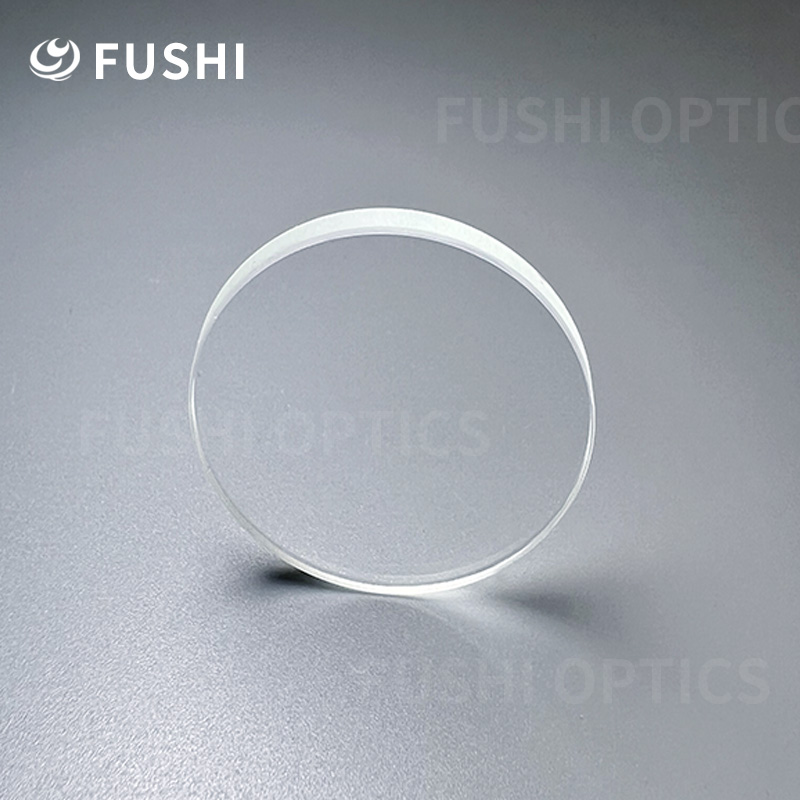
Magnesium Fluoride Window
Magnesium fluoride (MgF₂) windows are flat optics made from single-crystal or hot-pressed polycrystalline material. They are known for very high laser-damage thresholds, mechanical hardness, chemical stability, and broad vacuum-UV-to-mid-IR transmission. MgF₂ is presented as a preferred IR-window material for energetic lasers and harsh environments, balancing performance, durability, and cost. Applications require durability, laser-power tolerance, and spectral coverage. Handling/storage: despite hardness, wear gloves to prevent contamination. Remove dust with a blower/inert gas; gently clean oil with analytical-grade absolute ethanol or acetone. Chemical stability permits a wider range of cleaners. Excellent thermal-shock resistance tolerates large temperature changes; negligible water uptake permits stable humid-environment operation. Distribute mounting stress uniformly; high strength reduces fracture risk. IR-material comparison: MgF₂—transmission 0.11–7.5 μm, high hardness/wear resistance, extremely high damage threshold, best combined mechanical/laser/chemical properties as stated. BaF₂—0.15–12 μm, low hardness/threshold, broadest far-IR range but soft/moisture-sensitive. CaF₂—0.15–9 μm, medium hardness, high threshold, balanced UV/IR transmission. ZnSe—0.5–20 μm, medium-low hardness, medium threshold, best mid/far-IR performance but soft and impact-sensitive. Sapphire—0.15–5.5 μm, extremely hard, high threshold, survives extreme environments but shorter IR cutoff. Ordering: specify MgF₂ and single-crystal or hot-pressed polycrystalline form; diameter or length×width and thickness in mm; diameter/thickness/parallelism/figure tolerances; scratch-dig quality; and coating band or laser wavelength, such as 10.6 μm AR. MgF₂ versus BaF₂: MgF₂ is described as superior in hardness, strength, damage threshold, and chemical stability for durable high-power service. Its range, especially far IR, is narrower and it lacks scintillation; BaF₂ remains irreplaceable for ultrabroad IR and radiation detection. Further comparison, in order MgF₂ / fused silica SiO₂ / sapphire Al₂O₃ / CaF₂ / ZnSe: main transmission ranges are 0.11–7 μm (deep UV-mid IR), 0.18–2.5 μm (UV-near IR), 0.15–5.5 μm (deep UV-mid IR), 0.13–10 μm (vacuum UV-far IR), and 0.6–16 μm (visible-far IR). Mohs hardness: high ~6, very wear-resistant; medium ~5.5, acceptable; extremely high ~9, among the hardest optical materials; low ~4, very soft/scratch-prone; extremely low ~2.5, requiring special protection. Laser thresholds: high for energetic lasers, high, high, medium, low respectively. Chemical stability: very good against deliquescence/corrosion; excellent; very good; poor/deliquescent requiring moisture protection; poor/toxic requiring special handling. Costs: medium; low for common specifications; high; high especially for large/high-quality pieces; high. Prefer MgF₂ for combined UV/IR transmission and value, energetic lasers, exposed harsh environments such as astronomical correctors/missile domes/high-temperature windows, or wear-resistant UV spectroscopy/lasers where it is tougher than CaF₂. Consider CaF₂ for maximum UV, especially deep-UV, transmission, despite softness/moisture sensitivity and high cost/maintenance; SiO₂ for economical conventional visible/near-IR use; Al₂O₃ for extreme mechanical/thermal environments such as armored windows, with highest hardness but high cost; ZnSe for mid/far IR, especially the source's stated CO₂ laser wavelength of 6μm, described as almost the only high-transmission choice there despite poor mechanical properties.
 Save to Favorites
Overview
Specifications
| Parameter | Value |
|---|---|
| Key Technical Parameters - Crystal Properties - Crystal Structure | Tetragonal Crystal System (Single Crystal); Polycrystalline Hot-Pressed Type Lacks This Property |
| Key Technical Parameters - Crystal Properties - Density | 3.18 g/cm³ |
| Key Technical Parameters - Crystal Properties - Mohs Hardness | ~6 |
| Key Technical Parameters - Optical Properties - Transmission Range | 0.11 – 7.5 μm |
| Key Technical Parameters - Optical Properties - Refractive Index (@5 μm) [@5 μm;@5 μm)] | ~1.35 |
| Key Technical Parameters - Optical Properties - Birefringence (Single Crystal) | Δn ≈ 0.012 |
| Key Technical Parameters - Optical Properties - Laser Damage Threshold | Very High (>10 J/cm² @10.6 μm, 20 ns) |
| Key Technical Parameters - Mechanical and Thermal Properties - Thermal Expansion Coefficient | 13.7 × 10⁻⁶ /K (⊥c Axis) |
| Key Technical Parameters - Mechanical and Thermal Properties - Thermal Conductivity | 14.65 W/(m·K) (⊥c Axis) |
| Key Technical Parameters - Mechanical and Thermal Properties - Thermal Shock Parameter | High, Good Thermal Shock Resistance |
| Key Technical Parameters - Chemical Properties - Solubility | Insoluble in Water |
| Key Technical Parameters - Chemical Properties - Acid/Alkali Resistance | Good, Stable Against Common Acids and Alkalis |
| Standard Product Specifications - Diameter / Dimensions | 5 mm – 200 mm (or larger sizes; consultation required) |
| Standard Product Specifications - Thickness | 1 mm – 50 mm (selected according to size and intended use) |
| Standard Product Specifications - Tolerance | Diameter tolerance: ±0.1 mm. Thickness tolerance: ±0.1 mm. Parallelism: <1 arcmin (standard), <10 arcsec (high precision). Surface figure: λ/4 @633nm (standard), λ/10 (high precision). |
| Standard Product Specifications - Surface Quality | Scratch-Dig: 20-10 (Standard), 10-5 (High Precision) |
| Standard Product Specifications - Chamfer | Protective Bevel (Typically 0.1mm~0.3mm × 45°) |
| Standard Product Specifications - Coating | Antireflection (AR) Coatings Available, Most Commonly for 3-5 μm and 8-12 μm Bands, and Specifically for 10.6 μm Lasers. |
| Standard Product Specifications - Material Type | Single Crystal: For Polarization Optics, Higher Price. Polycrystalline (Hot-Pressed): For Standard Windows, No Birefringence, Lower Cost and Larger Available Sizes. |
Applications
Key Features
Datasheet
Please provide your email to download the datasheet.
Invalid email format. Please try again.
Supplier Information
Related Products
-
 Laser Protective Window
Optical Windows
Puyaxcl
-
 Dust Cover Plate
Optical Windows
Sanhai-optics
-
 Laser Protective Window
Optical Windows
Vislaser
Laser Protective Window - Dimensions (Diameter × Thickness): D10*1 Laser Protective Window-Coating: AR T>99.8%@1030-1090nm (355nm, 532nm etc.) T>85%@632-650nm Laser Protective Window - Dimensions (Diameter × Thickness): D18*2
-
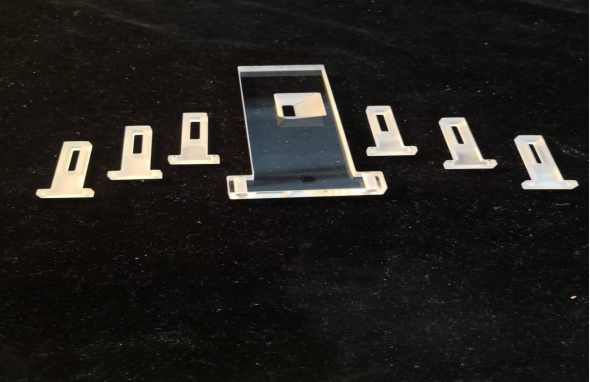 High-Precision Trapezoidal Tapered-Hole Mirror
Optical Windows
Hjgdkeji
Surface Finish on Both Sides: 10/5
-
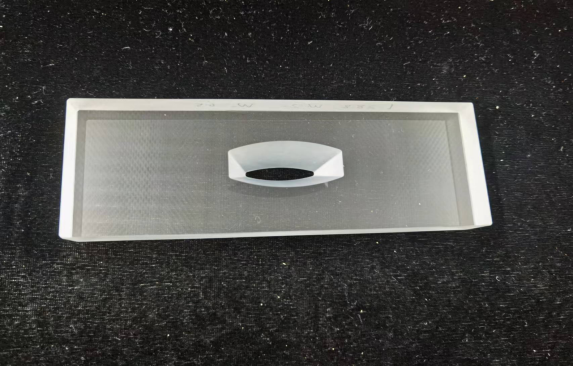 High-Precision Tapered-Bore Mirror
Optical Windows
Hjgdkeji
Surface Finish on Both Sides: 10/5
Related Articles
Driven by the rapid upgrading of industrial automation, high-precision displacement sensing technology has become a core foundation of intelligent manufacturing.
Widely adopted in small home appliances, industrial instruments, smart toys and atomization devices, the 0603 patch emerald green LED serves as a core status-indicating optical component.
Raybowlaser, a professional manufacturer of high-power laser chips, has officially launched its upgraded new-generation 1470nm high-performance laser chip. Achieving groundbreaking progress in rated output power and wall-plug efficiency (WPE), this innovative laser chip delivers superior and reliable core light source solutions for medical cosmetology, industrial processing, agricultural applications and scientific research equipment.
A solid-state laser is one of the most common and reliable laser types used in modern industry, medical equipment, and scientific research. Unlike gas or fiber lasers, it uses solid materials as its gain medium to generate stable, high-brightness laser beams. Thanks to its high precision, long lifespan, and compact structure, solid-state lasers have become a mainstream solution for high-precision laser processing and optical systems.
Loading...
Name
Phone
Organization
Use Case

Database Platform