
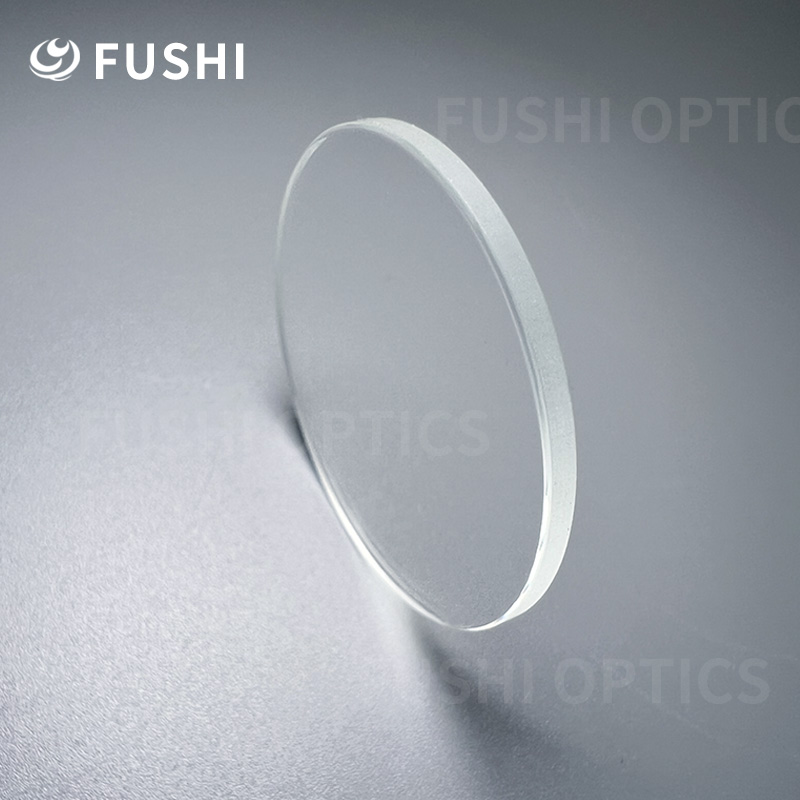
Calcium Fluoride Window TJFSGXFUG201002
Calcium fluoride, commonly called fluorite, is an optical crystal with distinctive properties. Unlike ordinary optical glass, it is grown as a single crystal. Its crystal structure and chemical bonding give it an irreplaceable role in advanced optics. These properties make its applications particularly suited to advanced and demanding optical systems. Available series specifications: diameter D (mm), 2-100; effective focal length EFL (mm), 2-800; center thickness Tc (mm), 1.4-9; edge thickness Te (mm), 0.5-5; material, calcium fluoride; coatings, antireflection, high-reflection, bandpass, beamsplitting, and others. Note: the following table shows only some window sizes; inquire for others. Custom sizes and coatings are available. Material comparison: calcium fluoride (CaF₂), optical glass such as K9/H-K9L, and zinc selenide (ZnSe). Transmission: CaF₂, 0.13 μm–10 μm, deep UV to mid IR; glass, 0.35 μm–2.5 μm, mainly visible to near IR; ZnSe, 0.6 μm–16 μm, mainly IR and described as not transmitting visible light. Core advantage: CaF₂ has an exceptionally broad range, among the few materials transmitting both DUV and MIR efficiently, a 'dual champion.' Refractive index/dispersion: CaF₂ has low index ~1.4 and very low dispersion, with high Abbe number; glass has higher index ~1.5-1.9 and higher dispersion; ZnSe has high index ~2.4 and higher dispersion. Low dispersion minimizes wavelength-dependent focal shifts and greatly reduces chromatic aberration, suiting key apochromatic lens elements. Thermal properties: CaF₂ has high thermal expansion but a large negative dn/dT; glass has medium expansion and a smaller positive thermo-optic coefficient; ZnSe has high expansion and a very large negative coefficient. High expansion makes CaF₂ temperature-sensitive, but the large negative coefficient partly compensates thermal focal shifts, allowing good stability in properly designed systems. Physical/chemical properties, first row: CaF₂ is relatively soft and scratches easily; glass is hard and abrasion-resistant; ZnSe is very soft and fragile. Main drawback: softness requires careful processing/cleaning and generally a hard antireflection coating to protect surfaces and reduce reflection; the source's deliquescence statement calls for dry use or waterproof coatings. Physical/chemical properties, second row: CaF₂ is chemically stable but described as readily deliquescent and requiring protective coating; glass is very chemically stable and corrosion-resistant; ZnSe does not deliquesce but is susceptible to acids and alkalis. The source repeats the drawback: softness requires careful processing/cleaning, generally hard antireflection coatings for protection and lower reflection, and dry conditions or waterproof coatings because of deliquescence. Laser-damage threshold: CaF₂ very high; glass medium; ZnSe medium. Its wide bandgap supports very high laser power density, making it ideal for high-power laser windows/lenses, especially UV/IR. Application recommendations from the source: DUV lasers such as lithography—CaF₂ for excellent DUV transmission and image quality; UV imaging/windows—quartz/CaF₂ for UV transmission; visible imaging in cameras/microscopes—BK7 glass for low cost and visible performance; IR thermal imaging—CaF₂/quartz JGS1 for IR transmission; high-temperature environments/laser focusing—quartz JGS1 for heat resistance and thermal stability; teaching, experiments, and ordinary instruments—BK7 glass for low cost, availability, and easy processing.
 Save to Favorites
Overview
Specifications
| Parameter | Value |
|---|---|
| Diameter | 13.00 mm |
| Center Thickness Tc | 3.40 mm |
| Edge Thickness Te | 2.00 mm |
| Coating | Uncoated |
| Material | Calcium Fluoride (CaF₂) |
| Surface Finish | 60/40 |
Applications
Datasheet
Please provide your email to download the datasheet.
Invalid email format. Please try again.
Supplier Information
Related Products
-
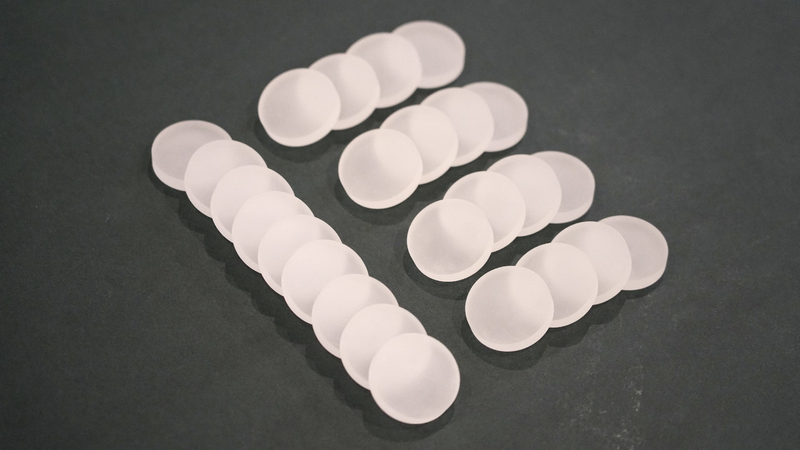 Laser Protective Window
Optical Windows
Puyaxcl
-
 Dust Cover Plate
Optical Windows
Sanhai-optics
-
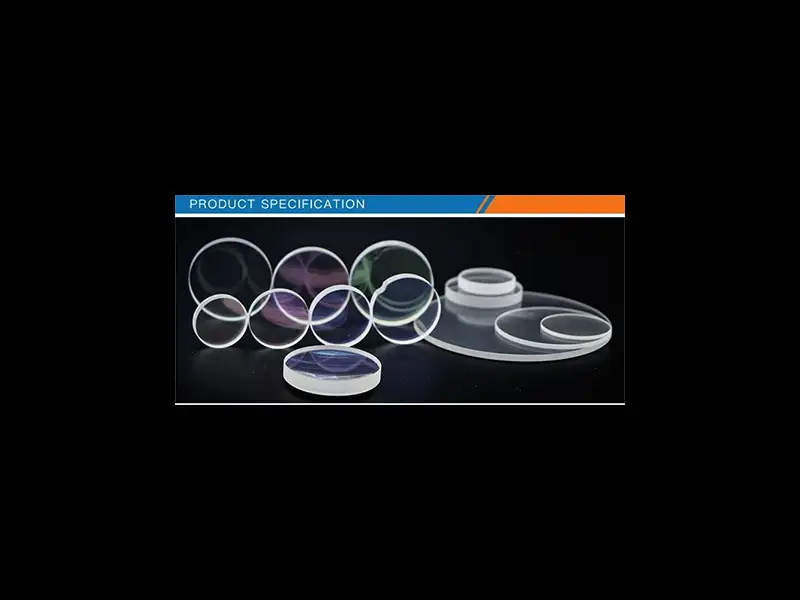 Laser Protective Window
Optical Windows
Vislaser
Laser Protective Window - Dimensions (Diameter × Thickness): D10*1 Laser Protective Window-Coating: AR T>99.8%@1030-1090nm (355nm, 532nm etc.) T>85%@632-650nm Laser Protective Window - Dimensions (Diameter × Thickness): D18*2
-
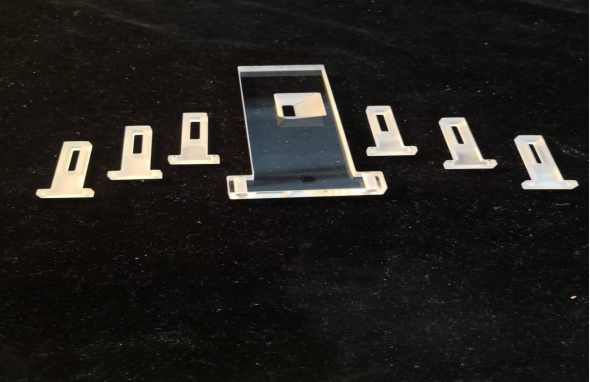 High-Precision Trapezoidal Tapered-Hole Mirror
Optical Windows
Hjgdkeji
Surface Finish on Both Sides: 10/5
-
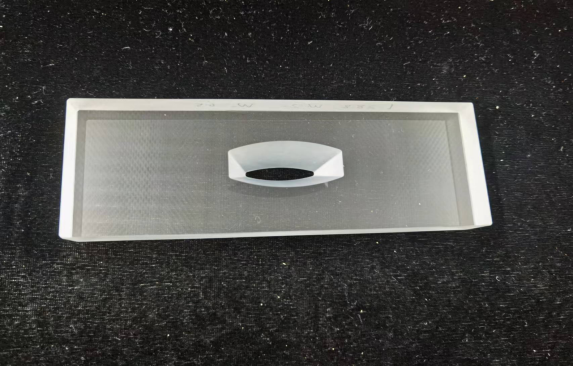 High-Precision Tapered-Bore Mirror
Optical Windows
Hjgdkeji
Surface Finish on Both Sides: 10/5
Related Articles
Driven by the rapid upgrading of industrial automation, high-precision displacement sensing technology has become a core foundation of intelligent manufacturing.
Widely adopted in small home appliances, industrial instruments, smart toys and atomization devices, the 0603 patch emerald green LED serves as a core status-indicating optical component.
Raybowlaser, a professional manufacturer of high-power laser chips, has officially launched its upgraded new-generation 1470nm high-performance laser chip. Achieving groundbreaking progress in rated output power and wall-plug efficiency (WPE), this innovative laser chip delivers superior and reliable core light source solutions for medical cosmetology, industrial processing, agricultural applications and scientific research equipment.
A solid-state laser is one of the most common and reliable laser types used in modern industry, medical equipment, and scientific research. Unlike gas or fiber lasers, it uses solid materials as its gain medium to generate stable, high-brightness laser beams. Thanks to its high precision, long lifespan, and compact structure, solid-state lasers have become a mainstream solution for high-precision laser processing and optical systems.
Loading...
Name
Phone
Organization
Use Case

Database Platform