
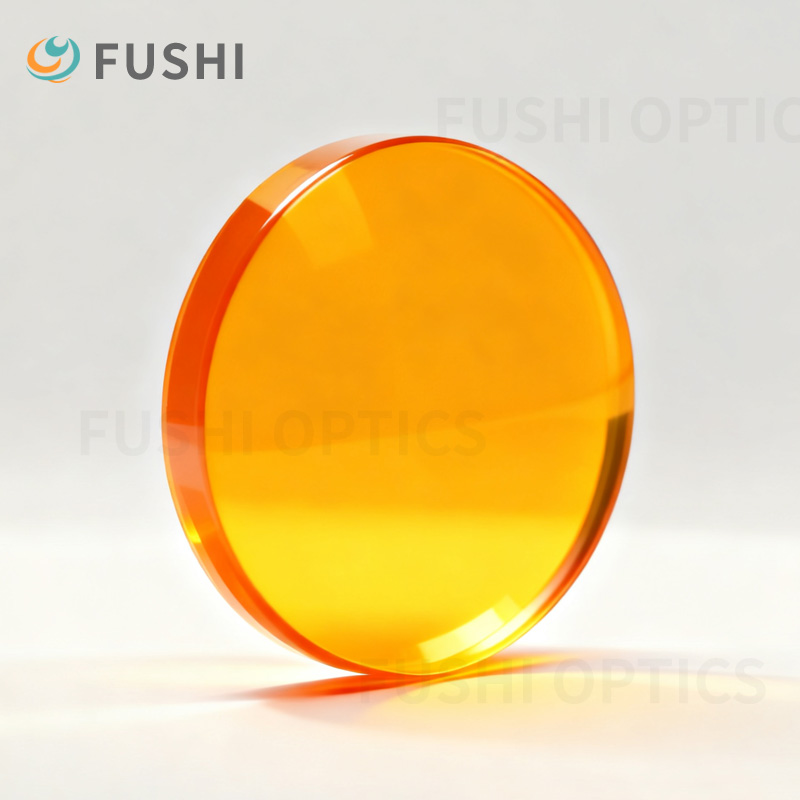
Zinc Selenide Lens
Zinc selenide lenses are presented as leading advanced IR optics through broad transmission, extremely high laser-damage thresholds, and thermal stability. Design involves tradeoffs: germanium dominates thermal imaging economically, zinc sulfide provides rugged windows, and silicon offers value in mid IR. Under the ZnSe-lens heading, the source describes silicon, germanium, and ZnSe substrates with antireflection coatings exceeding 95% working-band transmission. Diamond coatings improve hardness, harsh-environment lifetime, and damage resistance, tolerating lasers above 4000W. ZnSe is chemically inert, pure, environmentally adaptable, and easily machined. Low transmission loss/absorption and thermal-shock resistance suit high-power CO2 optics. Uniform refractive index also suits FLIR protective windows/optics and medical/industrial thermal-radiation meters and IR-spectrometer windows/lenses. Soft, scratch-prone ZnSe is unsuitable for harsh environments unprotected; Knoop hardness is only 120. Manufacturing, from gas to lens: CVD synthesis reacts zinc vapor, usually from Zn, with hydrogen selenide H₂Se at high temperature, depositing polycrystalline ZnSe blanks. Slow growth produces large, pure, isotropic material. Cutting/coarse grinding forms near-final blanks; diamond fine grinding and polishing achieve the required figure/finish. Softness makes polishing demanding. Coating is crucial: uncoated surfaces each lose about 17% by reflection at n=2.4, leaving only about 70% total transmission. AR coatings are wavelength-specific; common V-type coatings enhance both 10.6μm and the 633nm visible aiming beam, raising working-wavelength transmission above 99.5%. HR coatings make ZnSe laser mirrors. Interferometers inspect figure, spectrophotometers measure transmission/reflection, and laser power meters test damage threshold. Maintenance: wear clean gloves and hold only frosted edges; first blow dust off with clean dry compressed air/nitrogen. If wet cleaning is required, dampen lint-free material such as lens tissue with reagent-grade acetone or absolute ethanol and gently drag it across; avoid circular rubbing/pressure. Avoid mounting stress and distribute retaining-ring force uniformly. Store dry/clean, preferably in a dedicated soft-lined case. Application comparisons: ZnSe versus germanium—thermal dn/dT and visible transmission differ. Choose ZnSe for CO₂ lasers >500W or large temperature changes; low dn/dT stabilizes focus and high thresholds provide safety. Choose Ge for cost-sensitive consumer/industrial thermal imaging, such as security cameras or fever screening. Ge needs thermal control to offset drift but remains cheaper at volume. The source summarizes ZnSe as favoring performance/power and Ge cost/volume. ZnSe versus ZnS—hardness/wear and IR absorption/damage thresholds differ. Choose ZnSe when maximum transmission/power handling dominate, such as high-power cutting/welding. Choose ZnS for exposed missile-seeker windows, fast aircraft windows, or frequent cleaning, resisting sand/rain. Multispectral Cleartran® ZnS has less visible dispersion and truer colors. The source contrasts peak optical performance with environmental durability. ZnSe versus silicon—range/cost differ. Choose ZnSe for 8-12μm, especially 10.6μm. Silicon absorption rises sharply above 8μm and is described as entirely unsuitable for CO₂ lasers. Choose Si at 3-5μm for some chemical sensors or midwave IR lasers when low cost, hardness, and thermal conductivity matter. The source reiterates: above 8μm choose ZnSe; at 3-5μm consider Si to save cost. ZnSe versus chalcogenide glass such as AMTIR-1—balance cost/performance. Choose ZnSe for the best IR transmission/laser tolerance; AMTIR-1 for a compromise with better thermal properties than Ge and lower cost than ZnSe in lower-/medium-performance thermal-imaging or IR systems.
 Save to Favorites
Overview
Specifications
| Parameter | Value |
|---|---|
| Transmission Wavelength Range [Parameter Image 01: Zinc Selenide Properties Table] | 0.5–22 µm |
| Crystal Structure [Parameter Image 01: Zinc Selenide Properties Table] | Cube |
| Density [Parameter Image 01: Zinc Selenide Properties Table] | 5.27 g.cm -3 |
| Electrical Resistivity [Parameter Image 01; Source Number 12 Has No Explicit Superscript, Exponent Not Altered] | ~10 12 |
| Melting Point [Parameter Image 01] | 1525 °C |
| Chemical Purity [Parameter Image 01] | 99.9996 % |
| Coefficient of Thermal Expansion [Parameter Image 01; @273k] | 7.1*10-6 |
| Coefficient of Thermal Expansion [Parameter Image 01; @373k] | 7.8*10-6 |
| Coefficient of Thermal Expansion [Parameter Image 01; @473k] | 8.3*10-8 |
| Thermal Conductivity [Parameter Image 01; @298k] | 18 J/k.m.s |
| Heat Capacity [Parameter Image 01; @298k] | 0.339 J/g.k |
| Knoop Hardness [Parameter Image 01] | 110 kg/mm2 |
| Flexural Strength [Parameter Image 01] | 55 Mpa |
| Young's Modulus [Parameter Image 01] | 67.2 GPa |
| Poisson’s Ratio [Parameter Image 01] | 0.28 |
| Refractive Index [Parameter Image 02 Material Comparison Table; Zinc Selenide [ZnSe] Row Only] | 2.403 |
| Density [Parameter Image 02 Material Comparison Table; Zinc Selenide [ZnSe] Row Only] | 5.27 g/cm³ |
| CTE [Parameter Image 02 Material Comparison Table; Zinc Selenide [ZnSe] Row Only] | 7.1×10⁻⁶ |
| dn/dt [Parameter Image 02 Material Comparison Table; Zinc Selenide [ZnSe] Row Only] | 61×10⁻⁶ |
| Knoop Hardness [Parameter Image 02 Material Comparison Table; Zinc Selenide [ZnSe] Row Only, Unit Unspecified] | 120 |
Applications
Key Features
Datasheet
Please provide your email to download the datasheet.
Invalid email format. Please try again.
Supplier Information
Related Products
-
 Custom Sapphire Flat Surface Machining
Optical Material
Hbjir
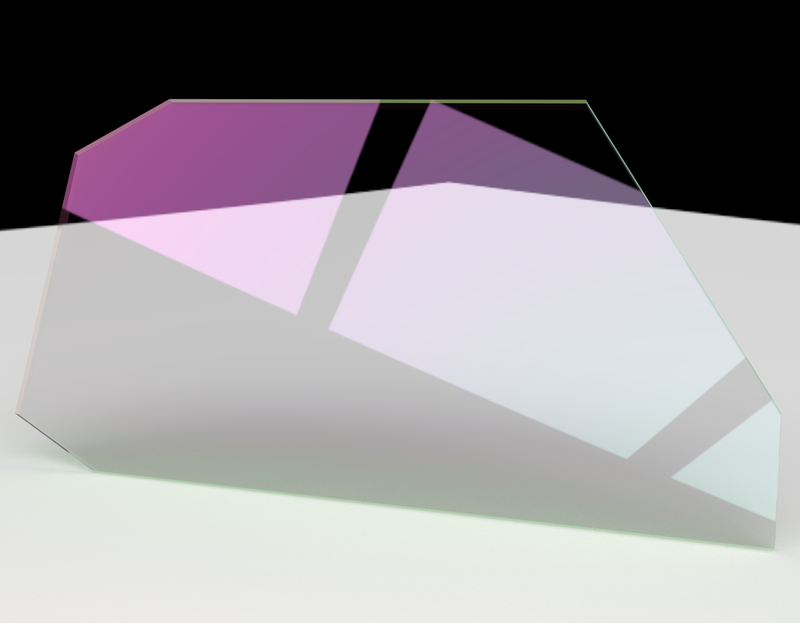
Machined Surface Shape: Flat surface Custom Material: Sapphire Custom Aperture: Φ20m to Φ750 mm (diagonal)
-
 Silicon-Based ABF Chip AB003BF
Optical Material
Raytrontek
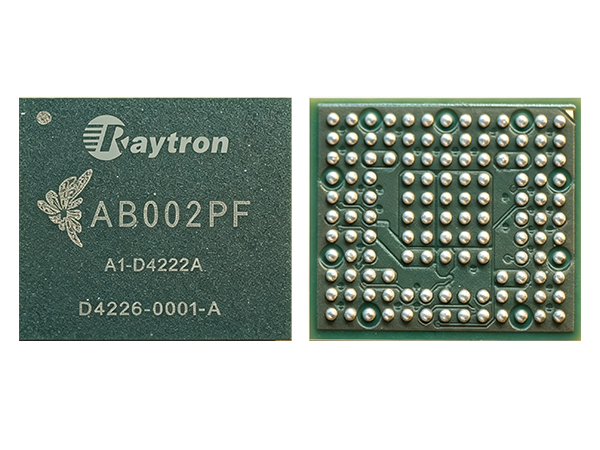
Function Description: X-band 4-channel 8-beam receiver chip Operating Frequency: 7.5~9GHz Main Specifications: Gain 7.3dB, NF≤11.5dB
-
 Silicon-Based ABF Chip AB301PF
Optical Material
Raytrontek
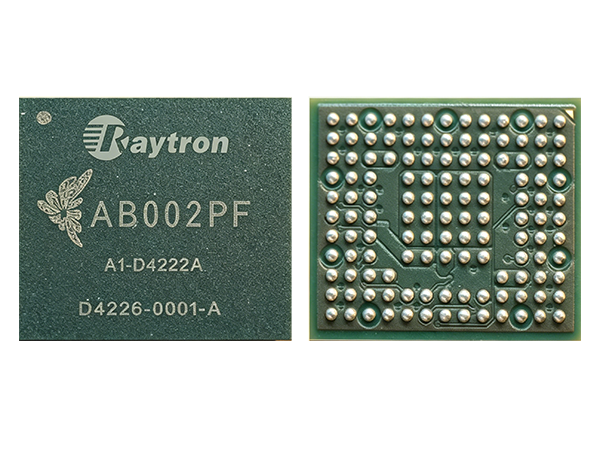
Function Description: K-band 8-channel dual-beam receive chip Operating Frequency: 17.7~21.2GHz Main Specifications: Gain 25dB, NF≤3dB
-
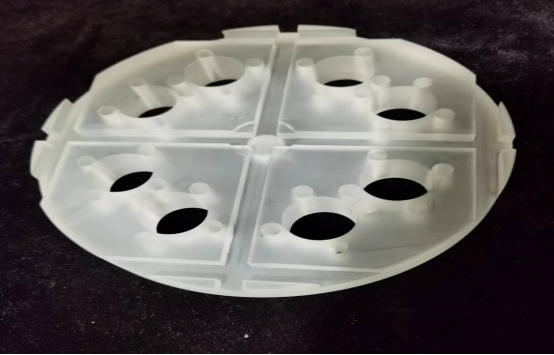 Multi-Hole Special-Shaped Blank
Optical Material
Hjgdkeji
-
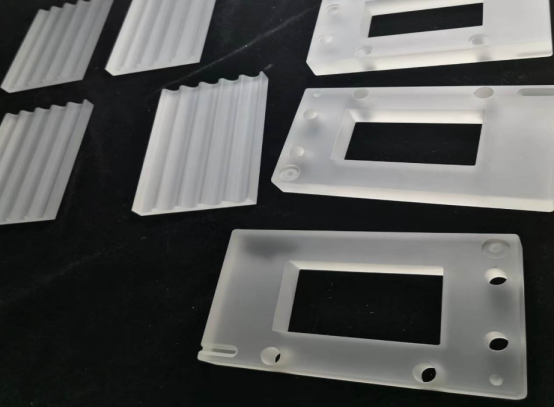 Special-Shaped Blank
Optical Material
Hjgdkeji
Related Articles
Driven by the rapid upgrading of industrial automation, high-precision displacement sensing technology has become a core foundation of intelligent manufacturing.
Widely adopted in small home appliances, industrial instruments, smart toys and atomization devices, the 0603 patch emerald green LED serves as a core status-indicating optical component.
Raybowlaser, a professional manufacturer of high-power laser chips, has officially launched its upgraded new-generation 1470nm high-performance laser chip. Achieving groundbreaking progress in rated output power and wall-plug efficiency (WPE), this innovative laser chip delivers superior and reliable core light source solutions for medical cosmetology, industrial processing, agricultural applications and scientific research equipment.
A solid-state laser is one of the most common and reliable laser types used in modern industry, medical equipment, and scientific research. Unlike gas or fiber lasers, it uses solid materials as its gain medium to generate stable, high-brightness laser beams. Thanks to its high precision, long lifespan, and compact structure, solid-state lasers have become a mainstream solution for high-precision laser processing and optical systems.
Loading...
Name
Phone
Organization
Use Case

Database Platform