
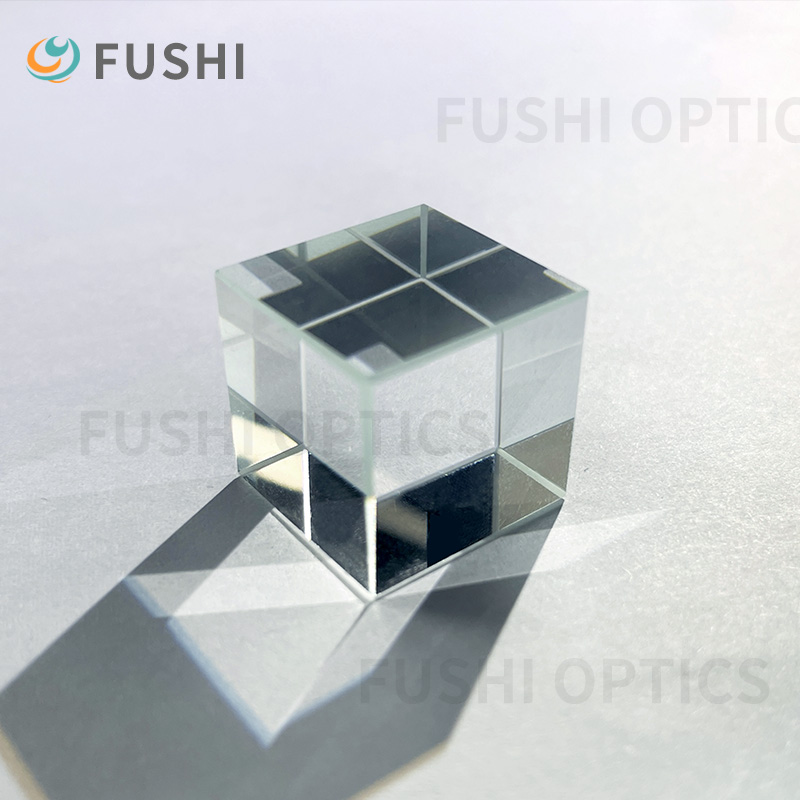
Caf2 Calcium Fluoride Prism
Calcium fluoride (CaF₂ single-crystal) prisms are known for ultrabroad transmission and ultralow dispersion, forming core components of high-end precision optical systems. Prism-material comparison. Material | refractive index n | transmission band | thermal expansion coefficient (×10⁻⁶/°C) | laser damage threshold | typical applications | cost. BK7 optical glass | 1.517 @587nm | 350nm-2.1μm | 7.1 | 5J/cm² @1064nm | telescopes, microscopes, laser collimation | $. Fused silica (FS) | 1.458 @587nm | 180nm-2.5μm | 0.55 | 15J/cm² @1064nm | UV lasers, space optics | $$. Calcium fluoride (CaF₂) | 1.434 @587nm | 180nm-8μm | 18.9 | 3J/cm² @1064nm | deep-UV lithography, infrared spectrometers | $$$. Zinc sulfide (ZnSe, as named in the source) | 2.4 @10μm | 600nm-16μm | 7.1 | 0.5J/cm² @10.6μm | infrared thermal imaging, CO₂ laser processing | $$. Plastic (PMMA) | 1.49 @587nm | 400nm-1.6μm | 70 | 0.1J/cm² @1064nm | consumer electronics, low-cost optical toys | $. Main material differences concern transmission band, mechanical/chemical stability, and cost. Sapphire/silica suit harsh environments or broadband UV/IR use. K9 glass is the economical first choice but limited to visible light. Calcium/barium fluorides serve high-end deep-UV or mid-/far-IR applications but are expensive and easily damaged.
 Save to Favorites
Overview
Applications
Key Features
Datasheet
Please provide your email to download the datasheet.
Invalid email format. Please try again.
Supplier Information
Related Products
-
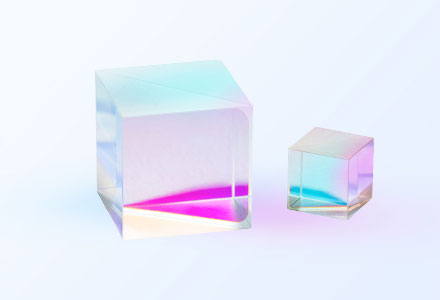 Polarizing Beamsplitter Prism
Prisms
Hjgdkeji
-
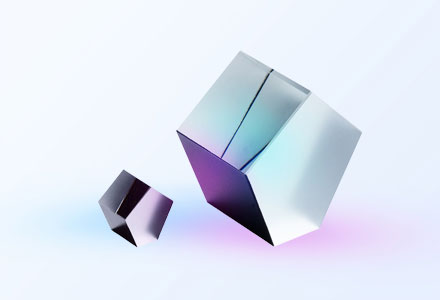 Pentaprism
Prisms
Hjgdkeji
-
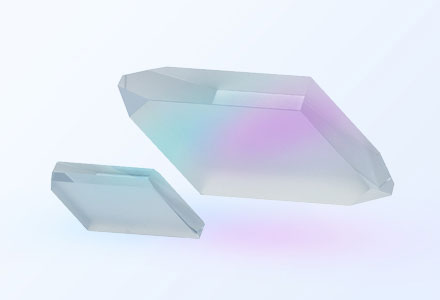 Rhomboid Prism
Prisms
Hjgdkeji
-
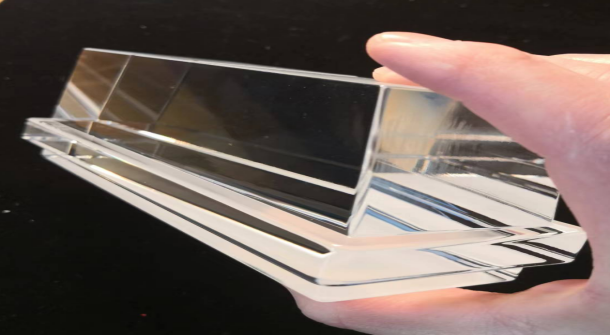 Trapezoidal Stepped Polyhedron
Prisms
Hjgdkeji
-
 Prism
Prisms
Bxoptic
Materials: Colorless optical glass, laser crystals, fused silica, radiation-resistant glass, UV and IR materials, such as: SiO₂, CaF₂, BaF₂, ZnSe, ZnS, Ge, Si, Al₂O₃, etc. Shape Range: 3~500 Shape Tolerance: ±0.005 ~±0.2
Related Articles
Founded in 2019, Jilin JC Ultrafast Equipment Co., Ltd. is a high-tech enterprise incubated by the Ultrafast Optoelectronics Center of Jilin University. Our R&D team owns 15 years of profound experience in femtosecond laser micro-nano fabrication.
For 1D optical detection scenarios such as spectrum acquisition, dimensional measurement and optical scanning, area array CMOS/CCD suffer redundant pixels, high cost and slow row readout speed.
Santec introduces the HSL‑20‑C‑E swept laser. Built on proprietary MEMS technology, this compact integrated light source combines high‑speed scanning and long coherence length, optimized for SS‑OCT imaging systems. Configurable start trigger and k‑clock outputs are available to meet development requirements for medical‑biological imaging and industrial non‑destructive inspection equipment.
For semiconductor, coating and laboratory vacuum chambers, thermal conductivity gauges suffer large measurement errors caused by gas type and ambient temperature.
Loading...
Name
Phone
Organization
Use Case

Database Platform