
Infrared materials
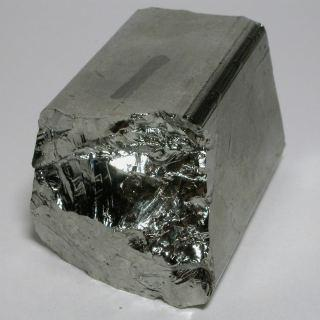
Germanium (Ge): Germanium (Ge) is the preferred lens and window material for high performance infrared imaging systems in the 8–12 μm wavelength band. Its high refractive index makes Ge ideal for low power imaging systems because of minimum surface curvature. Chromatic aberration is small, often eliminating the need for correction. Silicon (Si): Silicon (Si) is grown by Czochralski pulling techniques (CZ) and contains some oxygen that causes an absorption band at 9 microns.To avoid this, material can be prepared by a Float-Zone (FZ) process. Optical silicon is generally lightly doped (5 to 40 ohm cm) for best transmission above 10 microns, and doping is usually boron (P-type) and phosphorus (N-type). After doping silicon has a further pass band: 30 to 100 microns which is effective only in very high resistivity uncompensated material. CZ Silicon is commonly used as substrate material for infrared reflectors and windows in the 1.5-8 micron region. The strong absorption band at 9 microns makes it unsuitable for CO2 laser transmission applications, but it is frequently used for laser mirrors because of its high thermal conductivity and low density. Application as window, lens in the 1.5 - 8 um region; Mirror for CO2 laser and spectrometer applications. ZnS MultiSpectral Under intense heat and pressure, defects within the crystalline lattice are virtually eliminated, leaving a water-clear material with minimal scatter and high transmission characteristics from 0.4 to 12 microns. This material is particularly well suited for high-performance common aperture systems that must perform across a broad wavelength spectrum. ZnSe: ZnSe is a preferred material for lenses, windows, output couplers and beam expanders for its low absorptivity at infrared wavelengths and its visible transmission. For high-power applications, it’s critical that the material bulk absorption and internal defect structure be carefully controlled, that minimum-damage polishing technology be employed, and the highest quality optical thin-film coatings are used. The material absorption is verified by CO2 laser vacuum calorimetry. Our quality assurance department provides testing and specific optics certification on request. ZnSe is non-hygroscopic and chemically stable, unless treated with strong acids. It’s safe to use in most industrial field, and laboratory environments.
 Save to Favorites
Overview
Specifications
| Parameter | Value |
|---|---|
| Syngony [Germanium (Ge);Crystallographic properties] | Cubic |
| Crystal Form [Germanium (Ge);Crystallographic properties] | Poly or Single Crystal |
| Lattice Constant [Germanium (Ge);Crystallographic properties] | 5.66 |
| Cleavability [Germanium (Ge);Crystallographic properties] | <111>, non-perfect |
| Molecular Weight [Germanium (Ge);Crystallographic properties] | 72.6 |
| Density, at 20 °C [Germanium (Ge);Physical properties] | 5.33 |
| Hardness, Mohs [Germanium (Ge);Physical properties] | 6.3 Mohs |
| Dielectric Constant for 9.37 × 10⁹ Hz at 300 K [Germanium (Ge);Physical properties] | 16.6 |
| Melting [Germanium (Ge);Physical properties] | 937 |
| Thermal Conductivity, W/m·K at at 293 K [Germanium (Ge);Physical properties] | 59 W/m·K |
| Thermal Expansion, 1/K at 298 K [Germanium (Ge);Physical properties] | 6.1 × 10⁻⁶ |
| Specific Heat Capacity, J/(kgK) at 273-373 K [Germanium (Ge);Physical properties] | 0.074 J/(kgK) |
| Bandgap, eV [Germanium (Ge);Physical properties] | 0.67 eV |
| Knoop Hardness, kg/mm2 [Germanium (Ge);Physical properties] | 800 kg/mm2 |
| Youngs Modulus, Gpa [Germanium (Ge);Physical properties] | 102.66 Gpa |
| Shear Modulus, GPa [Germanium (Ge);Physical properties] | 67.04 GPa |
| Bulk Modulus, GPa [Germanium (Ge);Physical properties] | 77.86 GPa |
| Debye Temperature, K [Germanium (Ge);Physical properties] | 370 K |
| Poissons Ratio [Germanium (Ge);Physical properties] | 0.278 |
| Elastic Coefficient [Germanium (Ge);Physical properties] | C11=129, C12=48.3, C44=67.1 |
| Apparent Elastic Limit [Germanium (Ge);Physical properties] | 89.6 MPa (13000psi) |
| Solubility in acids [Germanium (Ge);Chemical properties] | Soluble |
| Molecular Weight [Germanium (Ge);Chemical properties] | 72.59 |
| Syngony [Silicon (Si);Crystallographic properties] | Cubic |
| Lattice Constant, A [Silicon (Si);Crystallographic properties] | 5.43 A |
| Density [Silicon (Si);Physical properties] | 2.33 g/cm3 |
| Hardness, Mohs [Silicon (Si);Physical properties] | 7 Mohs |
| Dielectric Constant for 9.37 x 10⁹ Hz [Silicon (Si);Physical properties] | 13 |
| Melting point, оС [Silicon (Si);Physical properties] | 1414 оС |
| Thermal Conductivity, W/m·K at 313 K [Silicon (Si);Physical properties] | 163 W/m·K |
| Thermal Expansion, 1/K at 293 K [Silicon (Si);Physical properties] | 2.6x10⁻⁶ |
| Specific Heat Capacity, J/(kg°C) [Silicon (Si);Physical properties] | 712.8 J/(kg°C) |
| Bandgap, eV [Silicon (Si);Physical properties] | 1.1 eV |
| Knoop Hardness, kg/mm2 [Silicon (Si);Physical properties] | 1100 kg/mm2 |
| Youngs Modulus, Gpa [Silicon (Si);Physical properties] | 130.91 Gpa |
| Shear Modulus, GPan [Silicon (Si);Physical properties] | 79.92 GPan |
| Bulk Modulus, GPa [Silicon (Si);Physical properties] | 101.97 GPa |
| Debye Temperature, K [Silicon (Si);Physical properties] | 640 K |
| Poissons Ratio [Silicon (Si);Physical properties] | 0.28 |
| Molecular Weight [Silicon (Si);Chemical properties] | 28.09 |
| Preferred wavelength bands for lenses/windows [Germanium (Ge)] | 8~12 μm |
| CZ silicon absorption band [Silicon (Si); CZ; Oxygen absorption] | 9 microns |
| Lightly doped optical silicon resistivity range [Silicon (Si); Best transmission above10microns] | 5~40 ohm cm |
| Transmission Wavelength Band [Silicon (Si); After doping; Very high resistivity uncompensated material only] | 30~100 microns |
| Window/lens application wavelength bands [Silicon (Si);CZ] | 1.5~8 um |
| High-transmittance band [ZnS MultiSpectral] | 0.4~12 microns |
| Material [ZnS MultiSpectral] | ZnS MultiSpectral |
| Diameter Tolerance [ZnS MultiSpectral] | +0.0, -0.1 |
| Thickness Tolerance [ZnS MultiSpectral] | ±0.1 mm |
| Clear Aperture [ZnS MultiSpectral] | >85% |
| Parallelism [ZnS MultiSpectral] | 3 arc minute |
| Surface Quality [ZnS MultiSpectral] | 80-50 scratch and dig |
| Wavefront Distortion [ZnS MultiSpectral; per25mm@633mm (actual source units)] | λ/2 |
| Bevel [ZnS MultiSpectral] | Protective (<0.2mm×45°) |
| Coating [ZnS MultiSpectral] | Optional (Uncoated, AR Coating, etc.) |
Datasheet
Please provide your email to download the datasheet.
Invalid email format. Please try again.
Supplier Information
Related Products
-
 Zinc Selenide (ZnSe) Lens
Optical Material
Szgladsome
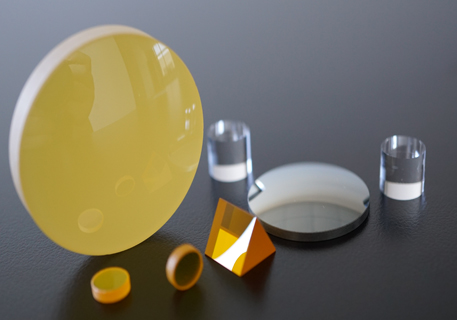
Design Wavelength: 10.6nm Focal Length Tolerance: ±1% Outline Tolerance: +0.0/-0.1mm
Zinc selenide has low absorption for infrared wavelengths and can transmit visible light, making it the preferred material for manufacturing infrared lenses, windows, output couplers, and beam expanders.
-
 Infrared Anti-Reflection AR8000-14000nm + DLC (Chalcogenide Glass)
Optical Material
Mirhz
Average transmittance Tavg [8000~14000nm]: Tavg≥80%
AR8000-14000+DLC
-
 AR8000-14000nm+DLC Infrared Antireflection Sensing Element
Optical Material
Mirhz
Average transmittance Tavg [8000~14000nm]: Tavg≥80%
AR8000-14000+DLC
-
 Barium Fluoride BaF2 Crystal Windows
Optical Material
Coupletech
Surface Quality: 20/10 Maximum Of Material Diameter Φ: Φ180mm Clear Aperture: 85%
Barium Fluoride BaF2(IR) Crysta is transparent from the ultraviolet to the infrared, from 150-200nm to 11-11.5 μm, and can be used as a material to make optical components such as lenses. BaF2 IR Crystal is used in Optical Windows for infrared spectroscopy, in particular in the field of fuel oil analysis. BaF2's transmittance at 200nm is relatively low (0.60), but at 500nm it goes up to 0.96-0.97 and stays at that level until 9 μm, then it starts falling off (0.85 for 10 μm and 0.42 for 12 μm). The refractive index is about 1.46 from 700nm to 5 μm. BaF2 IR Crystal is used as a preopacifying agent and in enamel and glazing frits production. BaF2 IR Crystal is also used in metallurgy, as molten bath for refining aluminum. BaF2 IR Viewport Windows for Infrared Thermography at 8 μm to 14 μm. Various optics for IR and VUV application, using our Optical Lenses of BaF2 ; Good quality BaF2 scintillation crystal; Good quality BaF2 crystal blank materials; oem service for good quality BaF2 crystals. Coupletech are the manufacturer and processor of Calcium Fluroide, with rohs environmental protection requirements. Also provide other Optical Elements such as: Optical Filters, beamsplitter, Optical Mirrors and optical prism.
-
 Calcium Fluoride CaF2 Crystal Windows
Optical Material
Coupletech
Surface Quality: 20/10 Clear Aperture: 85% Maximum Of Material Diameter Φ: Φ375mm
Calcium Fluoride (CaF2) crystal has excellent transmission in the UV, they are often used to make windows from below 150 nm and extending throughout the visible range. The material of CaF2 IR Windows are relatively soft and somewhat hygroscopic, Polished surfaces are stable and will last several years under normal conditions,so polishing and coating during processing are more critical. Coupletech provides CaF2 IR crystal shows good optical and thermo-mechanical properties, can be used for Optical Windows, Optical Mirrors , Optical Lenses, Optical prisms within a wide range from 130nm to 9μm. CaF2 has optical properties of isotropy, low absorption and low refractive index, which made Calcium Fluoride (CaF2) gain the unique advantages in the application of high power lasers. CaF2 IR viewport Windows for Infrared Thermography at 8μm to 10μm; Various optics for IR & VUV application. Using Coupletech Calcium Fluoride CaF2 crystal materials; Good quality CaF2 crystal blank materials; OEM service for good quality CaF2 crystals. Coupletech also provides other Optical Elements such as : Optical Filters and Beamsplitter.
Related Articles
Wuhan Optics Valley Quantum Technology Co., Ltd. is a leading domestic developer of high‑speed semiconductor optical chips and photodetector components. Our product portfolio covers InGaAs avalanche photodiode bare dies and PIN photodetector chips designed for fiber‑optic communication
The accelerated construction of new‑generation power systems has brought revolutionary upgrades to power‑equipment maintenance workflows.
icrolight is a high-tech enterprise specializing in the R&D, manufacturing and sales of active and passive photonic devices for microwave photonics, LiDAR ranging, gas sensing, fiber optics and photomedicine.
Fomoptic delivers integrated one‑stop optical solutions covering precision optical fabrication and custom vacuum coating services. Supported by complete processing production lines, comprehensive metrology equipment and experienced engineering team, we provide full‑chain customized components, ranging from blank shaping, ultra‑precision polishing to thin‑film coating, for laser systems, infrared imaging, industrial optics and scientific‑research projects.
Loading...
Name
Phone
Organization
Use Case

Database Platform