
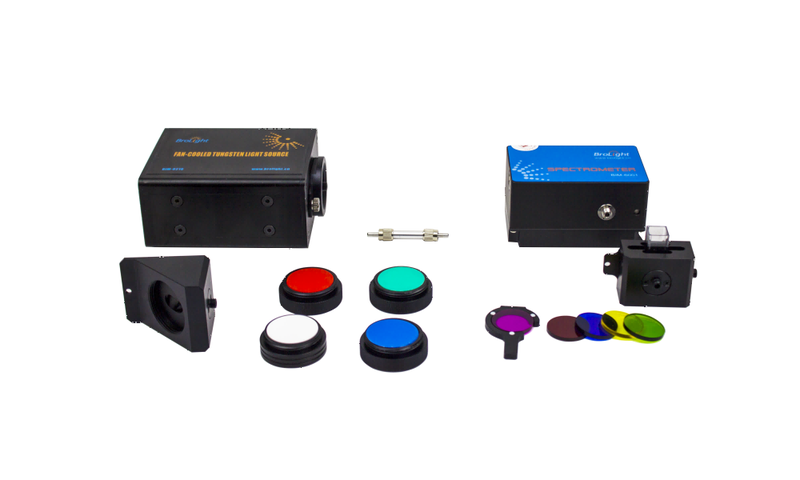
BEX-8205 spectral analysis kit
Each atom has its own energy-level structure and absorbs or emits specific spectral lines during transitions. Measuring these characteristic lines identifies chemical composition and relative abundance, a method called spectroscopic analysis. This experimental kit uses a cooled tungsten-halogen source as the reference and a miniature spectrometer as the detector. Adding a transmission module to the source allows measurement of liquid absorbance and calculation of solution concentration, or transmittance measurements of transparent materials such as filters. Adding a reflection module allows measurement of surface-reflection spectra and calculation of material color parameters.
 Save to Favorites
Overview
Specifications
| Parameter | Value |
|---|---|
| Fiber-optic spectrometer - Wavelength range | 350nm-1050nm |
| Fiber-optic spectrometer - Resolution | ~1nm |
| Air-cooled tungsten-lamp light source - Wavelength range | 400 nm-2000 nm |
| Air-cooled tungsten-lamp light source - Cooling method | Fan |
| Quartz optical fiber | Length 5cm, Φ600μm |
| Reflectance module | Uses a distinctive L-shaped structure. |
| Transmittance module | Uses a distinctive sample slot shaped like the character zhong. |
| Standard white reference | Protective housing made of aluminum. |
Applications
Key Features
Datasheet
Please provide your email to download the datasheet.
Invalid email format. Please try again.
Supplier Information
Related Products
-
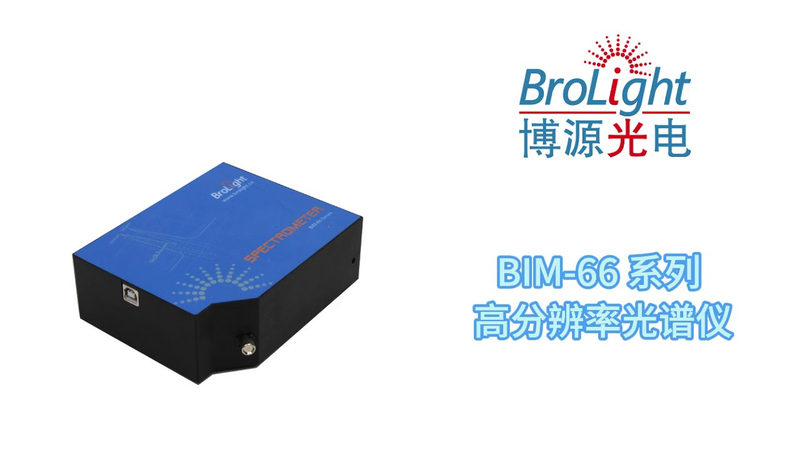 BIM-6602A series high-resolution spectrometers UV-NIR BIM-6602A-15
Spectrometers
Brolight
Fiber Connectors [BIM-6602A: Parameter Specifications]: SMA905 Detector [BIM-6602A: Parameter Specifications]: Hamamatsu S11639, Line-Array CMOS Detector Pixel [BIM-6602A: Parameter Specifications]: 2048 Pixels, Each Pixel 14μm×200μm
The BIM-6602A series spectrometer uses a high-resolution optomechanical structure in a compact, portable design, with resolution as fine as 0.08 nm. Interchangeable gratings adjust optical resolution and spectral range. Upgraded circuitry provides a 10000:1 dynamic range, minimum integration time of 0.5 milliseconds, and 600:1 signal-to-noise ratio for weak-signal detection. RS232 communication and improved interference resistance make it ideal for industrial and scientific applications.
-
 BIM-6602A series high-resolution spectrometers UV-NIR BIM-6602A-16
Spectrometers
Brolight
Fiber Connectors [BIM-6602A: Parameter Specifications]: SMA905 Detector [BIM-6602A: Parameter Specifications]: Hamamatsu S11639, Line-Array CMOS Detector Pixel [BIM-6602A: Parameter Specifications]: 2048 Pixels, Each Pixel 14μm×200μm
The BIM-6602A series spectrometer uses a high-resolution optomechanical structure in a compact, portable design, with resolution as fine as 0.08 nm. Interchangeable gratings adjust optical resolution and spectral range. Upgraded circuitry provides a 10000:1 dynamic range, minimum integration time of 0.5 milliseconds, and 600:1 signal-to-noise ratio for weak-signal detection. RS232 communication and improved interference resistance make it ideal for industrial and scientific applications.
-
 BIM-6602A series high-resolution spectrometers UV-NIR BIM-6602A-17
Spectrometers
Brolight
Fiber Connectors [BIM-6602A: Parameter Specifications]: SMA905 Detector [BIM-6602A: Parameter Specifications]: Hamamatsu S11639, Line-Array CMOS Detector Pixel [BIM-6602A: Parameter Specifications]: 2048 Pixels, Each Pixel 14μm×200μm
The BIM-6602A series spectrometer uses a high-resolution optomechanical structure in a compact, portable design, with resolution as fine as 0.08 nm. Interchangeable gratings adjust optical resolution and spectral range. Upgraded circuitry provides a 10000:1 dynamic range, minimum integration time of 0.5 milliseconds, and 600:1 signal-to-noise ratio for weak-signal detection. RS232 communication and improved interference resistance make it ideal for industrial and scientific applications.
-
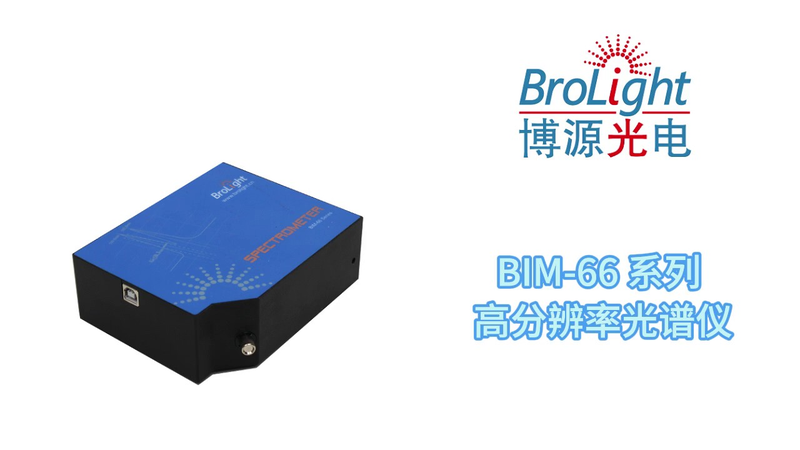 BIM-6602A series high-resolution spectrometers UV-NIR BIM-6602A-18
Spectrometers
Brolight
Fiber Connectors [BIM-6602A: Parameter Specifications]: SMA905 Detector [BIM-6602A: Parameter Specifications]: Hamamatsu S11639, Line-Array CMOS Detector Pixel [BIM-6602A: Parameter Specifications]: 2048 Pixels, Each Pixel 14μm×200μm
The BIM-6602A series spectrometer uses a high-resolution optomechanical structure in a compact, portable design, with resolution as fine as 0.08 nm. Interchangeable gratings adjust optical resolution and spectral range. Upgraded circuitry provides a 10000:1 dynamic range, minimum integration time of 0.5 milliseconds, and 600:1 signal-to-noise ratio for weak-signal detection. RS232 communication and improved interference resistance make it ideal for industrial and scientific applications.
-
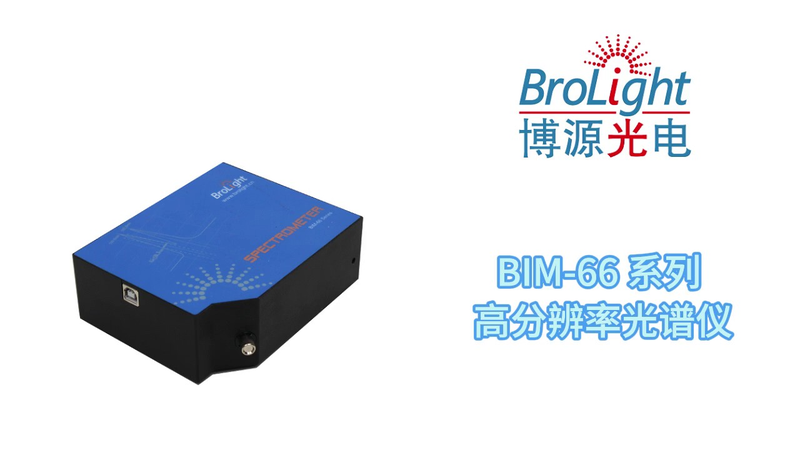 BIM-6602A series high-resolution spectrometers UV-NIR BIM-6602A-19
Spectrometers
Brolight
Fiber Connectors [BIM-6602A: Parameter Specifications]: SMA905 Detector [BIM-6602A: Parameter Specifications]: Hamamatsu S11639, Line-Array CMOS Detector Pixel [BIM-6602A: Parameter Specifications]: 2048 Pixels, Each Pixel 14μm×200μm
The BIM-6602A series spectrometer uses a high-resolution optomechanical structure in a compact, portable design, with resolution as fine as 0.08 nm. Interchangeable gratings adjust optical resolution and spectral range. Upgraded circuitry provides a 10000:1 dynamic range, minimum integration time of 0.5 milliseconds, and 600:1 signal-to-noise ratio for weak-signal detection. RS232 communication and improved interference resistance make it ideal for industrial and scientific applications.
Related Articles
The ElFys PD25s series photodetectors adopt ElFys‑patented Black Silicon Induced Junction technology, delivering excellent spectral response spanning deep‑ultraviolet, visible and near‑infrared bands for diverse high‑precision photometry applications. Sub‑variants including H, M, HG and MG are optimised for low‑capacitance, low‑dark‑current and high‑reverse‑bias guard‑ring operations respectively. Multiple packaging configurations are available to satisfy various system‑design requirements.
Fomoptic delivers integrated one‑stop optical solutions covering precision optical fabrication and custom vacuum coating services. Supported by complete processing production lines, comprehensive metrology equipment and experienced engineering team, we provide full‑chain customized components, ranging from blank shaping, ultra‑precision polishing to thin‑film coating, for laser systems, infrared imaging, industrial optics and scientific‑research projects.
Wuhan Optical Valley Interlink Technology Co., Ltd. was founded in 2013 by a technical team from Huazhong University of Science and Technology.
For semiconductor, coating and laboratory vacuum chambers, thermal conductivity gauges suffer large measurement errors caused by gas type and ambient temperature.
Loading...
Name
Phone
Organization
Use Case

Database Platform